News & stories

Latest news & stories
Costa Rican President Carlos Alvarado Quesada and Minister of the Environment and Energy Andrea Meza Murillo will lead an international event to rally up a global high ambition to restore degrading land to hasten the post-COVID-19 recovery

Desertification and Drought Day is celebrated every 17 June in every United Nations Member to keep the public informed about the state of the land, nationally and globally. Media are invited to cover the celebrations

Countries assess the progress made in the fight against DLDD and map the way forward

The UNCCD participated the Structured Expert Dialogue of the UNFCCC second Periodic Review to help identify gaps and opportunities in the efforts to keep global warming in check below 1.5 degrees. Together with representatives of CBD and WHO they outlined the linkages between the work of their agencies and climate change, illustrating the major challenges and potential solutions, while a representative of the GEF described their approach to supporting countries in addressing many of these challenges. The UNCCD described the potential for Land Degradation Neutrality to deliver multiple benefits while ensuring no further land degradation in net terms. The secretariat experts also outlined pathways to boost nature-positive production systems and catalyze global efforts to turn restoration commitments in to action on the ground. The UNCCD team introduced the ongoing work of PBL in developing a restoration scenario which will be published as part of the 2nd Edition of the Global Land Outlook. Watch the full recording here...

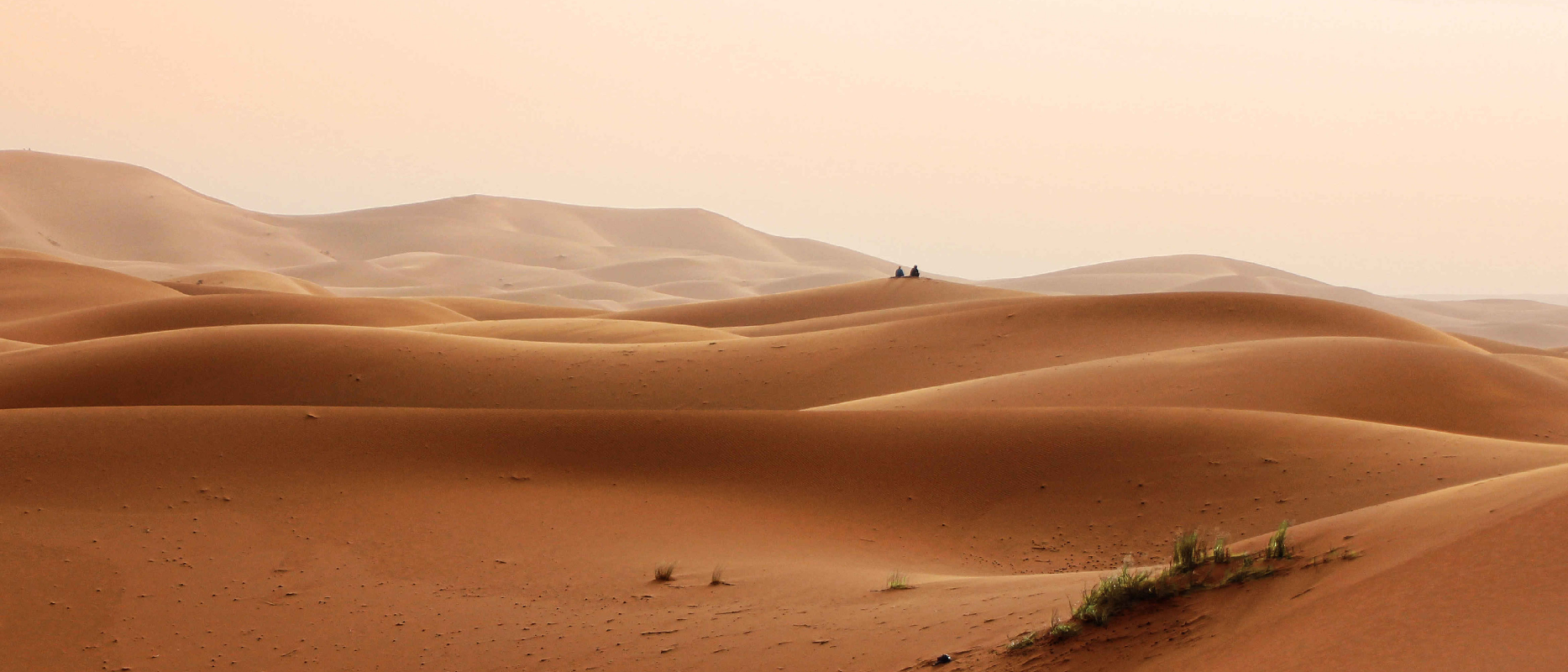
Remarks by the Executive Secretary Ibrahim Thiaw on UNCCD Commitment on drylands in Africa and the Sahel: To speak about land is to speak about life in all its complexity. Whether wet, dry, or severely degraded, the land is humanity’s common treasure that we must protect. So, allow me to debunk five myths about drylands: Drylands are not productive lands: Untrue! Drylands specifically provide us with unique products and produces: cereals, animal feed; non-timber products. Almost 3 billion people live in drylands, including hundreds of millions of pastoralists. Half of the world rangelands are found in drylands, including the largest terrestrial mammals and the tourism economy they generate. The fashion industry would not survive without cotton from drylands. The world is just about to discover the nutritional and health values of fonio, shea butter, cosmetic products and other great varieties produced in drylands. Drylands are not rich in biodiversity and have little to offer to resolve the climate crisis: from the largest terrestrial herbivores found in the magnificent savannahs of Africa, to the tiniest micro-organisms found in the large diversity of drylands habitats (ponds; savannah, oases; rivers; wetlands). The large open spaces of drylands are major carbon sinks. Their management and restoration provide unique mitigation and adaptation opportunities. Drylands do not contribute much to the economy. In most drylands, people have land as their only asset. In Africa, up to 70% of the population depend on the primary sector, including in drylands that represent up to 45% of the land mass. Agriculture, livestock, inland fisheries, tourism revenues. Think about the Okavango, the Masai Mara, Kruger, Zakouma, Waza, Comoe, to name just a few? Be it in Namibia, in Malawi or in Mali, millions of people depend on drylands. Who can explain why the mighty rivers of the Nile, the Niger, the Zambezi, or the Senegal have to flow through arid lands? As you know, the vast Sahara desert is sitting atop of the largest aquifers of Africa. Paradoxically, the drylands of Africa are granaries for hundreds of millions. Without its drylands, Africa would not be Africa. Africa is blessed with its drylands. Drylands are waste lands; they are not worth investing in. Today, drylands harbour major extractive companies: from oil production in the Middle East, to mineral extraction in dry Africa and Australia. The world is amazed by the clean energy potential found in drylands. Expect the shift from fossil fuel to hydrogen and other types of clean energy to be spearheaded in dry regions. Furthermore, with the progressive change of diet in the world, drylands are sources of healthy products on high demand. Expect the food industry to increase its investment in healthy food from dry areas. Drylands are major tourist destinations, thanks to their unique landscapes, spectacular wildlife, and great diversity of people. Again, expect major investments in the sector. In drylands, people deliberately destroy their environment. Drylands' ecosystems are fragile and are more vulnerable to human interactions than other habitats. However, people living in dry areas are generally water-efficient and use relatively little biomass. Either they scarcely use the environment, or they are forced to migrate for there are no resources to sustain them. Take the example of the Sahel: 11 countries came together, across the width of Africa, from Senegal-Mauritania to the West to Djibouti-Eritrea to the East. With a giant ambition. A bold vision. To invest substantial human and financial resources to heal their degraded ecosystems, support their rural communities and contribute to climate. They will, with their partners, build a new, green world wonder. Commitments will now have to move to a scalable action. Change is home made. Not imported. Dear friends, It is time to change our narrative on drylands. On Africa. It is time to reset. It is time to rethink Africa’s development. It is time to turn challenges into opportunities. The African population is certainly young and dynamic: Not a dynamite. African drylands are certainly fragile. Not volatile. « When a lion jumps in the finish line of a race, those who were in the back suddenly take the lead ». This African wisdom is perhaps the closest equivalent I found to the English concept of « piggybacking ». Dear friends, When land degradation happens in the world’s drylands, this is known as desertification – meaning the loss of biological and productivity of the land. Desertification reduces agricultural output, contributes to droughts, and increases human vulnerability to climate change. In Africa – we all know it too well – about 45% of its land, this precious resource- is being degraded, with dramatic impacts for its people, as 70% of them depend on the land to live and survive. I therefore feel obliged to repeat this message: Land is a finite resource. We are depleting our capital. Our food systems are not sustainable. Our production systems are land hungry. And water hungry. Our consumption patterns are not viable either. The good news is that dryland degradation can be reversed, recreating more resilient and productive landscapes that will fix more carbon especially in the soil, restore ecosystem services, promote new viable enterprises, and create employment, while reducing conflicts and migration. And together, these will increase the opportunities to meeting the Sustainable Development Goals and the targets of the Rio Conventions on desertification, climate change and biodiversity. In the context of post COVID-19 recovery efforts, investing in land restoration makes the most economic sense: just as an example, through investment in sustainable land management interventions, Africa could generate about 71.8 billion USD/year if all countries act against soil erosion. The question is how we protect and restore the land. There are plenty of ways, but I would like to emphasize on three transformations that will allow us to restore Africa’s drylands efficiently and effectively. First, we need to work towards sustainable and efficient land management techniques that grow more food with less land and water. Second, we need to invest in regenerative practices such as organic agriculture and agroforestry. And third, we need to adopt a landscape approach for restoration – instead of shortsighted, spot-focused views. Naturally, these transformations can only be successful if we act together: through coherence of policies and practices, through international cooperation and solidarity, and through the involvement of all those concerned, including farmers and landowners. The UNCCD process, its institutions, constituted bodies and mechanisms, including its Global Mechanism, are here to support Africa in restoration efforts. At the onset of the UN Decade on Ecosystem Restoration and as we imagine a better world for all after the pandemic, we can unlock the opportunity of land restoration and its multiple benefits for the people of Africa.
This project, “Children vs Desertification” is part of the UNCCD Capacity Development and Innovation Office’s (CDIO) series ‘‘Children and the UNCCD.’’ It was designed and managed by Giorgio Falchi as part of his internship with support from the CDIO Team. The aim of the project was to raise awareness of desertification and land degradation among younger generations in two Italian primary schools located in the municipality of Montespertoli (25 km far from Florence). 40 children ages 10 to 11, pupils of the schools "Don Lorenzo Milani" and “Rita Levi Montalcini” were involved in 2-hours of exercises on ways of combatting desertification and land degradation. Planning and development The efforts and spirit of our multicultural/international Team were central to the development and realization of this project. First School: Istituto Comprensivo Statale "Don Lorenzo Milani" Second School: Scuola Primaria "Rita Levi Montalcini". Giorgio's experience As I walked through the front door of the school that had shaped my childhood mindset for five years, I was overwhelmed by a flood of memories and emotions. Since taking the final examination, I had not set foot in primary school again. Why? I would like to say it was because of lack of time, but perhaps it would be more correct to say lack of will. It was as if I wanted to consign all the moments and memories I had experienced there, both the good and the bad, to that yellow and grey building, so that I would never have to deal with them again. While I was explaining to the caretaker the reason for my presence, I looked around me: the entrance, the stairs, the large mosaic in front of the door, the lockers, the colors had not changed one bit. Even the arrangement of the benches seemed the same. After shaking the teacher's hand, we entered the classroom assigned to me. It was strange to occupy the place that for five years, as a child, had been occupied by people to whom we, or at least I, attributed absolute authority. As I laid out the materials I had prepared for the exercise, I kept asking myself: "Will I be able to get the message across to them? Will I be interesting? Will I be able to make them learn and enjoy themselves?”. The answers to these questions I hoped to gage from their smiles and their happy faces at the end of the exercise. Description of the simulation The idea of preparing an exercise in which the children had to combat the advance of desertification came from the CDIO Team's passion for resource management board games. The training activity was then studied and approved together with the councillor for the culture of the municipality of Montespertoli, Daniela Di Lorenzo, and Professor Barbara Papini. After a brief introduction to the United Nations and the role played by the Convention to Combat Desertification in particular, the children were immersed in the fantastic world of Alkubra, the imaginary place where a simulation would take place. The world of Alkubra consists of four billboards, each corresponding to a district controlled by a city that is very proud of its past and traditions. In the centre, there is the Great Desert, which, to the misfortune of the inhabitants, is expanding in all directions. The children's ultimate goal is to make the right decisions in order to stop the advance of desertification. First, the children were divided into four teams, each representing a city council. Next, each team was given one of the four cardboards to draw their city in the white space and give it a name. Each city council was then assigned 16 resources to be placed in the yellow space between the city and the desert. Ponds represented water, trees represented forests, houses with fields represented agriculture and rabbits represented fauna. Finally, each team had to elect its own representative, who would report back with the answers during the simulation. The simulation consisted of a quiz with six multiple-choice questions. The aim was to stimulate the children's intuition and try to get them to understand how they could help combat and possibly prevent desertification. Each question had 4 possible answers: each city had to choose an answer and declare this through their representative. To make the simulation more challenging, as soon as one of the answers was chosen by one of the cities, the others had no further access to that answer. Each answer meant an increase or decrease in resources depending on whether the right decision was made, i.e. one which will help in combatting desertification. These were not abstract or theoretical questions or decisions but had a clear educational purpose. For example, one of the questions was about water consumption: the right answers included turning off the tap when brushing one's teeth and the wrong answers included increasing meat consumption. At the end of each question, the children themselves tried to explain why some decisions were right and others wrong in combatting desertification and in using natural resources in a sustainable way. The winning team at the end of the game was the one with the most resources, namely the one that made the right decisions to combat desertification in the shortest possible time. In class 5a A at the "Don Lorenzo Milani" school the winners were the "Fantastic City" city council, while in class 5a C at the "Rita Levi Montalcini" school the "Bonus" city won. Outcome / Feedback Preparing all the materials needed to carry out the simulation was not easy; in fact, we had to work under pressure, mainly due to a very tight time schedule. However, thanks to organization and teamwork we managed to prepare the simulation in time. The children showed a great interest in the exercise and in the need to combat desertification; they intervened very often and, in some cases, provided more than comprehensive explanations of phenomena that are not easy to understand. Finally, some children talked of their dreams and/or their difficulties. One girl said that her dream was to bring peace to the world. Another said that, due to financial difficulties, she could not afford to take a shower every day. Smiling, she added that she was glad that at least she could not waste water. Intern in charge of the project As an intern at the UNCCD - CDIO, I feel extremely grateful for the opportunity I have been given. Through this project, I have been able to contribute, albeit in a small way, to combating climate change by raising awareness in schools, the place where future generations are educated. Moreover, preparing for this project has allowed me to grow on a personal level: being in an environment that values creativity and team spirit in favor of sustainability is a unique opportunity. Finally, being surrounded by people who believe in you and your work has allowed me to gain more confidence in myself. Children and UNCCD The CDIO launched the - project “Children and the UNCCD” aiming to raise awareness amongst children of the world about the importance of the preservation of our environment and the land in particular. Would you like your school to be part of this exciting and important project -? Kindly let us know soonest.
