Multimedia

Great Green Wall
The Great Green Wall, an African-led initiative to grow an 8,000km belt of restored land across the Sahel, is now featured in Google Arts & Culture’s Trees Project. More than a reforestation effort, the Wall is a symbol of resilience—tackling land degradation, poverty,…
Read moreLand degradation is a global crisis—one that is reshaping landscapes, livelihoods and futures. Each year, vast areas of productive lands are lost, affecting nearly half of humanity and costing the global economy an estimated US$878 billion. In Latin America, over 20 per cent of arable land is already degraded due to deforestation, overgrazing and other types of unsustainable land use. At the heart of the UNCCD is the belief that land is not only a natural resource—it is a source of life, identity and resilience. But while policies and data help define the challenge, it is the stories from the ground that bring its true scale and urgency into focus. Here is where ReVerde plays a crucial role. The documentary-style television programme gives voice to the people behind the headlines—those living with and responding to the impacts of land degradation. From Indigenous communities to small-scale farmers, from urban collectives to rural cooperatives, the programme captures the diverse efforts underway to restore ecosystems, protect local resources and create sustainable alternatives. Aligned with the UNCCD’s vision for sustainable land stewardship, ReVerde explores both the challenges and the solutions. It highlights community-led restoration, the importance of ancestral knowledge and the risks posed by unregulated development. Ahead of this year's Desertification and Drought Day on 17 June 2025, hosted in Bogotá, Colombia, with the theme— “Restore the Land. Unlock the Opportunities.”— ReVerde stories remind us that restoration is not an abstract goal, but a daily effort being led by communities on the ground. The benefits are clear: land restoration can reverse more than US$1 trillion in agricultural productivity losses, strengthen food security for over a billion people and create millions of sustainable jobs. But to meet global targets, a significant funding gap—currently US$278 billion per year—must be closed. In telling the stories of land and those who care for it, ReVerde does more than inform—it inspires, builds understanding, sparks dialogue and brings us closer to a future where land is restored, protected and valued for generations to come. In its next chapter, ReVerde turns its lens to the global observance of Desertification and Drought Day—continuing its mission to spotlight the people and places at the heart of our planet’s most pressing challenges.

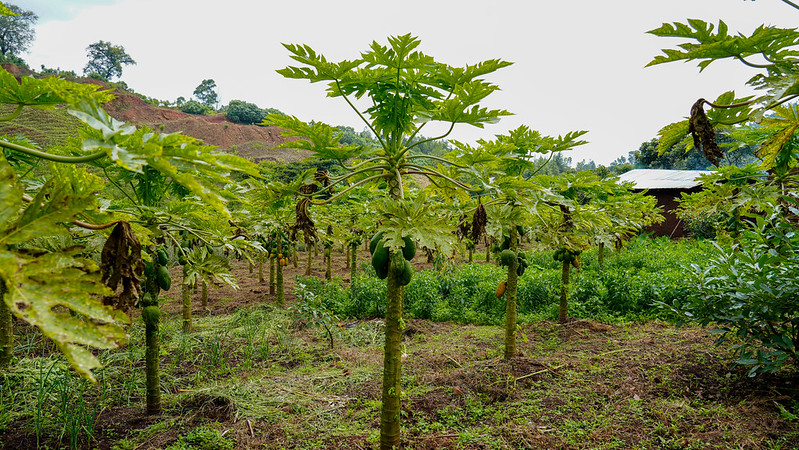
On the outskirts of Jimma, Ethiopia, a modest tree nursery is thriving against all odds. Here, vibrant green seedlings have sprouted from soil once rendered barren by relentless droughts. Hussein, a local farmer, walks among rows of avocado, banana and papaya seedlings, each symbolizing a new beginning for his family. “These trees are an important source of hope and pride for us,” he says, his voice a mix of pride and relief. This land has endured severe droughts for decades, with erratic rainfall extending the dry season and turning the soil to dust. But in Jimma, an agroforestry project offers a beacon of stability rooted in the soil.The path to Jimma’s environmental rejuvenation commenced with a thorough evaluation of its degraded soil, which had suffered from years of intensive agriculture and persistent droughts. This initiative, the Greening Drylands Partnership, bolstered by the Changwon Initiative, launched by the Republic of Korea during the UNCCD COP10 in 2011, aiming to support the global target of a land degradation-neutral world. Financial backing was provided by the Korea Forest Service through the United Nations Convention to Combat Desertification (UNCCD) and the United Nations Environment Programme (UNEP). They conducted extensive soil sampling throughout the region to assess nutrient and moisture levels and thus the resilience of the soil. Encouragingly, despite its depletion, Jimma’s soil showed potential; with proper care, it was capable of supporting new life.Hussein was one of the first to volunteer, intrigued by the idea that trees could provide benefits beyond his seasonal crops. At first, he didn’t believe trees could survive in this kind of soil, he admits. “We had always relied on corn and tomatoes, but when the drought came, they just dried up.” Today, he stands in the middle of his orchard, surveying the lush canopy that now protects his land. His fruit trees, once tiny saplings, have grown sturdy, their roots reaching deep into the earth. Where corn and peppers once struggled, avocado and banana trees thrive, providing a steady income he’d never imagined. In the past four months alone, he has earned about 72,000 Ethiopian Birr (about $1,300) from fruit sales. For Hussein, the change is more than financial. Hussein is not alone in this transformation. His neighbor, Mohammed, and women’s collectives have also joined the agroforestry project, moving from annual crops to a permanent orchard. They have seen a steady income and now employ other villagers to help with the harvest, extending the project’s impact beyond his land.Jimma’s agroforestry success is part of a larger movement. Across Ethiopia, the Green Legacy Initiative, a national reforestation campaign launched in 2019, has inspired communities to plant trees and protect natural resources. The program has surpassed its initial goal of planting 20 billion trees, setting the country on a path to reverse decades of environmental degradation. The Greening Drylands Partnership, with its direct economic benefits, demonstrates the potential to combine reforestation with income generation, giving struggling farmers a reason to protect their land.In Jimma, agroforestry is gaining traction as a movement, guided by farmers like Hussein, who recognize the importance of selecting the right seeds, planted with care, to ensure resilience.Ethiopia’s droughts persist. Each year, as temperatures rise and rains fail, the country faces increasing pressure to adapt. However, the farmers of Jimma have demonstrated that adaptation is not a matter of surrender. Through agroforestry, they have found a way to thrive in conditions that once seemed impossible. They are actively engaged in reshaping their future, planting trees with a sense of urgency and dedication, as if their very survival depends on it.The roots of resilience are spreading, offering a roadmap for other drought-prone regions in the Horn of Africa and beyond. It serves as a reminder that sometimes the most powerful solution is already present and waiting within our communities.
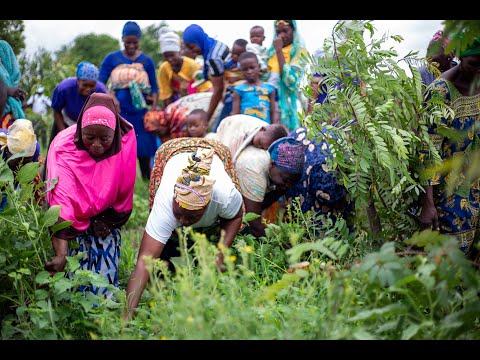
Dano, Ioba province of Burkina Faso - As dawn breaks, the village of Tambiri, in Burkina Faso's Ioba province, is already quite busy. Women like Dabiré Ngalle, head of the Ngongele women's group, start their day with a sense of urgency, shaped by generations of struggle and survival. Dabiré leads her team into the shea groves, which are the main source of income for their families and communities. Yet these emblematic Sahelian trees are now at the heart of a long-running ecological crisis. Dabiré Ngalle, president of the Ngongele Women’s Cooperative | The women of Tambiri stand together at the heart of their community, bearing generations of knowledge and responsibility for preserving shea trees.The shea tree (Vitellaria paradoxa), often called the "tree of life," has long provided shade, food and income throughout West Africa. In Burkina Faso alone, its economic and cultural value is considerable: some 800,000 tons of shea nuts are harvested each year, with women forming the backbone of this supply chain. But these trees are disappearing.Decades of deforestation, unsustainable farming practices and climate change have decimated the shea tree population. Studies show that drought stress alone has led to seedling mortality rates of up to 40% in some regions. Traditional farming methods, based on slow-growing seeds, are no longer sufficient."Every tree we lose is a piece of our history that is disappearing", Dabiré says in a measured but determined voice.The shea tree is more than a commodity; it's a key species in the Sahel's fragile ecosystem. For many rural women, it provides up to 80 percent of their household income. The production of shea butter, valued worldwide for its cosmetic and therapeutic properties, is both a livelihood and a heritage. But the decline of shea plantations has forced women to adapt in ways that strain their already precarious livelihoods.In Niemi, a neighboring village to Tambiri, memories of the abundance of shea trees are fading. "When I was young, shea trees were everywhere," recalls one woman. "Now the groves are like scattered islands, shrinking every year.The challenges women face go beyond the environmental. In Tambiri and beyond, traditional land tenure practices mean that women often have no guaranteed rights to the land on which they depend. This legal insecurity is a major obstacle to long-term investment in agroforestry or soil restoration.If my husband dies, my farm will be taken over by my in-laws," explains one woman. Her story is repeated throughout the region, where patriarchal norms limit women's autonomy in land-use decisions. Advocacy for land reform has gained momentum, with local leaders and NGOs pushing for policies that grant women ownership or long-term leases, but progress remains slow.Despite the challenges, new initiatives are offering a glimmer of hope. The Global Shea Alliance (GSA), in partnership with local NGOs and international bodies like the UNCCD are introducing regenerative agroforestry practices. These methods aim to balance ecological restoration with economic resilience."We used to plant trees without fully understanding how to take care of them," admits a participant in a training program in Niemi. "Now we know how to take care of the seedlings, so they survive."The programs also provide boreholes, which have reduced the backbreaking work of fetching water, and tricycles, which streamline the transportation of heavy shea nuts. These interventions are modest but meaningful, allowing women to reclaim time and energy for other tasks.The GSA's latest call to action - to restore four million hectares of Sahel parkland by 2030 - is ambitious. This restoration effort dovetails with the Great Green Wall Initiative, a broader strategy to address land degradation across the Sahel. But such large-scale projects often face funding gaps and logistical hurdles."It's not just about planting trees," emphasizes Gilles Amadou Ouedraogo, a UNCCD program officer. "It's about restoring ecosystems, empowering women, and ensuring the long-term viability of these landscapes."As daylight fades in Tambiri, Dabiré reflects on the challenges ahead. For her and the women of the Ngongele cooperative, the struggle is personal and generational. Each tree they plant is a seed of hope, an act of quiet defiance against the forces eroding their world."We're not just planting trees; we're panting for the survival of our children and their children," she says. Her words convey the quiet resilience of a community determined to preserve not just a species, but an entire way of life.The future of shea - and the millions who depend on it - will depend on a delicate balance of politics, environmental stewardship and the enduring determination of women like Dabiré.
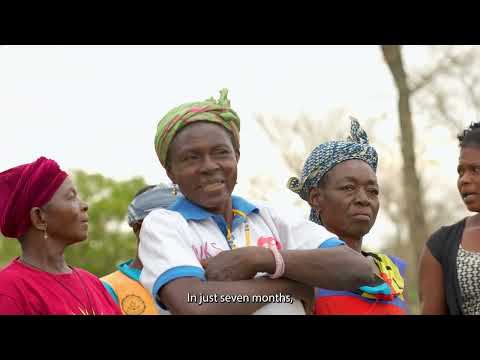
TUMU, Northern Ghana — As the sun rises over the dusty plains of northern Ghana, a quiet revolution is underway. In a region long ravaged by desertification and drought, communities are adopting innovative sustainable land management (SLM) practices and breathing new life into these once-parched lands. This is not just about restoring the environment but also about rejuvenating agriculture and creating a hopeful future. Women are at the forefront of this movement, whose leadership and innovation are paving the way for more sustainable lands and livelihoods. Women from the Nanchala community dancing and singingFor decades, the people of northern Ghana have battled against a harsh reality: their once fertile lands are turning to dust, their crops withering under the relentless sun. Traditional practices, such as cutting down trees for charcoal production, have only worsened the situation, leading to widespread deforestation and land degradation. “Especially this year, the sun has been too high,” laments Hillia Sulemana Joseph, the chairman of Sakalo’s community committee. “We are trying our best to help with the drought and all these problems.” Hillia Sulemana Joseph, chairman of Sakalo’s community committee.In response to these challenges, the community, with the support of organizations like Arusha Ghana, has begun to adopt sustainable practices that promise both environmental and economic benefits. One of the most notable innovations is the production of charcoal from grass — a resource that is abundant and renewable, unlike the rapidly disappearing trees. “Arusha Ghana has come to introduce the grass that we can use to make charcoal,” says Joseph, explaining how this shift could dramatically reduce deforestation. “This will reduce the cutting of trees that protect the vegetation and the ozone layer.”This sustainable approach is not just about preserving the environment; it’s about creating a new economy. By producing grass charcoal, the community not only protects its natural resources but also opens up new income streams for local families. The shift to grass charcoal has sparked a small-scale industry, providing jobs and fostering economic resilience in an area where opportunities are scarce. Charcoal made out of grass dryingThe community’s commitment to these practices is enforced by a newly established local police force, which ensures adherence to strict regulations against bush burning and illegal tree felling. “If we catch you burning bush or cutting trees for charcoal, you will go to jail,” Joseph warns, highlighting the seriousness of their mission.The economic benefits of sustainable land management are not limited to charcoal production. In July 2024, a team from the United Nations Convention to Combat Desertification (UNCCD) visited the Sakalu and Nachanla communities. They saw first-hand how innovative SLM practices are being used and witnessed the real results of the Land of Opportunities — Global Mechanism Project, commonly known as LogMe, which integrates environmental restoration with economic development, particularly for women. Women from the Nanchala communityThe LogMe project, funded by the Italian Ministry for Ecological Transitions and implemented by the International Union for Conservation of Nature (IUCN), is designed to create employment opportunities through sustainable land use. “We did not come with imposed technologies,” says Dr. Jacques Somda, head of the IUCN program in Burkina Faso. “We came to discuss with them and see together what we can do to change what they are doing that is not good for nature.”LogMe has facilitated the planting of over 60,000 tree seedlings to restore forests and farmlands. Four community nurseries with 40,000 seedling capacity were also established. 8 solar-powered boreholes were installed to improve access to clean drinking water. These interventions are helping to rebuild vegetation, store carbon and recharge groundwater. Dr. Jacques Somda, head of the IUCN program in Burkina FasoCentral to the project is the restoration of wetlands through reforestation and erosion control, practices that not only protect the environment but also enhance agricultural productivity. Somda explains, “By restoring the forest gallery, we reduce evapotranspiration and allow the watercourse to retain more water.” This restoration supports the creation of microclimates that can sustain crops even during dry seasons, boosting food security and providing farmers with more reliable incomes. Tree planting around water bodiesWomen, who have traditionally been marginalized in economic activities, are now becoming key players in this environmental and economic revival. Chambua Sahada, secretary of the women’s group Nanchala Community, describes the transformative effect of tree planting around water bodies: “With the trees, it was initially difficult to access water in December. But now, with the trees around, an ecosystem has been created. We can see crocodiles, hear birds, and there are even fish in the river.”This restoration not only brings environmental benefits but also empowers women economically. The LogMe project has introduced training programs that teach women to use energy-efficient cookstoves and produce charcoal briquettes from clay and dry grass. These new skills have opened up additional income streams for women, who are now able to sell these environmentally friendly products in local markets. Nanchala community women's group secretary Chambua Sahada with Gilles Amadou Ouedraogo, project manager at the Global Mechanism of the UN Convention to Combat Desertification (UNCCD).LogMe has promoted livelihood diversification activities like beekeeping, dry season gardening and soap making. Over 120 women’s groups received beehives and training in honey production.Women’s economic empowerment is central to the community’s sustainable development strategy. By involving women in decision-making and leadership roles, the community ensures that its initiatives are more inclusive and effective. Sahada’s group has even broken cultural taboos, with women now harvesting honey — an activity once reserved for men. “In the beginning, it was even taboo for a woman to harvest honey,” Sahada recalls. “But now we do it ourselves.” Rehabilitated forest area in northern Ghana dotted with bee hives, part of sustainable land management practices that not only restore the environment but also provide local communities with new sources of income through beekeepingIn just over two years, the LogMe project has sustainably transformed over 80,000 lives across 8 communities. Through integrated approaches, degraded sahelian landscapes have been restored, food security boosted, forests regenerated, and new livelihood options created. The project shows that even in the face of desertification and drought, coordinated action can turn lands of despair into lands of opportunity. Dr. Somda says: “We make sure that the restoration activities are based on benefits for the local people. As we restore the land, nature also benefits from these activities.” Two young girls share a joyful moment at a community water pump in northern Ghana, symbolizing the brighter future being built through sustainable land management and access to essential resourcesSustainable land management is critical to addressing the environmental challenges of northern Ghana. Through innovative approaches, community involvement and comprehensive projects like LogMe, significant progress is being made in restoring degraded land and improving agriculture. These efforts are protecting the environment and improving the lives of local communities, demonstrating the power of sustainable practices to build resilience and prosperity. As the sun sets over Sakalo, casting long shadows over the rejuvenated land, the women gather once more, their hands and hearts full of the day’s work. They are not just restoring the land; they are reclaiming their lives, their dignity, and their hope for a future where the earth is as resilient as the people who call it home.
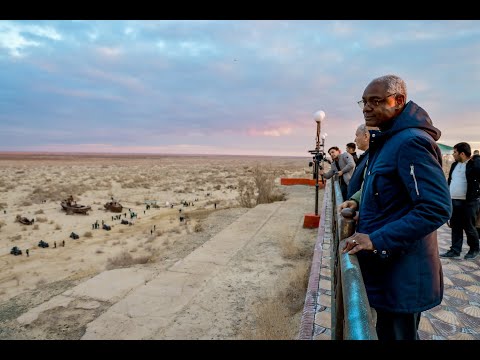
Ibrahim Thiaw, Executive Secretary of the United Nations Convention to Combat Desertification, discusses the environmental disaster that has occurred at the Aral Sea.
As the UNCCD high-level meeting in Central Asia draws near, we welcome you to this discussion on why global and regional gatherings are an essential part of the UNCCD process. The twenty-first session of the Committee for the Review of the Implementation of the Convention (CRIC 21) in Samarkand is set to serve as a vital marker in the Convention’s ongoing efforts to accelerate progress on land restoration and drought resilience. By bringing together experts, leaders and delegates from 196 nations and the European Union, the meeting sets a major arena for the exchange of cutting-edge insights. This pooling of global expertise not only fosters productive solutions but also facilitates joint decision-making, ensuring a coordinated approach to pressing environmental challenges. CRIC21 will focus on strategic objectives ranging from sustainable land management and drought resilience to secure and equal land rights for women. The event will also provide a platform to discuss emergent crises exacerbated by climate change, such as sand and dust storms and wildfires. Taking place at the halfway point between the biannual Confrences of the Parties (COP) to UNCCD, the insights coming out of CRIC21 will aid in defining the next steps for all stakeholders, providing a clear and focused roadmap to UNCCD COP16, scheduled to take place in Riyadh, Saudi Arabia in 2024.
