Multimedia

Great Green Wall
The Great Green Wall, an African-led initiative to grow an 8,000km belt of restored land across the Sahel, is now featured in Google Arts & Culture’s Trees Project. More than a reforestation effort, the Wall is a symbol of resilience—tackling land degradation, poverty,…
Read moreThe Great Green Wall is a symbol of hope in the face of one of the biggest challenges of our time – desertification. Launched in 2007 by the African Union, this game-changing African-led initiative aims to restore Africa’s degraded landscapes and transform millions of lives in one of the world’s poorest regions, the Sahel. Once complete, the Wall will be the largest living structure on the planet – an 8,000 km natural wonder of the world stretching across the entire width of the continent.

What is the relationship between our treatment of land and the likelihood of future pandemics? Congratulations to everyone who participated in the UNCCD/CDIO Global Essay Competition 2020-2021. We were glad about the sheer number of participants engaged in creating a better future by giving their ideas on averting future pandemics. Our hope is that this experience helps you stay concerned and motivated to address problems concerning sustainability by providing new ideas, products, and services that reduce the ruining of our planet and that benefit humanity. In this regard, all participants are encouraged to remain constructively engaged by continuing to contribute to this necessary action of protecting land. This effort must be made as it inter alia will help raising awareness and in reaching more and more communities across the globe. Background In 2020, we witnessed the outbreak of the Covid-19 pandemic causing devastating impacts in virtually every facet of people’s lives. To many, the pandemic feels like a force out of their control. Yet, a closer look reveals it is a directly result of our action as a global community. To mark the 2020 World Soil Day (Saturday the 5th of December), the UNCCD Capacity Development and Innovations Office (CDIO) invited people around the world to participate in an essay competition exploring the concept of 'one health' through examining the relationship between our treatment of the planet's land and the increased likelihood of these types pandemics. Participation in the essay competition was open to everyone and was FREE! Essays of a minimum of 500 and maximum of 1500 words were submitted in English, French, Russian or Spanish. All entries were original unpublished works written by the participants. Submissions The goal of this competition was to explore Covid-19, a topic of current and global importance, specifically, how our actions towards the planet's land resources can play a role in dealing with and help in preventing such pandemics in the future. Submitted essays explored inter alia: The diagnosis (the objective reality): The nature of Covid-19 and its relation to our attitude to land. The prescription and solution: What issues must be addressed for our improved relation to land. We have received 179 essays from 69 countries. There was a good distribution from all over the world: The winners, their stories and their essays The winners were announced in mid July on UNCCD CDIO social media platforms. 1st prize winner Divya Keren Prakash is from Chennai, a bustling metropolis in the south of India. She studies at SBOA School and Junior College and is in 10th grade. Like most teens today, she is inspired by Greta Thurnberg to look a little closer at the places we live in and try to harmonize with nature. At a global level there might be a lot being done, but she believes that a lot more can be done locally. In her essay she argues that if we are to survive, our attitude towards land needs to change. From trampling on everything in our path for self-satisfaction, to alternatively, recognizing the frailty of the gift granted to us and learning to "Live and let live". Not to conquer but to seek balance. To respect other species, no matter how small. To recognize that every life has value and has evolved for a purpose in its ecosystem. Read Divya's essay here 2nd prize winner Latifah Pillay is 18 years old, she lives in Guyana and is a secondary school student. Latifah's essay title was "The plan B". Latifah's work stood out as it encourages one to read to the end. Indeed, she starts directly by writing: "What if I told you the Covid 19 Pandemic was planned?". As we go along, we discover her arguments and her very interesting way of analysing the events of the last two years. She concludes that this crisis can lead us to reform our way of life and consumption: the Corona Pandemic actually gives us a unique opportunity to make the structural changes needed to transition towards a fair and ecologically sustainable economic system. Read Latifa's essay here 3rd prize winner Ilyia Volkov is 26 years old and lives in the Russian Ural region. Currently, he works in the field of management consulting, where he conducts projects in various industries, such as the oil and gas industry, retail information technology. He also engages in projects on a voluntary basis, for example, in the field of environmental protection. His essay was titled "Responsible attitude to the lands and prevention of pandemics". In his essay, Ilya talks about the relationship between earth and the current COVID-19 pandemic. He convincingly proves that if we change our attitude towards the earth, we will be able to prevent the occurrence of pandemics in the future. Read Ilya's essay here Land practitioner category winner Wilfredo Alfaro is a forest engineer and an experienced land practitioner from Chile, and works for the National Forest Corporation (Cooperación Nacional Forestal) which servers as a national focal point to the UNCCD. Wilfredo's essay is entitled "The social function of forests: towards Land Degradation Neutrality, the provision of human health and overcoming the COVID-19 pandemic in Chile". In his essay he talks about the damage to human health caused by the natural deficit. He highlights the important role of forests to overcome SARS-CoV2, as forests aerosols could have an antiviral pharmacological action. He underlines the role of the forest aerosol in the reduction of risk factors for covid, as cardiovascular diseases, metabolic syndrome and mental illness. In his essay, Wilfredo also highlights the progress that Chile has made to incorporate the social function of the forests to improve human health and combat the Covid 19. Read Wilfredo's essay here Special prize winners Elizabeth Dolger is 12 years old and lives in Brest, Belarus. Despite her young age, she is very responsible about the environment and the Covid-19 pandemic. She thinks this is a very serious topic. She always monitors the environment in nature and wears a protective mask in public places. Her essay was titled "COVID-19 - a harmless disease or a terrible pandemic?". In her essay, she says that the pandemic has divided life into before and after. But she believes that with the help of modern medicine, knowledge and a high-level of consciousness, humanity will be able to defeat this disease. Meerimgul Rajapova is 16 years old and lives in Kyrgyzstan. She studies at school no. 28 "Uchar" and is currently working on a project to clean ponds in her hometown and plans to expand it. Her essay is titled "Research COVID-19" and discusses her brother's experience as a medic in the "red zone" during the peak of the COVID-19 pandemic in Kyrgyzstan. The schoolgirl stresses that we should not underestimate the sacrifices made by health workers. Alejandro Mejia Gomez is 28 years old and is from Colombia but is presently living in Germany. He has completed his studies in the University of Cologne in Economics and he has worked with policy makers in the areas of economic growth and sustainability. Alejandro's essay title was "Health and land 2021". In his essay Alejandro advocates that a new "One health Governance" should be put into forward to tackle the COVID-19 pandemic. This governance arrangement recognizes that the health of the people is connected to the health of our animals and the environment. He argues that it is up to us to learn from this pandemic the fact that we are bound to the land whether we like it or not. Opeyemi Adewale is 43 years old and is from Nigeria. He has worked professionally in town planning, architecture and biomedical engineering. Opeyemi's essay title was "Land use change and the prevalence of zoonosis: The COVID-19 case". In his essay he particularly emphasizes that our readiness for future pandemics depends on how we treat the environment, the priority we place on animal health, and our understanding of its link to human health. Zachary Sadler is 22 years old and was born in the USA, raised in Thailand and studied in Spain. From an early age he was attracted by environmental issues and has led many ambitious projects concerning the same. Zachary's essay title was "The relationship between our treatment of the land and the increased likelihood of future pandemics". He underscores the importance of the interconnection between us (humans), animals and the Earth. For him, this is the most important thing that humans need to understand if they want to prevent events like COVID-19 from happening again. Vrishni Maharaj is 17 years old and lives in Trinidad and Tobago. She is a student, currently in the Sixth Form level, pursuing biology, chemistry, environmental sciences and entrepreneurship, with aspirations to become a surgeon. Vrishni's essay title was "COVID-19 and land resources". In her essay, she argues that "by shifting to a paradigm of sustainability, we can use land resources to our advantage as we fight through COVID-19. She says it is our duty as a global community to act now; tomorrow may be too late". Quotes from the essays Word from the team Isn't it amazing to be able to connect the world altogether around the same topic? Isn't it wonderful to get the views from every part of the globe about land? Isn't it beautiful to realize that we are actually all sharing this same land? These and more are what we found with this essay competition. It was a really wonderful to have this impressive number of participants and an even greater pleasure to discover their work. The essays were of very high quality, and written with sincerity and honesty. None of them disappointed us. It is necessary to understand that our reality can be quite different depending on our location and circumstances. We often find it challenging to put ourselves in other people's shoes, if only to understand better how the world works. However, the damage caused by our lack of care for our land has brought us all closer together. We are all victims of the pandemic. By joining our hands, hearts and minds we become a true a community. We were able to directly discover with pleasure, and sometimes sadness, how the relationship to the land influences the lives of hundreds of people, in countries all around the world. Every word was right, and every sentence should be read worldwide. Whether it was the laughter, the tears, the anecdotes, or the advice, each person who contributed to the exercise gave the world something of real value!! THANK YOU ALL!! Photo gallery Please see the photo gallery of the wonderful activities our winners are engaging in to protect the environment. Future competitions Please look out for our up-coming competitions and other major events. We shall soon be releasing a special competition from primary-school aged children; a special project for women and young girls, and much, much more. So please continue to stay tuned! Conclusion The power of the human mind never ceases to astonish us! Language abilities, face recognition, decision-making, creative thinking, memory, logic, multitasking, emotions, the list goes on. Imagine the potential when several such minds work together! The outcome is creation, innovation! This is what happened in this project. From the team that worked tirelessly to the participants who were willing to write and share their ideas.

This project, “Children vs Desertification” is part of the UNCCD Capacity Development and Innovation Office’s (CDIO) series ‘‘Children and the UNCCD.’’ It was designed and managed by Giorgio Falchi as part of his internship with support from the CDIO Team. The aim of the project was to raise awareness of desertification and land degradation among younger generations in two Italian primary schools located in the municipality of Montespertoli (25 km far from Florence). 40 children ages 10 to 11, pupils of the schools "Don Lorenzo Milani" and “Rita Levi Montalcini” were involved in 2-hours of exercises on ways of combatting desertification and land degradation. Planning and development The efforts and spirit of our multicultural/international Team were central to the development and realization of this project. First School: Istituto Comprensivo Statale "Don Lorenzo Milani" Second School: Scuola Primaria "Rita Levi Montalcini". Giorgio's experience As I walked through the front door of the school that had shaped my childhood mindset for five years, I was overwhelmed by a flood of memories and emotions. Since taking the final examination, I had not set foot in primary school again. Why? I would like to say it was because of lack of time, but perhaps it would be more correct to say lack of will. It was as if I wanted to consign all the moments and memories I had experienced there, both the good and the bad, to that yellow and grey building, so that I would never have to deal with them again. While I was explaining to the caretaker the reason for my presence, I looked around me: the entrance, the stairs, the large mosaic in front of the door, the lockers, the colors had not changed one bit. Even the arrangement of the benches seemed the same. After shaking the teacher's hand, we entered the classroom assigned to me. It was strange to occupy the place that for five years, as a child, had been occupied by people to whom we, or at least I, attributed absolute authority. As I laid out the materials I had prepared for the exercise, I kept asking myself: "Will I be able to get the message across to them? Will I be interesting? Will I be able to make them learn and enjoy themselves?”. The answers to these questions I hoped to gage from their smiles and their happy faces at the end of the exercise. Description of the simulation The idea of preparing an exercise in which the children had to combat the advance of desertification came from the CDIO Team's passion for resource management board games. The training activity was then studied and approved together with the councillor for the culture of the municipality of Montespertoli, Daniela Di Lorenzo, and Professor Barbara Papini. After a brief introduction to the United Nations and the role played by the Convention to Combat Desertification in particular, the children were immersed in the fantastic world of Alkubra, the imaginary place where a simulation would take place. The world of Alkubra consists of four billboards, each corresponding to a district controlled by a city that is very proud of its past and traditions. In the centre, there is the Great Desert, which, to the misfortune of the inhabitants, is expanding in all directions. The children's ultimate goal is to make the right decisions in order to stop the advance of desertification. First, the children were divided into four teams, each representing a city council. Next, each team was given one of the four cardboards to draw their city in the white space and give it a name. Each city council was then assigned 16 resources to be placed in the yellow space between the city and the desert. Ponds represented water, trees represented forests, houses with fields represented agriculture and rabbits represented fauna. Finally, each team had to elect its own representative, who would report back with the answers during the simulation. The simulation consisted of a quiz with six multiple-choice questions. The aim was to stimulate the children's intuition and try to get them to understand how they could help combat and possibly prevent desertification. Each question had 4 possible answers: each city had to choose an answer and declare this through their representative. To make the simulation more challenging, as soon as one of the answers was chosen by one of the cities, the others had no further access to that answer. Each answer meant an increase or decrease in resources depending on whether the right decision was made, i.e. one which will help in combatting desertification. These were not abstract or theoretical questions or decisions but had a clear educational purpose. For example, one of the questions was about water consumption: the right answers included turning off the tap when brushing one's teeth and the wrong answers included increasing meat consumption. At the end of each question, the children themselves tried to explain why some decisions were right and others wrong in combatting desertification and in using natural resources in a sustainable way. The winning team at the end of the game was the one with the most resources, namely the one that made the right decisions to combat desertification in the shortest possible time. In class 5a A at the "Don Lorenzo Milani" school the winners were the "Fantastic City" city council, while in class 5a C at the "Rita Levi Montalcini" school the "Bonus" city won. Outcome / Feedback Preparing all the materials needed to carry out the simulation was not easy; in fact, we had to work under pressure, mainly due to a very tight time schedule. However, thanks to organization and teamwork we managed to prepare the simulation in time. The children showed a great interest in the exercise and in the need to combat desertification; they intervened very often and, in some cases, provided more than comprehensive explanations of phenomena that are not easy to understand. Finally, some children talked of their dreams and/or their difficulties. One girl said that her dream was to bring peace to the world. Another said that, due to financial difficulties, she could not afford to take a shower every day. Smiling, she added that she was glad that at least she could not waste water. Intern in charge of the project As an intern at the UNCCD - CDIO, I feel extremely grateful for the opportunity I have been given. Through this project, I have been able to contribute, albeit in a small way, to combating climate change by raising awareness in schools, the place where future generations are educated. Moreover, preparing for this project has allowed me to grow on a personal level: being in an environment that values creativity and team spirit in favor of sustainability is a unique opportunity. Finally, being surrounded by people who believe in you and your work has allowed me to gain more confidence in myself. Children and UNCCD The CDIO launched the - project “Children and the UNCCD” aiming to raise awareness amongst children of the world about the importance of the preservation of our environment and the land in particular. Would you like your school to be part of this exciting and important project -? Kindly let us know soonest.

The Caribbean Youth Environment Network (CYEN), in collaboration with the United Nations to Combat Desertification (UNCCD), organized a panel discussion that took place on Saturday 29th of May, from 10:00 to 12:00 (GMT -4). The event aimed to bring together youths from across the entire Caribbean and panelists from five different islands in the region to discuss the topic “Covid-19, Land and the Future”. The main objective was to raise awareness among Caribbean youth about the importance of sustainable land use in relation to different vital aspects, crucial for the future of the region, as well as to inspire their youth action regarding the same. Attendees The webinar was attended by more than 575 participants from the Caribbean and the rest of the world. As part of the promotion of the event, several pieces of multimedia content were created and widely distributed through social and traditional media channels. More than 30,000 people in the Caribbean were reached through UNCCD CBM and CYEN's social media platforms. Professor Richard A. Byron-Cox and Mr. Elijah James conducted an interview with ABS TV media where they shared with viewers and 100K social media followers the major issues covered by the panel discussion. There was participation from the entire Caribbean and further afield. Panelists The panelists were all Caribbean nationals and came from different countries of the region: The keynote address was delivered by Honourable Hugh Todd, Minister of Foreign Affairs of the Republic of Guyana, who really set an excellent foundation for the rest of the exercise. Honorable Minister of Foreign Affairs of the Republic of Guyana, Mr. Hugh Todd made a keynote address for the panel discussion. Prof. Richard A. Byron-Cox Ph.D. He is the Head of the Capacity Development & Innovation Office at the Secretariat of the United Nations Convention to Combat Desertification (UNCCD) Secretariat. Ms. Jhannel Tomlinson, a youth climate activist and member of the Caribbean Youth Environment Network (CYEN), Jamaica. She is co-founder of Young People for Action on Climate Change (YPACC), Jamaica. Ms. Maria Beckles, a member of the Caribbean Youth Environment Network (CYEN) Barbados, and part of the organization’s Biodiversity working group. Mr. Chetwynd Osborne, a lecturer at the University of Guyana, currently pursuing Ph.D. studies in Environmental and Life Sciences at Trent University. He is also a technical advisor to the Partnership Initiative on Sustainable Land Management (PISLM). Mr. Davidson Baptiste from Sandy Bay, a village of the Carib settlement on the Northern part of St. Vincent. Due to the recent volcanic eruption on that island, this area of the island is presently deemed “The Red Zone.” Mr. Baptiste is a farmer, community worker, and a God-fearing man who is very committed, responsible, influential in his community. He spoke on the effects of the La Soufrière volcanic eruption in St. Vincent and the Grenadines.

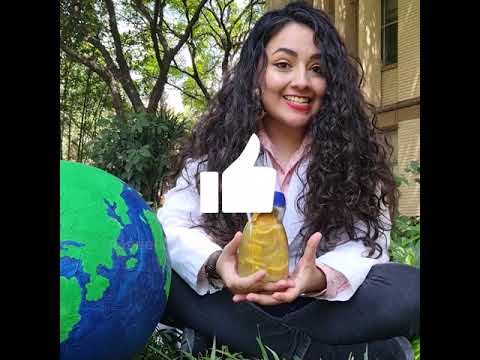
Today is International Youth Day!It is the opportunity to salute the incredible work done on the ground by young people all around the world who take concrete actions to improve livelihoods in their communities, achieve peace and food security, and build a brighter future through sustainable land management and landscape restoration. To give you an idea of what youth empowerment and commitment can achieve in all parts of the world , we present the following virtual events:Panel discussion “Sustainable food production and consumption”Moderated by the Youth Caucus, featuring four young women presenting the situation in their respective countries, discussing plant-based diet, food waste, the importance of education to reduce child obesity, and more. At 16:00 CET on our Facebook pageLand Heroes Recognition session – Ciencia Mágica from MexicoUNCCD and CONAFOR will hand out a certificate to Alondra Jazmín Fraustro Cardiel, co-founder of Ciencia Mágica for her impactful work with students and families in reconnecting communities with nature and reflect on sustainable agriculture, as well as reducing food waste by making home-made products out of fruits peels. At 5:00 CET on Ciencia Mágica Facebook page.What can YOU do? – Land Heroes give you tips!Land Heroes make a difference every day, through their actions. Some of them grow trees, others implement green energy systems, and some even see art material where others see trash!** Coming up soon: the Land Heroes Series! ** A series of webinars featuring Land Heroes sharing their vision and experiences to a live audience. Comments and questions are welcome… stay tuned to be inspired and become part of the solution!“Nuclear Disarmament is the only route to World Peace”Land Hero Kehkashan Basu is celebrating the founding of her organization Green Hope today, with an International Sustainability Debate on the motion “Nuclear Disarmament is the only route to World Peace.At 17:00 CET on Green Hope Facebook page
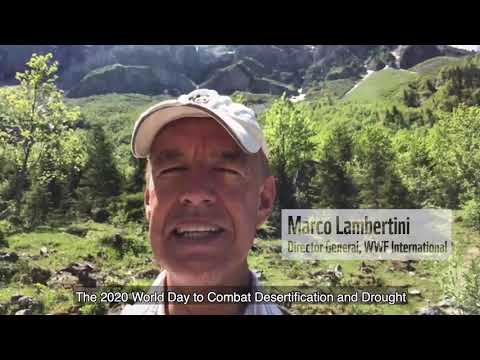
The first-ever online global observance of Desertification and Drought Day has proven to be a global success, thanks to the support and contributions of many prominent public figures and organizations.