Russia and UNCCD strengthen cooperation on land restoration, drought resilience and rangelands across Eurasia
-
26 June 2026
-
Press release
-
Rangelands and pastoralists
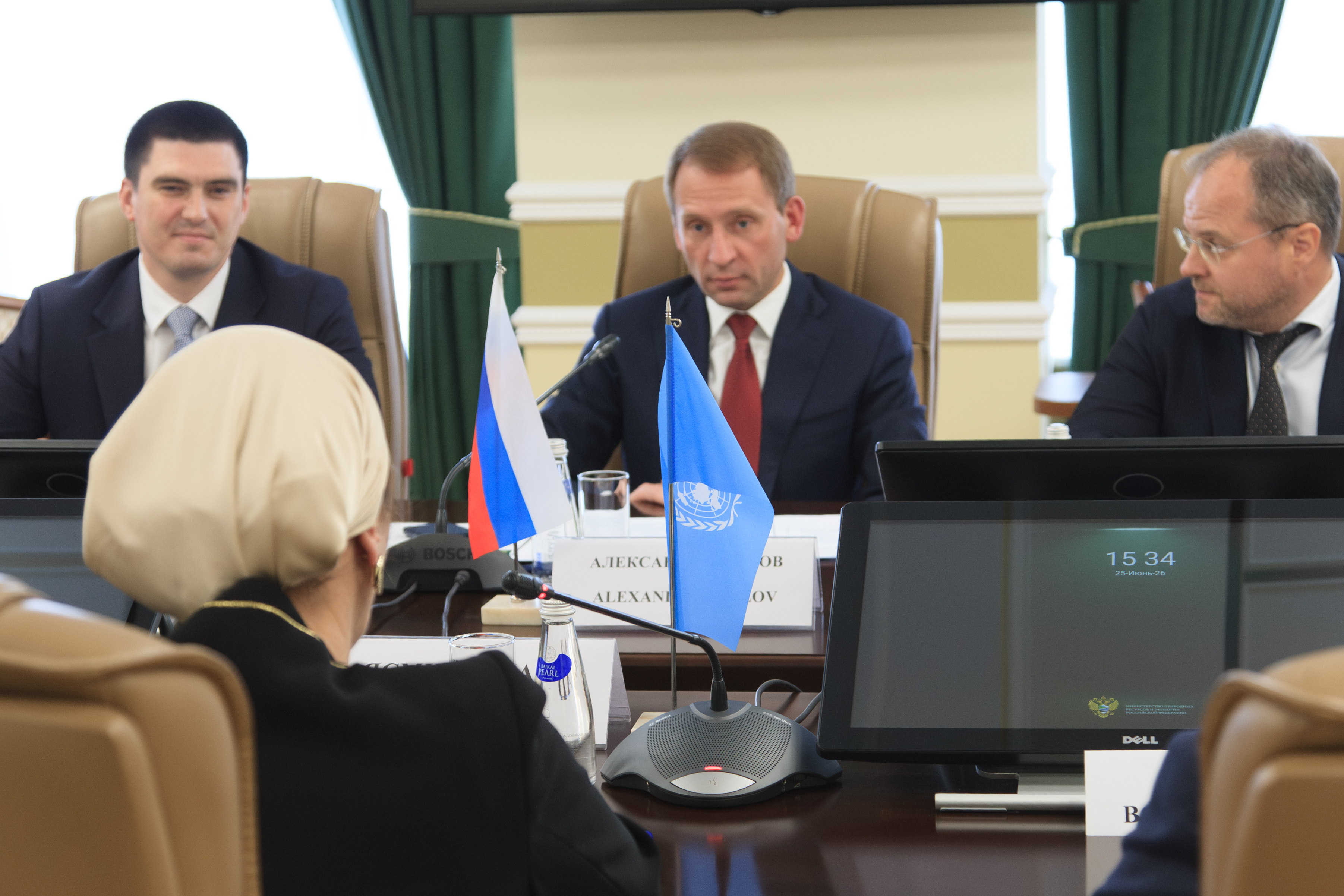
Moscow/Bonn, 26 June 2026 – From the grasslands of Kalmykia and the North Caucasus to the vast steppes that stretch across Eurasia, land has long connected people, cultures and livelihoods across one of the world's largest rangeland regions.
Today, that shared landscape also connects countries facing common challenges, from land degradation and drought to food security and ecosystem resilience.
Russia occupies an important place within this landscape. Spanning Europe and Asia, it is home to an estimated 70–80 million hectares of rangelands and natural pastures. These landscapes support biodiversity, pastoral livelihoods and sustainable livestock production while contributing to regional efforts to address land degradation and drought.
As pressures on land and water resources grow across Eurasia, cooperation is becoming increasingly important to address land degradation and drought. These shared challenges brought Yasmine Fouad, Executive Secretary of the United Nations Convention to Combat Desertification (UNCCD), to Moscow on 25–26 June to advance scientific cooperation, sustainable land management and regional initiatives across Eurasian drylands and rangelands.
During her visit, the Executive Secretary of the UN Convention to Combat Desertification (UNCCD) met with senior representatives of the Russian Federation from the foreign affairs, environment and agriculture sectors, including Ruslan Edelgeriyev, Aide to the President of the Russian Federation and Special Presidential Representative on Climate and Water Resources; Alexander Kozlov, Minister of Natural Resources and Environment of the Russian Federation; Oxana Lut, Minister of Agriculture of the Russian Federation; and Alexander Alimov, Deputy Minister of Foreign Affairs of the Russian Federation.
They discussed priorities for addressing land degradation and drought across Eurasia, including the role of science, knowledge exchange and cooperation. Participants also exchanged views on preparations for the seventeenth session of the Conference of the Parties (COP17) to the UNCCD, which will take place in Ulaanbaatar, Mongolia, from 17 to 28 August 2026.
The exchanges reaffirmed the longstanding cooperation between the Russian Federation and the UNCCD and a shared commitment to healthy and productive landscapes across the region, while highlighting the growing importance of land restoration and drought resilience for food security and sustainable development.
A key outcome of the visit was the signing of a Memorandum of Understanding (MoU) between UNCCD and the Institute of Geography of the Russian Academy of Sciences. The agreement builds on longstanding cooperation between UNCCD and Russian scientists, strengthening the link between science, policy and action on land degradation and drought.
The visit comes at a critical moment as countries across Eurasia intensify cooperation to address growing pressures on land, water and food systems.
Globally, up to 40 per cent of the Earth's land is degraded, affecting nearly half of humanity. Land degradation already costs the global economy nearly USD 900 billion every year, while droughts generate at least USD 300 billion in annual losses.
In his opening remarks, Ruslan Edelgeriyev, Aide to the President of the Russian Federation and Special Presidential Representative on Climate and Water Resources, noted that preparations for COP17 are entering a decisive phase and stressed that it is particularly important for countries in the region to approach the forthcoming negotiations with “a common assessment, a shared understanding of priorities and coordinated positions.” Referring to the Silk Road Caravan, he described it as “a symbol of our shared responsibility for preserving land, water and ecosystems,” whose condition underpins the stability of the entire region.
Eurasian rangelands extend for more than 8,000 kilometres from the Black Sea to the Mongolian Plateau and account for approximately one quarter of global rangelands. They play a vital role in sustaining communities, maintaining healthy ecosystems and helping countries adapt to drought and climate variability.
Globally, rangelands cover 54 per cent of the Earth's land surface and support around two billion people, including an estimated 500 million pastoralists. They provide one-sixth of the world's food supply and 70 per cent of livestock feed, making them essential to food security, rural economies and ecosystem health. Yet many of these landscapes are under increasing pressure from unsustainable land use, climate change and drought.
" The Russian Federation has been an important partner of the UNCCD, contributing to international efforts to address land degradation, drought and sustainable land management," said UNCCD Executive Secretary Yasmine Fouad.
" Our discussions in Moscow reflected a shared understanding that land degradation, drought and food insecurity transcend national borders and require collective responses. Working together across governments, scientific institutions and regional networks will be essential to advancing practical solutions, building resilience and supporting sustainable development across Eurasia”.
That spirit of cooperation was also reflected in the Executive Secretary's participation in the thirteenth meeting of the Desertification, Land Degradation and Drought Northeast Asia Network (DLDD-NEAN), hosted by the Russian Federation for the first time.
Bringing together countries from across Northeast Asia, the network serves as a platform for scientific exchange, policy dialogue and joint action on shared challenges, including land degradation, drought and sand and dust storms, demonstrating the value of regional cooperation in addressing environmental challenges that cross borders.
The International Year of Rangelands and Pastoralists 2026 has brought renewed global attention to the importance of rangelands and the communities that depend on them. Across Eurasia, pastoral communities have shaped landscapes, cultures and economies for centuries while helping maintain the health and productivity of some of the world's most extensive grazing lands.
This year, that common heritage has been highlighted through the Silk Road Caravan, a UNCCD flagship initiative that follows historic routes across the Eurasian rangelands while showcasing efforts to restore land, strengthen drought resilience and support pastoral communities. The Russian segment of the journey crossed Dagestan, Kalmykia and Astrakhan, highlighting both the challenges facing drylands and the opportunities offered by sustainable rangeland management and restoration.
Through stronger scientific partnerships, regional dialogue and practical cooperation on the ground, countries across the region are helping build more resilient landscapes, communities and food systems in the face of increasing environmental pressures.
Documents
Photo Gallery
UNCCD Executive Secretary Yasmine Fouad meets with Alexander Kozlov, Minister of Natural Resources and Environment, during her official visit to Moscow.

UNCCD Executive Secretary Yasmine Fouad in discussion with Ruslan Edelgeriyev, Aide to the President of the Russian Federation and Special Presidential Representative on Climate and Water Resources.

UNCCD Executive Secretary Yasmine Fouad meets with Oxana Lut, Minister of Agriculture of the Russian Federation, during her official visit to Moscow.