Stories
Latest
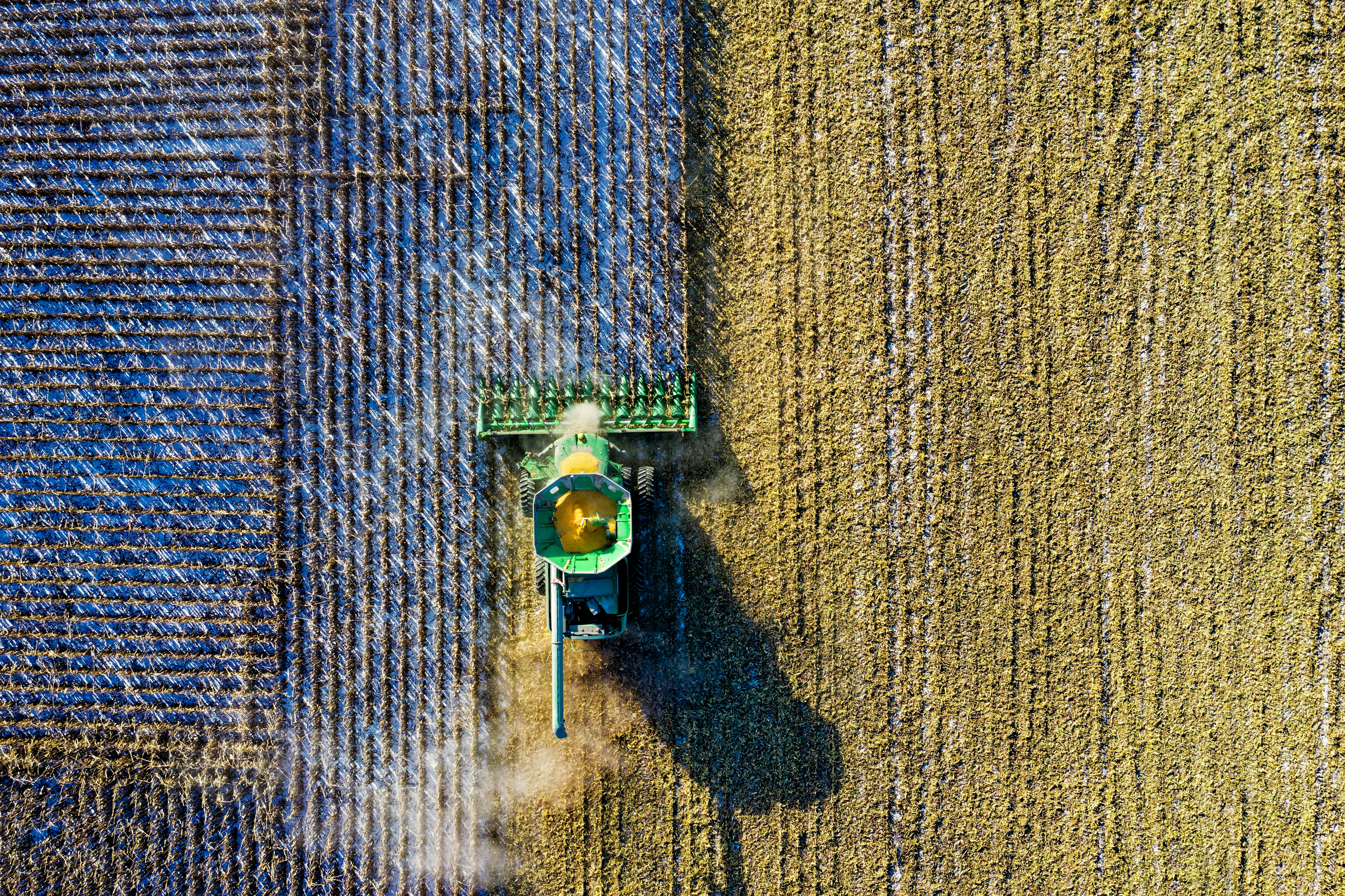


The International Day of Forests is observed on 21 March every year. This year, a special event to observe the Day was held at the Food and Agriculture Organization of the United Nations (FAO) headquarters in Rome under the theme, “Forests and energy”. The observance was held in conjunction with the Global Symposium on Soil Organic Carbon which is taking place until 23 March. The UNCCD Executive Secretary Monique Barbut made the following statement at this special observance event. The Forest – Energy nexus Excellency, Distinguished guests, Dear colleagues and friends, Province after province around the Mediterranean was turned to desert, 2000 years ago, by the rapid expansion of the Roman Empire and an urgent need for food, fuel and shelter. It reminded me of a quote by the French philosopher François-René de Chateaubriand who once said “Forests precede civilizations and deserts follow them”. It seems our civilization has not progressed that far in 2000 years! • Every 60 seconds -- we cut down 15 hectares of forest primarily to make room for food or energy production. • Between 1990 and 2015, the world lost some 129 million hectares of forest - an area the size of South Africa. When we take away the forest it is not just the trees that go. The entire ecosystem begins to fall apart. With dire consequences for us all. In terms of climate change and the water cycle certainly - but also in terms of future energy provision. • Deforestation and forest degradation are responsible for just over 17% of all man-made greenhouse gas emissions. For now, some 296 gigatonnes of carbon are stored in the world’s forests in both above and below ground biomass. But for how long? The need for food, fuel and shelter is still turning forests to deserts every day. • For every million kilos of beef exported from South America some 45,000 hectares of rainforest are cleared. • And in many low-income countries fuel wood is still the most important forest product - it represents 93% of the total harvested wood. The 300 million people who live in forests worldwide are counting on us to break the spiral of forest loss and degradation while allowing people to eat and have access to the energy, water and incomes the forest provides. So, how might we approach this? In my mind, we can manage the trade-offs better - in particular, getting the choices right where land use, water and energy collide. The time for small scale “pilot project” is coming to an end. We know that sustainable, efficient technologies and alternatives - to charcoal and fuel wood – work if they are in the hands of consumers. Our bio-fuels and hydro-electric strategies, while well-meaning, can sometimes be low carbon but not truly sustainable or friendly to the forests or the land. We can reflect a little more perhaps on these unintended consequences and revisit how we approach these strategies. While, if we shift our consumption patterns and sustainably manage and rehabilitate the degraded land we have outside forests; there will be less pressure for agricultural expansion into forests. I would like to see techniques like agroforestry go mainstream, for example. Above all, a new integrated way of doing business is something that would benefit everyone. The 105 countries participating in the Land Degradation Neutrality Target Setting Programme with UNCCD account for example represent more than 54 percent of global forest cover. Just these 105 countries have lost 64 million ha of forest between 1990 and 2015. Most of these countries will include specific forest-based targets such as increasing the amount of forested area or its productivity in their LDN targets. We would love to be working with you, indeed with all forestry stakeholders, to get the land, forest and energy communities working together. To get SDG 15 and SDG 7 delivered together. Man-made deserts should not follow mankind’s “so-called” civilization. I very much welcome the day the forest community will put me out of a job. Thank you.

According to the Kenyan Ministry of Environment and Natural Resources, over 80% of land in Kenya is classified as arid and semiarid. These areas are home to approximately 10 million people, 50% of Kenya’s livestock, and 70% of wildlife.As stated by the Principal Secretary in the State Department of Environment in Kenya, Mr. Charles Sunkuli, “land Degradation, which is driven by harsh ecological conditions and unsustainable land management practices, is a threat to food security and sustainable development, and continues to threaten livelihoods countrywide”.In order to address this issue, Kenya is currently among 105 countries committed to set national Land Degradation Neutrality (LDN) targets. The inception workshop to set Kenya’s targets for LDN was held in Nairobi 22 - 23 February 2017, with over 50 participants from various institutions nationwide. During his opening speech, Mr. Sunkuli also announced that: “Kenya has prioritized the issue of halting land degradation across sectors, in order to enhance the attainment of food security through sustainable land management practices, water harvesting and land based initiatives”.Kenya has been playing a leadership role in forging action on LDN: In October 2016, Nairobi hosted the fifteenth session of the Committee of the Review of Implementation of the UN Convention to Combat Desertification (CRIC 15). The issue that was deemed particularly important at CRIC15 was to move forward with LDN.During the 2016 Africa Regional Negotiators meeting in Nairobi, it was pointed out that Kenya is promoting Sustainable Land Management as a means of addressing desertification, land degradation, biodiversity and climate change.Kenya has mapped the United Nations 17 Sustainable Development Goals (SDGs), where some of the specific key areas of focus include: environment, agriculture, food security, and halting land degradation. In line with this, Kenya has embarked on integrating the SDGs into its Development Plan.Land Degradation Neutrality calls for securing enough healthy and productive natural resources by avoiding degradation whenever possible and restoring land that has already been degraded. Better management practices and better land use planning can improve economic, social and ecological sustainability for present and future generations. In the following months Kenya is set to work on establishing the national LDN baseline and targets. Subsequently this achievement will greatly contribute to advancing national sustainable development priorities, such as the National Climate Change Action Plan and the Green Economy Initiative. For more information: Simeon Hengari The Global MechanismTel: +49 177 52 663 17SHengari@unccd.int
President Hollande announces that France will participate in the investment fund for Land Degradation Neutrality (LDN Fund) In his address to the Heads of States Summit held on the occasion of the 22nd Session of the Conference of Parties (COP22) to the United Nations Framework Convention on Climate Change (UNFCCC), French President Mr. François Hollande announced his decision to join other public and private sector investors in the establishment of the LDN Fund, as part of France’s commitment to combat desertification and mobilize the necessary resources. Watch the video of Mr. Hollande’s speech in French (or jump to min. 7’45”): Discours au sommet des chefs d'Etat et de... von elysee For more information: Simone Quatrini The Global Mechanism Tel. +49 228 815 2860 squatrini@unccd.int
United Nations Secretary-General António Guterres is in Bonn, Germany, today to engage with G20 Foreign Ministers on the issues of Africa and sustainability. It is the new UN chief’s first visit to Bonn since taking office this year. Monique Barbut, current Chair of the UN Agencies in Germany and Executive-Secretary of the UN Convention to Combat Desertification says: “From Bonn, the UN is dealing with issues of burning concern for sustainable development and is indeed delivering centerpieces to the Agenda 2030.” “In the face of climate change and environmental degradation, vulnerable communities, especially those in rural areas affected by frequent droughts, are often forced to make disastrous choices. The G20 can ensure young people are secure and have a stable future.”
Monique Barbut, the United Nations Under Secretary-General and the Executive Secretary of the United Nations Convention to Combat Desertification (UNCCD), and Noriko Suzuki, Senior Vice President of Japan International Cooperation Agency (JICA) met today at the JICA Headquarters in Tokyo to discuss possible areas of cooperation for Africa’s development. Despite the fact that about 874 million hectares of Africa's land – 20 times more than arable land in Japan - is considered suitable for agricultural production, about 83 percent of which have been seriously affected by desertification. According to Food and Agriculture Organization of the United Nations, desertification could cost a loss of natural capital valued at an estimated USD1 to 3 billion per year. On the other hand, improving land and water management on just 25% of sub-Saharan Africa’s 300 million hectares of prime cropland would result in an additional 22 million tons of food. This is a significant opportunity for Africa’s development where more than 90% of the economy depends on a climate-sensitive natural resource base like rain-fed, subsistence agriculture. Restoring land will increase food security and income of the land users most of whom are the poorest farmers. This in turn helps avoiding unnecessary movement of people, and reducing current and potential fighting over resources in degraded areas. Desertification is a cause and consequence of poverty and a push factor of migration, which can be linked to greater insecurity. Therefore, addressing desertification is a key to achieving sustainable development for Africa while contributing peace and stability to the region and around the world. Against this backdrop, Barbut and Suzuki agreed to find areas of cooperation for Africa which bring multiple synergetic benefits to ongoing programmes and projects of respective organization, especially with regard to fight against land degradation, desertification and mitigation of drought. Earlier, UNCCD and JICA agreed to co-partner “African Initiative for Combating Desertification to Strengthen Resilience to Climate Change in the Sahel and the Horn of Africa”, along with the Government of Kenya, the Government of Senegal and other partners. The areas of further exploration were discussed on the following: Support to countries to promote measures to combat desertification particularly through networking, knowledge-sharing and improving access to finance. Support to countries to achieve land degradation neutrality in view of achieving Sustainable Development Goal 15. Addressing the root causes of instability in Africa, particularly migration and conflict related to natural resource degradation through harmonization with 3S Initiative on Sustainability, Security and Stability. Further, joint outreach and awareness-raising activities were proposed, taking opportunities of major global platforms on desertification and Africa’s development such as Tokyo International Conference of African Development (TICAD) and the UNCCD Conference of the Parties (COP). The next UNCCD Conference of the Parties (COP13) is scheduled from 4-15 September 2017 in Ordos, China. Stressing the global benefits of restoring Africa’s land, Barbut said, “JICA’s long history of development support is well recognized in Africa. Land is still the most important mechanism for lifting millions of people from poverty, and our partnership in sustainable land management and drought management will accelerate the pace towards achieving the Sustainable Development Goals on Land, Poverty and Climate in Africa .” Suzuki commented, ”Countries’ ownership and global partnership are indispensable to addressing the mounting development challenges in Africa and achieving the world that no one left behind. The partnership with the UNCCD which plays a critical role in Africa as a convention to combat desertification is a great opportunity for JICA to accelerate our contribution to Africa’s development and peace and stability in the world.” At the end of the meeting, Barbut and Suzuki agreed to continue the dialogues towards developing concrete joint partnership aiming tangible outcomes. For further information, UNCCD Yukie Hori, Spokesperson and Communication Team Leader yhori@unccd.int +49 228 815 2829 www.unccd.int JICA Mari Miura, Deputy Director, Natural Environment Team 2, Forestry and Nature Conservation Group, Global Environment Department Miura.Mari@jica.go.jp +81-3-5226-9534 www.jica.go.jp/english/ **** About UNCCD The United Nations Convention to Combat Desertification (UNCCD) is the only legally binding international agreement on land issues. The Convention promotes good land stewardship. Its 195 Parties aim, through partnerships, to implement the Convention and achieve the Sustainable Development Goals. The end goal is to protect our land, from over-use and drought, so it can continue to provide us all with food, water and energy. By sustainably managing land and striving to achieve land degradation neutrality, now and in the future, we will reduce the impact of climate change, avoid conflict over natural resources and help communities to thrive. About JICA Japan International Cooperation Agency (JICA), as the implementing agency for providing Japan’s official development assistance (ODA) in an integrated fashion, carries out international cooperation with developing countries. JICA supports the resolution of problems faced by developing countries by combining a variety of approaches as well as expertise, technologies and funds owned by Japan with the vision of “dynamic development that benefits all people.” JICA has set four Strategic Objectives adapted to the agendas of the three Rio conventions and the SDGs, which include sustainable use of natural resources to improve livelihoods of vulnerable communities.
Majority of people in Japan tend to think desertification is happening far away from them. During the symposium today, they learned why they should care and take action in the fight against desertification and land degradation. “Japan is not immune from the impact of land degradation,” said Monique Barbut, UNCCD Executive Secretary, speaking at the opening of the symposium. “For example, the Japanese government aims to increase the food self-sufficiency rate to 45%. It will be tough when nearly 30% of the agricultural land in Japan is already degraded. Meeting food self-sufficiency targets means not just food production increases but should also mean land restoration and rehabilitation in Japan.” She further mentioned the potential impact of land degradation on international peace and security because the loss of productive land is driving people to make risky life choices. Mr. Yoshihiro Seki, Vice Minister for Environment in Japan, introduced Japan’s cooperation on the drylands issues through bilateral and multilateral cooperation. He stressed the importance of land restoration in achieving the 17 Sustainable Development Goals. The symposium participants then heard from three keynote speakers: Prof. Kazuhiko Takeuchi, Director, IR3S, University of Tokyo and Senior Visiting Professor, UNU-IAS; Prof. Uriel Safriel, Professor Emeritus, Hebrew University of Jerusalem; and Ms. Majig Tungalag, Director, Department of Forest Policy and Coordination, Ministry of Environment, Green Development and Tourism, Mongolia. Two panel discussions followed, the first one focusing on the UNCCD process and the second about the role of science and technology in achieving Sustainable Development Goal target 15.3 by combatting desertification to achieve a “land degradation-neutral world” by 2030. The symposium was held in the United Nations University in Tokyo, where the observance of the International Year for Desert and Desertification was held 11 years ago, and in commemoration of over the 20 years of the implementation of the United Nations Convention to Combat Desertification (UNCCD). It was co-organized by the UNCCD secretariat along with the Ministry of Environment in Japan and Tottori University. Information about the symposium (English and Japanese): http://www.svc-net.jp/201727/