News & stories


Latest news & stories
The Olympic snowboarding champion will mobilize young people and sports audiences to support healthy land, resilient communities and ecosystems. Bonn, Germany, 12 July 2026 — The UNCCD has named Chinese Olympic snowboarding champion Su Yiming its newest Sport4Land Champion for Resilience. The appointment recognizes Su’s inspiring journey, his commitment to empowering young people through sport and his growing leadership in promoting resilience both on and the beyond slopes. At just 22, Su has already established himself as one of the world’s leading snowboarders. He first captured global attention at the Beijing 2022 Olympic Winter Games, where he won gold in Big Air and silver in Slopestyle, becoming China’s youngest Winter Olympic champion and the country’s first Olympic gold medallist in snowboarding. At Milano Cortina 2026, he reinforced his place among the sport’s elite with another Olympic gold in Slopestyle and bronze in Big Air, demonstrating the resilience and adaptability required to remain at the highest level of the sport. The same determination also shapes Su’s work beyond elite competition. Inspired by his father’s years of volunteer coaching, Su established the Super Sports Foundation to expand access to sports education, support grassroots initiatives and help more young people pursue their ambitions. He also serves as a Special Olympics East Asia Regional Ambassador, reflecting his belief that sport should create opportunities that are inclusive and open to all. Snowboarding exists because of healthy mountain environments. Reliable snowfall, resilient landscapes and thriving ecosystems are not simply the backdrop to the sport, they make it possible. As climate change accelerates land degradation, biodiversity loss and water stress, athletes like Su can help inspire new generations to understand that protecting nature also means protecting the future of sport and the communities that depend on healthy land. For Su, resilience extends beyond athletic performance. It is also about creating opportunities for others and protecting the natural environments that have shaped his journey. Speaking about his appointment, he said: "Protecting the land is protecting the future of every turn we carve, every run we chase and every moment we find freedom on snow. Today, I call on every young person to be a champion for their own corner of the Earth—one small daily act at a time. Let’s turn our love for the outdoors into action that heals the ground beneath us.”Su joins a growing network of Sport4Land Champions using the universal language of sport to raise awareness of land restoration, drought resilience and sustainable land management. Launched during the Paris 2024 Olympic and Paralympic Games, the UNCCD initiative brings together athletes from around the world to inspire action for healthy land and encourage fans to become part of the solution. As Sport4Land Champion for Resilience, Su will work with UNCCD to help engage young people and sports communities in protecting and restoring land. Through advocacy, awareness-raising and public engagement, he will champion the idea that resilience is built not only through perseverance and determination, but also through safeguarding the natural environments that sustain life, livelihoods and sport itself.

Ulaanbaatar, Mongolia, 7 August 2026 – The Silk Road Caravan, a global outreach campaign shining the spotlight on rangelands and pastoralists, today begins its journey across Mongolia, just days before the start of the seventeenth session of the Conference of the Parties (COP17) to the United Nations Convention to Combat Desertification (UNCCD) in Ulaanbaatar on 17 August. For millennia, the Mongolian steppe has witnessed the movement of people, goods and ideas across Eurasia. The Orkhon Valley, one of Mongolia's most important historical landscapes, served as the political and cultural centre of successive nomadic empires, while generations of pastoralists developed a way of life that still defines Mongolia today. This August, that story continues. Ahead of UNCCD COP17, the UNCCD Silk Road Caravan arrives in Mongolia after travelling more than 6,000 kilometres, across Eurasia. Along the way, it has brought together pastoralists, scientists, policymakers, young people and local communities to share experiences and practical solutions for restoring rangelands and building resilience to increasing drought conditions. Launched by the UNCCD in support of the International Year of Rangelands and Pastoralists 2026 (IYRP 2026), the Silk Road Caravan follows the spirit of the historic routes that once linked Asia and Europe. Since departing Türkiye in May, participants have travelled through the Russian Federation, Uzbekistan, Kazakhstan, Kyrgyzstan and China, visiting restoration initiatives and meeting local communities along the way. The journey has highlighted how dedicated efforts and cooperation at all levels can help restore degraded land. Dr. Yasmine Fouad, Executive Secretary of the UNCCD, said: Throughout the Silk Road Caravan journey, we have seen how countries and communities are managing and restoring rangelands that are inseparable from their identities, cultures, economies and ways of life. Every stop along the journey has reinforced one simple truth: people are at the heart of restoration. Those experiences remind us that there is no single path to restoration. As we gather in Mongolia for COP17, our responsibility is to turn these local experiences into global action, strengthening international cooperation and investing in the people who have been caring for these landscapes for generations." Ts. Sandag-Ochir, Minister of Environment and Climate Change of Mongolia: Land degradation, desertification and climate change know no borders. They are shared challenges that demand shared solutions. The Silk Road Caravan arrives in Mongolia after connecting experiences, local solutions and the voices of people across countries along its journey. It is particularly meaningful that the Caravan’s journey concludes where UNCCD COP17 begins. Our goal is to carry the experiences and lessons gathered along the way forward in Ulaanbaatar — turning them into concrete commitments, stronger cooperation and practical solutions that can be put into action.Tsagaankhuu Iderbat Minister of Food, Agriculture and Light Industry of Mongolia, said: Mongolia has a long tradition of pastoralism and a deep connection to its vast rangelands, which have shaped our nomadic culture for generations. Recognizing the global importance of rangelands and pastoralists, Mongolia was proud to initiate the proposal that led the United Nations General Assembly to proclaim 2026 the International Year of Rangelands and Pastoralists. The arrival of the Silk Road Caravan in Mongolia, followed by UNCCD COP17, provides a unique opportunity to bring global attention to rangelands, land degradation and climate change. It also reminds us that the knowledge and experience of pastoralists, developed over generations of living in harmony with nature, remain an essential part of the solutions we need today. Rangelands cover 54 per cent of the Earth's land surface, support around two billion people, provide nearly 70 per cent of global livestock feed and store vast amounts of carbon. Yet up to half are already degraded, putting biodiversity, food production and rural livelihoods at risk. The experiences gathered along the Caravan will now be carried into COP17, where countries will consider the next steps for restoring and protecting rangelands. In Mongolia, rangelands are the foundation of pastoral life. Covering around 70 per cent of the national territory, they support the livelihoods of approximately one third of the population and form one of the world's largest remaining pastoral landscapes. Yet these same landscapes are under increasing pressure. Nearly 77 per cent of Mongolia's land is affected by degradation. Droughts are becoming more frequent, while the annual number of sand and dust storm days has more than tripled since the 1960s. In 2023–2024, a devastating combination of summer drought followed by the harsh winter known as dzud resulted in the loss of more than seven million livestock. The disaster showed how exposed pastoral communities are to drought and climate extremes. Avirmed Gan-Ochir, an Animal Breeding Specialist at the Greengold Mongolian Rangeland Research Center and a participant in the Silk Road Caravan, said: " As someone who grew up on Mongolia's rangelands, it has been inspiring to travel through Uzbekistan and Kazakhstan and meet pastoralists whose lives are so different, yet so similar to my own. Every community has taught us something new, from how they adapt to a changing climate to how they preserve traditions that have been passed down through generations. I am proud that the Caravan is now arriving in Mongolia, and I look forward to welcoming everyone to our country, sharing our own experiences, and continuing this exchange of knowledge ahead of COP17. Aldarjavkhlan Jukov Minister of Culture, Sports, Tourism and Youth of Mongolia, said: "For centuries, the Silk Road connected countries, peoples and civilizations. As the Silk Road Caravan reaches Mongolia, it offers an opportunity to share our nomadic culture, traditions and long-standing heritage of living in harmony with nature. Hosting the Caravan's final stage and welcoming the world to UNCCD COP17 creates a meaningful connection between Mongolia's cultural heritage and today's global challenges, including land degradation, desertification and ecosystem restoration. It is an opportunity to learn from the knowledge of the past while working together towards a more sustainable future." The challenges facing Mongolia are shared by many dryland countries. From 17 to 28 August, COP17 will bring together governments, scientists, Indigenous Peoples, pastoralists, civil society organizations, businesses and international organizations in Ulaanbaatar to discuss practical solutions for land restoration, drought and sustainable rangeland management. As the first of this year's three Rio conventions’ Conferences of the Parties (COP), it is expected to help shape the international agenda on land. Coinciding with the International Year of Rangelands and Pastoralists, UNCCD COP17 will also highlight the vital role of rangelands in supporting food security, biodiversity conservation, climate resilience and rural livelihoods. Silk Road Caravan participants will spend a week travelling across Mongolia, from the Gobi Desert to the forests and grasslands of the country's centre. They will meet nomadic herder families, researchers, local authorities and pastoral cooperatives, and visit land restoration projects. The route includes Hustai National Park, the UNESCO World Heritage-listed Orkhon Valley Cultural Landscape, the Ramsar-listed Ugii Lake and the Mini Naadam festival. Participants will see first-hand how people across Mongolia's rangelands are responding to land degradation and drought. They will also join activities marking the International Year of Rangelands and Pastoralists before reaching Ulaanbaatar in time for COP17. NOTE TO EDITORS Media opportunities During the Mongolian leg of the Silk Road Caravan, accredited media will have opportunities to: Visit land restoration sites across the Gobi Desert and central Mongolia. Meet nomadic herder families and pastoral cooperatives. Learn about community-based rangeland restoration and sustainable grazing practices. Visit Hustai National Park, the UNESCO World Heritage-listed Orkhon Valley Cultural Landscape and the Ramsar-listed Ugii Lake. Interview international Caravan participants, Mongolian experts and UNCCD representatives. Cover the conclusion of the Silk Road Caravan ahead of the opening of UNCCD COP17. Media accreditation Accreditation for media representatives covering UNCCD COP17 is now open. Journalists are encouraged to apply through the United Nations Online Registration System (ORS), the official platform for media accreditation. Further information for media is available at the COP17 media page. Follow COP17 Follow @UNCCD on X, Instagram, LinkedIn and Facebook. Official hashtag #COP17Mongolia Additional hashtags: #UNCCDCOP17 | #RestoringLandRestoringHope | #UNited4Land | #HerLand | #Sport4Land | #Youth4Land Resources Media kit UNCCD COP17 website Host country website UN WebTV – Live broadcast of key plenary sessions with live interpretation in all six UN languages UNCCD COP17 Visual Assets and Branding Resources Earth Negotiations Bulletin (daily coverage, photographs and analysis) About the Silk Road Caravan For centuries, caravans travelling on the Silk Road carried not only goods, but also ideas, cultures and knowledge between civilizations. The Silk Road Caravan seeks to revive that spirit of connection, sharing stories of people working to restore land, protect ecosystems and sustain pastoral ways of life in regions where culture, land and climate are deeply intertwined. The Silk Road Caravan is a flagship UNCCD campaign linking COP16 in Riyadh (2024) to COP17 in Ulaanbaatar (2026), in support of the International Year of Rangelands and Pastoralists 2026. From the deserts of the Arabian Peninsula to the vast grasslands of Eurasia, this symbolic and physical caravan journey will shine a light on rangeland ecosystems and the pastoral communities that have shaped life along these routes for generations. It aims to raise awareness of the critical role of rangelands, which cover more than half of the Earth’s land surface and support two billion people globally. Through a combination of field visits, storytelling, and a documentary film, the initiative highlights both the challenges of land degradation and the solutions emerging from local communities. More information about the Silk Road Caravan: silkroadcaravan.org About UNCCD The United Nations Convention to Combat Desertification (UNCCD) is the global vision and voice for land. We unite governments, scientists, policymakers, private sector and communities around a shared vision and global action to restore and manage the world’s land for the sustainability of humanity and the planet. Much more than an international treaty signed by 197 Parties, UNCCD is a multilateral commitment to mitigating today’s impacts of land degradation and advancing tomorrow’s land stewardship in order to provide food, water, shelter and economic opportunity to all people in an equitable and inclusive manner.

A new report shows progress in restoring land, creating jobs and building resilience across the Sahel—while highlighting the scale of the work still aheadIn Garaké, Niger, a pond once choked by invasive plants has become a source of food, income and hope. After restoration work cleared the water and opened the land for crops, Abdoulaye Aboubacar began growing rice, maize, sugar cane, potatoes and sweet potatoes. He now feeds his family, sells the surplus and invests the income in other small businesses.Stories like his bring to life a new report marking five years of the Great Green Wall Accelerator an effort launched to help turn one of Africa’s most ambitious environmental visions into tangible progress for communities on the ground.Led by African countries and supported by partners including the United Nations Convention to Combat Desertification (UNCCD), the Great Green Wall (GGW) initiative has evolved from a bold vision into a growing effort to deliver results on the ground and at scale.Senegal / Kaolack regionThe world's largest living structureOften described as the world’s largest living structure, it spans a vast mosaic of restored landscapes, farms, water systems and communities stretching across Africa’s drylands. Founded in 2007 by the African Union and UNCCD, the Great Green Wall extends across 156 million hectares — from the Senegal River Basin in the west to the Horn of Africa in the east. The 11 founding member countries are Burkina Faso, Chad, Djibouti, Eritrea, Ethiopia, Mali, Mauritania, Niger, Nigeria, Senegal and Sudan.Five years into the Accelerator, the story is evolving—from ambition and scale to a stronger focus on tracking impact, improving transparency and building systems that can show what is working. It is no longer just about planting trees, but about whether large-scale restoration can deliver real change, fast enough, in one of the world’s most vulnerable regions.The initiative has long been thought of as a wall of trees. It’s more. A continental effort to restore degraded land, strengthen food systems and create new economic opportunities, while expanding access to clean energy and building resilience in one of the regions most exposed to climate change, land degradation and drought.Fetching water in NigerThe GGW Accelerator: Turning pledges into results on the groundLaunched in 2021 after the One Planet Summit, where major technical and financial partners pledged more than $19 billion, the Accelerator was created to improve coordination, track funding and help countries measure results. Five years later, the picture that emerges is still taking shape—but it is beginning to show how this effort is changing the way the Great Green Wall is planned, financed and monitored.Central to the Accelerator's success is its close partnership with the Panafrican Agency of the Great Green Wall (PAGGW), the intergovernmental body that coordinates regional implementation across borders. Together, the GGW Accelerator and the PAGGW work to convert financial commitments into tangible, measurable results across Africa's drylands, building the institutional architecture required for reporting and monitoring progress. The Observatory now tracks over 389 projects. But the data also tells a more complex story. Fewer than 90 currently report data aligned with the initiative’s harmonized indicators, highlighting both early progress and significant gaps in reporting that are still being addressed. Stonewall construction in Ethiopia's Tigray regionEven with these limitations, the available data points to early but meaningful gains: 1.66 million hectares under restoration, 24 million tons of CO₂ equivalent sequestered or mitigated, 4.6 million jobs created, 46 million beneficiaries reached and 2,315 MWh of clean energy produced.These results should be understood in the context of long-term land restoration processes, which can take years—sometimes decades—to fully materialize at scale, especially since reporting on the totality of GGW projects remains an iterative process that remains undergoing.For partners already investing in the Great Green Wall, the report offers a clearer —though still evolving— sense of how support is translating into results on the ground. For those considering future engagement, it points to something equally important: a growing architecture for transparency, accountability and investment readiness.Employment, women's leadership and the human face of restorationThe jobs figure is among the strongest early indicators of momentum. Against a 2030 target of 10 million jobs, the reported total suggests that restoration is not only an environmental undertaking but also an economic one. Across the Sahel, the Great Green Wall is increasingly being framed as a platform for rural enterprise, women’s leadership, youth employment and locally led adaptation.Reversing land degradation in Burkina FasoThe report’s human stories bring that shift into focus. In Mali, a women’s cooperative received tools, training and a tricycle that transformed the daily work of transporting organic fertilizer. The cooperative later expanded into processing local crops into enriched flour and was granted four hectares of land by the municipality. "We are leaders, innovators, and providers. Our daughters now see a future. Our municipality recognized our progress by granting us four hectares of land to scale up production. This is proof that women's leadership can inspire trust and collective action." — Florence Banou, 55, leader of the AMAKENE women's cooperative, Bandiagara, Mali — supported through WFP's Integrated Resilience ProgrammeIn Chad, women trained to install and repair solar panels turned clean energy access into a new source of income and independence."Since solar panels have come to Chad, families have benefitted a lot and women's lives have been transformed. Before, I depended on my husband. But today, we make a profit from each installation. Ever since I learned this job, I've wanted my sisters to follow my example." — Adouia Brema, Chad — trained to install and repair solar panels through a World Bank-supported initiativeSuch examples help reframe the Great Green Wall for its next phase—one that places greater emphasis on systems, data, and investment readiness alongside on-the-ground impact. They also point to three areas shaping what comes next: communication, innovative finance and transboundary land and water management. Together, they aim to build a stronger narrative, unlock financing tools such as green bonds, carbon credits and blended finance and align land restoration with shared water governance across borders. The next generation of land stewardsOne framework, one platform: Building a common evidence baseA central achievement is the move toward a common evidence base. This responds directly to longstanding challenges around fragmented data, coordination, and visibility of results. The Harmonized Results Management Framework, developed and validated with ten of the 11 countries in close collaboration with the PAGGW, gives partners a shared language for measuring progress. The GGW Observatory — launched in Ouagadougou in 2024 and now endorsed by 10 countries — builds on that foundation, offering a single platform for tracking projects, finance, results and geospatial data. Its indicators feed directly into real-time dashboards used by the GGW governments, donors and local communities.The Accelerator also supported the establishment of National Coalitions in nine of the 11 countries — bringing together Finance, Planning, Environment and Forestry ministries alongside civil society, academia, the private sector and media into whole-of-society platforms for GGW governance.Planting the seeds of the next harvest in SudanThe report also places the Sahelian effort within a wider continental frame, noting that the updated African Union Great Green Wall Strategy expands the initiative’s reach while keeping the Sahel as its foundation.The work ahead: From commitment to lasting impactThe work ahead remains substantial. Challenges persist, particularly in data completeness, coordination across actors, and the time required to translate financial commitments into on-the-ground results. Stronger national validation, more complete reporting and sustained political leadership will be needed to turn commitments into lasting impact. National coalitions, already supported in nine of the 11 countries, are expected to play a growing role in aligning ministries, donors, civil society and local actors.The PAGGW and the Accelerator will continue to use the COPs and Ministerial Councils to sustain political visibility and accountability, driving a unified 'One Africa GGW' momentum toward Mission 2030.This progress is supported by a broad coalition of partners working across the region. The next five years will be critical in turning these systems into real impact on the ground. The Great Green Wall is beginning to move from ambition to more visible and coordinated results—grounded not only in restoration, but in jobs, resilience and opportunity across Africa’s drylands.

The journey across Eurasian rangelands links land restoration with viable pastoral livelihoods on the road to Ulaanbaatar Bonn, Germany/Xilinhot, Inner Mongolia, China (17 July 2026 ) — The Silk Road Caravan today reached its 6,000-kilometer mark in northern China, exactly one month before the seventeenth session of the Conference of the Parties (COP17) to the United Nations Convention to Combat Desertification (UNCCD) opens in Ulaanbaatar, Mongolia. Since leaving Erzurum, Türkiye on 6 May on a symbolic journey connecting Riyadh COP16 to Ulaanbaatar COP17 in support of the International Year of Rangelands and Pastoralists 2026, the Caravan has travelled through Russia, Uzbekistan, Kazakhstan and Kyrgyzstan before arriving in China earlier this week. Pastoralists and researchers from Africa, Asia, Europe and South America have joined UNCCD Goodwill Ambassadors and Sport4Land champions to explore how communities across countries are restoring degraded rangelands while sustaining the livelihoods that depend on them. Rangelands cover more than half of the Earth’s land surface, support around two billion people and provide nearly 70 per cent of global livestock feed. Yet up to half are degraded or at risk. At UNCCD COP16 in Riyadh, countries adopted the Convention’s first decision devoted to rangelands, calling for stronger policies and investment, action against conversion, overexploitation and fragmentation, and a greater role for pastoralists in decisions on land management and tenure. Along the way, the Caravan has served as a living showcase of restoration in practice, gathering ideas and experiences that will help inform discussions at COP17. From dune stabilization to sustainable grazing and value-added livestock products, each stop has offered a different perspective on the Eurasian rangelands—the world's largest continuous grazing region stretching 8,000 kilometers—that are under increasing pressures from the combined effects of drought and soil erosion. Carrying the knowledge, experiences and voices gathered along the route, the Silk Road Caravan journey will continue across Mongolia before culminating at UNCCD COP17 taking place from 17-28 August under the theme of “Restoring Land, Restoring Hope.” Insights from the journey In China’s Otindag Sandy Land, willow branches are woven into grids across shifting dunes, stabilizing the sand long enough for grasses to take root. But restoration does not end with planting. Sites are monitored over time, and livestock numbers are matched to the land’s carrying capacity and local communities—including women— receive technical support and incentives to maintain restored areas. China is just one example of a broader pattern that emerged across the Silk Road Caravan's journey. Each country offered different solutions, but many pointed to the same underlying principles. In Türkiye, seasonal mobility distributes grazing pressure across the landscape and gives pastures time to recover. Around Erzurum, it also supports household economies, with milk processed locally into cheese and other products. The system depends on secure access to grazing land and the transmission of pastoral knowledge between generations. In Russia's Kalmykia region, one of the most affected by desertification, hardy dzhuzgun shrubs are transforming shifting sands into productive pasture, with survival rates of around 95 per cent. The shrubs stabilize the dunes and reduce wind erosion, allowing fodder grasses to be planted between the dzhuzgun rows. As vegetation recovers, degraded land gradually returns to productive pasture. Mobile research units monitor the results while training students in the field. Restoration here follows a sequence: stabilize the soil, rebuild vegetation, recover grazing value and monitor results. Meanwhile, Uzbekistan offered a lesson in the economics of patience. In Nurabad District, drought-tolerant pistachio trees are being established on degraded, low-productivity pastures. Local residents are paid to plant and maintain them; once the trees mature, five-hectare plots are intended for lease to lower-income families. The trees take years to yield. The model addresses a gap many restoration programmes leave open: communities need income while land recovers, and a lasting stake once it becomes productive. In Kazakhstan, soil science and new technologies are helping transform the way rangelands are managed. Decades of soil surveys, herbarium records and aerial imagery are being integrated with GPS, satellite data and digital agricultural maps. These systems can track pasture condition, water infrastructure and early signs of degradation, while supporting reporting under the UNCCD Land Degradation Neutrality framework. The resulting evidence helps detect degradation early, before land's health and productivity are compromised. In Kyrgyzstan, the Caravan journey highlighted another dimension of restoration ---one rooted in people and culture. Young activists from the Innovation Center in Bishkek brought elders and youth together through an intergenerational exchange on pastoral knowledge. On Desertification and Drought Day, 17 June, a dialogue at the Ministry of Agriculture convened policymakers, UN and international partners, researchers and pastoralists to develop recommendations on rangeland restoration and sustainable pasture management. Near Lake Issyk Kul, an association of women artisans invited Caravan participants to weave a commemorative felt carpet, demonstrating how traditional skills, value-added local products, and fair market access create resilient rural livelihoods. Message to COP17 Together, these experiences showed that while restoration solutions differ from place to place, the conditions for success are remarkably consistent and extend far beyond the countries visited by the Silk Road Caravan. What unites these examples ---and makes them scalable--- is a common set of principles: communities need the authority and incentives to sustainably manage their land; grazing pressure must remain within ecological limits; land restoration must generate economic value; women and youth must have a voice in decision-making and land health must be monitored over time. In Ulaanbaatar, the Silk Road Caravan will deliver a clear message: the most successful restoration efforts are those that strengthen livelihoods, build resilience and create economic opportunity, showing that restoring rangelands is as much a development challenge as an environmental one.

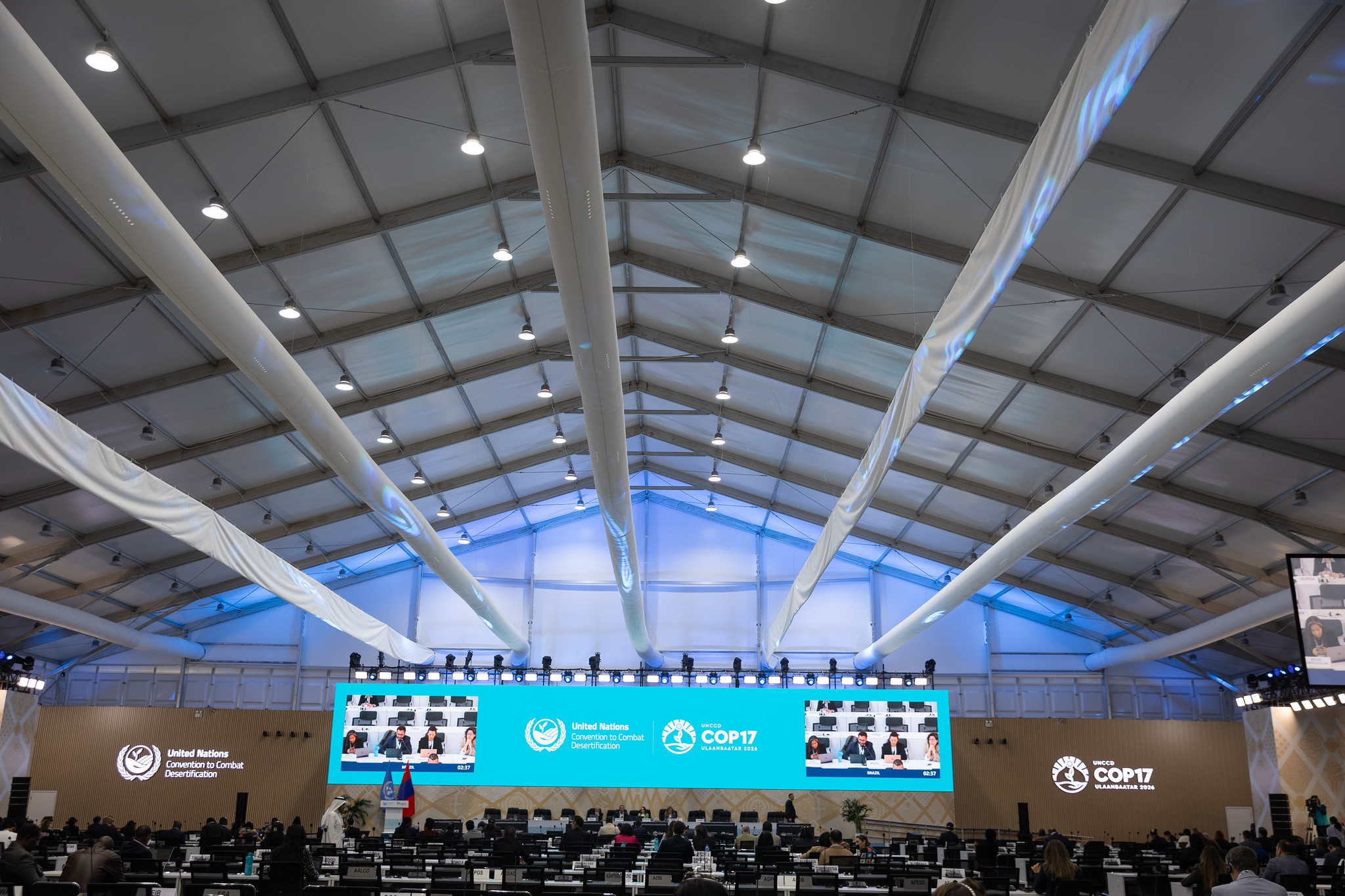
UNCCD COP17: Ulaanbaatar, Mongolia | 17–28 August 2026: Media accreditation is open

As land degradation, drought and water scarcity intensify across regions, countries are increasingly looking for ways to restore ecosystems, strengthen food systems, safeguard livelihoods, and build resilience.
