News & stories

Latest
Информация для СМИ Двадцать первая сессия Комитета по рассмотрению осуществления Конвенции (КРОК 21) пройдет с 13 по 17 ноября 2023 года в Самарканде (Узбекистан) Бонн/Самарканд, 09/11/2023 – Двадцать первая сессия Комитета по рассмотрению осуществления (КРОК 21) Конвенции ООН по борьбе с опустыниванием (UNCCD, КБО ООН) пройдет в Самарканде (Узбекистан) 13-17 ноября 2023 года. В работе КРОК 21 примут участие около 500 делегатов из 196 стран и Европейского Союза, представители гражданского общества и научных кругов, которые проанализируют прогресс в достижении стратегических целей Конвенции. Впервые с момента подписания КБО ООН одна из ее наиболее значимых встреч пройдет в Центральной Азии. Эта встреча проходит в критический момент, поскольку последние данные, представленные КБО ООН, показывают, что ежегодные потери здоровых и продуктивных земель в мире составляют около 100 млн га. При сохранении нынешних тенденций для достижения нейтрального баланса деградации земель в мире к 2030 году необходимо будет восстановить 1,5 млрд га. Однако прекращение дополнительной деградации и ускорение выполнения существующих обязательств могут превысить поставленные цели. "Засухи, лесные пожары и аномальная жара, которые мы наблюдаем по всему миру, являются симптомами климатического и природного кризисов, которые усугубляются и взаимосвязаны между собой. С 2015 года было утеряно около 4 млн кв. км здоровых и продуктивных земель - территория, равная примерно площади Центральной Азии. Мы должны срочно остановить дальнейшую деградацию земель и восстановить не менее 1 млрд га, чтобы достичь глобальных целей в области землепользования к 2030 году", - заявил исполнительный секретарь Конвенции ООН по борьбе с опустыниванием Ибрагим Тиау. КРОК 21 будет проходить в Самаркандском конгресс-центре "Шелковый путь". Стороны получат возможность проанализировать прогресс и представить рекомендации по достижению глобальных целей по предотвращению деградации земель в соответствии со стратегией КБО ООН на 2018 - 2030 годы. Основные пункты программы КРОК 21: - Открытие пленарного заседания 13 ноября (10:00-13:00), где со вступительными заявлениями выступят председатель КРОК, исполнительный секретарь КБО ООН и представитель правительства Узбекистана. - 14 и 16 ноября (13:00-15:00) на Группе по вопросам гендера КБО ООН (UNCCD Gender Caucus) соберутся международные эксперты для обсуждения земельных прав женщин как необходимого условия успеха глобальных усилий по восстановлению земель и устойчивости к засухе. - 15 ноября (10:00-13:00) состоится мероприятие высокого уровня по песчаным и пыльным бурям, организованное правительством Узбекистана. В последние годы песчаные и пыльные бури участились и усилились как в Узбекистане, так и в соседних странах. - Впервые в рамках КРОК 21 будет организовано более 30 параллельных мероприятий. Эти мероприятия предоставляют сторонам и организациям-наблюдателям возможность обменяться информацией и опытом по различным вопросам, связанным с целями Конвенции Пресс-брифинги будут проводиться в течение всего КРОК 21 с 13:00 до 15:00 по местному времени: 13 ноября. «Акцент на Центральную Азию: региональные тенденции в области опустынивания, деградации земель и засухи». Участвуют главный научный сотрудник КБО ООН Баррон Орр и сотрудник отдела науки, технологий и инноваций Ольга Андреева. (Ожидается подтверждение) 14 ноября. «Ее земля. Ее права: глобальные и региональные усилия по продвижению земельных прав женщин и их участия в восстановлении земель и засухоустойчивости» с участием экспертов UNCCD и региональных экспертов. (Ожидается подтверждение) 15 ноября. «Песчаные и пыльные бури». Будут представлены последние данные об этом усугубляющемся явлении с участием экспертов КБО ООН и региональных экспертов, а также подведены итоги мероприятия высокого уровня, организованного правительством Узбекистана 17 ноября. Заключительная пресс-конференция. Обзор итогов КРОК 21. Участвуют исполнительный секретарь КБО ООН Ибрагим Тиау, председатель КРОК Бильяна Килибарда, министр экологии, охраны окружающей среды и изменения климата Узбекистана Азиз Абдухакимов Информация для журналистов: Аккредитованные представители СМИ приглашаются для участия в работе КРОК 21 и связанных с ним мероприятиях. Непосредственно до и после КРОК 21 будут организованы выезды на места, где журналисты смогут ознакомиться с проектами по восстановлению земель и устойчивости к засухе. Ежедневная информация о работе КРОК 21 будет предоставляться в бюллетене IISD Earth Negotiations Bulletin: https://enb.iisd.org/unccd-committee-review-implementation-convention-cric21. Расписание других мероприятий доступно по ссылке: https://www.unccd.int/sites/default/files/2023-10/Side%20Events%20CRIC21.pdf Аудиовизуальные материалы о КРОК 21 и данные КБО ООН доступны здесь: https://trello.com/b/zq0kxtkK/unccd-cric21-samarkand-uzb-2023 Онлайн-регистрация для представителей СМИ доступна по ссылке: www.unccd.int/cric-21-online-registration Для регистрации предоставьте следующие документы: Одна недавняя фотография размера для паспорта Действующая пресс-карта Копия паспорта (страницы с фотографией и подписью) для иностранных журналистов или национального удостоверения личности для местных журналистов Рекомендательное письмо от руководителя бюро или компании, спонсирующей вашу поездку на сессию. Для внештатных журналистов необходимо письмо от СМИ, поручающей вам освещение конференции Заполненная аккредитационная форма Журналисты, зарегистрировавшиеся на сайте, смогут получить аккредитацию в Конгресс-центре "Шелковый путь" при предъявлении действующего пресс-карты и документа, удостоверяющего личность. Более подробную информацию о правилах получения виз можно получить по следующей ссылке: https://e-visa.gov.uz/main_ По вопросам аккредитации СМИ и освещения мероприятия обращайтесь по адресу: press@unccd.int На конференции будет организовано рабочее пространство для прессы и СМИ. Дополнительная информация и обновления для СМИ по Конвенции и КРОК 21 будут доступны на сайте UNCCD: https://www.unccd.int/cric21 О UNCCD (КБО ООН) Конвенция ООН по борьбе с опустыниванием (UNCCD) — это глобальное видение и голос в поддержку земли. Мы объединяем правительства, ученых, политиков, частный сектор и сообщества вокруг общего видения и глобальных действий по восстановлению и рациональному использованию мировых земель в интересах устойчивого развития человечества и планеты. КБО ООН - не просто международный договор, подписанный 197 сторонами, это многостороннее обязательство по смягчению последствий деградации земель и развитию управления земельными ресурсами в будущем, чтобы обеспечить всех людей продовольствием, водой, жильем и экономическими возможностями на справедливой и инклюзивной основе.

В преддверии встречи КБО ООН в Центральной Азии, приглашаем вас принять участие в дискуссии о том, почему глобальные и региональные совещания являются важной частью процесса КБО ООН. Двадцать первая сессия Комитета по рассмотрению хода выполнения Конвенции (КРОК21) в Самарканде станет важнейшим этапом в предпринимаемых в рамках конвенции усилиях по ускорению прогресса в области восстановления земель и повышения устойчивости к засухе. Собирая экспертов, руководителей и делегатов из 196 стран мира и Европейского Союза, КРО21 станет важной ареной для обмена новейшими знаниями. Такое объединение глобального опыта не только способствует выработке общих направлений работы, но и облегчает принятие совместных решений, обеспечивая скоординированный подход к актуальным проблемам экологии. В центре внимания КРОК21 будут стратегические задачи, начиная от устойчивого управления земельными ресурсами и устойчивости к засухе и заканчивая обеспечением равных прав на землю для женщин. Мероприятие также предоставит платформу для обсуждения возникающих кризисов, усугубляемых изменением климата, таких как песчано-пылевые бури и лесные пожары. Отмечая половину дистанции между проводимыми каждые два года конференциями Сторон (КС) КБО ООН, КРОК является важной вехой в определении дальнейших шагов всех заинтересованных сторон. 21-ая сессия КРОК представит четкую и целенаправленную "дорожную карту" до КС16 КБО, запланированной на 2024 год в Эр-Рияде (Саудовская Аравия).

Excellency, Abdulrahman Al Fadhley, Minister of Environment, Water and Agriculture of the KSA Excellency Salam Al Malik, Director General of ISESCO, Excellency Hussein Brahim Taha, SG of the Organization of Islamic Cooperation Excellencies, Ministers Esteemed delegates, and honored guests Ladies and gentlemen, As-Salaamu aleykum As we gather today in the beautiful city of Jeddah, I wish to express our profound appreciation to the Kingdom of Saudi Arabia for graciously hosting this gathering today. My appreciation extends to ICESCO, the linchpin behind our convening today. Now more than ever before, as we witness the catastrophic effects of environmental changes, redefining our relationships with nature is of critical importance. Allow me to bring to your attention the Centrality of sustainable land management to green transformation. Land is not merely the terrain beneath our feet. Land has always been the cradle of our civilizations. Land provides us with the essential food we eat. Land clothes us; land provides us with the water we drink and the clean air we breathe. It nurtures our ecosystems, supports our economies, and sustains our cultures. The health of our lands is therefore the cornerstone upon food security. Land degradation and drought amplify competition over access to land and water. Conflicts between farmers and pastoralists are exploding all over. Consider this: any land degradation anywhere in the world, is a depreciation of our global economy and an erosion of human wellbeing. Any efforts to « green the economy » are therefore doomed to fail, unless we prioritize investments in this crucial natural capital. We know this well: nature provides 30% of the solutions to climate change. Sadly, nature-based solutions only receive 3% of the climate funding. Sadly, investments on land restoration and drought mitigation are shockingly insufficient. This should change, and this group of countries has to power to bring positive change. Arguably, countries of the Islamic World have more power to bring positive change to the Planet than any other similar group. The Islamic World, perhaps more than other groups, needs to control its narrative on climate and environmental change. Unleashing that power can be truly transformative and bring positive change to the world. Coming back specifically to land loss, the challenge is huge. According to the UNCCD’s Global Land Outlook report, up to 40 % of the global land has been degraded. If the current trend continues, by 2050, we will further degrade an area the size of South America. The good news is the solution is literally in our hands: it’s called Land Restoration. By restoring degraded land, we improve food security and, even more importantly, food sovereignty. Whether in Arid Lands, in grasslands or in more humid ecosystems, we have one billion hectares of land that can be put back to health by 2030. Healing one billion hectares of ailing land and putting it back to the global economy is a smart and wise investment. One good example of such powerful change is the critical role played by Saudi Arabia during its G20 Presidency, when it led G20 Leaders to adopt the Global Land Restoration Initiative. The ambitious G20 Global Land Initiative, housed within the UNCCD, has set an audacious goal: halve land degradation in the world by 2040. This initiative is global in scope and is committed to working with all countries, including those of the Islamic World and with the ICESCO. We are also very pleased with the Middle East Green Initiative, which has received substantive financial support from Saudi Arabia and aims at restoring 200 million hectares of degraded land. We are confident that building on Islamic Civilization and its great principles of solidarity, more countries will support large-scale land restoration as well Drought Mitigation in the world. Indeed, islamic civilizations were visionaries in fields like sustainable agriculture, water conservation, and harmonious land practices. It's a heritage—a treasure of knowledge- that can be drawn upon. Yet, as we honor our past, we must confront silent killers that are chocking our economies, namely land degradation and drought. As we build our futures, we must ensure that our progress is in harmony with nature. To achieve this, we need to combine ancestral wisdom with contemporary innovation. Weaving together Islamic principles of stewardship and reverence for nature with cutting-edge land management techniques, we can chart a course towards a green transformation. Allow me, before I conclude, to say a word about the Road to UNCCD COP16. Saudi Arabia’s role as the host of the upcoming UNCCD COP 16 is a testament of commitments to addressing these global challenges. Climate COP 27 in Sharm Es-Sheikh and COP28 in Dubai, while Morocco just hosted the WB/IMF annual assemblies …there is no mistake. There is a clear indication of Islamic Countries strong commitment to multilateralism. UNCCD COP16 in December 2024, in Riyadh, presents a unique platform for countries of this group to demonstrate their leadership in combating desertification, land degradation, and drought. We can make the next UNCCD 16th COP the moon-shoot moment for land restoration and drought resilience, for people, for the planet and for prosperity. Shukran!

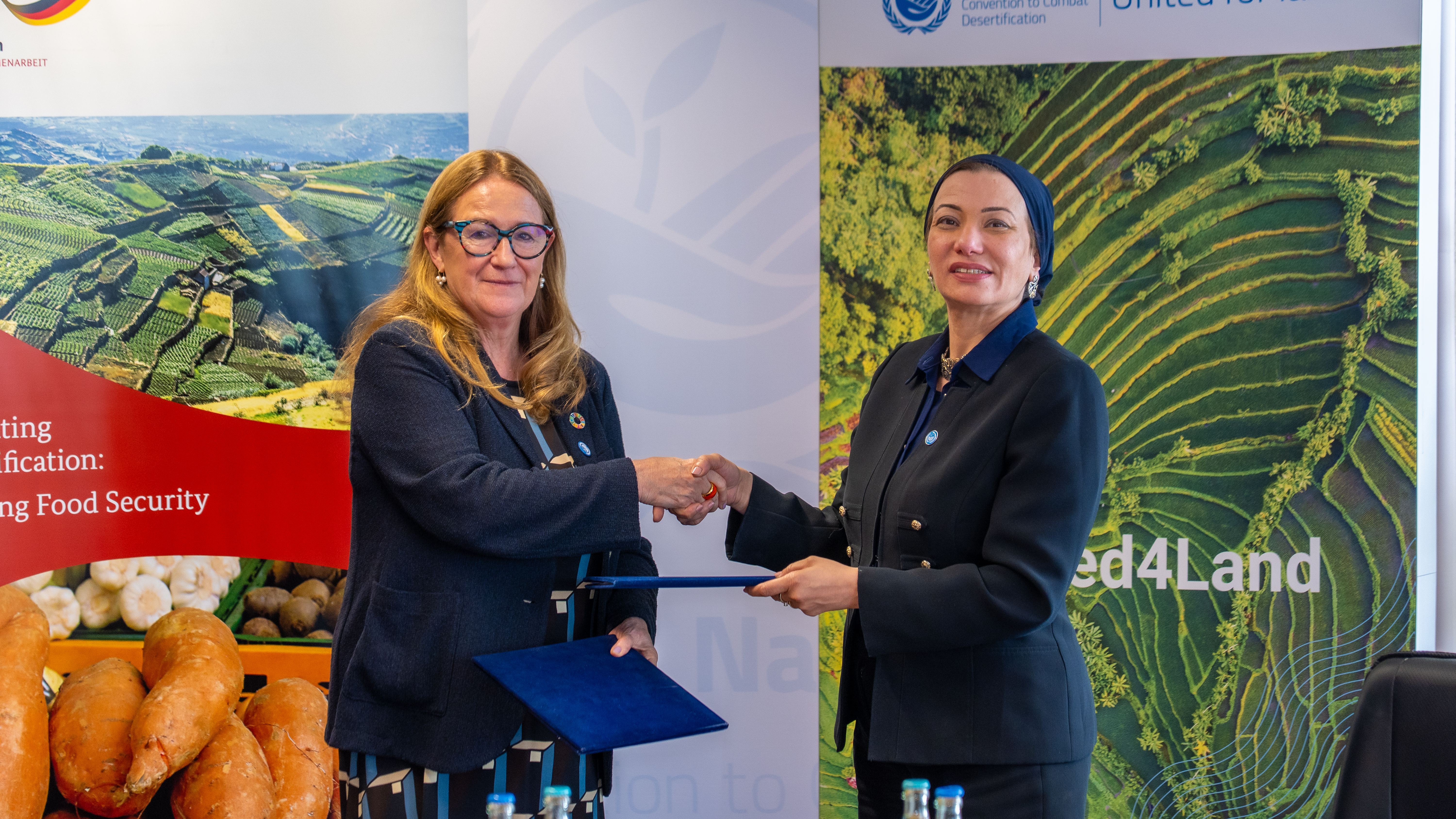
Bonn/Samarkand, 10 October 2023 – Today the United Nations Convention to Combat Desertification (UNCCD) entered into a landmark agreement with the government of the Republic of Uzbekistan. The Host Country Agreement marks the culminating chapter in the preparations for the upcoming 21st session of the UNCCD Committee on the Review of the Implementation of the Convention (CRIC21), to be held from 13-17 November 2023 in Samarkand. For the first time since its inception, UNCCD is convening one of its most important meetings in the heart of Central Asia. The highly anticipated CRIC21 will serve as a global platform for cutting-edge insights into land degradation and drought while assessing the progress the countries are making in restoring productive land. Welcoming the UNCCD delegation to the historic crossroads of culture and civilization in the city of Samarkand, Uzbekistan's Minister of Ecology, Aziz Abdukhakimov emphasized the upcoming UN conference's role in bolstering global partnerships and environmental innovation. Among the inspiring examples of the successful project in land restoration he shared is the ongoing tree-planting efforts on 2 million hectares to combat the Aral Sea environmental crisis. UNCCD Executive Secretary Ibrahim Thiaw noted that CRIC21 meets at a time of increasing environmental turbulence: cataclysmic heatwaves in Europe and North America, devastating droughts in the Horn of Africa, torrential monsoons and cyclones across Asia. The significance of land degradation as both a contributor to and a consequence of these phenomena cannot be overstated. Recent UN data paints a sobering picture, demonstrating that 420 million hectares of fertile and productive land between have been degraded between 2015 and 2019 – an area exceeding the combined landscapes of Kazakhstan, Kyrgyzstan, Tajikistan, Turkmenistan and Uzbekistan. CRIC21 – a global symposium of delegates from 196 nations and the European Union, leaders of the civil society, academia, and international organizations – will delve into progress on the Convention's strategic objectives. These range from sustainable land management and drought resilience to ensuring fair land rights for women and tackling the sand and dust storms and wildfires exacerbated by the climate change and environmental degradation. The UNCCD secretariat wishes to express its sincere gratitude to the Republic of Uzbekistan for graciously assuming the role of the host for this pivotal event. Like an intricate carpet weaved by expert hands unfurls to reveal its detailed patterns, CRIC21 will roll out at the Silk Road Samarkand Congress Centre in Uzbekistan this November.

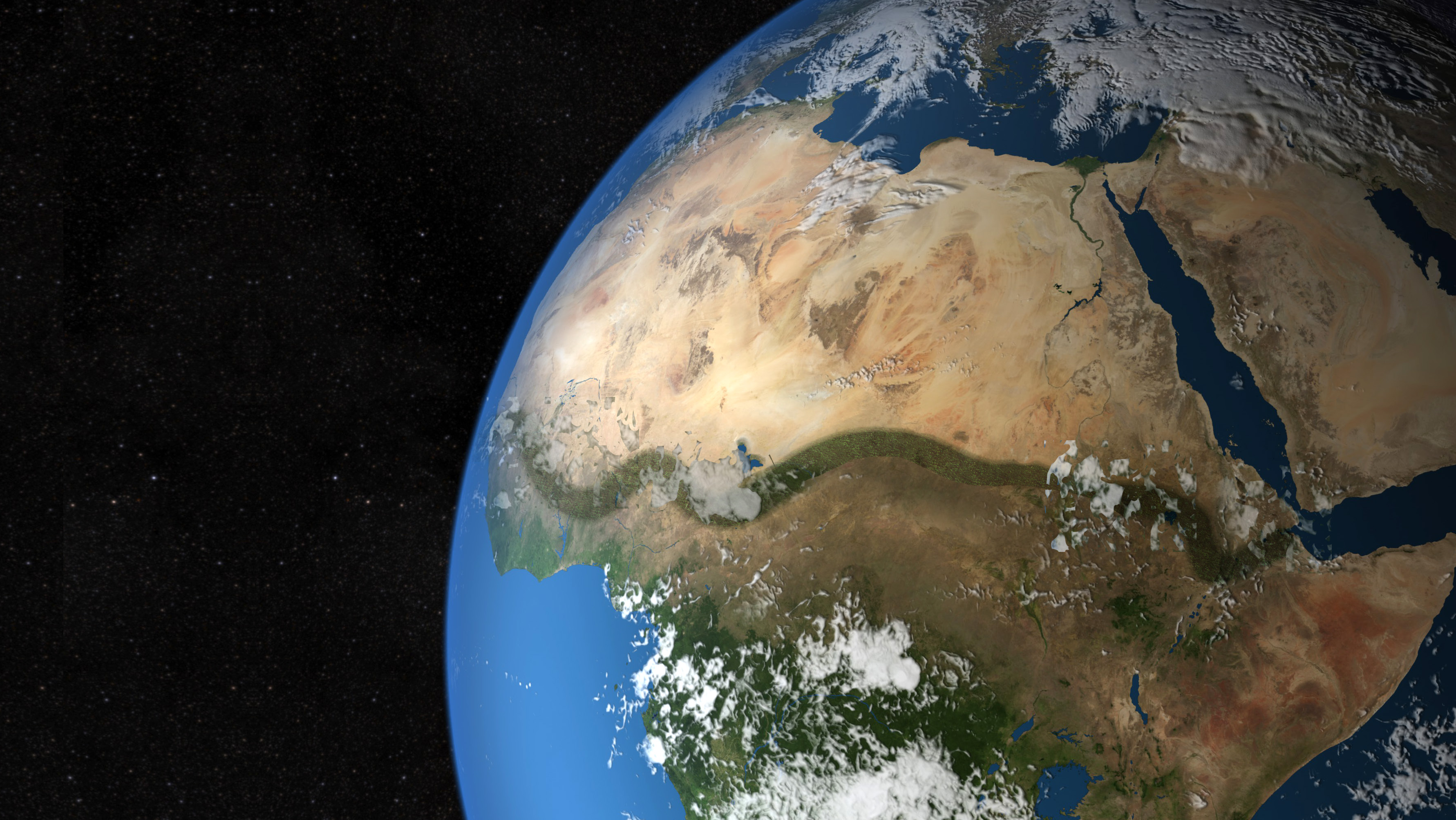
Mr. Chairman, Bureau members, distinguished delegates, Ladies and Gentlemen, Permítame trasladar mis sinceras felicitaciones a su Excelencia el Embajador Carlos Amorin, Representante Permanente de Uruguay ante las Naciones Unidas y Presidente de la Segunda Comisión de la Asamblea General. I also congratulate your fellow Bureau members. We will spare no efforts to support your work. Let me also salute the delegations of the Kingdom of Saudi Arabia, Mongolia and Uzbekistan. Saudi Arabia will host UNCCD COP 16 in Riyadh in December 2024, Mongolia COP 17 in 2026. Uzbekistan is hosting next month the 21st session of the Committee for the Review of the implementation of the Convention in Samarkand. I wish to express my gratitude and appreciation to these countries which are playing a leadership role in the UNCCD processes and implementation. Excellencies, Three weeks ago, the UN Secretary-General drew the world leaders’ attention to the fact that only 15 per cent of the SDG targets are on track and many are, on the contrary, going in reverse. The Secretary-General sounded alarm bells warning that instead of leaving no one behind, we risked leaving the SDGs behind. And this is the case for land and its SDG 15.3, in the 2023 report[1], the findings are worrisome: “Between 2015 and 2019, the world lost at least 100 million hectares of healthy and productive land every year, affecting food and water security globally. " Worldwide, poverty, hunger, environmental degradation, and conflicts are indeed increasing. And we can see a correlation where globally the poorest and the hungriest are found in areas affected by land degradation, desertification, and drought, and the Sahel and the Dry Corridor in Central America, to name few, are clear examples of this reality. These intertwined crises of nature-climate-land degradation and conflicts require the implementation of solutions that generate multiple benefits and the mobilization of technical and economic resources at an unprecedented scale. Investing in land restoration and drought resilience are win-win and cost- effective solutions with multiple benefits for a safe and sustainable future. Land restoration and drought resilience are critical to guarantee water and food security, livelihoods, to reduce irregular migration of people and conflicts over resource scarcity. These solutions also constitute building blocks to achieve climate and biodiversity goals. Excellencies, Within this framework let me now proceed to the introduction of the Report of the Secretary-General contained in document A/78/209, section II. The report suggests some recommendations that we hope would feature the UNCCD resolution that you will negotiate in these coming days. Since this report has been before you for quite some time, I will not go into its details. Regarding the outcome of COP 15, the Secretariat is working with the country Parties to support the implementation of the COP decisions adopted in Abidjan. In the context of achieving land degradation neutrality, we noted some important political signals. For instance, in 2020 in Riyadh, the G20 Group declared their ambition to reduce 50 per cent of the world’s degraded land by 2040. This declaration and the launch of the G20 Global Land Initiative are contributing to consolidating a land restoration movement. Over the past two years, the presidencies of G20 have included land restoration as an important political priority within their communique, and have promoted the restoration of peatlands and mangroves, as well as land affected by mining and forest fires. LDN is becoming an important vehicle to achieve the SDGs: 130 countries are currently involved in the process for setting land degradation neutrality targets, and a number of flagship initiatives on land restoration are being promoted globally: such as Great Green Wall in the Sahel and in the SADC region, the Dry Corridor, the Middle East Green Initiative. We need to continue enhancing collaboration and cooperation to accelerate action on the ground. In terms of outreach activities, the highlight has been the observance of the World Day to Combat Desertification and Drought on June 17, celebrated in the General Assembly Hall. That day a global campaign under the theme “Her Land. Her Rights” was launched to advocate for women and girls’ access to land. Several global leaders, UN agencies and partners participated in the event and are part of this global campaign that recognizes that land restoration, conservation and sustainable management can be accelerated if we address land tenure and gender issues in an integrated manner. On the drought front, we are moving forward. We see an appetite from the international community to operate a paradigm shift in drought management – from reactive to proactive action that better prepares countries and communities for future droughts, but more information sharing, resources, and political will is needed. It is in this context that the International Drought Resilience Alliance (IDRA) was established to generate more political momentum for this agenda and to accelerate action. I invite the General Assembly to encourage its members to join this coalition. Regarding the implementation of the COP 15 decision, the Intergovernmental Working Group on Drought has been analyzing how to strengthen drought management system within the convention. Its members are currently discussing policy options to be considered by COP 16. The next COP which will be held in December 2024 in the Kingdom of Saudi Arabia aspires to be a moonshot moment for the land and drought resilience agenda. We hope to see you there. Before I close my presentation, allow me to pay a short tribute to my colleague, Mr. Melchiade Bukuru, Director of our Office in New York who is about to retire after over a quarter of a century with you, for his long dedication and commitment to UNCCD processes. [1] https://hlpf.un.org/sites/default/files/2023-04/SDG%20Progress%20Report%20Special%20Edition.pdf

Acknowledging that severe drought affects Africa more than any other continent, leaders at the Africa Climate Summit in Nairobi have put forward a common vision for drought resilience in the run up to the next climate and desertification summits — UNFCCC COP28 in November 2023 and UNCCD COP16 in December 2024. The objective is to reduce the costs of future droughts for societies and economies through strategic investments in sustainable land and water management.
