News & stories


Latest news & stories
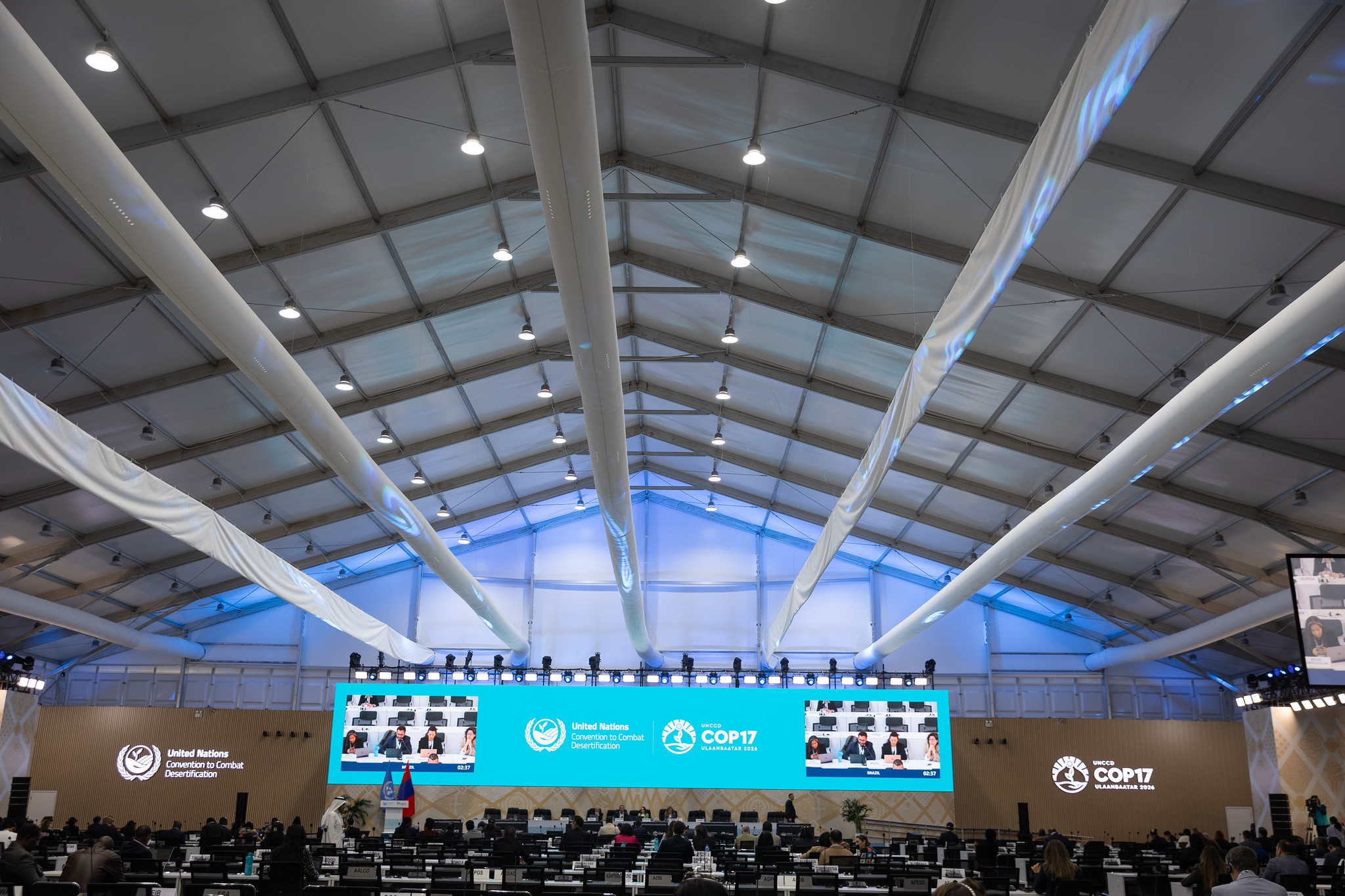
The UNCCD and the International Drought Resilience Alliance (IDRA) are launching the Land and Drought Media Reporting Fellowship for six journalists to cover COP17 in Ulaanbaatar, Mongolia (August 17–28, 2026).

New global assessment reveals deep gaps in land tenure security, governance and women’s land rights For billions of people, land is more than property. It is their livelihood, income, identity and stability. Yet that stability is increasingly fragile. Only about one-third of the world’s land is formally documented. More than one billion people – nearly one in four adults globally – feel insecure about their rights to land or housing and fear they could lose them within the next five years. A new global assessment, The Status of Land Tenure and Governance, sheds light on this growing insecurity. Co-published by the Food and Agriculture Organization of the United Nations (FAO), the International Land Coalition and the French Agricultural Research Centre for International Development (CIRAD), under the Global Land Observatory, it brings together data from governments, researchers and civil society to show who holds land, how secure those rights are and where governance gaps remain. With up to 40 per cent of the world’s land already degraded, secure land tenure is essential to restoring land at scale. A widening gap between land management and recognition Although states legally own most of the world’s land, much of it is governed in practice through customary systems. Indigenous Peoples and local communities manage 42 per cent of global land, yet only a small portion of those territories are formally recognized as theirs. This gap between management and legal recognition means that many communities who depend on land do not have formal protection of their rights. In contexts characterized by high land concentration and ongoing large-scale land acquisitions, the absence of recognition can leave customary landholders with limited legal safeguards. Where land rights are unclear or unprotected, adoption of sustainable land management practices becomes more difficult. Farmers and communities are less likely to invest in restoring degraded soils, conserving water, or adopting sustainable practices if their claims to land are uncertain. “The findings of the Status of Land Tenure and Governance Report confirm that secure and equitable land tenure is a prerequisite for sustainable land management,” said Ward Anseeuw, Senior Land Tenure Officer at FAO. “Strengthening land governance is therefore essential to achieving the objectives of the UNCCD, particularly in advancing land degradation neutrality and enabling local land users to invest confidently in the long-term health and productivity of their land.” Rising insecurity and persistent inequality Land insecurity is increasing globally. Since 2020, the share of adults who feel insecure about their land or housing rights has risen from 19 per cent to 23 per cent worldwide – affecting more than 1.1 billion people. In several regions, more than one-quarter of adults' report feeling insecure, with youth facing particularly high levels of uncertainty. Gender disparities remain pronounced. Across 108 countries assessed, 48 per cent of men report being sole or joint landowners, compared to 40 per cent of women. In agricultural contexts, the gap is often wider. Women produce roughly half of the world’s food yet own less than one-fifth of land globally. Where women lack secure tenure – due to inheritance barriers, limited legal protections or discriminatory customary norms - their ability to invest in soil restoration and sustainable practices is constrained. Advancing women’s land rights is therefore not only a matter of equality. It is essential for resilient food systems and sustainable land management. Customary lands, climate and resilience Customary land systems often overlap with areas of high biodiversity and significant carbon storage. Communities managing these territories have demonstrated long-standing stewardship practices that contribute to ecosystem stability. Healthy land, including soils and water, plays a significant role in climate mitigation and adaptation. According to the UNCCD estimates, drought losses now exceed USD 300 billion annually, and large parts of the world are becoming progressively drier. Billions of people could face increasing aridity in the coming decades. In this context, strengthening recognition of customary tenure is not only about justice – it is about safeguarding ecosystems and supporting communities that are already on the frontlines of climate stress. A structural data and governance gap Land is central to food security, climate action and sustainable development – yet information about land tenure arrangements and the security of those rights remains patchy. Only a limited number of countries report fully on land-related Sustainable Development Goals (SDG) indicators. Compared to sectors such as health or public finance, land tenure data are far less available and often not publicly accessible. The assessment calls for stronger national data systems, clearer legal frameworks and better alignment with international standards, including the Voluntary Guidelines on the Responsible Governance of Tenure of Land, Fisheries and Forests (VGGT), endorsed by the Committee on World Food Security and supported by FAO – the only globally agreed framework that sets standards for how land tenure rights should be recognized and protected. These guidelines form the foundation for a number of critical policy decisions of the UNCCD Conference of the Parties. Without reliable and transparent information, it becomes harder for governments to track progress and meet commitments under the SDGs and the Rio Conventions – the three global agreements on climate change, biodiversity and desertification. Governance at the heart of restoration These themes were further explored during a joint side event convened by the UNCCD together with TMG Think Tank for Sustainability – an independent research and policy institute focused on land governance and environmental justice – as well as the Robert Bosch Foundation and other partners. The discussion underscored that restoration, food security, and resilience cannot be separated from land governance systems. Transparent land administration, inclusive decision-making, and legal certainty are foundational conditions for sustainable land management. Governments have pledged to restore one billion hectares of degraded land by 2030, with nearly half of that commitment under the UNCCD framework. Achieving this ambition will require more than finance and technical solutions. It will require trust and equity for the people who depend on the land. “Land underpins food systems, climate stability and livelihoods,” said Dr Barron Joseph Orr, Chief Scientist of the UNCCD. “Without responsible and inclusive land governance that safeguards land tenure, the intended positive impacts of restoration efforts risk being temporary. Securing land rights is not simply about the four "R's" of Redistribution, Restitution, Recognition, and Regulation - it is about creating the conditions that allow communities to restore land and sustain it for generations to come.” Photo (c) : FORESCA

Across Southern Africa, drought is no longer an occasional shock — it is a recurring reality shaping landscapes, economies and daily life. As climate variability increases, pressure on land, water systems and rural livelihoods continues to grow. In Zimbabwe, Mozambique and Madagascar, the impacts are increasingly severe and they fall hardest on women and local communities who depend on land and natural resources to feed families and earn an income. In Madagascar, more than 9 million hectares (over 15 per cent of the country’s land area) are affected by drought, with some regions experiencing near-total crop failure during prolonged dry events. Mozambique faces frequent seasonal droughts that threaten food security for over 4 million people, particularly in its central and southern provinces. In Zimbabwe, recurring drought episodes have put nearly three million hectares of farmland at risk, with smallholder farmers and pastoralist communities most affected. Across these countries, drought disproportionately impacts women, who make up the majority of smallholder farmers, and other vulnerable groups dependent on agriculture and natural resources for their livelihoods. Yet the story is not only about risk. It is also about opportunity: how these countries are designing gender-smart, community-led solutions that turn drought resilience into livelihoods, restore degraded land and protect food and income while advancing sustainable land management and Land Degradation Neutrality (LDN). A key shift is placing women and local communities at the center — not only as beneficiaries, but as leaders of resilient livelihoods and value chains. This means recognizing women’s role in managing farms, water and household food security while tackling the barriers they face in accessing land, finance, skills, markets and decision-making. It also means strengthening community institutions so local knowledge and priorities shape what resilience looks like on the ground. Another big change is using drought risk data together with economic and livelihood analysis to identify where resilience investments can create real opportunities. In practice, this helps countries move from broad vulnerability profiles to concrete ideas that match local realities: which landscapes are most at risk, which groups are most exposed, what options can reduce pressure on land and water, and which interventions can generate reliable incomes even during dry periods. Countries are also working to develop scalable investment ideas — from climate-resilient agriculture to water management — that can attract blended finance and align with national priorities. Examples discussed through this work include community-based water management that secures access during dry spells, climate-resilient agriculture that stabilizes yields, and women-led enterprises that diversify income while reducing vulnerability and restoring degraded land. These solutions are designed to be practical, locally anchored and capable of expanding beyond pilot sites. “Women and local communities are already on the front line of drought. When they lead the solutions — supported by secure land tenure together with access to finance and investment-ready plans — resilience becomes real: it protects food and incomes today and restores land for generations to come,” emphasizes Louise Baker, Managing Director of the Global Mechanism of the UNCCD. This work is being advanced through the Gender-Transformative Drought Resilience in Transition States in Southern Africa (GRDSA) Project, supporting Madagascar, Mozambique and Zimbabwe to help countries prepare drought investment plans, strategies and pipelines. The GRDSA Project does not finance investments directly. Instead, it focuses on project preparation so countries can later mobilize additional public and private finance, building on existing national policies, drought monitoring systems and vulnerability assessments rather than duplicating them. National inception workshops held in 2025, alongside a regional exchange, helped set this work in motion. The project is financed by the African Development Bank (AfDB) and the Government of Canada and implemented by the Global Mechanism of the UNCCD. Photography (c) : Global Water Partnership Southern Africa, Krees Raharison

The Guna use eco-taxes to protect their forests, feed their people and save their culture

How carbon markets can deliver real benefits for land and livelihoods

КС-17 КБО ООН пройдет в Улан-Баторе (Монголия) с 17 по 28 августа 2026 годаУлан-Батор/Бонн, 5 февраля 2026 года — Монголия и Конвенция ООН по борьбе с опустыниванием (КБО ООН) сегодня объявили тему семнадцатой сессии Конференции сторон КБО ООН (КС-17), которая пройдет в Улан-Баторе (Монголия) с 17 по 28 августа 2026 года, на фоне активной подготовки к этой знаковой глобальной встрече по вопросам опустынивания, деградации земель и засухи. Девиз конференции — «Восстанавливаем земли, возрождаем надежду» — был представлен в ходе встреч высокого уровня между руководством КБО ООН и Монголии, посвященных подготовке к КС-17.«Земля — это наша важнейшая инфраструктура, лежащая в основе продовольственной безопасности, водных ресурсов, источников средств к существованию и стабильности. Когда земля деградирует, растет нестабильность — из-за утраты средств к существованию, вынужденного перемещения населения и обострения конкуренции за ограниченные ресурсы. Принимая КС-17 КБО ООН, Монголия обращается к миру с убедительным призывом: “Восстанавливаем земли. Возрождаем надежду” — это не только экологическая повестка, но и приоритет развития и устойчивости. В условиях усиливающихся засух и ускоряющейся деградации земель конференция призвана обеспечить практические, инвестиционно-реализуемые решения — от восстановления деградированных земель и почв до укрепления взаимосвязи между землей и водными ресурсами — чтобы сообщества могли развиваться и процветать», — заявила Исполнительный секретарь КБО ООН Ясмин Фуад.«Монголия в полной мере осознает ответственность, связанную с проведением КС-17 КБО ООН, и нацелена на обеспечение конкретных, ориентированных на реальные действия и долгосрочных результатов конференции. Для нашей страны, чье развитие, образ жизни и культурное наследие неразрывно связаны с землей, восстановление земельных ресурсов является фундаментальной опорой мира, устойчивого развития и инклюзивного социально-экономического роста. Проведение КС-17 в 2026 году — в Международный год пастбищных земель и пастбищных животноводов — открывает уникальную возможность перевести вопросы пастбищных земель и средств к существованию пастбищных сообществ от осведомленности к практической реализации и инвестициям, а также укрепить глобальное сотрудничество в борьбе с опустыниванием, деградацией земель и засухой», — отметил Премьер-министр Монголии Гомбожавын Занданшатар.КС-17 КБО станет первой из трех сессий Конференций сторон Рио-конвенций, которые пройдут в 2026 году и будут посвящены вопросам земельных ресурсов, биоразнообразия и изменения климата. Цель конференции — придать импульс коллективным действиям по защите источников средств к существованию, связанных с землей, и укреплению устойчивости на основе подхода, где во главе угла — люди.Ожидается, что КС-17 соберет делегации 197 Сторон-участниц КБО ООН, а также лидеров правительств, бизнеса и гражданского общества, ученых, молодежь, представителей коренных народов, пастбищных животноводов и представителей малых фермерских хозяйств, чтобы вместе выработать решения для преодоления взаимосвязанных проблем опустынивания, деградации земель и засухи, признавая, что восстановление земельных ресурсов также необходимо для снижения нестабильности, предотвращения вынужденного перемещения населения и укрепления человеческой и национальной безопасности в уязвимых регионах.Деградация земель уже затронула до 40 процентов суши планеты, приводя к далеко идущим последствиям для производства продовольствия, доступности водных ресурсов, источников средств к существованию и экономической стабильности. КС-17 станет поворотным моментом для стран и партнеров, способным придать новый импульс реализации обязательств и мобилизации более масштабных инвестиции для повышения устойчивости к засухе и продвижения устойчивого управления земельными ресурсами.Монголия, территория которой составляет 1,56 млн квадратных километров, относится к числу стран, наиболее уязвимых к опустыниванию и деградации земель: почти 77 процентов ее территории уже подвержены деградации. Проведение КС-17 в Улан-Баторе позволит сосредоточить внимание международного сообщества на приоритетах восстановления земельных ресурсов, включая подходы, направленные на защиту источников средств к существованию, продовольственной безопасности и экосистем в засушливых регионах.Конференция проходит в Международный год пастбищных земель и пастбищных животноводов, провозглашенный Генеральной Ассамблеей ООН по инициативе Монголии. Это дает значительные возможности для ускорения действий в сфере устойчивого управления, восстановления и сохранения пастбищных земель, а также для привлечения внимания к потребностям пастбищных сообществ, напрямую зависящих от этих экосистем.Пастбищные земли покрывают более половины поверхности суши Земли, служат источником средств к существованию около 500 миллионов человек и обеспечивают до одной шестой мировых потребностей в питании, оставаясь при этом одними из наиболее недооцененных и всё более уязвимых экосистем планеты.В течение двухнедельной конференции участники примут участие в сегменте высокого уровня, включая министерские диалоги, а также в многосторонних форумах и тематических обсуждениях, посвященных взаимодействию науки и политики, инновациям, практическим решениям, инструментам и технологиям, а также финансированию. Помимо официальных переговоров ожидается, что КС-17 станет катализатором совместных действий по пастбищным землям, устойчивости и водным ресурсам, а также по продовольственным системам и здоровью почв.В рамках подготовки к КС-17 Монголия запустила национальные инициативы, увязывающие восстановление земельных ресурсов с источниками средств к существованию и развитием сельских районов. Среди них — запущенная в 2021 году национальная кампания «Миллиард деревьев» под руководством Президента страны, цель которой — высадить один миллиард деревьев к 2030 году. Монголия также расширила общественное участие и вовлечение молодежи через национальные диалоги и просветительские мероприятия, включая Национальный форум «Youth4Land». Через Бизнес-совет Монголии председательство КС-17 вовлекает частный сектор в поддержку инициативы КБО ООН «Business4Land», направленной на более активное вовлечение деловых структур в устойчивое управление земельными ресурсами.«Инициативы Монголии наглядно демонстрируют именно тот комплексный подход к восстановлению земельных ресурсов и укреплению устойчивости, который КС-17 КБО призван продвигать. Конференция нацелена на усиление политического импульса и достижение практических результатов, чтобы помочь странам мобилизовать ресурсы и углубить сотрудничество ради расширения масштаба восстановления земель и укрепления устойчивости там, где это необходимо больше всего», — заключила Исполнительный секретарь КБО ООН Ясмин Фуад.Для запросов СМИПресс-служба КБО ООН: press@unccd.intО Конвенции ООН по борьбе с опустыниваниемКонвенция ООН по борьбе с опустыниванием (КБО ООН) — это глобальное видение и голос в защиту земель. Она объединяет правительства, ученых, законодателей, частный сектор и местные общины вокруг общего видения и глобальных действий по восстановлению и устойчивому управлению земельными ресурсами на благо благополучия людей и планеты.КБО ООН — это не только международный договор, который ратифицировали 197 Сторон. Это многостороннее обязательство по противодействию текущим последствиям деградации земель и по формированию будущей культуры бережного отношения к земле для обеспечения всех людей продовольствием, водой, жильем и экономическими возможностями на справедливой и инклюзивной основе.
