Stories
Latest


The UNCCD Gender Action Plan (GAP) emphasizes the critical importance of gender equality and women’s empowerment in implementing the Convention. A key priority of the GAP is to increase women’s access to relevant knowledge and technologies. To fulfill these objectives, UNCCD and the World Overview of Conservation Approaches and Technologies (WOCAT) joined forces in 2020 to advance gender-responsive Sustainable Land Management (SLM). This collaboration between UNCCD and WOCAT focuses on documenting, analyzing and scaling gender-responsive SLM practices by gathering gender-disaggregated data. A specialized tool, co-designed with gender and SLM experts, identifies gender-based parameters as well as the technical and socio-cultural factors that enhance the adoption of SLM by both women and men. In the initial phase of the project in 2021, WOCAT network partners in 15 countries tested the tool, showing promising results. As the Pambadeniya Women Group from Sri Lanka noted, “Women and men debated on how to guarantee equal opportunities in decision making, participation and fair distribution of benefits.” The data demonstrated that equal access to SLM technologies and approaches is both context- and technology-specific. Five technology group profiles on gender-responsive SLM were developed to show the need for further action. Building on this success and following Decision 24/COP.15, UNCCD and WOCAT are now launching a call for expressions of interest to apply the gender-responsive SLM tool. This initiative aims to gather more country-specific gender-disaggregated data on SLM practices, which will be presented at the upcoming UNCCD COP16 in Ryiadh, Saudi Arabia, this December. We are inviting up to 40 stakeholders to implement the gender-responsive SLM tool in local contexts from September to November 2024. Applications are welcome from UNCCD Parties, civil society organizations, WeCaN members and others involved in sustainable land management. The application deadline is 4 August 2024. Submissions are accepted in English, French and Spanish. For more details on the call, application requirements, and the online application form, please see the side menu. * Please note: the questionnaire is currently being reviewed and updated. The final version of the questionnaire will be available in September 2024

Gender equality is a key entry-point for Sustainable Land Management (SLM) and UNCCD together with WOCAT are working to improve gender-responsiveness of SLM practices. Direct and indirect gender-related barriers prevent women from adopting SLM practices. These barriers include land tenure insecurity; land availability; education or literacy levels; access to seeds, fertilizers, or extension services; and access to technologies and financing. As a result, women adopt SLM technologies at a rate that is typically lower and slower than that of men. In line with the UNCCD Gender Action Plan (GAP) and guided by the idea to build back better, the aim of this UNCCD-WOCAT project is to: Add a gender lens to SLM technologies and appraoches and assess their gender-responsiveness Evaluate how gender-responsiveness of SLM Technologies and Approaches can be improved, stepping up adoption and dissemination, making SLM beneficial for women and men alike. This will support project planners, designers and implementers to identify, realize and scale gender-responsive SLM Technologies and Approaches within the framework of LD/SLM and LDN projects and programmes as well as promote the implementation of gender-responsive SLM practices in the UN Decade of Ecosystem Restoration. Phase 1: Development of Gender-responsive SLM tool In the first phase, WOCAT and UNCCD designed a tool that helps to test the gender-responsiveness of SLM Technologies and Approaches and to identify areas of improvement to support project planners, designers, and implementers in their effort to scale up SLM Technologies and Approaches that are gender-responsive. The gender-responsive SLM tool was reviewed during a UNCCD-WOCAT consultation workshop with experts from different organizations and regions, resulting in the fine-tuning of the tool. Currently, the tool is being tested with WOCAT network partners in more than 10 countries around the globe, supporting it further refinement and facilitating a first round of data collection. Data will be analysed and presented in the form of SLM Gender Profiles, showcasing women and men's involvement in different SLM Technologies and providing insights and recommendations on the improvement of SLM Technologies and related Approaches in view of gender equality and women empowerment. Phase 2: New gender tool added to WOCAT Database (May 2024 – June 2025) The Global WOCAT SLM Database will be enhanced with a gender-responsive SLM tool, enabling: Online assessment of the gender-responsiveness of SLM practices Search for gender-responsive SLM solutions Collection of gender-disaggregated data through a harmonized system Possibility to analyse and share gender-disaggregated data to support informed decision-making for gender equality in land management, particularly in relation to drought resilience Platform to discuss gender and land management related issues within communities Interested partners and institutions, including UNCCD Parties and CSOs, will be trained in its application to gain country-specific gender-disaggregated data on SLM practices. Results will support the design and implementation of gender-responsive SLM projects and programmes and inform decision-makers. During the upcoming UNCCD COP16 in Riyadh, Saudi Arabia in December 2024, partners will present results and country insights.

Experts share key success factors in reducing vulnerability to drought Drought is a hazard, but it needn’t be a disaster. That is, provided all communities are adequately equipped before it strikes. At the 10th World Water Forum, held in Bali from 18 to 25 May, experts urged decision-makers to prioritize drought resilience in the face of climate change, drawing inspiration from success cases around the globe. Representatives from the scientific, non-profit, and technical sectors made the case for building resilience to the world’s costliest and deadliest hazard at an event featuring partners of the International Drought Resilience Alliance (IDRA.) The session took place at the Spanish Pavilion under the auspices of the General Directorate for Water of Spain and the UNCCD. The experts convened as the need to bridge science and policy for drought risk management is becoming more apparent: global warming is ushering in a new era of rapid-onset, or flash, droughts, just as the global freshwater demand is set to outstrip supply by 40% by 2030, putting societies, economies, and ecosystems on the line. These are the key takeaways from the conversation: California to East Africa “Drought and desertification are not just problems for the Sahel region of Africa and for developing countries,” said UNCCD policy officer Daniel Tsegai before an international audience. “We already see impacts in highly productive and populated parts of the developed world like California, Spain, and Australia.” In the past two decades, the Colorado river basin (US), which is home to 40 million people, has been experiencing the worst drought in 1,200 years; Australia, has recently grappled with the harshest drought in 800 years; in the Horn of Africa, the worst event in 40 years has left 23 million people severely food-insecure, and Spain has seen the water level of some dams drop to 1% of their capacity. “The good news is that investments in drought resilience have an up to tenfold return, and we know what it takes to decouple the severity of a drought from its most serious impacts on lives and livelihoods,” explained Tsegai. Unconventional water resources For thousands of years, mobile pastoralism has been a prime survival strategy in the Arabian Peninsula, one of the most arid regions in the world. However, urbanization, population growth, and lifestyle changes have brought new challenges —and are spawning new solutions. “We are looking to expand sewage water treatment and desalination, for example, to irrigate crops, and we are also keen on further building local capacity on sustainable land and water management,” said Omar Ouda, senior water management advisor at the Ministry of Water, Environment and Agriculture of Saudi Arabia. The country will host the largest-ever UN land and drought summit, or UNCCD COP16, from 2-13 December. Spain, in the Mediterranean basin, has more than 700 desalination plants, including the largest in Europe for drinking water, which is now catering to more than 4.,5 million people in the drought-struck Barcelona area. The amount of energy required to desalinate water, though, remains a key consideration when opting for this tool. “We make decisions based on indicators like dam water levels,” said water commissioner at the Júcar River Basin Authority in Spain Marc Garcia, who noted the importance of adopting a proactive approach to drought management. “On the basis of such information, authorities assess options like intensifying desalination, decommissioning wells and, if necessary, restricting water use in certain basins.” Nature-based solutions While technology and grey infrastructure can contribute to building resilience, nature-based solutions and sustainable land and water management remain central to mitigating, and adapting to, future droughts, according to several panellists. Land degradation, for example, disrupts regional rainfall patterns by disrupting the amount of water that regularly moves from the earth to the air. Conversely, healthy lands support consistent seasonal and annual rainfall; facilitate aquifer recharge; and mitigate the risk of droughts and floods. “Nature can be a big part of the solution,” said the Director of Water Scarcity and Markets at The Nature Conservancy (TNC) Tom Iseman. “For instance, it is essential we protect source watersheds, keeping their storage capacity intact, slowing runoff, and protecting water quality,” said the expert of TNC, which is engaged in source water protection initiatives across Africa. Success factors for water governance The International Water Management Institute (IWMI) is helping communities conserve and use water more efficiently, based on the latest scientific insights and innovations —from drought-tolerant seeds and improved irrigation methods to remote sensing technologies to explore new water resources. They also support policy-makers in creating drought policies across Africa and Asia. “To define drought policies, it ideally needs to be raining outside because it takes time to put them together,” said IWMI deputy director general Rachael McDonnell, and explained they involve the ministries of health, environment, agriculture, economy, infrastructure, and finance, as well as statistical and meteorological agencies. The process must engage all governance levels, from national institutions to local administrations and communities, she said, and make sure crucial data is available to all of them —a consideration they keep front and centre as they support the creation of early warning systems in countries like Zambia, Morocco, Jordan, and Lebanon. For director general of the US National Drought Mitigation Centre at the University of Nebraska, Mark Svoboda, another key is involving users in the co-design of information systems and tools to build ownership in the long run. From his experience in southern Africa, countries that successfully appropriate and put to use drought early warning systems create a ripple effect. “They generate positive peer pressure: neighboring countries want to understand how to do what they do, so building trust now takes one year, instead of eight,” said Svoboda. “It all starts with political will, and showing tangible results is the best way to get buy-in from decision-makers.” Drought communications In the lead up to major international events like UNCCD COP16 and Drought+10, participants called on the Alliance to get the word out on the urgency of building drought resilience. “Drought is a major threat multiplier, but it is too often lost to audiences, overshadowed by geopolitics and other conflicts,” said McDonnell from IWMI. Executive secretary and CEO of the Global Water Partnership (GWP) Alan AtKisson echoed the need to boost communications on drought at all levels, from the public and affected communities to political leaders and the finance sector: “We need to talk much more about drought resilience, and we need investors to understand how drought can impact their value chains going forward,” said AtKisson. “Tropical storms get the headlines, but the hazard that destroys most economic value on our planet is drought.”

Kigali, Rwanda, 24 May 2024. On the occasion of the Global conference on decent jobs for youth, the secretariat of the United Nations Convention to Combat Desertification (UNCCD) joins the United Nations Global Initiative on Decent Jobs for Youth, committing to fostering youth engagement in the implementation of the Convention. “UNCCD strives to realize a future where youth and youth organizations have a strong voice in decision-making on land use, and are recognized as vital actors in combatting desertification, land degradation and drought. With this commitment, UNCCD aims to create a new generation of “landpreneurs” inspired to build a more equitable and sustainable future based on meaningful jobs and careers that restore a healthy relationship with nature,” said UNCCD Executive Secretary Ibrahim Thiaw. According to the International Labour Organization (ILO), involving youth in transforming food systems and land restoration activities can contribute to the creation of the estimated 600 million jobs required over the next 15 years to meet youth employment needs.[1] Decent Jobs for Youth was launched in 2016 as a joint effort of the United Nations system to address the youth employment challenge, which is a central element of the 2030 Agenda for Sustainable Development. It is a global multi-stakeholder initiative that brings together governments, social partners, the private sector, youth, and civil society organizations, among others. The UNCCD commitment will foster participation and partnerships, capacity building and networking to empower them to pursue meaningful and sustainable careers in sustainable land and water management. The first opportunity to do so will be this year’s Desertification and Drought Day, 17 June 2024, which focuses on intergenerational land stewardship under the theme of “United for Land. Our Legacy. Our Future.” The event will also mark the launch of the first UNCCD Youth Engagement Strategy, emphasizing the importance of youth voices at the negotiating table. About UNCCD The United Nations Convention to Combat Desertification (UNCCD) is the global vision and voice for land. We unite governments, scientists, policymakers, private sector and communities around a shared vision and global action to restore and manage the world’s land for the sustainability of humanity and the planet. Much more than an international treaty signed by 197 parties, UNCCD is a multilateral commitment to mitigating today’s impacts of land degradation and advancing tomorrow’s land stewardship in order to provide food, water, shelter and economic opportunity to all people in an equitable and inclusive manner. https://www.unccd.int/ For more information, please contact: Media office: press@unccd.int Global Initiative on Decent Jobs for Youth, ILO | decentjobsforyouth@ilo.org [1] International Labour Organization. 2022. Investing in Transforming Futures for Young People X Global Employment Trends for Youth 2022.

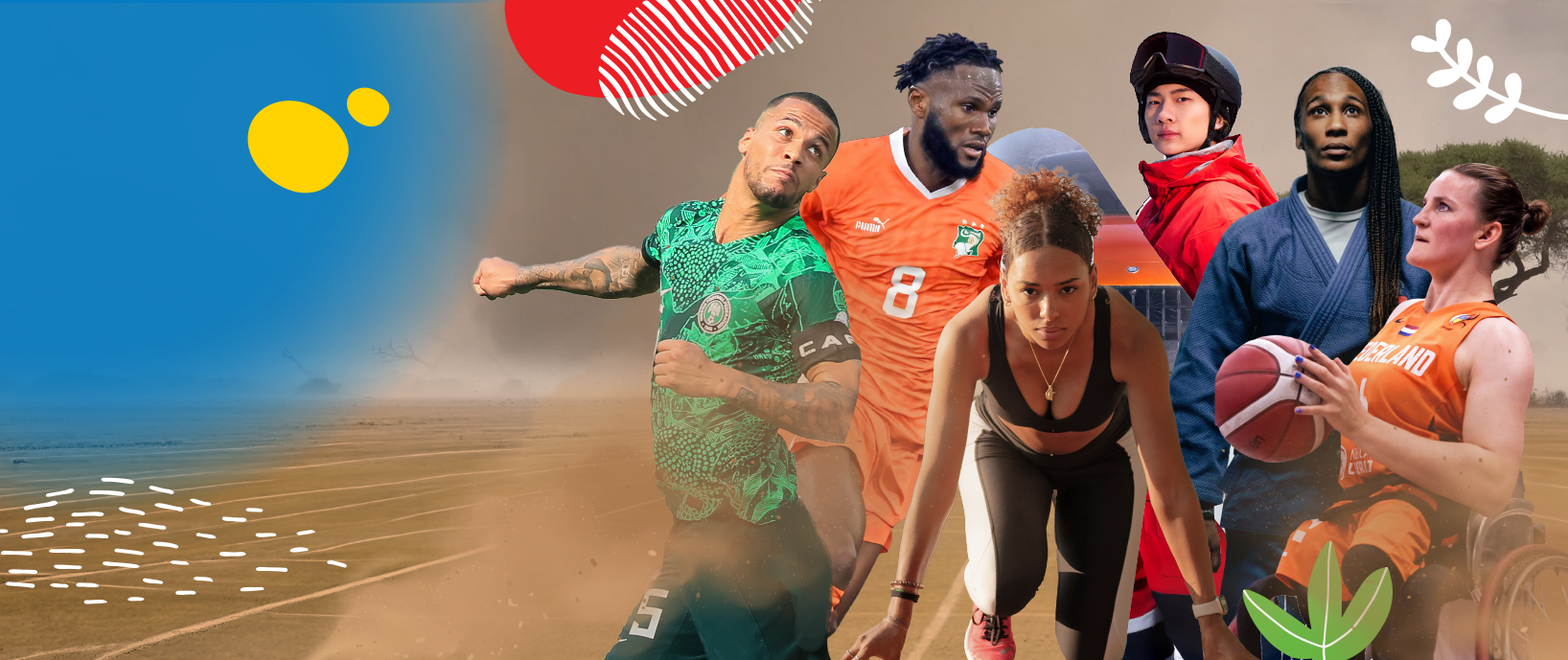
On 17 May, one month before the Desertification and Drought Day 2024, UNCCD Goodwill Ambassadors Ricky Kej and Inna Modja released the new Her Land anthem to support land rights for women across the world. They are among the key activists and influencers that work with UNCCD to spearhead the campaign #HerLand and mobilize support to secure land rights for women and girls across the world. When land is degraded women and girls are impacted first and most. They are disproportionately affected by poverty, hunger, displacement and violence. And they have minimal control over land itself or decisions about how to manage it. Although women produce half the world’s food, they own less than one-fifth of land worldwide and make up the majority of the world’s hungry. But it doesn’t have to be this way. When land rights are secured, we have seen women and girls increase yields, restore land, and build resilience to drought. Listen to the song, get inspired and join our call to action for Her Land, Her Rights!

Imagine a world where every farmer, indigenous community and local group has the power to improve their land and their lives. It's not just a dream. By securing land tenure – the right to use, control and transfer land – we can unlock sustainable development on a global scale. The United Nations Convention to Combat Desertification (UNCCD) and the Food and Agriculture Organization of the United Nations (FAO) are working together to make this vision a reality. Land tenure determines how people connect with the land. Worldwide, 2.5 billion people depend on communally managed territories, which often lack legal protection. This vulnerability undermines sustainability, escalates conflicts and damages the environment. Although more than 50 per cent of communal lands are used by indigenous peoples and local communities, only 10 per cent are legally recognised. These challenges led to the launch of the Voluntary Guidelines on the Responsible Governance of Tenure (VGGT) in 2012. A blueprint for fairness, the VGGT ensure that everyone – regardless of gender or social status – receives the same land rights. Incorporating principles of equity, transparency and sustainability into land governance is critical to creating secure and productive communities. These principles are not just theoretical; they are being successfully applied around the world, with transformative results. In Eritrea, the Serejeka sub-zone, part of the Great Green Wall initiative, introduced a new land tenure system called "xlmi" across 28 villages. This new system, which allows landholdings to be inherited as family property, replaced the previous seven-year lease system with redistribution among smallholders. The change has led to clear environmental and social benefits. It has significantly reduced deforestation and land conflicts, and provided farmers with secure, long-term benefits. This security has undoubtedly encouraged greater investment in sustainable land management practices, boosting household income. In the Senegal River Basin, a concerted effort to improve land governance has facilitated better management of vast agricultural resources, boosting food security and economic stability across the region. In Colombia, the government has launched a land regularisation programme with indigenous communities, employing the "Open Tenure" tool under the VGGT. This tool maps legitimate tenure rights, supporting a transparent process that helps stakeholders record and protect their rights. The programme also promotes joint land ownership for spouses, aiming to combat discriminatory inheritance practices. In many rural areas, land tenure security acts as a vital safety net for the poor, buffering them against uncertainties and securing their livelihoods. This security is more than just a piece of paper; it ensures that smallholder farmers can produce food and reduce poverty and inequality within their communities. The process of securing land rights – through formal recognition, proper documentation and robust dispute resolution – is critical not only to the well-being of farmers, but also to the promotion of sustainable agricultural practices. The challenge, however, is that in many developing countries land is often held under informal or undocumented arrangements. Simply formalising these arrangements doesn't automatically lead to true security and can even lead to 'elite capture', where only a few reap the benefits. The genuine recognition and enforcement of legitimate land rights – including access, use, management and ownership – is essential. This not only increases agricultural productivity, but also strengthens the rights and livelihoods of the most vulnerable, paving the way for a more equitable and sustainable future for rural communities. A major challenge in this area is the significant gender disparity in land governance, management and benefit-sharing, even under customary or informal tenure arrangements. Although women make up nearly half of the world's agricultural workforce, they own less than 20 per cent of the world's land. It is clear that investing in women's equal access to land and related assets is a direct investment in their future and the future of humanity. When women have secure land rights, they are more likely to invest in the land and participate actively in community life, leading to better outcomes for families and societies. When women's tenure security is improved, household spending on food and education increases by up to 30 per cent. The UNCCD and FAO are committed to continuing these efforts through national consultations and inclusive policy-making. By engaging a wide range of stakeholders, they aim to tailor land tenure reforms to local needs and open up new opportunities for cooperation and financing. These efforts will eventually reach more than 30 countries o have who have requested support on integrating secure tenure into their Land Degradation Neutrality (LDN) programmes and restoration activities. Securing land rights and advocating for inclusive governance is a powerful tool for change. By protecting ecosystems and empowering millions of people around the world to have a say on how land and associated resources are managed, we are advancing multiple sustainable development objectives.
