Stories
Latest



Mr Ibrahim Thiaw, UN Under-Secretary-General and Executive Secretary of the United Nations Convention to Combat Desertification (UNCCD), paid a three-day visit to Mauritania from 15 to 17 April. This strategic visit coincides with Mauritania's current role as Chair of the African Union and sets the stage for the upcoming 16th Conference of the Parties (COP 16) in Riyadh, Saudi Arabia, later this year. During his stay, Mr Thiaw held high-level talks with the Mauritanian authorities, focusing on strengthening cooperation between Mauritania and the UNCCD. These discussions are particularly important as they come at a time when Mauritania is not only leading the African Union, but also facing serious environmental challenges that are at the forefront of the international sustainable development agenda. Mauritania is facing severe environmental degradation, with 1.28 million of its total population of 4.3 million exposed to land degradation, covering 60 per cent of its total land area. The country has been severely affected by recurrent droughts since the late 1960s, making desertification control a national priority and a key concern of successive governments. In 2021, Mauritania experienced the most severe drought in its history, resulting in 20 per cent of the population facing acute food insecurity. This degradation has not only led to physical and economic impacts, but has also increased social vulnerability, particularly among low-income households and women who rely heavily on natural resources for their livelihoods. “Mauritania is a country severely affected by desertification, and it is crucial to rethink the country's development policies in the light of climate change. This includes adopting new and renewable energy sources, formulating more appropriate agricultural and fisheries policies, combating drought and implementing environmental programmes adapted to these arid conditions. The development of a tailor-made strategy is essential, with Mauritania charting its own course to address these complex issues”, said Ibrahim Thiaw. Mauritania is one of 22 countries participating in the Great Green Wall initiative. This ambitious project aims to restore 100 million hectares of currently degraded land, sequester 250 million tonnes of carbon and create 10 million green jobs by 2030. Through this initiative, Mauritania is seeking both environmental and economic benefits, demonstrating its commitment to both local and global sustainability efforts After ratifying the UNCCD in June 2001, Mauritania launched the National Action Plan to Combat Desertification (PAN-LCD), which takes an integrated, participatory approach. This plan has been instrumental in integrating poverty reduction into desertification control programmes, working with grassroots communities, local authorities and non-governmental organisations.

The conversion of land for agriculture to meet the demands for food, feed, fibre and bioenergy production is the leading driver of land-use change, with up to 40% of the world’s land already degraded. The global economy is projected to lose USD 23 trillion by 2050 to land degradation, desertification and drought. Transforming our production and consumption patterns has enormous potential to reverse land degradation and biodiversity loss, as well as mitigate climate change. The economic benefits of land restoration are huge: half of the world’s GDP is dependent on nature, and every dollar invested in restoration generates up to USD 30 in benefits. Despite its importance to economic activity, Sustainable Development Goal 15 Life on Land is one of the least financed SDGs. The private sector can play a critical role in achieving the goal to restore 1.5 billion hectares of degraded land by 2030. It can facilitate investments and technology for sustainable production as catalysts for a transition to sustainable land use and promote the expansion of value chains for sustainable consumption for healthy lands and people. UNCCD made its mark at the Change Now Conference held from 25 to 27 March at the Grand Palais Ephémère in Paris by bringing together innovators and investors from the private sector to find solutions that have the power to reverse and halt current land degradation trends. The Business4Land strategy, presented by UNCCD during the World Economic Forum 2024 in Davos, seeks to mobilize the power of the private sector to advance Land Degradation Neutrality by enabling transition from our current extractive and extensive land-use models towards sustainable land management. At the Paris meeting, UNCCD launched discussions on innovative financing models, highlighting the role of private sector investments in land restoration projects and productivity enhancement business models. Highlighting the potential for carbon sequestration and natural-based solutions, the Convention showcased the economic viability of sustainable land-based projects to encourage entrepreneurs to seize untapped opportunities. Inspired by the spirit of Gustave Eiffel who made possible what seemed impossible in his time, UNCCD invites the private sector to join the Business4Land initiative as a vehicle to leave a healthy legacy to future generations on our planet. —UNCCD Deputy Executive Secretary Andrea Meza During the Pioneers Dinner at the Eiffel Tower The Business4Land initiative unites private sector leaders to improve business practices, contribute to sustainable financing tools, explore leveraging mobile new technologies and best practices to support further land restoration investments. Companies are invited to join the Business4Land initiative and define voluntary actions and announce them at UNCCD COP16 in Riyadh, Saudi Arabia in December 2024. To join the Business4Land initiative, visit: https://www.surveymonkey.com/r/B4L For more information, please contact: b4l@unccd,int

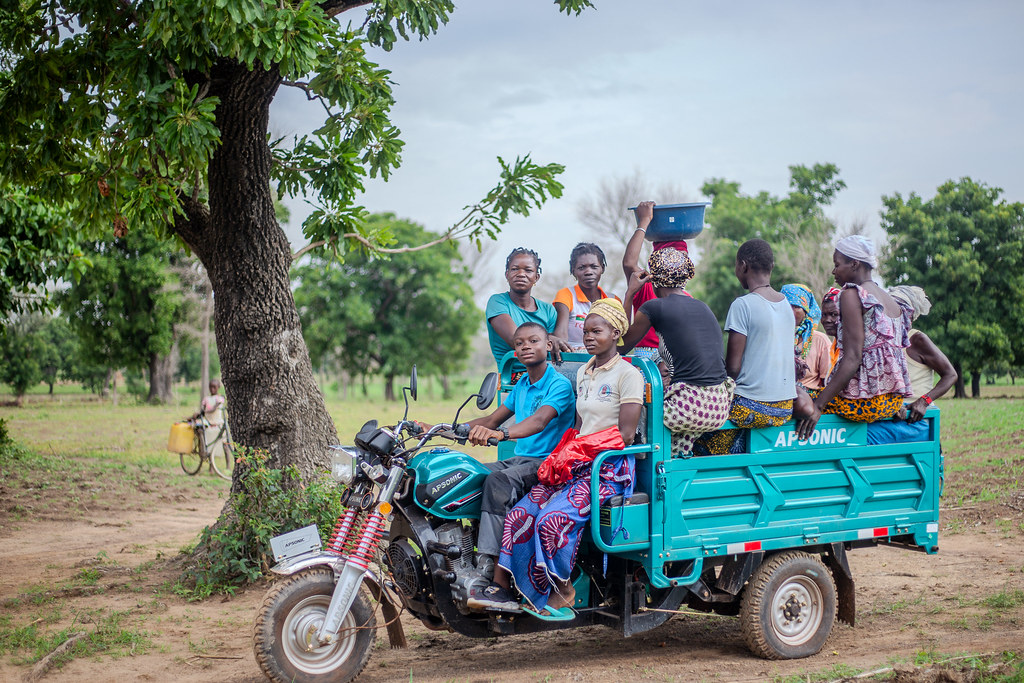
In the Houet Province of central Burkina Faso, 43-year-old Sanou Fatimata is a key figure in the Song Taab Yalgre Association, a shea cooperative bringing together some 500 women.With more than three decades of experience in the shea industry, Fatimata seamlessly blends traditional methods with modern, eco-friendly practices, enhancing her community's cultural heritage and future sustainability.Fatimata's group is a member of the Global Shea Alliance, an industry association established in 2011. As part of its efforts towards sustainability, the GSA supports women’s cooperatives to build their income generating capacity and more importantly their resilience. For women’s cooperatives like Song Taab Yalgre, the shea tree, known as ‘shi yiri’ meaning 'life' in the Dioula language, serves as a cornerstone in enhancing livelihoods. Co-op members harvest shea fruitIts kernels, which are processed into shea butter used in cooking, medicine and cosmetics, are an important source of income in the wider Sahel region. Traditionally, women like Fatimata process shea kernels by hand. This involves gathering the kernels from shea parklands, transporting them back home to boil and dry and then manually crush and mill them. The kernels are then hand-kneaded to extract the oil, which in turn is heated and boiled to produce the final product, shea butter.Much of the shea butter is consumed at home but can also be sold locally or internationally, bringing income into the household. Many women also choose to sell the boiled and dried kernels directly to buyers, most of which end up in food or cosmetic products around the world. This is also another great income-generating activity especially if women are working together as a cooperative, where they can sell quantity at a negotiated price.Traditional methods blend with eco-friendly practices for sustainable productionIn recent years, there has been a significant decline in the number of shea trees, with approximately 8 million shea trees lost each year. This decline is attributed to various factors, including tree cutting for mechanized agriculture and fuelwood, as well as limited replanting due to cultural factors and the lengthy growth period of shea trees.This decrease in the shea tree population impacts rural economic development and women's empowerment. The availability of shea is at risk to respond to growing demand. Shea communities are at the same time disproportionately impacted by climate change, with extreme temperatures and climate events changing the landscape and impacting agricultural yields. Providing comprehensive training in sustainable shea tree management with an enhanced emphasis on conservation can ensure the long-term availability of shea resources, benefiting not only current collectors but generations to come. Fatimata's group is a member of the Global Shea AllianceIn early 2024, the GSA launched the "Reversing Land Degradation in Shea Communities” project in Mali and Burkina Faso, funded by the Austrian Development Cooperation through the UNCCD. The project focuses on land restoration and livelihood enhancement through regenerative shea agroforestry to increase shea-related incomes. The project aims to improve the income and nutrition of 2,500 women shea collectors and restore 150 ha of farmland and community land through agroforestry practices and shea tree planting. The women also plan to diversify their activities beyond production of shea butter to include crops such as moringa, baobab and fonio. To help with these activities, the project will provide access to water, through boreholes installation, and tricycles will be provided for greater efficiency.“The project activities will have a great impact on the community. The borehole will benefit both the cooperative and the community and will allow us to grow crops during the off-season. The vegetable and fonio harvests will be partly for consumption and partly for the local market, which will increase our financial income. We'll also be able to sell the baobab and moringa when they are ripe. I'm looking forward to the implementation of the activities and I'm committed to the success of the project," says Somda Leocadie, a member of one of the women's cooperatives in Burkina Faso.Despite challenges such as increasingly harsh weather conditions and market fluctuations, the cooperatives, including Fatimata's association, show remarkable resilience, strengthened by ongoing training in sustainable agriculture and financial management. Together, they envision their communities as models of sustainable growth and a brighter future for the Sahel.Photos: ULPKS – YIRIWASSO Cooperative.

E-learning course developed by the UNCCD in collaboration with FAO, GEO-LDN and GIZ, focused on remote sensing and data use in support of SDG 15, specifically Land Degradation Neutrality.

The 25 members of the UNCCD’s Science-Policy Interface (SPI) have assembled at the UN Campus in Bonn, Germany for a critical scientific meeting in the run up to the 16th Session of the Conference of the Parties, which will be held in Riyadh, Saudi Arabia from the 2nd to the 13th of December 2024. The SPI is a unique combination of independent scientists from all corners of the globe, science delegates to the Convention representing the five regions of the world, and five practitioners from implementing agencies and civil society. Over the past year half of the SPI members have been assembling the evidence base for a much more systemic approach to land use, so that our impacts can be more strategic and, ideally, much greater than the sum of the parts. The other half have been conducting a comprehensive analysis of aridity trends, projections and anticipated impacts, which under the Convention translates into land and people affected by the combined effects of land degradation and water scarcity. Both assessments have led to draft technical reports which will undergo independent scientific review following the meeting so that they can be finalized and published in the autumn. The SPI is dedicated to building a bridge between science and policy. They are a global community of experts, united by a passion for understanding and safeguarding all life on land.

The rollout of the second phase of the Land Degradation Neutrality Target Setting Programme (LDN TSP 2.0) represents a key phase in combating land degradation worldwide, as 18 countries from several regions step up their land restoration commitments ahead of the 16th Conference of the Parties to the UNCCD (COP16). This significant advancement has become the focus of the recent workshop on "Strengthening land restoration targets and commitments" in Doha, Qatar, emphasizing the global community's renewed commitment to sustainable land management. Conducted on the sidelines of Expo 2023 Doha this February, the workshop saw the gathering of UNCCD National Focal Points, lead country consultants and key international organization representatives, such as the UN Convention on Biological Diversity, UN Framework Convention on Climate Change, UN Development Programme, Food and Agriculture Organization, World Wildlife Fund, Conservation International, German Development Cooperation and G20 Global Infrastructure. The workshop fostered the engagement of countries actively working on strengthening their LDN targets by introducing new tools and guidelines for integrated land use planning, and facilitating the identification of priority restoration areas that align with national policy objectives. The workshop also offered an opportunity to explore operational synergies with major environmental initiatives, putting a strong emphasis on the importance of enhancing LDN target monitoring and reporting mechanisms. “The LDN TSP 2.0 represents a unique opportunity for 18 champion countries to showcase in an innovative and bold way to bring UNCCD implementation efforts to the next level in direct response to the global land degradation crisis, paving the way for other countries to follow, ” remarked LDN TSP Team Lead Pedro Lara Almuedo. The goal of the LDN TSP 2.0's is to help countries refine their national targets towards actionable and measurable initiatives. The program stresses the importance of improving land governance by utilizing spatial mapping and monitoring to effectively combat land degradation. The progress and insights achieved through the programme will be shared at the UNCCD COP16 in Riyadh, Saudi Arabia, this December. With 131 countries engaged in the LDN TSP since 2016, over 450 million hectares committed to restoration and 106 countries having published their LDN targets, the workshop's impact sets the stage for significant contributions at COP16 to tackle regional challenges and propel the global efforts against desertification. Land Degradation Neutrality is essential for achieving SDG 15.3, offering co-benefits like poverty reduction, food security, women's empowerment, environmental protection, biodiversity conservation and sustainable management on natural resources. LDN also aids in climate change mitigation and adaptation by transforming degraded lands into carbon sinks. The LDN TSP 2.0, championed by the 18 countries – Argentina, Benin, Central African Republic, Georgia, Jordan, Kenya, Kyrgyzstan, Malawi, Namibia, Nigeria, Pakistan, Panama, Peru, Republic of Moldova, South Africa, Sri Lanka, St. Lucia and Türkiye – aims to demonstrate progress and guide further actions beyond COP16 in response to the urgent need for accelerated global efforts to restore productive land.
