Stories
Latest
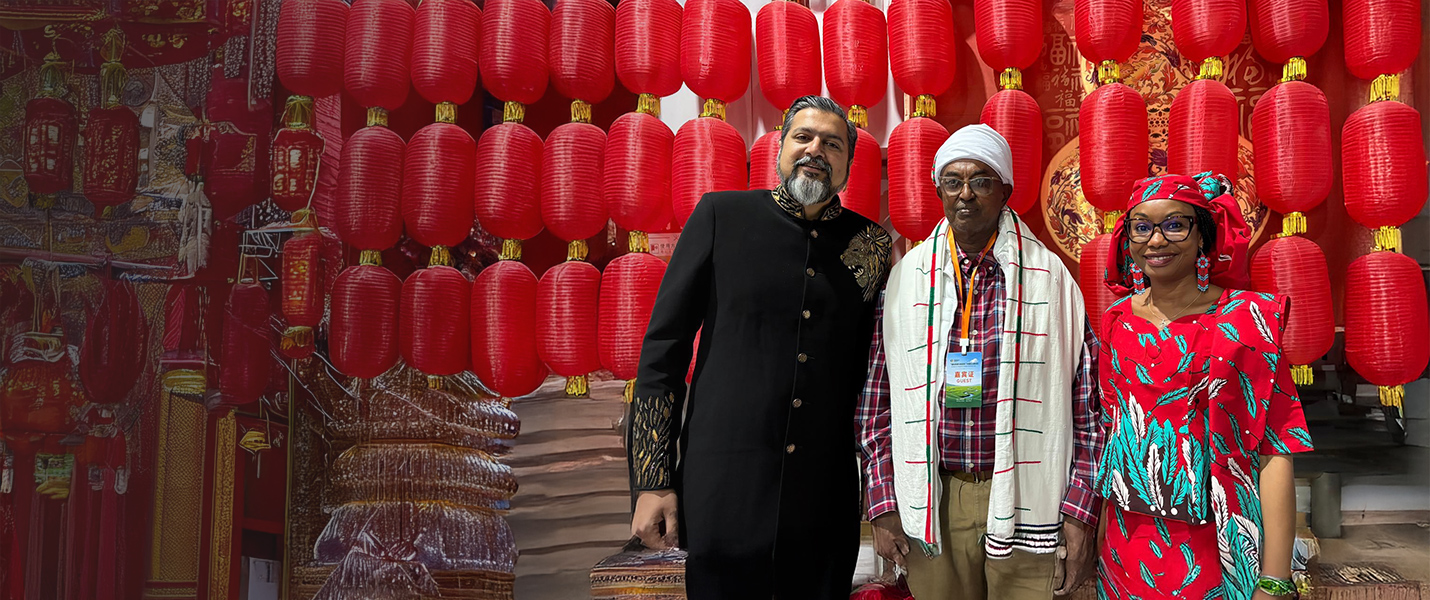
三十多年前,库布其沙漠因流动沙丘和频繁的沙尘暴,被称为中国的“死亡之海”。如今,它已经发生了翻天覆地的变化。本周,第十届库布其国际沙漠论坛在内蒙古鄂尔多斯举行。论坛由联合国防治荒漠化公约(UNCCD)、联合国环境规划署(UNEP)、中国国家林业和草原局及内蒙古自治区政府共同主办,汇聚了国际组织、政府官员、专家学者和企业家,围绕“科学治沙 绿色发展”主题,共同探讨土地恢复的解决方案。 全球挑战,刻不容缓 全球土地退化正在加速。如今,全球已有40%的土地退化,直接影响近一半人口。每年因不可持续的土地利用和气候变化,至少有1亿公顷健康土地流失,相当于一个埃及的面积。经济损失严重:每年因荒漠化、土地退化和干旱损失近9000亿美元。 自2000年以来,干旱发生频率和强度增加了三分之一,每年造成超过3000亿美元损失。预计到2050年,全球四分之三的人口将受到影响。但解决方案是存在的。UNCCD数据显示,每投资1美元在土地修复上,可产生高达27美元的回报,既能增强粮食系统,又能创造就业,还能帮助社区抵御气候冲击。 从“死亡之海”到富饶之地 库布其沙漠展示了科学、政策与社区行动结合所能带来的奇迹。如今,超过50万公顷沙地得到修复,大片沙丘长满植被,减少了沙尘暴,稳定了土壤,也阻止了大量泥沙流入黄河。 可再生能源的引入发挥了重要作用。在退化土地上建立的光伏电站,不仅生产清洁能源,还改善了植被生长条件。这种“光伏+治沙”模式创造了新的就业机会,提高了家庭收入,也证明了治理土地退化能带来繁荣。在内蒙古部分地区,农民如今靠林业和果业获得主要收入,显示健康的生态系统能够支撑可持续经济。 “恢复土地,就是恢复尊严” 在论坛的视频致辞中,UNCCD执行秘书雅斯敏·福阿德强调: “库布其模式告诉我们一个基本真理:恢复土地,就是恢复人的尊严。它创造了逾10万个就业岗位,孕育了支撑家庭的新兴产业,让社区不再把沙漠视为敌人,而是视为共创未来的伙伴。这一转变并非单一部门之功,而是政府、企业和社区并肩携手、同心协力的结晶。” 共享经验,共创未来 论坛不仅关注内蒙古,也汇聚了来自蒙古国、非洲萨赫勒地区、拉丁美洲等受荒漠化严重影响地区的声音。蒙古国林业官员介绍了“十亿棵树”计划,非洲和拉美代表分享了从火灾监测到可持续牧业的经验。 论坛还展示了“UNCCD土地英雄”青年代表的经验。来自马里的企业家罗基娅图·特拉奥雷创立了Herou联盟,通过可持续辣木种植赋能妇女和青年。她说:“中国向世界证明了,只要有政治承诺和社区参与,就能把沙漠变成绿洲。种树不仅保护环境,还能增加GDP和社区收入。科学和技术是我们恢复土地、改善经济的最佳伙伴。” 来自津巴布韦的塔库德扎·阿什利·姆兰博则强调科技的重要性:“论坛让我看到无人机、卫星和物联网等创新方案,以及光伏与动植物结合的模式。如果能在撒哈拉以南非洲推广,我相信我们能够实现土地退化零增长的目标。” 从地方成功到全球目标 库布其的经验对全球具有重要意义。各国已承诺到2030年恢复10亿公顷退化土地,其中近一半是在UNCCD框架下作出的。要实现这一目标,未来五年每天至少需投入10亿美元。但收获的韧性、粮食安全和生计改善,将足以证明这一投资是值得的。 在土地恢复过程中,当地社区、农民和牧民发挥了核心作用:他们植树种草,成立合作社,发展小企业,证明了土地恢复能够带来社会和经济双重收益。 论坛的结论很明确:土地可以恢复,而当它恢复时,人类与自然都会受益。

The leaders of the three Rio Conventions recently met in Bonn to chart the next stage of their collaboration. Yasmine Fouad, the new UNCCD Executive Secretary, chaired the meeting of the Joint Liaison Group, welcoming her counterparts Simon Stiell of the UN Framework Convention on Climate Change (UNFCCC) and Astrid Schomaker of the UN Convention on Biological Diversity (CBD). Together, they discussed priority actions for 2025–2026 and pledged to strengthen cooperation to address the triple planetary crisis of climate change, biodiversity loss and land degradation. One immediate outcome of the meeting is the launch of the Rio Synergies platform, unveiled to showcase how the three conventions are stepping up joint action. The new website highlights the benefits of integrated approaches and provides a window into how countries, communities and institutions can work across climate, biodiversity and land agendas.Some 30 years ago, at the Rio Earth Summit, the world agreed on three landmark treaties to protect the planet: the UNCCD, the CBD and the UNFCCC. Each tackles a different piece of the environmental puzzle—but all share one truth: climate change, biodiversity loss and land degradation are deeply connected, and solving one equals tackling them together.The rationale for closer cooperation is clear: Humanity is on track to reach ten billion people by 2050, just as nature’s life-support systems are reaching breaking point. Almost one million species are at risk of extinction. Three-quarters of the planet’s land has been transformed by human activity. And if greenhouse gas emissions continue unchecked, the world is set to overshoot the 1.5°C warming limit within decades.At the heart of cooperation is a shared conviction: when climate, land and biodiversity goals are pursued together, the results are stronger, more cost-effective and longer lasting. By linking their mandates, the Rio conventions are committed to turning overlapping challenges into shared opportunities—delivering solutions that benefit people, economies and ecosystems alike.The new platform demonstrates how this can work in practice. It showcases key areas for action, such as sustainable land use planning, nature-positive food production, renewable energy transition and gender-responsive action. It also highlights country case studies where integrated projects are already making a difference: Rwanda’s nationwide restoration strategy combining reforestation, agroforestry and land recovery; Central Asia’s efforts to restore vast degraded steppes as carbon sinks; and Panama’s “Nature Pledge,” which unites its climate, biodiversity and land commitments under a single national framework, among others.The Rio synergies approach is centered around three pillars. First is country support: helping governments strengthen policies, develop integrated plans and build negotiation skills through joint capacity-building. Second is coherence and complementarity: aligning work on shared themes like food systems, forests and water, and engaging Indigenous Peoples and youth. Third is outreach and visibility: speaking with one voice at global events, promoting a joint narrative and sharing inspiring examples of synergy in action.As the three Executive Secretaries agreed, climate change, biodiversity loss and land degradation are not separate challenges—they are different symptoms of one planetary crisis. By strengthening synergies, the Rio Conventions aim to help humanity heal its relationship with nature and build a more resilient, sustainable future for all. The Rio journey now leads to 2026 — the triple COP year when all three conventions will hold their governing conferences— a pivotal convergence to align national commitments, showcase joint solutions and generate the political momentum needed to translate promises into action on the ground.Join the Rio journey at https://rioconventions.org

In the past decade, the world has made a historic push to prepare for drought before it strikes, unlocking solutions in policy, practice, and finance. Humanity has never been better equipped to face this growing challenge. The next step, experts say, is using all the available knowledge and expertise to build drought resilience for everyone, everywhere. At World Water Week, held in Stockholm from 24 to 28 August, The Nature Conservancy (TNC), the German Agency for International Cooperation (GIZ), and the UN Convention to Combat Desertification (UNCCD), co-convened leading experts to highlight success cases and new initiatives for drought resilience.Here are five takeaways from the session ‘Accelerating Drought Resilience in a Changing Climate:’Systemic measures for a systemic riskFar from only affecting agriculture, drought can have long-lasting impacts on all sectors of society, the economy and ecosystems —-uprooting people from their lands, stunting the development of entire generations, and causing GDPs to plummet by up to 10 per cent. Drought is a systemic risk, but too often, it is addressed with piecemeal measures.“Water crosses so many boundaries as it moves from the tops of mountains through ecosystems towards the ocean: administrative, legal, cultural, ecological boundaries,” said Global Director of Freshwater Outcomes at TNC Nicole Silk. “That is why we need to work across systems, sectors, borders, and scales to build drought resilience”.In that spirit, the nonprofit is supporting the implementation of nature-based solutions across entire watersheds in collaboration with communities, the private sector, and governments. Protecting key ecological functions is a nature-based solution, as are financial innovations.One example is TNC's work in the Tana River in Kenya, which supplies 95% of the water for Nairobi’s 4 million residents, feeds one of the country’s main agricultural areas, and provides half of the country’s hydropower output. In the past 50 years, the substitution of agricultural fields for forests and wetlands had reduced the ability of the land to store runoff water and hold the soil, compromising the water security of millions.Enter the Upper Tana-Nairobi Water Fund. The mechanism, which TNC kickstarted in 2015 as is now an independent Kenyan-registered entity, has public and private donors and major water consumers downstream contribute resources to support water and soil conservation measures upstream, which is improving water quality and supply.No-regret investments Protecting ecosystems, managing land and water resources sustainably, and restoring degraded land are some of the most effective and sustainable ways of building drought resilience. But the benefits of nature-based solutions go way beyond drought.Every dollar invested in nature-based solutions (NbS) can generate up to US$27 in improved ecosystem services and livelihoods —-a no-regret investment, according to a recent report launched at UNCCD COP16 and as evidenced by the Economics of Land Degradation (ELD) Initiative.“More intense and frequent droughts are the new normal,” said Senior Policy Officer at BMZ Mario Lootz-Petersen. “Our goal is to make nature-based solutions a new normal, as well. The evidence and the tools are definitely there.” For the expert, one of the keys is continuing to build robust business cases and models around sustainable land and water management with a view to scaling up the many successful initiatives around the world.Tailored approaches While the pillars of drought resilience are universal, each context requires its own tailored solutions. Hence the importance of adapting drought resilience approaches to different realities.“A key question is how we can localize drought resilience solutions such as climate-smart agriculture, drought insurance, and water-storage innovation,” said Giriraj Amarnath, Principal Researcher on Disaster Risk Management and Climate Resilience at the International Water Management Institute (IWMI).Through the Drought Action Catalyst, experts, decision-makers, and communities can come together to co-design and scale solutions for drought. The IWMI-led platform, launched at UNCCD COP16, also promotes South-South learning; an integrated action across sectors like agriculture, health, and infrastructure, and even an AI-based chatbot to help farmers tackle drought.From policies to practice With support from UNCCD, more than 70 countries have put in place national plans to manage drought risk, up from three only a decade ago. In parallel, the convention is hosting two major initiatives on drought resilience and is collaborating with academic, research and civil society organizations to bridge policy and practice.One of the UNCCD-hosted initiatives is the International Drought Resilience Alliance (IDRA), which is building political momentum and developing tools to help countries anticipate, prepare for, and adapt to drought —for example, the International Drought Resilience Observatory (IDRO). The other is the Riyadh Drought Resilience Partnership (RDRP), which will financially support 74 vulnerable countries in implementing their national drought plans from early 2026, as explained by Policy Officer with the UNCCD Daniel Tsegai. The idea is to invest in people, land, and ecosystems today, so that communities can thrive tomorrow.Additionally, the Convention and the Global Water Partnership (GWP) have launched a series of regional and global Communities of Learning and Practice (CLP) —an agora where practitioners, decision-makers and scientists can learn from each other, ask for advice, and share new developments on drought-related matters.“I cannot overstate how important peer-to-peer learning is when it comes to accelerating drought action on the ground,” said Tsegai, who stressed the importance of sustainable land and water management. “Together, we can go further, faster —and the CLPs provide a safe space to do just that.”Beyond early warningIn Africa, UNCCD teamed up with the Sahara and Sahel Observatory (OSS) —an IDRA partner— and the National Drought Mitigation Center/ University of Nebraska-Lincoln (NDMC/UNL) to create a drought impact tracker for countries in the region. The tool looks to empower farmers to report on drought signs and impacts using their phones, contributing to improve drought management.A project led by the GWP is now integrating the impact tracker into efforts to improve early warning systems in Eastern Africa. For GWP specialist Anjali Lohani, the move shows the importance of integrating existing tools and insights, instead of trying to reinvent the wheel.“So much knowledge already exists, so a priority is to make it available and accessible to those who need it,” said Lohani, who also noted the importance of building the capacity of communities to act on early warning messages. “Knowing that drought is coming is not enough; you need to have preparedness and response capabilities in place.”

As the planet continues to warm, harsher droughts, extreme heat and erratic rainfall are eroding the food security and livelihoods of millions – especially the smallholder farmers who produce one third of the world’s food. Over the past three decades, disasters have caused US$3.8 trillion in crop and livestock losses globally. But in regions like Africa, only three per cent of family farmers have agricultural insurance, leaving millions exposed to shocks. Meanwhile, land degradation and drought are pushing rural communities deeper into poverty, jeopardizing the ability to feed a growing world population. One way to address the challenge is reducing insurance premiums for farmers who manage the land sustainably, as explained by a new report commissioned by UNCCD and funded by the International Drought Resilience Alliance (IDRA) This innovative model leverages mobile and satellite technologies, behavioral science and systems thinking to provide financial protection while promoting sustainable land use. The report, called ‘Securing Land and Livelihoods: Insurance for Drought Resilience,’ shows the practical and economic benefits of the model through case studies from Ethiopia, Kenya, Malawi and the Horn of Africa. To put it in practice, authors recommend building public-private partnerships, establishing pilot projects and embedding these solutions into national development plans and climate risk strategies. This integrated model reflects UNCCD’s commitment to solutions that align land management, insurance innovation and resilience-building for the communities most affected by land degradation and drought. A pilot project is underway in Namibia, with progress to be shared at UNCCD CRIC23 this December, and the project findings to be presented at a dedicated insurance event during UNCCD COP16 in 2026.

Civil society is on the frontline of the land challenge — and they are essential partners for the UNCCD. From farmers’ associations to women’s cooperatives and youth networks, civil society organizations (CSOs) bring local realities to the global stage. The CSOs amplify the lived reality that land degradation is not only an environmental issue but as a direct challenge to livelihoods, food security and the future of our communities. Today, nearly 1,200 are accredited to the UNCCD and their engagement supported and coordinated through the UNCCD CSO Panel. This structure ensures that voices from local communities are heard in international negotiations, connecting grassroots experience with global policymaking on the future of our land.At the heart of the Convention’s work is Land Degradation Neutrality (LDN) — the global commitment to balance the amount of healthy and productive land with the land being degraded. The goal is simple but urgent: by 2030, reduce degradation, restore what has been lost and make sure there is no net loss of healthy, productive land. To turn this ambition into action, the Global Environment Facility (GEF) launched the Medium Size Project “Strengthening Civil Society Role in Achieving Land Degradation Neutrality (CS4LDN).” Backed by two million USD in funding, this three-year initiative is implemented by the International Union for Conservation of Nature (IUCN) and executed by Both ENDS on behalf of the Drynet network, with IUCN also serving as co-executor. The project is carried out in close partnership with the UNCCD CSO Panel, the UNCCD Secretariat and other global stakeholders. Through CS4LDN, civil society organizations are better positioned to influence LDN policy and practice — linking community-driven initiatives with international decision-making. The project focuses on two main areas: Influencing LDN – raising the visibility and policy impact of CSOs in LDN efforts. This includes building skills in advocacy and communication, promoting local initiatives and supporting CSO participation in global forums such as UNCCD COP and CRIC events.Leveraging LDN – Improving CSO access to funding by strengthening fundraising skills and building connections with donors. Activities range from training and donor roundtables to a study on funding barriers, with special focus on challenges faced by CSOs in the Global South. CS4LDN follows a collaborative, cross-learning approach. Webinars, mentorships and workshops strengthen CSO capacity, while knowledge is shared through an online platform, newsletters and storytelling. A strong focus is placed on amplifying voices from youth- and women-led initiatives. The project is guided by a Project Management Unit (Both ENDS and IUCN) and a Steering Committee that includes the Drynet Board, IUCN, the UNCCD CSO Panel and the UNCCD Secretariat. It will also support CSO consultations and participation in major gatherings, including UNCCD CRIC23 in Panama this December as well as Désertif’actions and UNCCD COP17 in 2026. Photo: © IISD/ENB Anastasia Rodopoulou

Mongolia has unveiled the official logo for the 17th session of the Conference of the Parties (COP17) to the United Nations Convention to Combat Desertification (UNCCD), taking place in Ulaanbaatar from 17 to 28 August 2026. The emblem blends deep cultural symbolism with a call to global action, reflecting UNCCD’s mission to unite nations in finding solutions to desertification, land degradation and drought. The unveiling of the logo marks the beginning of one-year countdown to UNCCD COP17. More than a visual identity, it is an invitation to join hands in planting seeds of unity, resilience and shared trust — so that lands once degraded may flourish again. At the top of the logo, radiating sunrays recall the eternal expanse of the sky — a life-giving force in Mongolian cosmology — which echoes the Sustainable Development Goals and represents the solutions to environmental challenges faced by humanity. The rays flow into the silhouette of a traditional Mongolian ger (yurt), crowned with a toono — the circular opening through which the sky enters the home. This symbol of harmony between people and nature echoes the timeless wisdom of nomadic life and the belief that the earth is both homeland and heritage. Beneath, an open hand cradles the Earth with gentle strength, a gesture of stewardship and protection, while from the palm a green sprout emerges — a sign of resilience, renewal and the promise of a restored world. Together, these elements express COP17’s central message: that our collective efforts, diverse knowledge and shared responsibility can transform the challenges of land degradation into opportunities. With over 75 per cent of its land affected by degradation, Mongolia has made land restoration a national priority through initiatives such as the “Billions of Trees” movement, the “White Gold” rural development programme and the “Food Revolution” agri-soil campaign. Hosting UNCCD COP17 will provide a platform to share these experiences while catalyzing global cooperation to address the interlinked crises of land degradation, climate change and biodiversity loss. UNCCD COP17 will bring together delegates from 197 Parties, academia, civil society and private sector to advance drought resilience and land restoration goals. The conference aligns with the UN International Year of Rangelands and Pastoralists (IYRP 2026), an initiative championed by Mongolia to highlight sustainable rangeland management and the needs of over one billion people who depend directly on these ecosystems.
