Stories
Latest
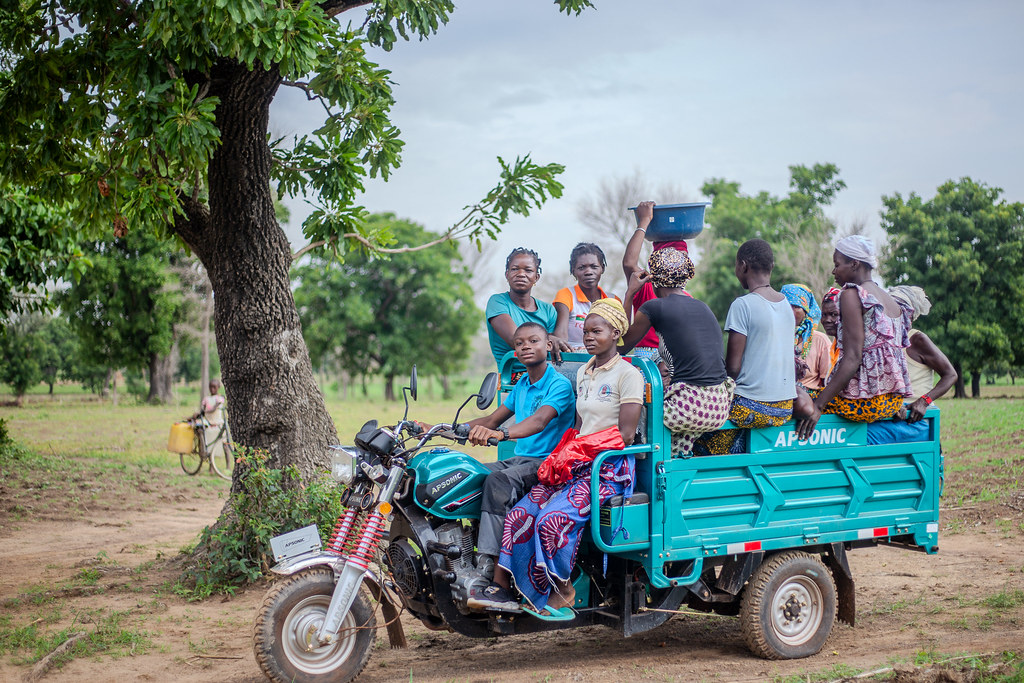


New global assessment reveals deep gaps in land tenure security, governance and women’s land rights For billions of people, land is more than property. It is their livelihood, income, identity and stability. Yet that stability is increasingly fragile. Only about one-third of the world’s land is formally documented. More than one billion people – nearly one in four adults globally – feel insecure about their rights to land or housing and fear they could lose them within the next five years. A new global assessment, The Status of Land Tenure and Governance, sheds light on this growing insecurity. Co-published by the Food and Agriculture Organization of the United Nations (FAO), the International Land Coalition and the French Agricultural Research Centre for International Development (CIRAD), under the Global Land Observatory, it brings together data from governments, researchers and civil society to show who holds land, how secure those rights are and where governance gaps remain. With up to 40 per cent of the world’s land already degraded, secure land tenure is essential to restoring land at scale. A widening gap between land management and recognition Although states legally own most of the world’s land, much of it is governed in practice through customary systems. Indigenous Peoples and local communities manage 42 per cent of global land, yet only a small portion of those territories are formally recognized as theirs. This gap between management and legal recognition means that many communities who depend on land do not have formal protection of their rights. In contexts characterized by high land concentration and ongoing large-scale land acquisitions, the absence of recognition can leave customary landholders with limited legal safeguards. Where land rights are unclear or unprotected, adoption of sustainable land management practices becomes more difficult. Farmers and communities are less likely to invest in restoring degraded soils, conserving water, or adopting sustainable practices if their claims to land are uncertain. “The findings of the Status of Land Tenure and Governance Report confirm that secure and equitable land tenure is a prerequisite for sustainable land management,” said Ward Anseeuw, Senior Land Tenure Officer at FAO. “Strengthening land governance is therefore essential to achieving the objectives of the UNCCD, particularly in advancing land degradation neutrality and enabling local land users to invest confidently in the long-term health and productivity of their land.” Rising insecurity and persistent inequality Land insecurity is increasing globally. Since 2020, the share of adults who feel insecure about their land or housing rights has risen from 19 per cent to 23 per cent worldwide – affecting more than 1.1 billion people. In several regions, more than one-quarter of adults' report feeling insecure, with youth facing particularly high levels of uncertainty. Gender disparities remain pronounced. Across 108 countries assessed, 48 per cent of men report being sole or joint landowners, compared to 40 per cent of women. In agricultural contexts, the gap is often wider. Women produce roughly half of the world’s food yet own less than one-fifth of land globally. Where women lack secure tenure – due to inheritance barriers, limited legal protections or discriminatory customary norms - their ability to invest in soil restoration and sustainable practices is constrained. Advancing women’s land rights is therefore not only a matter of equality. It is essential for resilient food systems and sustainable land management. Customary lands, climate and resilience Customary land systems often overlap with areas of high biodiversity and significant carbon storage. Communities managing these territories have demonstrated long-standing stewardship practices that contribute to ecosystem stability. Healthy land, including soils and water, plays a significant role in climate mitigation and adaptation. According to the UNCCD estimates, drought losses now exceed USD 300 billion annually, and large parts of the world are becoming progressively drier. Billions of people could face increasing aridity in the coming decades. In this context, strengthening recognition of customary tenure is not only about justice – it is about safeguarding ecosystems and supporting communities that are already on the frontlines of climate stress. A structural data and governance gap Land is central to food security, climate action and sustainable development – yet information about land tenure arrangements and the security of those rights remains patchy. Only a limited number of countries report fully on land-related Sustainable Development Goals (SDG) indicators. Compared to sectors such as health or public finance, land tenure data are far less available and often not publicly accessible. The assessment calls for stronger national data systems, clearer legal frameworks and better alignment with international standards, including the Voluntary Guidelines on the Responsible Governance of Tenure of Land, Fisheries and Forests (VGGT), endorsed by the Committee on World Food Security and supported by FAO – the only globally agreed framework that sets standards for how land tenure rights should be recognized and protected. These guidelines form the foundation for a number of critical policy decisions of the UNCCD Conference of the Parties. Without reliable and transparent information, it becomes harder for governments to track progress and meet commitments under the SDGs and the Rio Conventions – the three global agreements on climate change, biodiversity and desertification. Governance at the heart of restoration These themes were further explored during a joint side event convened by the UNCCD together with TMG Think Tank for Sustainability – an independent research and policy institute focused on land governance and environmental justice – as well as the Robert Bosch Foundation and other partners. The discussion underscored that restoration, food security, and resilience cannot be separated from land governance systems. Transparent land administration, inclusive decision-making, and legal certainty are foundational conditions for sustainable land management. Governments have pledged to restore one billion hectares of degraded land by 2030, with nearly half of that commitment under the UNCCD framework. Achieving this ambition will require more than finance and technical solutions. It will require trust and equity for the people who depend on the land. “Land underpins food systems, climate stability and livelihoods,” said Dr Barron Joseph Orr, Chief Scientist of the UNCCD. “Without responsible and inclusive land governance that safeguards land tenure, the intended positive impacts of restoration efforts risk being temporary. Securing land rights is not simply about the four "R's" of Redistribution, Restitution, Recognition, and Regulation - it is about creating the conditions that allow communities to restore land and sustain it for generations to come.” Photo (c) : FORESCA

Across Southern Africa, drought is no longer an occasional shock — it is a recurring reality shaping landscapes, economies and daily life. As climate variability increases, pressure on land, water systems and rural livelihoods continues to grow. In Zimbabwe, Mozambique and Madagascar, the impacts are increasingly severe and they fall hardest on women and local communities who depend on land and natural resources to feed families and earn an income. In Madagascar, more than 9 million hectares (over 15 per cent of the country’s land area) are affected by drought, with some regions experiencing near-total crop failure during prolonged dry events. Mozambique faces frequent seasonal droughts that threaten food security for over 4 million people, particularly in its central and southern provinces. In Zimbabwe, recurring drought episodes have put nearly three million hectares of farmland at risk, with smallholder farmers and pastoralist communities most affected. Across these countries, drought disproportionately impacts women, who make up the majority of smallholder farmers, and other vulnerable groups dependent on agriculture and natural resources for their livelihoods. Yet the story is not only about risk. It is also about opportunity: how these countries are designing gender-smart, community-led solutions that turn drought resilience into livelihoods, restore degraded land and protect food and income while advancing sustainable land management and Land Degradation Neutrality (LDN). A key shift is placing women and local communities at the center — not only as beneficiaries, but as leaders of resilient livelihoods and value chains. This means recognizing women’s role in managing farms, water and household food security while tackling the barriers they face in accessing land, finance, skills, markets and decision-making. It also means strengthening community institutions so local knowledge and priorities shape what resilience looks like on the ground. Another big change is using drought risk data together with economic and livelihood analysis to identify where resilience investments can create real opportunities. In practice, this helps countries move from broad vulnerability profiles to concrete ideas that match local realities: which landscapes are most at risk, which groups are most exposed, what options can reduce pressure on land and water, and which interventions can generate reliable incomes even during dry periods. Countries are also working to develop scalable investment ideas — from climate-resilient agriculture to water management — that can attract blended finance and align with national priorities. Examples discussed through this work include community-based water management that secures access during dry spells, climate-resilient agriculture that stabilizes yields, and women-led enterprises that diversify income while reducing vulnerability and restoring degraded land. These solutions are designed to be practical, locally anchored and capable of expanding beyond pilot sites. “Women and local communities are already on the front line of drought. When they lead the solutions — supported by secure land tenure together with access to finance and investment-ready plans — resilience becomes real: it protects food and incomes today and restores land for generations to come,” emphasizes Louise Baker, Managing Director of the Global Mechanism of the UNCCD. This work is being advanced through the Gender-Transformative Drought Resilience in Transition States in Southern Africa (GRDSA) Project, supporting Madagascar, Mozambique and Zimbabwe to help countries prepare drought investment plans, strategies and pipelines. The GRDSA Project does not finance investments directly. Instead, it focuses on project preparation so countries can later mobilize additional public and private finance, building on existing national policies, drought monitoring systems and vulnerability assessments rather than duplicating them. National inception workshops held in 2025, alongside a regional exchange, helped set this work in motion. The project is financed by the African Development Bank (AfDB) and the Government of Canada and implemented by the Global Mechanism of the UNCCD. Photography (c) : Global Water Partnership Southern Africa, Krees Raharison

The Guna use eco-taxes to protect their forests, feed their people and save their culture

How carbon markets can deliver real benefits for land and livelihoods

The shift to renewable energy is picking up momentum, and with it comes a practical question: how do we scale clean power without putting more pressure on land that supports food, nature and livelihoods? A recent report from the International Institute for Sustainable Development (IISD) looks at how renewable energy and sustainable land management can work together when projects are planned with land and people in mind. During the webinar on the report findings, UNCCD Deputy Executive Secretary Andrea Meza noted, “There are ways in which we can deploy these technologies in different landscapes while ensuring food and water security and protecting biodiversity. It is possible to reduce negative impacts and have positive ones if we start putting in place integrated land use plans as part of the strategy for deploying these technologies.” To avoid catastrophic climate change impacts, the world must rapidly transition away from fossil fuels toward renewable energy sources. The share of renewable energy in the power mix is likely to continue growing rapidly, as countries strive to fulfil their emission reduction commitments and the cost of renewable energy technologies continues to shrink. “The starting point was: how can we make sure that the expansion of renewable energy does not come at the expense of sustainable land management and our efforts to halt land degradation globally? What are the main strategies to make sure that new renewable energy installations do not lead to land degradation?” explained IISD Indicator Lead and report co-author Stefan Jungcurt. Today, renewables account for around 30 per cent of global electricity mix, with solar power growing most rapidly, doubling capacity every three years. That momentum has a land dimension. Renewable energy technologies interact with land systems in complex ways, influencing land health and productivity, the provision of ecosystem services and local socio-economic outcomes. Many renewables require more land than fossil fuels when you factor in energy farms, spacing and enabling infrastructure. The report mentions that solar power needs about twice the land footprint of coal-fired electricity and wind energy can require up to 12 times more largely because of spacing between panels and turbines. However, the land between these components can often be put to good use and a larger footprint does not have to translate into degraded land or land use conflicts. Risks arise when renewable energy expansion is driven only by energy objectives, and land considerations arrive late. “The report is a joint response to overlapping challenges of climate change, land degradation and desertification and energy poverty. Clean energy and sustainable land management do not need to compete for space or resources. A well-designed renewable energy system can work with land rather than against it,” said the Interim Head of the Pan-African Cooperation and Educational Technologies Division at the United Nations University Vice-Rectorate in Europe Emmanuel Cheo. One of the most attractive options is dual land use: placing energy infrastructure alongside other productive uses on the same land. Dual-land-use systems can help align land-energy planning, finance and implementation and unlock synergies to advance climate action, biodiversity goals and land restoration together rather than on parallel tracks. The report points to the Land Degradation Neutrality response hierarchy as a practical way to structure action: Countries can avoid land degradation by siting renewable energy systems on land or freshwater systems that have already been degraded or modified by human activities. Solar, wind and bioenergy farms on low-impact sites can be explicitly designed to reduce reliance on wood and charcoal for fuel, helping avoid further deforestation and land degradation. Countries can reduce land degradation by designing and implementing dual-use approaches such as agrivoltaics which pairs solar with crops or grazing, eco-voltaics which combines solar with restoration or conservation goals and wind farms on rangelands where most of the surrounding land can still be used. Integrating renewables with sustainable land and water management through regenerative agriculture, agroforestry and silvo-pastoralism can increase food production, enhance drought resilience, conserve biodiversity and reduce post-harvest losses. “There have been a lot of methodologies developed to avoid and minimize the negative impacts. Integrating these considerations into the early planning stage is very important. We also found that the operation of solar photovoltaic plants can improve soil conditions and the micro-environment but an integrated and aligned policy framework is critical,” said International Renewable Energy Agency's Programme Officer Jinlei Feng. Countries can reverse land degradation through carefully chosen locations for solar and wind, or through bioenergy approaches such as harvesting invasive species or cultivating feedstock on marginal or degraded land. For example, solar energy systems can support land restoration through shading or wind protection, providing clean energy while promoting soil health and vegetation growth under the solar panels. “Countries are trying to decarbonize their economies, meet rising energy demands and at the same time deliver on the commitments under all three Rio Conventions. The good news is that renewable energy and sustainable land management are not in competition by default. We can avoid, reduce and reverse land degradation as we deploy renewables,” said UNCCD Chief Scientist Dr. Barron J. Orr. A key takeaway from the report is that dual-land-use systems will only deliver results if the right conditions are in place: coordination across sectors, clear governance and regulatory frameworks, finance and incentives. Community engagement and capacity building help ensure that people who work the land can influence siting and project design, take part in implementation and share fairly in jobs, energy access and other benefits. When done right, the renewable energy transition can support sustainable land management while strengthening food security and livelihoods. With UNCCD COP17 set to spotlight the world’s rangelands the message is timely: land that sustains rural and pastoralist communities can also accommodate well-designed renewable energy systems that support resilience without adding pressure. The report titled “A Natural Fit: Renewable energy and sustainable land management” was prepared by IISD in collaboration with UNCCD and UNU and with funding support from the European Union. You can watch the recording of the webinar on report findings below:

At the World Economic Forum in Davos, the United Nations Convention to Combat Desertification officially launched the Business4Land (B4L) Champions’ Council, a high-level coalition of global business leaders committed to restoring land and building drought resilience at scale. The launch, co-hosted with InTent, brought together Champions and partners for a dynamic discussion on accelerating private sector action for sustainable land management.Bringing together 10 visionary leaders across diverse regions and industries, including food, fashion and insurance, the B4L Champions’ Council will serve as a high-profile advocacy platform under UNCCD’s flagship B4L Initiative. Its mission is to mobilize corporate action to restore 1.5 billion hectares of degraded land by 2030, while inspiring other companies to adopt land-positive and regenerative business models that deliver both environmental and economic impact. The inaugural B4L Champions are:Bayanjargal Byambasaikhan, Vice Chair, Business Council of MongoliaBenedikt Bösel, Founder, Gut & BöselBirgit Cameron, Co-Founder, Patagonia Provisions and CEO, B. Cameron ConsultingDavid Canassa, Executive Director, Reservas VotorantimAlexandre Capelli, Group Environmental Deputy Director, LVMHMathieu Dondain, Managing Director, NexiraLorenzo Fattibene, Global Business Transformation Leader & Global Sustainable Insurance Leader, EYJulie Greene, Chief Sustainability Officer, Olam AgriAdrienne de Malleray, Co-Founder, Genesis Soil HealthMaria Luiza de Oliveira Pinto e Paiva, Executive Vice-President of Sustainability, Communication and Brand, Suzano“The B4L Champions’ Council reflects a pivotal shift in how we address land degradation: by placing the private sector at the forefront of sustainable land management and people at the heart of the process. Restoring land is not just a government priority, it is a global economic necessity,” said Dr. Yasmine Fouad, Executive Secretary of UNCCD at the launch event in Davos.The Kingdom of Saudi Arabia, represented at the launch by Deputy Minister of Environment and Advisor to the COP16 Presidency, Dr. Osama Ibrahim Faqeeha, serves as the inaugural Chair of the B4L Champions’ Council. “Land restoration is a smart investment in our collective future. With the launch of the Business4Land Champions’ Council, we are creating a platform where private sector leaders can commit, collaborate, and catalyze real-world impact,” he said. “Every business is a land champion.” The Chair role will integrate the Council’s work into UNCCD COP processes and align business leadership with national and global commitments on land restoration and drought resilience. The COP17 Presidency of Mongolia, represented by the Deputy Minister of Environment Mr. Munkhtamir Batbayar, will assume the Chair in August 2026, continuing this leadership through the next year and beyond.“The Champions’ Council is not symbolic, it is designed to lead private-sector action on land restoration and drought resilience. From Mongolia’s perspective, we want business engagement to shift in three ways: from commitments to measurable land outcomes, from isolated pilots to investable pipelines, and from ‘do no harm’ to land-positive value creation. Engaging with our Steppe Action Agenda, the Council can drive collective leadership that moves markets, influences peers, and creates a race to the top on land stewardship,” stated Deputy Minister Batbayar.“We want to bring companies the finance and technology needed to speed up land restoration and sustain livelihoods for people,” said Mr. Bayanjargal Byambasaikhan, Vice Chair, Business Council of Mongolia.As the world looks toward UNCCD COP17 in Mongolia, the B4L Champions’ Council marks a key milestone in placing land at the center of business strategies. With resources and priorities stretched across multiple global challenges, it is more essential than ever that companies invest in regenerative, land-positive solutions to secure a sustainable future for people, nature, and economies.
