News & stories


Latest news & stories
By Yasmine Fouad, UNCCD Executive SecretaryThe global energy transition is often portrayed as a challenging, complex, costly and urgent necessity. But this perspective fails to capture the full picture. What if this monumental transformation offers one of the greatest opportunities of our time to restore our planet? This is an opportunity both to change how we power our world and to restore the land itself, addressing the interconnected crises of climate change, biodiversity loss and food insecurity at their source. A bucket-wheel excavator, one of the world's largest land vehicles, looms against the sky at the Hambach open-pit mine. This machine symbolizes the large-scale extraction of lignite coal that has shaped the region for generations. I witnessed this firsthand in Eschweiler, Germany, this week. For generations, this region was defined by the massive machinery of the Hambach open pit mine, which spans 85 square kilometers (about the area of Manhattan) and plunges 400 meters (about half the height of the Burj Khalifa, the tallest building in the world) deep. With a delegation of parliamentarians from around the world for our Global Changemaker Academy, I visited this former mine site. Through a meticulous, multi-decade effort, the landscape is being transformed into what I can only describe as a "friendly land": an ecosystem reborn from an industrial scar that is teeming with new life. The vast pit is destined to become Germany's second-largest lake after 2029. UNCCD Executive Secretary Yasmine Fouad joined the global delegation of parliamentarians from the Global Changemaker Academy, who were welcomed by the deputy mayor of Eschweiler at City Hall (Stadt Eschweiler Rathaus). What is happening in Eschweiler is powerful and tangible, going beyond a "good story." It is a prime example of what can happen when investment, technology, law and community dialogue converge. But Eschweiler's story is a complex narrative of a just transition that acknowledges the decades of community displacement and environmental degradation that preceded it. The most important lesson from this visit is not found in the soil or the newly planted trees. It is found in the law. The remarkable restoration we have seen did not happen by virtue of corporate goodwill alone. It was the direct result of a robust, forward-thinking legislative framework: Germany's Federal Mining Act. The law shows the principle that those who profit from extracting resources are responsible for restoring the land afterward. It requires companies to submit detailed, science-based reclamation plans for approval before any earth is moved. This legal framework designs the end from the beginning. The successful restoration of the land was achieved because the law required it, setting ambitious standards and ensuring the land was returned to the people in a healthy, productive and ecologically diverse state. UNCCD Executive Secretary Yasmine Fouad This is the critical framework we must bring from Eschweiler to the rest of the world. For the parliamentarians who joined me, this was the primary takeaway. While the specific restoration techniques or financial scale of this "Rolls Royce" project may not be replicable everywhere, the principle of strong, enforceable policies is universal. As lawmakers, they are the architects of this change. For three decades, the international community has addressed our planet's greatest challenges through three related agreements stemming from the Rio Earth Summit. Too often, these agreements tended to be pursued in relative isolation. Eschweiler shows us, in contrast, that on-the-ground action creates the constructive collaboration we need. Here, land restoration is the unifying, practical action that allows us to address climate change, biodiversity loss and desertification all at once. The restored Inde River flows through a lush, green landscape that was once an open pit mine. Wind turbines in the background represent the successful integration of a revived ecosystem and a clean energy future. Healthy soil and thriving ecosystems act as powerful carbon sinks, absorbing vast amounts of CO2 from the atmosphere. Restored lands become our best defense against climate shocks. They act like natural sponges, absorbing floodwaters and keeping moisture during droughts. At the same time, restoration is the engine of biodiversity's return. By rebuilding healthy soil and restoring water cycles, we lay the foundation for life. Reintroducing native plants sets the stage for the return of pollinators, insects, birds and mammals, transforming a barren landscape into a complex, resilient web of life. My journey from Eschweiler starts locally but will go globally. This first field visit as Executive Secretary served as a clear statement of intent. I am here for the land. Seeing this restoration firsthand alongside these dedicated lawmakers reinforces my conviction. My message to them and to leaders everywhere is this: "The UNCCD stands ready to be your partner on the ground. We will come to your countries, walk your landscapes and work with you to craft the people-centric policies that will bring your land back to life." The Blausteinsee, a popular recreational lake formed from an old open pit mine, features a visible power plant in the distance. Its transformation from an industrial scar to a community hub for nature and leisure exemplifies the ultimate vision of restoration.

As the planet continues to warm, harsher droughts, extreme heat and erratic rainfall are eroding the food security and livelihoods of millions – especially the smallholder farmers who produce one third of the world’s food. Over the past three decades, disasters have caused US$3.8 trillion in crop and livestock losses globally. But in regions like Africa, only three per cent of family farmers have agricultural insurance, leaving millions exposed to shocks. Meanwhile, land degradation and drought are pushing rural communities deeper into poverty, jeopardizing the ability to feed a growing world population. One way to address the challenge is reducing insurance premiums for farmers who manage the land sustainably, as explained by a new report commissioned by UNCCD and funded by the International Drought Resilience Alliance (IDRA) This innovative model leverages mobile and satellite technologies, behavioral science and systems thinking to provide financial protection while promoting sustainable land use. The report, called ‘Securing Land and Livelihoods: Insurance for Drought Resilience,’ shows the practical and economic benefits of the model through case studies from Ethiopia, Kenya, Malawi and the Horn of Africa. To put it in practice, authors recommend building public-private partnerships, establishing pilot projects and embedding these solutions into national development plans and climate risk strategies. This integrated model reflects UNCCD’s commitment to solutions that align land management, insurance innovation and resilience-building for the communities most affected by land degradation and drought. A pilot project is underway in Namibia, with progress to be shared at UNCCD CRIC23 this December, and the project findings to be presented at a dedicated insurance event during UNCCD COP16 in 2026.

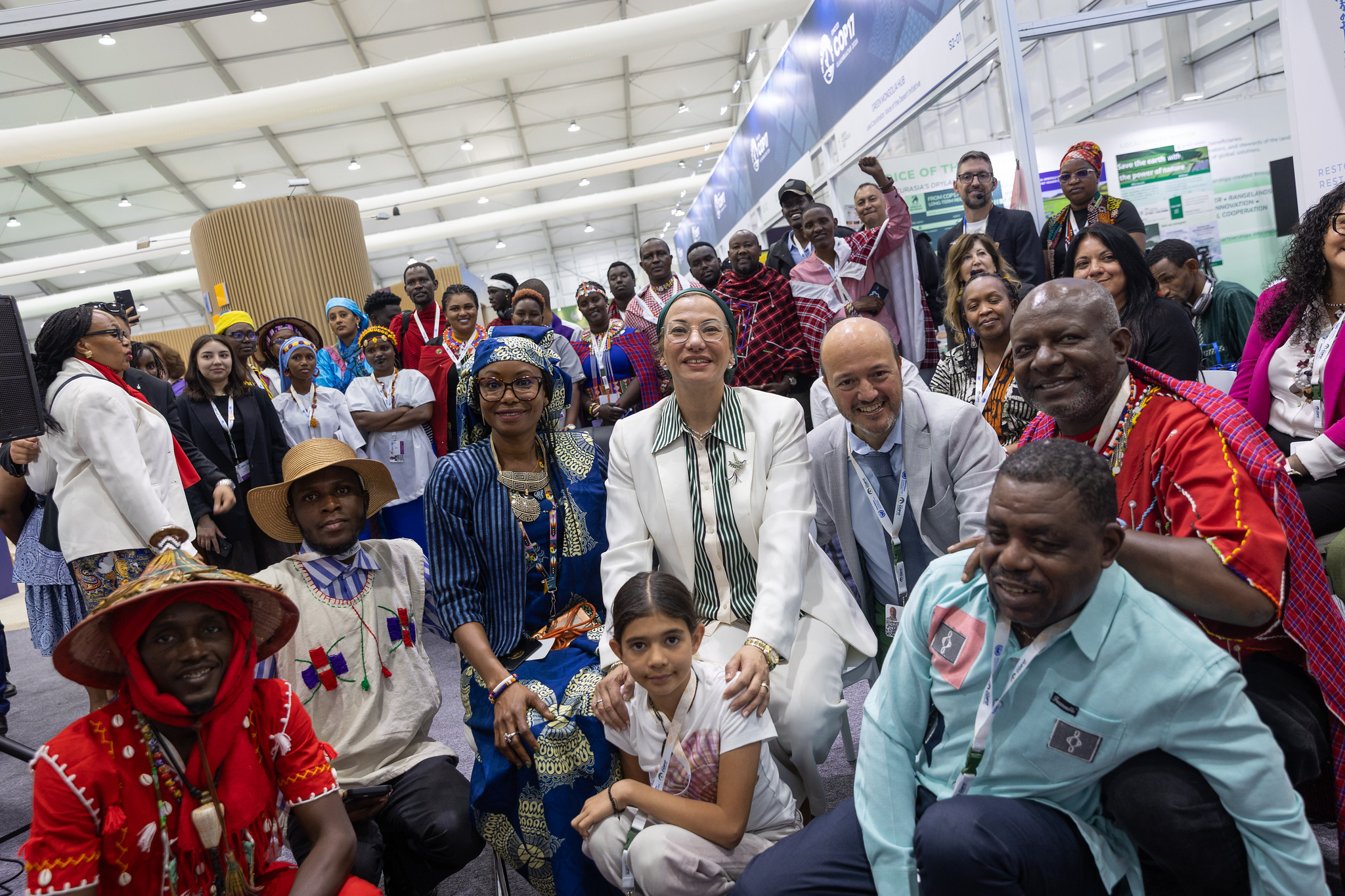
Civil society is on the frontline of the land challenge — and they are essential partners for the UNCCD. From farmers’ associations to women’s cooperatives and youth networks, civil society organizations (CSOs) bring local realities to the global stage. The CSOs amplify the lived reality that land degradation is not only an environmental issue but as a direct challenge to livelihoods, food security and the future of our communities. Today, nearly 1,200 are accredited to the UNCCD and their engagement supported and coordinated through the UNCCD CSO Panel. This structure ensures that voices from local communities are heard in international negotiations, connecting grassroots experience with global policymaking on the future of our land.At the heart of the Convention’s work is Land Degradation Neutrality (LDN) — the global commitment to balance the amount of healthy and productive land with the land being degraded. The goal is simple but urgent: by 2030, reduce degradation, restore what has been lost and make sure there is no net loss of healthy, productive land. To turn this ambition into action, the Global Environment Facility (GEF) launched the Medium Size Project “Strengthening Civil Society Role in Achieving Land Degradation Neutrality (CS4LDN).” Backed by two million USD in funding, this three-year initiative is implemented by the International Union for Conservation of Nature (IUCN) and executed by Both ENDS on behalf of the Drynet network, with IUCN also serving as co-executor. The project is carried out in close partnership with the UNCCD CSO Panel, the UNCCD Secretariat and other global stakeholders. Through CS4LDN, civil society organizations are better positioned to influence LDN policy and practice — linking community-driven initiatives with international decision-making. The project focuses on two main areas: Influencing LDN – raising the visibility and policy impact of CSOs in LDN efforts. This includes building skills in advocacy and communication, promoting local initiatives and supporting CSO participation in global forums such as UNCCD COP and CRIC events.Leveraging LDN – Improving CSO access to funding by strengthening fundraising skills and building connections with donors. Activities range from training and donor roundtables to a study on funding barriers, with special focus on challenges faced by CSOs in the Global South. CS4LDN follows a collaborative, cross-learning approach. Webinars, mentorships and workshops strengthen CSO capacity, while knowledge is shared through an online platform, newsletters and storytelling. A strong focus is placed on amplifying voices from youth- and women-led initiatives. The project is guided by a Project Management Unit (Both ENDS and IUCN) and a Steering Committee that includes the Drynet Board, IUCN, the UNCCD CSO Panel and the UNCCD Secretariat. It will also support CSO consultations and participation in major gatherings, including UNCCD CRIC23 in Panama this December as well as Désertif’actions and UNCCD COP17 in 2026. Photo: © IISD/ENB Anastasia Rodopoulou

Mongolia has unveiled the official logo for the 17th session of the Conference of the Parties (COP17) to the United Nations Convention to Combat Desertification (UNCCD), taking place in Ulaanbaatar from 17 to 28 August 2026. The emblem blends deep cultural symbolism with a call to global action, reflecting UNCCD’s mission to unite nations in finding solutions to desertification, land degradation and drought. The unveiling of the logo marks the beginning of one-year countdown to UNCCD COP17. More than a visual identity, it is an invitation to join hands in planting seeds of unity, resilience and shared trust — so that lands once degraded may flourish again. At the top of the logo, radiating sunrays recall the eternal expanse of the sky — a life-giving force in Mongolian cosmology — which echoes the Sustainable Development Goals and represents the solutions to environmental challenges faced by humanity. The rays flow into the silhouette of a traditional Mongolian ger (yurt), crowned with a toono — the circular opening through which the sky enters the home. This symbol of harmony between people and nature echoes the timeless wisdom of nomadic life and the belief that the earth is both homeland and heritage. Beneath, an open hand cradles the Earth with gentle strength, a gesture of stewardship and protection, while from the palm a green sprout emerges — a sign of resilience, renewal and the promise of a restored world. Together, these elements express COP17’s central message: that our collective efforts, diverse knowledge and shared responsibility can transform the challenges of land degradation into opportunities. With over 75 per cent of its land affected by degradation, Mongolia has made land restoration a national priority through initiatives such as the “Billions of Trees” movement, the “White Gold” rural development programme and the “Food Revolution” agri-soil campaign. Hosting UNCCD COP17 will provide a platform to share these experiences while catalyzing global cooperation to address the interlinked crises of land degradation, climate change and biodiversity loss. UNCCD COP17 will bring together delegates from 197 Parties, academia, civil society and private sector to advance drought resilience and land restoration goals. The conference aligns with the UN International Year of Rangelands and Pastoralists (IYRP 2026), an initiative championed by Mongolia to highlight sustainable rangeland management and the needs of over one billion people who depend directly on these ecosystems.

The secretariat of the United Nations Convention to Combat Desertification (UNCCD) presents its compliments to the Parties and Observer States to the Convention and has the honour to inform that the twenty-third session of the Committee for the Review of the Implementation of the Convention (CRIC 23) to the UNCCD will take place at the Panama Convention Center, in Panama City, Panama from 1 to 5 December 2025. Consultations of affected country Parties of the Convention’s regional implementation annexes for Africa, Asia, Latin America and the Caribbean, Northern Mediterranean and Central and Eastern Europe in preparation for CRIC 23 will be convened on 30 November 2025, at the Panama Convention Center. Further information on the regional consultations will be shared in a separate communication. In due consideration of the above, the secretariat of UNCCD has the honour to invite your Government to participate in CRIC 23. The provisional agenda (ICCD/CRIC(23)/1) and the pre-session documentation will be made available on the UNCCD website in due time. In line with decision 13/COP16, at CRIC 23, Parties will review the effective implementation of the Convention at national, subregional and regional levels. To this end, updates on the implementation of voluntary land degradation neutrality targets and related implementation efforts and the ensured follow-up on policy frameworks identified by the Conference of the Parties at its sixteenth session will be presented at CRIC23. The status of development and promotion of activities for targeted capacity-building to further the implementation of the Convention will be also considered by the session. A report on the status of improving the procedures for communication of information as well as the quality and formats of reports to be submitted to the Conference of the Parties as mandated by decision 4/COP16, will be also presented at CRIC23. The Intergovernmental Working Group on Future Strategic Framework of the Convention will present its interim report for consultation to Parties, intergovernmental organizations and regional groups at CRIC23. Also, in line with decision 20/COP.16 OP8, the CRIC23 will consider priorities for science–policy guidance with the aim of enabling Parties to provide initiative to and feedback on the work of the Science-Policy Interface, with particular attention to contributing to the content of each flagship report. Distribution: To Parties and Observer States through their Diplomatic Missions accredited to the Federal Republic of Germany, National Focal Points and Permanent Missions accredited to UNOG.Through its decision 25/COP.16 the Parties requested that Gender Caucus be convened as part of the official programme of work of the CRIC23 as a vehicle for identifying bottlenecks in the implementation of the Gender Action Plan and for sharing best practices in advancing gender equality and women’s and girls’ empowerment, and encouraging the participation and engagement of women and girls from Indigenous Peoples, local communities, youth and civil society organizations. In accordance with requests made by Parties, the session will facilitate interactive exchanges among Parties and their development partners on topics selected by the Bureau of the CRIC. In order to assist delegations in preparing for the conference, a document entitled “Information for participants” (ICCD/CRIC(23)/INF.1) is made available on the UNCCD website. As per past practice, CRIC 23 will be a paperless session. Accordingly, official documents of the session and its daily journal will not be printed and distributed. All such documents will be made available on the UNCCD website and app. The secretariat would be grateful if your Government would kindly nominate the representative(s) who will attend CRIC 23. Online registration will be available from 15 September 2025 at the following link. For more information on the online registration, please refer to the document “Information for participants” (ICCD/CRIC(21)/INF.1). The secretariat would like to kindly recall that participants are responsible for getting their own visas, hotel reservations and any type of health or other insurance they may need. Participants requiring visas must apply online by filling-up the visa application form at https://lara.migracion.gob.pa and uploading a scanned copy of a facial photo and their passport bio-data page. A quick guide with step-by-step instructions on how to apply will be published on the UNCCD CRIC 23 webpage as soon as possible.The secretariat of the United Nations Convention to Combat Desertification avails itself of the opportunity to renew to the Parties and Observer States to the Convention the assurances of its highest consideration.

必须通过减少食物浪费、释放可持续海洋食品潜力 以及到2050年恢复一半退化土地 来扭转土地退化的趋势 在《自然》杂志上,21位顶尖科学家今日提出利用食品系统遏制并逆转土地退化的方法,强调此举必须成为全球应对气候变化和阻止生物多样性丧失的最高优先事项。 该文章开创性地量化了到2050年通过减少75%的食物浪费和最大程度增加可持续海洋食品生产所带来的影响,仅凭这两项措施,就能节省出一片比非洲还要大的土地面积。 根据该论文: “食品系统尚未完全纳入政府间协议,也不在当前应对土地退化的战略中得到足够重视。 然而,聚焦全球食品系统的快速、综合性改革可将土地健康从危机转向恢复,并为全人类确保一个更健康、更稳定的地球。” 作者特别强调了遏制食物浪费和可持续管理土地的重要性,并提出了一个雄心勃勃但可实现的目标:到2050年恢复50%的土地(目前的目标为到2030年恢复30%)。 他们强调,所概述的措施将对气候、生物多样性和全球健康产生巨大协同效益。 沙特阿拉伯国王阿卜杜拉科技大学(KAUST)的首席作者费尔南多·T·马斯特雷表示:“本文提出了一套大胆、综合的行动方案,旨在同时应对土地退化、生物多样性丧失和气候变化,并为到2050年实施这些措施提供了明确路径。” “通过改革食品系统、恢复退化土地、开发可持续海产品的潜力以及促进国家间和部门间的合作,我们可以‘扭转趋势’并逆转土地退化,同时朝着《联合国防治荒漠化公约》及其他全球协议的目标迈进。” 《联合国防治荒漠化公约》首席科学家、共同作者巴伦·J ·奥尔补充道:“一旦土壤失去肥力、地下水位下降、生物多样性丧失,恢复土地的成本将呈指数级增长。持续的土地退化正引发一系列日益严峻的全球挑战,包括粮食和水资源短缺、强制迁移和人口流动、社会动荡以及经济不平等。” “土地退化不仅仅是农村问题,它影响着我们餐桌上的食物、我们呼吸的空气以及我们所生活的世界的稳定性。这不仅仅关系到拯救环境,而且关系到保障我们共同的未来。” 关键建议: 通过可持续土地管理实践恢复50%的退化土地,相当于恢复300万平方公里耕地和1000万平方公里非耕地,总计1300万平方公里。 文章指出,土地恢复必须涉及生活在土地上并管理土地的人们——尤其是原住民、小农户、妇女和其他脆弱群体及社区。 为支持他们,作者建议: 支持小农户:全球大部分粮食由小农户和家庭农场生产。该论文呼吁将农业补贴从大规模工业农场转向可持续的小农户,激励全球6.08亿个农场进行良好的土地管理,并促进他们获得技术、稳定的土地权利和公平的市场 基于土地的税收或关税:以奖励可持续农业并惩罚污染者 环境标签:以便消费者能够做出明智的、对地球友好的食品选择 更好的数据和报告:以追踪排放和土地使用影响 减少75%的食物浪费:估计有5650万平方公里农业用地(耕地和牧场)用于生产食物,而生产出的全部食物中大约有33%被浪费(其中14%在农场收获后损失;19%在零售、餐饮服务和家庭消费阶段浪费)。 因此,减少75%的食物浪费可节省约1340万平方公里土地。 作者强调了以下关键措施以解决此问题: 制定防止过量生产和食物变质的政策 禁止食品行业拒收“丑陋”农产品的规则 鼓励食品捐赠及临期产品的折扣销售 开展宣传教育以减少家庭浪费 支持发展中国家的小农户改善储存和运输条件 他们指出,西班牙已出台新法律,要求商店捐赠或销售剩余食品,餐厅提供打包容器,并要求食品供应链中的所有参与者实施正式的减少食品浪费计划。 整合陆地与海洋食品系统:以不可持续方式生产的红肉消耗大量土地、水资源和饲料,并排放大量温室气体。海鲜和海藻是可持续且营养丰富的替代品。例如,海藻无需淡水且能吸收大气中的二氧化碳。以低影响物种(如贻贝和海藻衍生产品)为重点的负责任水产养殖,可减轻对土地的压力。作者建议: 将70%的不可持续生产的红肉替换为可持续来源的海产品,如野生或养殖的鱼类和贝类。此举可节省目前用于牧场和牲畜饲料的1710万平方公里土地。 使用可持续来源的海藻衍生产品作为蔬菜替代品——仅用海藻衍生产品替代全球蔬菜摄入量的10%,即可释放超过40万平方公里耕地。 这些变化对肉类消费量较高的富裕国家尤为重要。在一些较贫困地区,动物性产品仍是营养的重要来源。 通过上述第二项和第三项食品系统相关措施能节省的土地总面积约为3090万平方公里,相当于非洲的面积。 因此,土地恢复、减少食物浪费和饮食结构调整的结合,将在30年内(2020-2050年)节省或恢复约4380万平方公里土地。 所提议的措施结合起来还将 在2050年前每年减少约13亿吨二氧化碳当量排放,为减排努力做出贡献; 通过改善栖息地质量和生态系统功能,以及避免将剩余的自然生态系统转化为农田,从而促进生物多样性; 帮助全球社区实现其在多个国际协议中的承诺,包括三个里约公约(气候、生物多样性和荒漠化)、可持续发展目标等。 里约公约之间的协调行动 作者呼吁联合国的三个里约公约——《联合国防治荒漠化公约》(UNCCD)、《生物多样性公约》(CBD)和《联合国气候变化框架公约》(UNFCCC)——围绕共同的土地和食品系统目标团结一致,鼓励交流最先进的知识,跟踪进展并将科研成果转化为更有效的政策,从而加速推进实地行动。 他们指出,土地和食品系统在实现三个公约和可持续发展目标的具体目标和指标方面发挥着关键作用。 作者呼吁三个里约公约的缔约方以协调和合作的方式推动土地和食品系统的多边行动。UNCCD的197个缔约方在沙特阿拉伯利雅得举行的最近一次缔约方大会(COP16)上,已通过了一项关于避免、减少和逆转农业用地和土壤退化的决定。 其他观点 “土地不仅仅是土壤和空间。它孕育生物多样性,循环水资源,储存碳,调节气候。它为我们提供食物,维持生命,承载着深厚的祖先记忆与知识。目前,地球上超过三分之一的土地用于种植食物——养活了超过80亿的全球人口。然而,现代农业实践、毁林和过度使用正导致土壤退化、水体污染和关键生态系统的破坏。仅食品生产就占全球温室气体排放量的近20%。我们必须采取行动。为了确保一个繁荣的未来——并保护土地——我们必须重新构想我们的农业方式、生活方式以及与自然和彼此的关系。现在是时候进行土地管理了:将土地视为一个有生命的盟友,而不是一个待开发的资源。” 合著者伊丽莎白·胡伯-桑瓦尔德(Elisabeth Huber-Sannwald),墨西哥圣路易斯波托西州波托西科学与技术研究所教授 “土地退化是导致强制迁移和资源冲突的关键因素。那些高度依赖农业谋生的地区,尤其是养活了世界大部分人口的小农户,特别容易受到影响。这些压力可能导致整个地区动荡并加剧全球风险。” 合著者多洛雷斯·阿门特雷斯(Dolors Armenteras),哥伦比亚国立大学景观生态学教授,波哥大 “整合陆地和海洋食物系统是实现粮食安全、恢复退化土地和维持健康人口的关键。” 合著者卡洛斯·M·杜阿尔特(Carlos M. Duarte),沙特阿拉伯国王科技大学海洋科学教授 ****** 数据一览 56%:若沿袭当前路径,到2050年所需的粮食产量增幅 34%:地球无冰陆地中已用于粮食生产的比例,到2050年将升至42% 21%:全球温室气体排放中由粮食系统产生的比例 80%:由粮食生产驱动的毁林比例 70%:农业占淡水消耗量的比例 33%:目前全球食物浪费的比例 1万亿美元:全球每年食物损失或浪费的估算价值 75%:到2050年减少全球食物浪费的宏伟目标 50%:到2050年通过可持续土地管理恢复退化土地的拟议比例 2780亿美元:实现《联合国防治荒漠化公约》土地恢复目标的年度资金缺口 6.08亿:全球农场数量 90%:面积不足2公顷的农场占比 35%:全球粮食产量中由小型农场贡献的份额 65亿吨:利用6.5亿公顷海洋进行海藻养殖的潜在生物量产量 1750万平方公里:若人类采用提议的里约+饮食方案(减少不可持续生产的红肉,增加可持续来源的海鲜和海藻衍生食品),预计可节省的耕地面积 1.66亿:通过增加饮食中水生食品的摄入量,可避免微量营养素缺乏的人口数量 ******* 扭转土地退化趋势以实现全球环境目标, https://doi.org/10.1038/s41586-025-09365-5 作者 费尔南多·T·马斯特雷 – 沙特阿拉伯国王阿卜杜拉科技大学(第一作者) 埃米利奥·圭拉多 – 沙特阿拉伯国王阿卜杜拉科技大学 多洛雷斯·阿门特雷斯 – 哥伦比亚国立大学,哥伦比亚波哥大 希尔克·E·贝克 – 沙特阿拉伯国王阿卜杜拉科技大学 玛莎尔·宾特·萨乌德·阿尔沙兰 – 埃昂集体,沙特阿拉伯利雅得 努拉·本特·图尔基·阿尔沙特 – 艾昂集体,沙特阿拉伯利雅得 拉尔夫·查米 – 蓝绿未来有限责任公司,美国华盛顿特区 傅伯杰 – 中国科学院区域与城市生态安全全国重点实验室及中国科学院大学,中国北京 赫琳·吉琴杰 – 独立顾问,肯尼亚内罗毕 伊丽莎白·胡伯-桑瓦尔德 – 圣路易斯波托西科学与技术研究所,墨西哥圣路易斯波托西 钦韦·伊费吉卡·斯佩兰扎 – 伯尔尼大学地理研究所,瑞士伯尔尼 豪尔赫·马丁内斯-瓦尔德拉马 – 干旱地区实验站,西班牙国家研究委员会,西班牙阿尔梅里亚 马修·F·麦卡贝 – 沙特阿拉伯国王阿卜杜拉科技大学 巴伦·J·奥尔 – 《联合国防治荒漠化公约》,德国波恩 唐婷 – 沙特阿拉伯国王阿卜杜拉科技大学 格拉西埃拉·梅特内希特 – 澳大利亚西悉尼大学 迈克尔·米斯 – 沙特阿拉伯国王阿卜杜拉科技大学 詹姆斯·F·雷诺兹 – 杜克大学环境学院和生物学系,美国 琳赛·C·斯特林格 – 约克大学,英国 和田义英 – 沙特阿拉伯国王阿卜杜拉科技大学 卡洛斯·M·杜阿尔特 – 沙特阿拉伯国王阿卜杜拉科技大学 ******* 关于KAUST 成立于2009年的阿卜杜拉国王科技大学(KAUST)是一所致力于解决全球及沙特阿拉伯在食品与健康、水资源、能源、环境及数字领域面临的最为紧迫的科学与技术挑战的研究型大学。 KAUST汇聚全球顶尖人才推动科研进步。校园内有来自120多个不同国家的人士共同生活、工作和学习。KAUST也是创新、经济增长和社会繁荣的催化剂,其研究成果包括新型专利和产品、创业型初创企业、区域及全球性倡议,以及与其他学术机构、产业界和沙特政府部门的合作。 https://www.kaust.edu.sa/en 关于《联合国防治荒漠化公约》(UNCCD) 《联合国防治荒漠化公约》(UNCCD)是一项关于良好土地管理的国际协议。它通过促进可持续土地管理,帮助创造财富、发展经济并保障粮食、清洁水源和能源供应。公约的197个缔约方建立合作伙伴关系和健全体系,以迅速有效地应对干旱。基于科学和政策依据的良好土地管理有助于整合并加速实现可持续发展目标,增强应对气候变化的韧性,并防止生物多样性丧失。 UNCCD第16次缔约方会议(COP16)于2024年12月在沙特阿拉伯利雅得举行。蒙古国将于2026年8月17日至28日在乌兰巴托主办UNCCD第17次缔约方会议(COP17),该会议与联合国“国际牧场与牧民年”主题相契合。 来自《联合国防治荒漠化公约》缔约方、国家元首、部长、国际组织代表、科学界、民间社会及私营部门的代表将齐聚一堂,加快应对荒漠化、土地退化和干旱的行动。
