News & stories


Latest news & stories
CRIC23 Highlights Gender Equality, Indigenous Leadership, and the Post-2030 Strategic FrameworkToday’s CRIC23 discussions focus on gender equality, Indigenous women’s leadership, and the Interim Report of the Intergovernmental Working Group on the Future Strategic Framework (IWG-FSF).Key event 10:00–13:00 | Field Visit to the Panama Canal (Miraflores Visitors Center)Journalists are invited to a field visit organized by the Panama Canal Authority (ACP) at the Miraflores Visitors Center. The visit will offer insights into how the ACP integrates sustainability and watershed protection into its long-term strategy to safeguard the Canal’s water resources.The programme includes:Welcome and transfer to Salón Río GrandePresentation: Sustainable Development Strategy of the Panama CanalRaúl Martínez, Manager for Socio-Environmental Sustainability (ACP)Testimony: Experience of coffee producer Jim Mariscal with ACP-supported projectsQ&A with ACP representatives and community partnersGuided visit to key viewpoints and facilities of the Panama CanalTransport departs at 10:00 from the Panama Convention Center.Return to hotel expected at 13:00.Other CRIC23 highlights — Gender Caucus sessionsTwo sessions of the UNCCD Gender Caucus will take place on 3 December at the Panama Convention Centre. Journalists with CRIC23 accreditation may attend.10:00–11:30 | Gender Caucus — Session 1Leadership and worldviews of Indigenous women for sustainable land managementThis session brings together Indigenous women leaders to discuss land governance, ancestral knowledge systems, and current land-related challenges.11:30–13:00 | Gender Caucus — Session 2Gender dimensions of sand and dust stormsThis session explores how sand and dust storms affect men and women differently, adaptation strategies, and data gaps that inform future policy guidance.Launch eventStrengthening the Capacities of Latin American and Caribbean Countries for Sustainable Land Management and Ecosystem Restoration within the Framework of the UNCCDWhen: 3 December 2025Time: 19:00 – 21:30Where: Hotel Aloft Panama, Vía Israel y Calle 76, San Francisco, Panama CityOrganized by: CAF – Development Bank of Latin America and the Caribbean -& UNCCDThis launch event presents a new CAF–UNCCD collaboration to strengthen the capacities of Latin American and Caribbean countries in sustainable land management and ecosystem restoration. As land degradation and drought intensify vulnerabilities across the region, the initiative supports countries in advancing effective land and water management while helping mobilize the financing needed to meet UNCCD objectives.

Excellencies, Distinguished Delegates, Ladies and Gentlemen, Dear Friends, Before we begin our work, allow me to reflect on where we stand. Just a few kilometers from here lies one of the world’s most important waterways, the Panama Canal. Today, water levels are at historic lows. Ships move more slowly. Transit is restricted. Costs rise. And the ripple effects extend far beyond Panama: from the Suez Canal to the Rhine, the world is watching. But this is not only a story about global navigation, it is a story about people. It is about food prices, water scarcity, disrupted value chains, and strained livelihoods. It reminds us that land, water, climate, and economies are deeply interconnected, and that when land and water fail, everything downstream feels the impact. This is the human reality I have witnessed in my first 100 days as Executive Secretary. These are the stories that come from you. “Healthy land and soils are the foundation of food, water, stability, and peace.” And I want to begin by expressing my deepest appreciation to all Parties for your confidence in my appointment as Executive Secretary of this important Convention. It is a profound responsibility. And I commit, clearly that I will serve all Parties equally, transparently, and with the utmost professionalism. And my thanks goes to my brother Ibrahim Thiaw for the legacy he left and which I have the pleasure to build upon. Over the next days, we gather not to negotiate, but to deliver. CRIC is where we measure progress, identify gaps, and accelerate solutions. Let me be clear: “CRIC is not a negotiation body, it is a platform for delivery.” I will ensure that the session remains constructive, and focused on implementation. All Party requests will be addressed under their appropriate agenda items. And I will work closely with the CRIC Chair, the COP16 Presidency, and the incoming COP17 Presidency to ensure continuity and coherence. One of the most important topics from here to COP17 is Drought. Drought is advancing faster than ever, affecting millions today and threatening billions tomorrow. Three in four people may face drought by 2050 unless we change course. From Egypt to Chile to the Sahel, the message is clear: “Drought is predictable, and if it’s predictable, it’s preventable.” Since COP16, we were able to advance some of the work on Drought the Presidency has advanced the Tafá’ul Process to help parties to find possible solutions to achieve a negotiation outcome at COP 17 The Secretariat is committed to support countries to shift from a fragmented crisis response to an integrated drought risk governance. We are: Strengthening early warning and anticipatory action Supporting drought-smart policy reforms Developing technical guidance Preparing the IDRO Observatory architecture to support evidence-based decision-making These efforts support Parties in developing national drought plans, aligning ministries, improving water governance, and protecting vulnerable communities before crisis strikes. I want to thank the COP16 Presidency and partners for launching the Global Drought Resilience Partnership (RGDRP). But a fundamental truth remains: “Drought without finance remains words on paper.” Which I would like to address today. This is why advancing the Drought Resilience Investment Facility (DRIF) which provides a practical roadmap to help countries identify pipelines of bankable drought-resilience projects, mobilize blendd finance, and scale nature-based solutions. We are also strengthening tools to support Parties in developing drought-smart investment plans through: DRIF national pilots RGDRP partner coordination Integration with IDRA and IDRO technical products Restoring land and investing in resilience makes economic sense: Each dollar invested in restoration yields up to 30 dollars in benefitsInvestments in drought resilience pay off tenfoldWe will continue working on land restoration. Yet today, only 6% of land restoration and drought finance comes from the private sector. Let me state clearly: “Only six percent of land restoration finance comes from the private sector, this must change.” We need public, private, and philanthropic capital working together to unlock resilience at scale. Rangelands sustain nearly half a billion people. As we prepare for COP17 in Mongolia and the International Year of Rangelands and Pastoralists: “Rangelands sustain hundreds of millions of people, yet remain undervalued and under threat.” This is the moment to elevate them. But the real story comes from the real people – we have focused on Indigenous Peoples’ Caucus and the Local Communities Caucus, who along with women, bear the greatest burden of the impacts of drought and land degradation. Tomorrow afternoon, a consultation will take place on the work Indigenous representatives have undertaken over recent months, inviting feedback from Parties and observers. We continue to mobilize resources to advance this important work. Everywhere I go, I meet the people who protect and restore land every day. Their message is simple: “You cannot protect land without protecting the people who care for it.” Women, youth, Indigenous custodians, farmers, and herders hold the knowledge and the courage needed to safeguard our soils and water. But without: -Secure land rightsAccess to financeOpportunities for youthand a fair share of benefitsOur restoration efforts will not succeed. People are at the heart of the UNCCD mission. More than three billion people are already affected by land degradation, human lives, not numbers. Excellencies, colleagues, friends, We meet at a pivotal moment, a moment of rising droughts, declining water, and pressure on land. But it is also a moment of solutions, science, and collective determination. The story of the Panama Canal reminds us of one truth: “What happens upstream on land shapes everything downstream.” Let us choose to shape it wisely. Let us choose resilience. Let us choose communities. Let us choose the land that sustains us all I thank you.

اجتماع 197 طرفًا مشاركاً اتفاقية الأمم المتحدة لمكافحة التصحر بهدف تقييم التقدم على الطريق من الرياض إلى أولان باتار،بنما تتعهد باستعادة 100 ألف هكتار بحلول عام 2035 ضمن استراتيجية وطنية رائدة لتحقيق أهداف الأرض والمناخ والتنوع البيولوجي. مدينة بنما، 1 ديسمبر 2025 - يتصدر فقدان الأراضي الخصبة عالميًا وتصاعد موجات الجفاف جدول أعمال الدورة الثالثة والعشرين للجنة استعراض تنفيذ الاتفاقية (CRIC23)، حيث يجتمع هذا الأسبوع في بنما ممثلو الدول الـ197 الأطراف في اتفاقية الأمم المتحدة لمكافحة التصحر. يأتي هذا الاجتماع في لحظة حاسمة. فوفق المسار الحالي، قد تتعرض أراضٍ تعادل مساحتها قارة أمريكا الجنوبية تقريبًا (16 مليون كيلومتر مربع) لتدهور متزايد بحلول عام 2050، في وقت يرتفع فيه الطلب العالمي على الغذاء والمياه والطاقة بشكل غير مسبوق. فيما تشير البيانات إلى أن ثلثي سطح الكوكب أصبح أكثر جفافًا خلال العقود الثلاثة الماضية، فيما سجّل العامان الأخيران أوسع موجات الجفاف انتشارًا وأعمقها أثرًا منذ بدء تدوين السجلات المناخية. في بنما، تسبّب الجفاف في إبطاء حركة الملاحة عبر القناة، مما ترك أثرًا ملموسًا على التجارة العالمية. قالت الدكتورة ياسمين فؤاد، الأمينة التنفيذية لاتفاقية الأمم المتحدة لمكافحة التصحر: " إن صمود مجتمعاتنا واقتصاداتنا وأنظمتنا البيئية يبدأ من أرض سليمة وصحية. ومع ذلك، ما زلنا نفقد كل عام مساحة تعادل مساحة مصر تقريبًا نتيجة تدهور الأراضي، مما يُضعف قدرتها على إنتاج الغذاء وتخزين المياه ودعم التنوع البيولوجي وحماية الإنسان من الجفاف والفيضانات والعواصف الرملية والغبارية. الاستثمار في الإدارة المستدامة للأراضي واستعادتها والحلول القائمة على الطبيعة ليس مجرد ضرورة بيئية؛ بل هو أولوية تنموية واستثمار استراتيجي في الاستقرار والازدهار والسلام." وأضافت: "يشكّل اجتماع لجنة استعراض تنفيذ الاتفاقية محطة رئيسية لتقييم ما أحرزناه من تقدم، وتعزيز مسار العمل الممتد من الرياض إلى أولان باتار، والتأكيد على أن إدارة الأراضي وبناء القدرة على مواجهة الجفاف هما عنصران أساسيان يربطان بين اتفاقيات ريو الثلاث. ومن خلال العمل المشترك، نستطيع تسريع التحول نحو مستقبل قدرة على الصمود، وأشد أمنًا غذائيًا، وأكثر حفاظًا على الطبيعة." من الرياض إلى أولان باتار سيستعرض اجتماع لجنة استعراض تنفيذ الاتفاقية التقدم المُحرز في تنفيذ القرارات الصادرة عن مؤتمر الأطراف السادس عشر (COP16) لاتفاقية الأمم المتحدة لمكافحة التصحر الذي استضافته الرياض في ديسمبر 2024، كما سيناقش خارطة الطريق لما بعد عام 2030. وقال سعادة الدكتور أسامة فقيها، نائب وزير البيئة والمياه والزراعة لشؤون البيئة في المملكة العربية السعودية رئيسة مؤتمر الأطراف السادس عشر: "مثّلت المشاركة الكبيرة والمتنوعة التي قاربت 100 ألف مشارك في مؤتمر COP16 بالرياض نقطة تحول تاريخية في الوعي العالمي بشأن آثار تدهور الأراضي والجفاف، والحاجة إلى تعزيز وتسريع الجهود العالمية لمواجهة هذه التحديات التي يؤثر بشكل مباشر على الأمن المائي والغذائي، والتنوع البيولوجي، والقدرة على التكيف مع المناخ، ومستوى معيشة مليارات البشر حول العالم." وأضاف: "أسفر مؤتمر الأطراف السادس عشر عن نتائج مهمة عززت الجهود الدولية في استعادة الأراضي وبناء القدرة على الصمود أمام الجفاف، بما في ذلك اعتماد إعلان الرياض، وإصدار أكثر من 30 قرارًا، والإعلان عن نحو 40 مبادرة ضمن أجندة عمل الرياض لتعزيز الجهود لحماية الأرض." وسيتناول المؤتمر جلسات متخصصة حول حيازة الأراضي كأساس للاستثمار في الأراضي السليمة، ومناقشة التهديد المتزايد للعواصف الرملية والترابية، كما سيستضيف المؤتمر الاجتماع الثاني لمنتدى النوع الاجتماعي، والذي بهدف إلى إعطاء صوت للنساء اللواتي يتأثرن بشكل غير متناسب بتدهور الأراضي والجفاف بينما يُسهمن في دعم سبل عيش المجتمعات حول العالم. كما سيُتاح للأطراف التفاعل مع أصحاب المصلحة، بما في ذلك الشباب والشعوب الأصلية والمجتمعات المحلية، إضافة إلى إطلاق تقارير جديدة حول الدول الجزرية الصغيرة النامية والمراعي. وسيُعقد أيضًا أول حوار غير رسمي وطوعي من بين ثلاثة حوارات مخصّصة لتعزيز القدرة على مواجهة الجفاف، وذلك استنادًا إلى مخرجات مؤتمر الأطراف السادس عشر واستعدادًا لاستئناف المفاوضات في مؤتمر الأطراف السابع عشر وتقود رئاسة مؤتمر الأطراف السادس عشر هذه العملية النقاشات باسم "عملية تفاؤل"، تعبيرًا عن روح الأمل والعزيمة البنّاءة. كما ستسهم توصيات اجتماع لجنة استعراض تنفيذ الاتفاقية 23 في دعم عملية صنع القرار من قبل الأطراف الـ196 للدول الأعضاء في الاتفاقية والاتحاد الأوروبي، تمهيدًا لمؤتمر مؤتمر الأطراف السابع عشر الذي سيُعقد في أولان باتار، منغوليا، في أغسطس 2026. قال باتمونخ دوندفدورج، المستشار الخاص للوزير ورئيس المكتب الوطني لرئاسة مؤتمر الأطراف السابع عشر المقبلة: "يجب أن يكون الطريق من الرياض إلى أولان باتار طريق أمل للمجتمعات والأنظمة البيئية التي طال إهمالها. سيتزامن المؤتمر مع السنة الدولية للمراعي والرعاة، ما يوفر لحظة سياسية فريدة لتسليط الضوء على المراعي، التي تختفي بوتيرة أسرع من الغابات." وأضاف: "اجتماع بنما مهم للغاية لوضع الأساس لنجاح مؤتمر الأطراف السابع عشر، الذي سيبرز الروابط بين رفاه الإنسان والأراضي السليمة والمنتجة والقادرة على الصمود. وهذا أمر صحيح بشكل خاص بالنسبة للمراعي، التي تغطي نحو نصف اليابسة وتوفر موطنًا لنحو ملياري إنسان، لكنها تُعامل غالبًا على أنها مناطق فارغة أو هامشية. بالنسبة لمنغوليا، حيث ترتبط الهوية والثقافة والاقتصاد بالرعي، فإن هذه ليست قضية مجردة، بل مسألة كرامة وهوية وفرص لمجتمعات طال تجاهلها." تعهد بنما للطبيعة وسلّطت بنما اليوم الضوء على الدور المحوري للأرض من خلال “تعهدها للطبيعة”، وهو خارطة طريق توحّد الجهود الوطنية لمواجهة تدهور الأراضي وفقدان التنوع البيولوجي وتغيّر المناخ، بما يعزّز أوجه التكامل بين اتفاقيات ريو الثلاث ويدفع باتجاه تحقيق أهدافها المترابطة بوتيرة أسرع. وستعمل بنما ضمن هذا التعهد على استعادة 100,000 هكتار من الأراضي المتدهورة بحلول عام 2035. وقال معالي خوان كارلوس نافارو، وزير البيئة في بنما: "الطبيعة هي العمود الفقري للاقتصاد العالمي. ويعكس تعهد بنما للطبيعة التزامنا باستعادة الأحواض المائية الحرجة، وحماية الغابات، وتشجيع الممارسات الزراعية المستدامة، باعتبارها وسائل لبناء قدرة اقتصادنا ومجتمعاتنا على الصمود. لم يعد هناك وقت لنضيعه، علينا أن نهتم بالطبيعة حتى تواصل الطبيعة الاعتناء بنا." ومنذ انضمامها إلى الاتفاقية عام 1996، التزمت بنما بتحقيق حيادية تدهور الأراضي بحلول عام 2030، وحددت 31 نقطة حرجة للتدخل، وتمضي قدمًا في برامج إعادة التشجير والتكيف مع ظروف "الممر الجاف". كما أصبحت هذا العام أول دولة تستضيف اجتماعات الاتفاقيات الثلاث لريو في العام نفسه. انتهى ملاحظات للمحررين للاستفسارات وطلبات المقابلات، يرجى التواصل عبر press@unccd.int يمكن الحصول على مواد بصرية حول اجتماع لجنة استعراض تنفيذ الاتفاقية CRIC23 https://trello.com/b/zq0kxtkK/unccd-cric23-panama-2025 فعاليات مخصّصة للإعلام مؤتمرات صحفية: 12:00–13:00 (بتوقيت بنما) 1 ديسمبر: المؤتمر الصحفي الافتتاحي سيعرض المؤتمر توقعات اجتماع لجنة استعراض تنفيذ الاتفاقية ، ويسلط الضوء على قيادة بنما – بما في ذلك الإشارة إلى تعهدها للطبيعة – ويقدم رؤى من رئاسة مؤتمرات الأطراف السادسة عشر والسابعة عشر. المتحدثون: خوان كارلوس نافارو، وزير البيئة في بنماالدكتورة ياسمين فؤاد، الأمينة التنفيذية لاتفاقية الأمم المتحدة لمكافحة التصحرأسامة إبراهيم فقيها، نائب وزير البيئة والمياه والزراعة لشؤون البيئة، المملكة العربية السعوديةباتمونخ دوندفدورج، المستشار الخاص للوزير ورئيس المكتب الوطني لرئاسة مؤتمر الأطراف السابع عشر COP17 2 ديسمبر: إطلاق تقرير حول الدول الجزرية الصغيرة النامية (SIDS) تقرسر جديد يسلط الضوء على آثار تدهور الأراضي والجفاف والإجراءات المتخذة في الدول الجزرية. المتحدثون: أندريا ميزا، نائبة الأمين التنفيذي للاتفاقيةكالفن جيمس، منسق منتدى SIDS في الاتفاقيةفريد نيكولاس، مسؤول مشروع في دائرة البيئة الوطنية – جزر كوك 4 ديسمبر: إطلاق تقرير اقتصاديات المراعي عرض تقرير جديد حول المراعي– وهي نظم بيئية ضرورية للأمن الغذائي والاستقرار المناخي تتراجع بسرعة. المتحدثون: مارك شاور، قائد المشروع (مشترك)، وكالة التعاون الدولي الألمانية (GIZ)الدكتور بارون أور، كبير العلماء في الاتفاقيةإنريكي ميتشود، الرئيس المشارك للتحالف العالمي للسنة الدولية للمراعي والرعاةأريونتويا دورجسورن، المديرة العامة لإدارة التعاون الدولي، وزارة البيئة وتغير المناخ، ومنسقة الاتصال الوطنية لمنغوليا إطلاق السنة الدولية للمراعي والرعاة (IYRP) سيشهد شهر ديسمبر إطلاق السنة الدولية للمراعي والرعاة، وهي محطة مهمة في الطريق نحو مؤتمر الأطراف السابع عشر في منغوليا في أغسطس 2026. 5 ديسمبر – البيان الختامي بمناسبة يوم التربة العالمي يصدر بعد الجلسة الختامية لاجتماع لجنة استعراض تنفيذ الاتفاقية، ويعرض أبرز نتائج الاجتماع وأهميتها في الطريق نحو مؤتمر الأطراف السابع عشر. 3 ديسمبر – رحلة ميدانية للصحفيين يدعى الصحفيون إلى زيارة ميدانية ينظمها هيئة قناة بنما في مركز زوار ميرافلوريس، للاطلاع على كيفية دمج الهيئة للاستدامة وحماية الأحواض المائية ضمن استراتيجيتها الطويلة الأمد للحفاظ على موارد المياه في القناة. معلومات إضافية لمزيد من المعلومات حول الاتفاقية واجتماع لجنة استعراض تنفيذ الاتفاقية ، يرجى زيارة: https://www.unccd.int/cric23 حول اتفاقية الأمم المتحدة لمكافحة التصحر (UNCCD) اتفاقية الأمم المتحدة لمكافحة التصحر هي الرؤية والصوت العالمي للأرض وهي تجمع تحت مظلتها الحكومات والعلماء وصنّاع السياسات والقطاع الخاص والمجتمعات المحلية ضمن رؤية موحّدة وجهود مشتركة لإعادة إصلاح الأراضي وإدارتها بشكل مستدام، وذلك من أجل ضمان استمرارية الحياة على سطح الأرض. والاتفاقية ليست فقط معاهدة دولية موقعة من قِبل 197 طرفا؛ فهي تمثل التزاما عالميا متعدد الأطراف لمواجهة آثار تدهور الأراضي اليوم، وتعزيز الإدارة الرشيدة للأراضي في المستقبل. كما أنها تهدف إلى تأمين الغذاء والمياه والمأوى والفرص الاقتصادية لكل الناس، بطريقة عادلة وشاملة. نبذة عن اجتماع لجنة استعراض تنفيذ الاتفاقية CRIC23 يجتمع ممثلون عن 196 دولة والاتحاد الأوروبي في بنما خلال الفترة من 1 إلى 5 ديسمبر 2025 لاستعراض جهودهم في مكافحة التصحر وتدهور الأراضي والجفاف ضمن إطار اتفاقية الأمم المتحدة لمكافحة التصحر، وهي إحدى اتفاقيات ريو الثلاث إلى جانب المناخ والتنوع البيولوجي. ويُشارك في الدورة الثالثة والعشرين للجنة استعراض تنفيذ الاتفاقية نحو 500 مشارك من الحكومات والمجتمع المدني والأوساط الأكاديمية لتقييم التقدم نحو تحقيق أهداف الاتفاقية.

As negotiators meet in Panama City for the 23rd session of the UNCCD Committee for the Review of the Implementation of the Convention (CRIC 23), they gather in a country that treats climate change, biodiversity loss and land degradation as interlinked challenges. The new Panama’s Nature Pledge is set to bring the next-generation climate promise, updated biodiversity strategy and Land Degradation Neutrality (LDN) strategy into a single national framework, also covering oceans and plastics. It shows how one country can align all three Rio Conventions and unlock finance to accelerate action. That same logic has been at the heart of the LDN Target Setting Programme (LDN TSP) for almost a decade. Since 2016, the programme has helped 131 countries commit to voluntary LDN targets, with 124 reporting their baselines and targets through the UNCCD, and collectively aiming to restore close to 600 million hectares of degraded lands. Restoration work done in the field by a volunteer groupA global shift from pledges to plans LDN stems from a simple idea: the world’s productive land base should at least remain stable and grow where possible. In less than ten years, the LDN TSP has given governments a common language and toolkit to map where degradation is happening, agree on measurable, time bound targets and identify measures that fit national realities. LDN TSP 2.0: More ambitious, more bankable If the first eight years of LDN TSP were about enabling countries to set and validate LDN targets based on best- available data, the second phase of this programme (LDN TSP 2.0) is about making those targets sharper and more actionable. Eighteen countries from every region are refining their voluntary commitments to achieve land degradation neutrality so they are more specific, time-bound, quantitative, spatially explicit, gender responsive and tied to land-use planning following a COP15 mandate. These priorities were clearly reflected in a recent global knowledge exchange webinar on LDN TSP 2.0, where 100 representatives of countries and partner agencies reviewed progress to date ahead of CRIC23. Integrated land use planning inception workshop May 2025 South Africa Photo : © Dr. Ernest Daemane, South African National ParksIn Sri Lanka, for example, updated LDN work is being used to align land-use decisions with national climate and biodiversity strategies and to prioritize the most vulnerable landscapes for action. In Central Asia, countries are using LDN targets to connect land restoration with drought resilience and more sustainable management of rangelands and drylands. In Argentina, new LDN targets seek to improve the sustainable management of their wetlands. This second phase also pushes governments to think like investors, by helping them identify priority landscapes, estimate costs and benefits and structure projects and programmes that can attract climate and development finance. Negotiations training for national focal points and a write-shop on development of large-scale investment programme for Pacific SIDS, Seoul, Korea 2023Why this matters for everyone, not just negotiators Up to 40 per cent of the planet’s land is already degraded, affecting billions of people. When land is degraded, harvests decline, food becomes more expensive, rural livelihoods weaken and people are forced to move. LDN helps reverse this pattern by restoring land, strengthening ecosystems and generating economic benefits that far outweigh the initial investments. The Rio synergies dividend Panama’s reference to its Nature Pledge during CRIC23 reinforces a clear message: climate, biodiversity and land are not three separate problems. Land is the common thread that allows us to materialize synergies. Country stories on the new Rio Conventions platform show how land restoration is becoming a practical link between climate, biodiversity and land agendas. Examples range from national work in Sri Lanka to regional initiatives in Central Asia, where managing land degradation is central to climate resilience and food security. In Uzbekistan, hectares of sturdy saxaul shrubs are planted as the first line of defense against desertification and sand and dust storms originating from the dried-up Aral seabedNigeria is updating its land targets in parallel with its National Net Zero Nature Positive plan (NZNP) ensuring that both processes reinforce each other. By aligning these efforts, countries can stretch limited public finance further and create stronger cases for private investment. From targets to transformative projects Ambitious targets need equally ambitious implementation plans. That is where Land Degradation Neutrality Transformative Projects and Programmes (LDN TPPs) come in. These are large-scale, country driven programmes that bundle individual projects into coherent packages aligned with national LDN priorities. Under the second phase of the programme, participating countries are defining TPPs through the Global Mechanism’s Partnership for Project Preparation to turn revised targets into concrete funding proposals. In Benin and the Central African Republic, work supported by the Sahara and Sahel Observatory is helping to define priority landscapes, integrate gender analysis and structure programmes for submission to climate and development funds. In Argentina, two strategic projects are being developed to strengthen integrated land-use planning and create synergies between the country’s updated land targets and its wetlands conservation goals under RAMSAR. At CRIC23 in Panama, the new phase of the LDN work is moving from technical workshops into the political spotlight. The Global Mechanism is presenting progress on revised targets, new tools and emerging project pipelines in plenary, while land degradation neutrality features throughout the week’s programme, from interactive discussions on resource mobilization to country-led side events. Landscape view of lush, green hills and farmland in Jimma, Ethiopia, highlighting the positive impact of sustainable agriculture and land restorationTracking progress – and the remaining gap Transparent data is essential to convince citizens, partners and investors that LDN commitments are a sound investment. Key UNCCD knowledge tools – notably the LDN targets tracking tool and the UNCCD Data Dashboard – allow users to see how much land is degrading or being restored and to follow progress towards voluntary LDN targets. New tools are also being developed to support the integration of LDN as a guiding principle for smarter and better-informed land use planning decisions that avoid future land degradation. “A decade of LDN target setting has proved that restoring land is not a luxury, it is basic infrastructure for our economies,” says Louise Baker, Managing Director of the UNCCD Global Mechanism. “If we invest now in LDN TSP 2.0, we are not just planting trees, we are stabilizing food systems, protecting biodiversity and creating new jobs where they are needed most.” In Panama this integrated vision becomes the highlight of the side event “Restoring Land, Building Sustainable Futures: Success Stories from the Changwon Initiative,” hosted by the Republic of Korea. It gives participants a front-row insight into how the Changwon Initiative has supported the development of the LDN Target Setting Programme and its second phase, strengthened science–policy linkages through the UNCCD Science-Policy Interface and invested in capacity building that helps countries move from pilot projects to nationwide implementation. Success stories – from local pilot sites to national-scale programmes – demonstrate how long-term, strategic donor engagement is enabling countries to translate land targets into concrete action on the ground. As Barron Orr, Chief Scientist of the UNCCD, put it: “Land Degradation Neutrality is about doing the right things in the right places at the right scale. The scientific guidance produced by the UNCCD Science-Policy Interface has helped countries pursue all of their economic, social and environmental objectives in an inclusive and integrated way — so that biodiversity is protected where it is highest, food is grown where soils are most productive and new development does not harm either. This approach places a strong foundation of healthy land underneath global efforts to achieve all the SDGs.” Amina, leader of a women’s collective in Jimma, Ethiopia, proudly standing in front of her community members engaged in agroforestry and land restoration activitiesWith the right support from development banks, climate and biodiversity funds, impact investors and philanthropy, LDN TSP 2.0 can enable countries to turn degraded hectares into thriving landscapes and resilient communities. As countries gear up for next year’s UNCCD COP17 that will mark ten years of this global effort, the focus shifts from targets agreed to real results delivered on the ground.

How Communities of Learning and Practice are speeding action in the face of a new drought era

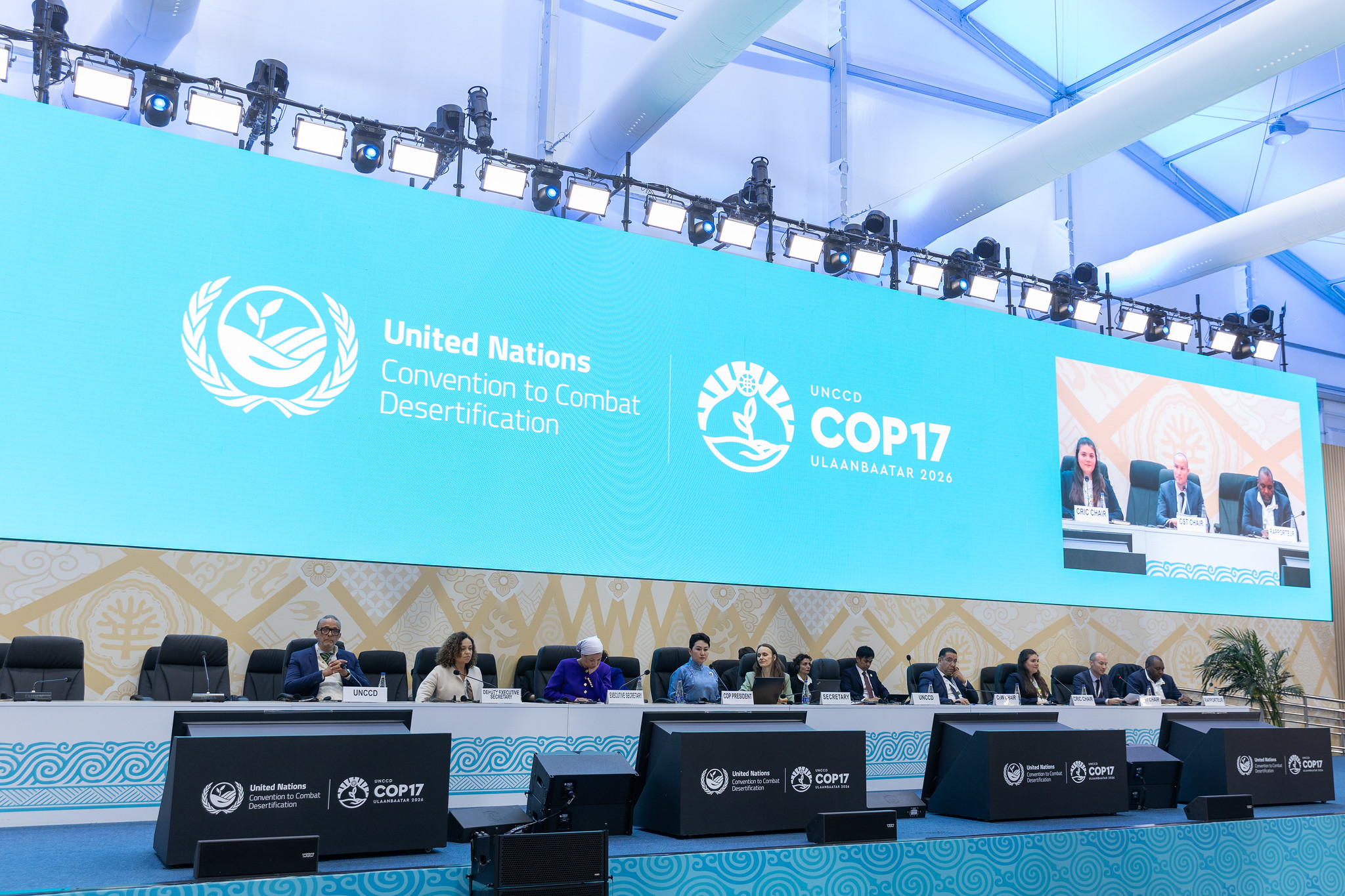
UNCCD CRIC23 Opens in Panama: Countries Review Global Progress on Land Restoration and Drought Resilience Media representatives are invited to the opening day of the 23rd session of the UNCCD Committee for the Review of the Implementation of the Convention (CRIC23), held from 1–5 December 2025 at the Panama Convention Center. CRIC23 brings together representatives from 196 countries and the European Union to assess global progress on land restoration, drought resilience, land tenure, reporting systems, capacity-building and gender equality, and to inform the post-2030 strategic framework ahead of the 17th UNCCD Conference of the Parties (COP17), taking place in Mongolia from 17 to 26 August 2026. Panama will also highlight its Panama Nature Pledge, already introduced in national processes, which outlines the country’s commitment to achieving Land Degradation Neutrality by 2030, restoring priority hotspots and strengthening drought resilience across the Dry Corridor. KEY EVENTS Opening Plenary When: 10:00–13:00 Where: Plenary Hall The opening plenary will outline the goals of CRIC23, including the review of reporting improvements, progress on thematic frameworks (land tenure, gender, sand and dust storms), and a presentation by Panama on its Panama Nature Pledge, which has already been introduced in national processes. Photographers: assemble at 09:15 at the Media Center. Opening Press Conference When: 12:00–13:00 Where: Press Conference Room Speakers: Juan Carlos Navarro, Minister of Environment of Panama Yasmine Fouad, UNCCD Executive Secretary Osama Ibrahim Faqeeha, Deputy Minister of Environment, Water, and Agriculture for Environmental Affairs. KSABatmunkh Dondovdorj, Special Advisor to the Minister and Chairman of upcoming COP17 Presidency National Office The press conference will present the key expectations for CRIC23, highlight Panama’s leadership — including a reference to its Nature Pledge — and provide reflections from the UNCCD COP16 and COP17 Presidencies. Media Accreditation Accredited journalists may access all open press events. Accreditation can be completed at the venue’s Media Registration Desk during opening hours. Side events organized by partners take place throughout the day. Full schedule: https://www.unccd.int/cric23/side-events