News & stories

Latest news & stories
Restoring land is no longer a question of knowing what to do. Countries across regions and income levels have identified interventions where land is degrading and how drought risks can be reduced. What now determines whether these plans deliver real impact is their financing. “We have reached a point where the challenge is not a lack of commitment or solutions,” said Yasmine Fouad, Executive Secretary of the United Nations Convention to Combat Desertification (UNCCD). “The challenge is whether our financial systems are able to support the scale of transformation that land restoration and drought resilience require.” Meeting global land restoration and drought resilience targets will require around USD 355 billion per year between 2025 and 2030 – far more than is currently being invested. As long as land is not considered a strategic asset, rather than treated as a secondary environmental concern, this gap will persist. Why existing financing approaches fall short Today’s financial systems are not designed for the scale, timeframes, or risk profiles that land restoration demands. Public budgets in many countries are under pressure, shaped by competing development priorities and raising sovereign debt levels that result in limited fiscal space. Responsibilities for land, water, agriculture and climate are often split across institutions, complicating coordinated investment. Private investment has so far played a limited role. While interest in sustainability is growing, land restoration often involves longer time horizons and higher perceived risks. Without mechanisms to share risk, capital continues to flow elsewhere – even as UNCCD works to mobilize companies and investors through its Business4Land (B4L) platform, including the launch of the B4L Champions’ Council in 2026. The result is a persistent mismatch: the economic costs of land degradation continue to accumulate across food systems, water security and national economies, while investment remains far below what is required. Closing this gap requires a shift in investment logic – recognizing land restoration as core economic activity, not a side project. “Investing in land is one of the smartest investments available today,” Fouad said. “It reduces risk, strengthens resilience and delivers returns that far exceed the cost.” For development banks and public financiers, this means positioning land restoration not as a niche environmental issue, but as a strategic asset class – one that underpins food security, climate resilience and long-term stability. Turning finance into delivery In many countries, fiscal policies continue to favour land-degrading activities, while restoration remains underfunded. Redirecting incentives – by reforming subsidies and aligning taxation and public spending with sustainable land management – can change the economics of land use, making restoration financially viable rather than marginal. Aligning agriculture, water, climate and economic strategies is critical to making financing more effective and durable. When policies pull in different directions, investment fails to deliver lasting results. Mobilizing private investment at scale will also depend on reducing risk. Strategic use of public and concessional finance can absorb early risks, unlocking private capital at a scale that public budgets alone cannot reach. International cooperation remains essential, particularly for countries facing the largest restoration and drought resilience needs. When used strategically, public finance can mobilize additional resources while delivering benefits that extend beyond national borders. The cost of inaction The economic consequences of inaction are already visible. Land degradation, desertification and drought already cost the global economy close to USD 900 billion each year, through lost productivity, soil depletion, drought damage and carbon emissions. By contrast, scaling up investment in land restoration and drought resilience could generate USD 1.8 trillion in annual benefits- an estimated eight-to-one return on investment. These gains go beyond economics, strengthening food security, reducing vulnerability and supporting more resilient societies. Every year of delay increases the economic, social and environmental costs. From COP16 momentum to COP17 delivery Financing was central to discussions at the sixteenth session of the Conference of the Parties to the UNCCD (COP16), which mobilized political attention, launched new partnerships and secured more than USD 12 billion in pledges for drought resilience. COP16 showed that political momentum exists. The challenge now is whether financing systems can convert that momentum into delivery. Attention is now shifting to COP17 in Ulaanbaatar, Mongolia. With the International Year of Rangelands and Pastoralists in 2026 approaching, the focus will increasingly turn to implementation. Rangelands alone cover more than half of the Earth’s land surface and support the livelihoods of over one billion people, yet remain among the most underfinanced ecosystems globally. For the UNCCD, the road to COP17 is about ensuring that financing frameworks are designed to deliver -capable of translating ambition into measurable impact on the ground. A defining moment The plans are in place. The solutions are known. The ambition is clear. What will define the coming decade is whether financial systems evolve to match that ambition – recognizing land as a strategic investment and financing it accordingly. “If we align finance with the value of land,” Fouad said, “we can restore ecosystems, strengthen resilience and secure a future that delivers for both people and planet.”

The UNCCD Youth Caucus has announced the selection of Rico Rau and Tiffany Marcelle as its new Global Focal Points (GFPs), following an open and competitive nomination process. The call for nominations was launched on 15 October and closed on 29 October, receiving a total of 45 nominations from youth representatives across all regions. Candidates were assessed against eligibility criteria outlined in the call, including age requirements, demonstrated engagement within the UNCCD process, alignment with the Convention’s mandate, and affiliation with UNCCD-accredited organizations. Following this assessment, a short list of candidates who fully met the criteria was identified. In line with the Youth Caucus’ commitment to balanced geographical representation, and considering that the previous Global Focal Points, Ms. Juliet Grace Luwedde represented the Africa region, and Ms. Esha Mitra represented the Asia region — the selection team agreed to appoint: Tiffany Marcelle (Dominica, Caribbean Youth Environment Network – CYEN), representing the Latin America and Caribbean (LAC) region Rico Rau (Germany, Isha Foundation), representing the Europe / WEOG region Both selected candidates demonstrated strong alignment with the UNCCD mandate, active engagement within the UNCCD Youth Caucus, and solid experience working with accredited organizations and international youth processes. As Global Focal Points, Tiffany Marcelle and Rico Rau will provide overall coordination and strategic guidance for the Youth Caucus, supporting youth representation, strengthening regional coordination, and advancing collective action on land restoration, land degradation, and drought resilience. Global Focal Points are elected by Youth Caucus members and are accountable for ensuring that the mandate of their role is effectively implemented. The UNCCD Youth Caucus and the UNCCD Secretariat also expressed its appreciation to the outgoing leadership, Ms. Juliet Grace Luwedde, for her dedicated service and contributions to strengthening the visibility and impact of youth engagement within the UNCCD process. Learn more about the UNCCD Youth Caucus.

نيروبي / بون، 12 ديسمبر 2025 – أعلنت كلٌّ من حكومة كينيا واتفاقية الأمم المتحدة لمكافحة التصحر (UNCCD) اليوم أنّ كينيا ستستضيف فعالية اليوم العالمي لمكافحة لتصحر والجفاف لعام 2026، التي ستقام في 17 يونيو تحت شعار "المراعي: الاعتراف بقيمتها. احترامها. استعادتها." وستُقام الفعالية في كينيا، لتسليط الضوء على الدور المحوري للمراعي حول العالم في تعزيز القدرة على الصمود أمام تغير المناخ، وضمان الأمن الغذائي والمائي، وحماية التنوع البيولوجي، وصون الهوية الثقافية للمجتمعات الرعوية والشعوب الأصلية. تغطي المراعي أكثر من نصف مساحة اليابسة على كوكب الأرض، وتُعيل حياة ملياري إنسان، بينهم 500 مليون من الرعاة الذين حافظوا على هذه النظم البيئية عبر أجيال متعاقبة. ويعكس قرار كينيا استضافة هذه الفعالية العالمية التزامها المستمر بمواجهة تدهور الأراضي، وتعزيز القدرة على تحمل موجات الجفاف، ودعم المجتمعات التي تعيش في المناطق الجافة والرعوية. تم الإعلان رسميًا عن قرار كينيا استضافة هذه الفعالية العالمية من قبل معالي وزيرة البيئة وتغيّر المناخ والغابات، الدكتورة ديبورا ملونغو باراسا، التي وجّهت دعوة مفتوحة إلى المجتمع الدولي للمشاركة في هذه المناسبة العام المقبل، قائلةً: "نيابةً عن حكومة كينيا، يسعدني أن أوجّه دعوة صادقة إلى الجميع. ففي العام المقبل، تتشرّف كينيا باستضافة الاحتفال العالمي باليوم العالمي لمكافحة التصحر والجفاف. ونرحّب بحرارة بجميع الدول الأعضاء، وشركائنا، والمجتمع المدني، والشباب، للانضمام إلينا ونحن نسلّط الضوء عالميًا على القدرة على الصمود في مواجهة الجفاف، واستعادة الأراضي، والمجتمعات التي تتشكّل حياتها وسبل عيشها بفعل هذه التحديات." وأضافت أن "مشاركة الحضور لن تُثري هذه الفعالية فحسب، بل ستؤكد أيضًا التزامنا المشترك بحماية الأراضي الجافة في العالم ودعم المجتمعات التي تعتمد عليها. ومع احتفالنا بالسنة الدولية للمراعي والرعاة، نأمل أن يقف المجتمع الدولي إلى جانب كينيا في الاعتراف بالقيمة الهائلة لهذه النظم البيئية وبالذين يرعونها ويحافظون عليها. ونتطلع إلى الترحيب بكم في كينيا، ونحن نحشد العالم للعمل على مواجهة الجفاف قبل أن يفرض الجفاف آثاره علينا." وعلقت الأمينة التنفيذية لاتفاقية مكافحة التصحر ياسمين فؤاد قائلة: "نوجّه شكرنا لحكومة كينيا على استضافة اليوم العالمي لمكافحة لتصحر والجفاف 2026 وعلى تسليط الضوء على المراعي حول العالم. فهذه النظم البيئية أساسية للغذاء والماء والتنوع البيولوجي والقدرة على الصمود في مواجهة المناخ. ويأتي هذا الالتزام في لحظة حاسمة، فيما تتعرض المراعي لضغوط متزايدة عالميًا. من خلال إدراك أهميتها، واحترام من يرعونها تقليديًا، واستعادة صحتها، نستطيع تعزيز سبل عيش ملياري إنسان." وأضافت أن "ما يصل إلى نصف المراعي في العالم متدهور اليوم، وبعضها يتلاشى بوتيرة تفوق اختفاء الغابات المطيرة، مما يهدد الأمن الغذائي وتوافر المياه وثقافات المجتمعات الرعوية." ورغم امتدادها الواسع وأهميتها الحاسمة، لا تزال المراعي من أكثر النظم البيئية التي يُساء تقديرها عالميًا. فاستمرار تدهورها يهدد التنوع البيولوجي، وتنظيم المناخ، واقتصادات الدول التي تعتمد على الإنتاج الحيواني وأنظمة الرعي. وتبرز التقييمات الفنية الحديثة للاتفاقية أن الاستثمار في استعادة المراعي قد يحقق عوائد تصل إلى 35 دولارًا عن كل دولار واحد يُستثمر، بفضل ما توفره من منافع بيئية واجتماعية واقتصادية متكاملة. وتزامنًا مع السنة الدولية للمراعي والرعاة 2026، ستدعو فعالية اليوم العالمي لمكافحة التصحر والجفاف المجتمع الدولي إلى إدراك القيمة الحيوية للمراعي، واحترام حاملي المعرفة التقليدية الذين حافظوا عليها عبر قرون، واستعادة الأراضي المتدهورة لضمان سبل العيش واستمرار الخدمات البيئية. من خلال الاحتفال بيوم 2026، تدعو الاتفاقية الدول والمجتمعات إلى: إدراك المساهمة الاقتصادية للمراعي في الاقتصادات الوطنية والإقليمية، وتقييم دورها في صون التنوع البيولوجي والحياة البرية، وتقدير الفوائد المتعددة التي توفرها، من تنظيم دورة المياه إلى تخزين الكربون. احترام الرعاة والشعوب الأصلية والمجتمعات المحلية، الذين تُعدّ حركتهم ونظمهم العرفية للحوكمة ومعارفهم البيئية عناصر أساسية للحفاظ على صحة وإنتاجية هذه النظم. استعادة المراعي من خلال الاستثمار في الإدارة المستدامة للأراضي والمياه، وتعزيز الحوكمة، وتحسين الجاهزية للجفاف، ودعم جهود الاستعادة التي تقودها المجتمعات. يُعدّ اليوم العالمي لمكافحة التصحر والجفاف، الذي يُحتفل به سنويًا في 17 يونيو، لحظة عالمية لدعوة المجتمع الدولي إلى حماية الأراضي السليمة واستعادتها، وإلى زيادة الوعي بمخاطر الجفاف وتدهور الأراضي. وسيكون عام 2026 أول مرة منذ قرابة عقد تستضيف فيها القارة الإفريقية هذا الحدث العالمي. وشملت مواقع الاحتفال السابقة كولومبيا (2025)، ألمانيا (2024)، الولايات المتحدة (2023)، إسبانيا (2022)، كوستاريكا (2021)، جمهورية كوريا (2020)، تركيا (2019)، الإكوادور (2018)، بوركينا فاسو (2017)، والصين (2016). للمزيد من المعلومات، يرجى التواصل عبر: press@unccd.int https://www.unccd.int/events/desertification-drought-day/2026 نبذة عن اليوم العالمي لمكافحة التصحر والجفاف أُعلن هذا اليوم رسميًا من قبل الجمعية العامة للأمم المتحدة عام 1994 (A/RES/49/115)، ويُعد مناسبة سنوية لاستعراض الحلول العملية لمكافحة التصحر وتدهور الأراضي والجفاف. وتشارك دول عديدة حول العالم بأنشطة تعليمية وثقافية ورياضية لإحياء هذا اليوم. نبذة عن اتفاقية الأمم المتحدة لمكافحة التصحر اتفاقية الأمم المتحدة لمكافحة التصحر هي الرؤية والصوت العالميان للأرض. تجمع الاتفاقية الحكومات والعلماء وواضعي السياسات والقطاع الخاص والمجتمعات حول رؤية مشتركة وعمل عالمي لاستعادة أراضي العالم وإدارتها من أجل استدامة الإنسان والكوكب. وإلى جانب كونها معاهدة دولية موقّعة من 197 طرفًا، تُعدّ الاتفاقية التزامًا متعدد الأطراف للتخفيف من آثار تدهور الأراضي اليوم وتعزيز حوكمة الأرض في المستقبل، بهدف توفير الغذاء والماء والمأوى والفرص الاقتصادية لجميع الناس على نحو منصف وشامل.

Across one of the world’s most biodiverse regions, countries are confronting rising land degradation and accelerating efforts to build resilience. In Panama, the relationship between land and water is visible in every direction. Forested hillsides feed rivers that sustain communities, ecosystems, and one of the world’s most strategic waterways. The country’s geography is a reminder of something Latin America and the Caribbean know well: when land thrives, resilience follows — and when land is under pressure, the effects ripple outward across economies, societies and borders. This truth is shared across the 33 countries that make up the region. Stretching from the drylands of northern Mexico to the rainforests of the Amazon and the island nations of the Caribbean, Latin America and the Caribbean hold extraordinary natural wealth — yet they are also experiencing some of the fastest environmental changes in the world. According to the latest assessments of the UNCCD, 394 million hectares — nearly one-fifth of the reported land area — are already degraded. In some subregions, scientific estimates rise as high as 40 per cent. In Panama alone, more than 32 per cent of land shows signs of degradation. These pressures take many forms. In the Dry Corridor, shifting rainfall patterns affect crops and even navigation routes. In the Amazon basin, record dry seasons have strained rivers essential for food, hydropower, and transport. In the La Plata basin, prolonged drought has influenced global commodity prices. Forest fires — once sporadic — now burn more frequently in several countries. For small islands with limited freshwater reserves, water scarcity is becoming increasingly acute. Yet the region is also defined by determination and creativity. Communities are restoring degraded hillsides, reviving agroforestry, protecting watersheds, and strengthening early-warning systems.Their work reflects what UNCCD Executive Secretary Yasmine Fouad described as the foundation of resilience: “Healthy land and soils are the foundation of food, water, stability and peace.” This commitment is visible in daily life — in how farmers adapt to shifting rainfall, in the stewardship of Indigenous guardians, in the recovery of forests and rangelands, and in local initiatives that protect water sources. Together, these efforts form a mosaic of resilience, from mountain landscapes to coastal plains. Where regional realities meet global dialogue These shared realities — the challenges and the solutions — also informed recent exchanges in Panama City, held alongside the 23rd session of the Committee for the Review of the Implementation of the Convention (CRIC23). While not a negotiation forum, CRIC23 provided a moment for countries to reflect on common concerns and contribute to a broader conversation about land and resilience. The lived experience of the region mirrors its environmental pressures: farmers adapting to new seasonal patterns, Indigenous custodians restoring landscapes with ancestral knowledge, and governments developing strategies to manage droughts that reshape entire sectors. At the same time, new opportunities are emerging — from nature-based solutions to integrated fire management and long-term drought planning. Amid these exchanges, Brazil offered a clear call for coordinated regional and global action. Edel Moraes, National Secretary for Traditional Peoples, Local Communities and Sustainable Rural Development at the Ministry of the Environment of Brazil, stressed that: “Land degradation and rising drought risks demand urgent, coordinated action. Protecting soils, restoring ecosystems, and strengthening drought-resilient territories are essential for food security and rural prosperity. Brazil highlights the leadership of women, Indigenous Peoples and local communities, whose knowledge and stewardship are central to successful restoration and sustainable land management. We also call for stronger synergies among the Rio Conventions — UNCCD, UNFCCC and CBD — to reduce fragmentation, align support, and expand access to predictable finance for developing countries. Brazil remains committed to advancing integrated solutions that deliver real benefits on the ground and support a just, inclusive and sustainable transition.” Governments are already putting in place strong frameworks for land restoration and drought preparedness. The next step is mobilizing investment at the scale required. As in many regions, financial constraints limit the ability to direct sustained funding toward land and water systems. Expanding access to diverse financing — public, private, and community-based — will be essential to unlocking the region’s full potential. Panama’s leadership in land, water and climate action Panama illustrates how deeply land, water and economic stability are interconnected. Its forests and watersheds sustain biodiversity, local livelihoods, and a Canal that carries 6 per cent of global trade. Few countries show more clearly how environmental stewardship supports national and global economies. The country’s Nature Pledge brings together land, biodiversity, and climate action in a single strategic vision. It demonstrates how nature-based solutions can serve communities while advancing national development goals and the objectives of all three Rio Conventions. And since the relocation of the UNCCD regional office to Panama City in early 2024, cooperation among Latin American and Caribbean nations has deepened, strengthening the region’s ability to accelerate collective action. A region shaping the path to COP17 The perspectives surfaced in Panama will help inform the region’s contribution to the 17th session of the Conference of the Parties (COP17) to the UNCCD, taking place in Ulaanbaatar from 17 to 28 August 2026. Drought resilience, rangelands, Indigenous leadership and restoration finance will be central themes — and Latin America and the Caribbean, marked by both vulnerability and immense restoration potential, will play a decisive role. A shared message emerged strongly: land restoration begins with people. As the UNCCD Executive Secretary emphasized: “You cannot protect land without protecting the people who care for it — the women, youth, Indigenous custodians, farmers and herders. If we want healthier land, we must strengthen the rights, resources and opportunities of the communities who depend on it.” Her message resonated in Panama, reinforcing the region’s recognition that resilient landscapes are rooted in resilient communities. Looking forward A common direction is taking shape: restoring land, strengthening drought resilience and placing communities at the center of action. From the Amazon to the Andes, from the Dry Corridor to the Caribbean Sea, Latin America and the Caribbean are working toward a future where healthy land supports thriving communities — and where regional leadership helps guide global action toward COP17 and beyond.

The United Nations Convention to Combat Desertification (UNCCD) is proud to celebrate a historic moment as its Executive Secretary, Dr. Yasmine Fouad, has been awarded the 2025 Nobel Sustainability Medal by the Nobel Sustainability Trust, one of the world’s most distinguished recognitions for leadership in sustainability.This honor reflects more than two decades of Dr. Fouad’s contributions to environmental governance, climate resilience, and community-centered development across Africa, the Arab region, and the world. It also underscores the growing international appreciation for the work of the UNCCD, as land restoration, drought resilience, and sustainable livelihoods become increasingly central to global environmental and development agendas.From the beginning of her career, Dr. Fouad has been driven by a simple but powerful belief: sustainability must begin with people. Her journey has taken her from scientific research in Egypt’s most vulnerable communities, to leading global negotiations, to shaping national environmental policy as Egypt’s Minister of Environment. Throughout this path, she has consistently emphasized that land is not only an ecological asset, but the foundation of human dignity, stability, and opportunity.Her leadership has always been shaped by her human story as much as her professional achievements. She often recalls a moment at the 2018 UN Biodiversity Conference when one of her sons walked into the negotiation hall, approached the podium, and placed his hands on the gavel as delegates applauded. It was, she says, a reminder that while leaders negotiate for agreements, children negotiate for their future. This intergenerational sense of responsibility continues to define her approach to sustainability and diplomacy.Today, the world faces unprecedented pressures on land and water. A quarter of the planet’s land is degraded, droughts are intensifying, and millions of people are losing the resources they depend on. Under Dr. Fouad’s leadership, UNCCD has strengthened its efforts to reverse these trends by elevating land restoration as a pathway to resilience, by advancing more inclusive approaches to drought preparedness, and by ensuring that the voices of women, youth, Indigenous Peoples, and rural communities shape global action.Her tenure has also ushered in renewed momentum toward key global milestones. The Tafa’ul Process, inspired by the spirit of constructive optimism, is guiding a fresh dialogue on drought resilience. The upcoming COP17 in Mongolia is expected to deepen commitments to land stewardship, particularly as the world observes the International Year of Rangelands and Pastoralists in 2026.As she accepted the award, Dr. Fouad dedicated it to the women who rebuild their communities in silence, to the young people who refuse to inherit despair, to the workers who transform scarcity into creativity, and to the families who choose hope every day. Her words capture the heart of the UNCCD’s mission: that sustainability is not purely technical work, but work grounded in humanity, in livelihoods, in cultural heritage, and in the right of every person to thrive on healthy, productive land.Her recognition arrives at a pivotal moment for global environmental action. As the world seeks solutions that are equitable, resilient, and just, Dr. Fouad’s leadership offers a model of diplomacy that is principled, compassionate, and grounded in real-world experience. Her story is a reminder that environmental stewardship is not solely about restoring ecosystems, but about restoring hope and opportunity for communities everywhere.UNCCD extends its warmest congratulations to Dr. Yasmine Fouad for this extraordinary achievement. The Convention looks forward to continuing its work under her guidance as it supports countries and communities in building a more resilient, humane, and sustainable future.

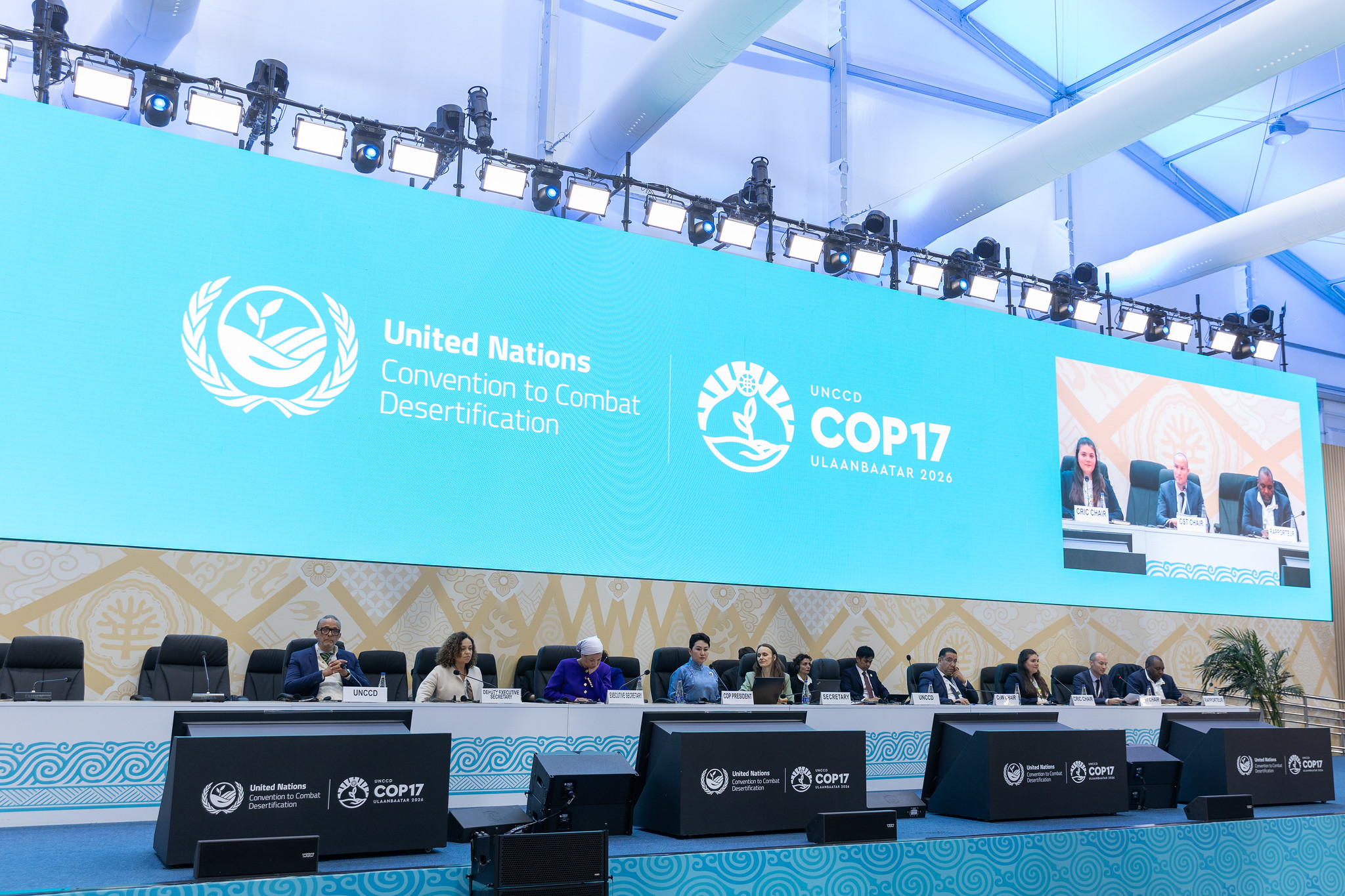
أجندة عمل الرياض تمضي قدمًا مع مبادرات مثل الشراكة العالمية للقدرة على الصمود أمام الجفاف ومرفق الاستثمار في القدرة على الصمود أمام الجفاف صعودلمنصّتي النساء والشعوب الأصلية كقوتين مؤثرتين في مسار اتفاقية مكافحة التصحر تقارير جديدة تسلّط الضوء على الدول الجزرية الصغيرة والمراعي قبيل مؤتمر الأطراف السابع عشر بون / بنما سيتي، 5 ديسمبر 2025 – تزامنًا مع اليوم الدولي للتربة، اختتم الاجتماع الذي يمثّل نقطة منتصف الطريق بين مؤتمري الأمم المتحدة للأراضي في الرياض وأولان باتار أعماله في بنما، بعد خمسة أيام من الحوار البنّاء حول التقدّم في التصدي لفقدان التربة الخصبة وتدهور الأراضي والجفاف على مستوى العالم. وقد مهّد ممثلو الأطراف الـ197 المشاركون في الدورة الثالثة والعشرين للجنة استعراض تنفيذ الاتفاقية CRIC23 التابعة لاتفاقية الأمم المتحدة لمكافحة التصحرUNCCD، الأساس للمؤتمر المقبل الذي سيُعقد في منغوليا عام 2026، حيث ستُدعى الدول إلى حماية موارد الأرض والمياه في وقت يتزايد فيه الطلب العالمي على الغذاء والطاقة. وفي إطار المسار الممتد من الرياض إلى أولان باتار، تبادل المندوبون والجهات غير الحكومية الرؤى حول كيفية دفع أجندة العمل المنبثقة عن مؤتمر الأطراف السادس عشر، بما في ذلك الشراكة العالمية للقدرة على الصمود أمام الجفاف ومرفق الاستثمار في القدرة على الصمود أمام الجفاف. وتركزت المناقشات على أفضل السبل للاستفادة من آليات التعاون والتمويل الجديدة لحشد التمويل الثنائي والخاص لدعم العمل على الأرض في مجال الأراضي والجفاف. كما وضع المشاركون الأساس لاستئناف المفاوضات حول الإطار العالمي للجفاف خلال مؤتمر الأطراف السابع عشر، الذي سيُعقد في أغسطس 2026. وحققت عملية "تفاؤل"، وهي أول سلسلة من ثلاثة حوارات غير رسمية وطوعية تقودها رئاسة مؤتمر الأطراف السادس عشر، تقدمًا في بناء الثقة بين الأطراف قبل المحادثات المرتقبة في منغوليا. وشهد المؤتمر أيضًا تقدمًا في تفعيل الشراكة العالمية للقدرة على الصمود أمام الجفاف، التي أقرت نظام الحوكمة الخاص بها وقدمت خطة عمل تهدف إلى دعم نحو 70 دولة في الحد من تعرضها لأحد أخطر وأكثر الكوارث تكلفة على مستوى العالم. كما برزت ضمن فعاليات المؤتمر اجتماعات منصة النوع الاجتماعي – التي أنشئت في مؤتمر الأطراف الخامس عشر في أبيدجان وأُدرجت للمرة الأولى هذا العام ضمن البرنامج الرسمي كمساحة لصياغة سياسات أرض تراعي المساواة بين الجنسين – والمنصة الشبابية، وأول اجتماع رسمي لمنصة الشعوب الأصلية التي أُنشئت في مؤتمر الأطراف السادس عشر، والتي دعت إلى إشراك فعلي في سياسات وبرامج الأرض والجفاف على المستويات المتعددة الأطراف والوطنية. وخلال أعمال اللجنة، قيّمت الأطراف مدى التقدم في قضايا مثل بناء القدرات، والإبلاغ، والنوع الاجتماعي، وتملك الأراضي، وتنفيذ الأهداف الطوعية للحياد في تدهور الأراضي. وأكدت الأمينة التنفيذية لاتفاقية مكافحة التصحر، ياسمين فؤاد، أهمية العمل متعدد الأطراف، وجددت – باسم أمانة الاتفاقية – الالتزام بدعم الدول في تحويل التعهدات السياسية إلى نتائج ملموسة للناس والكوكب. وقالت: "إن الخطط الوطنية لمواجهة الجفاف وأهداف الحياد في تدهور الأراضي من دون تمويل تبقى مجرد كلمات على الورق. مهمتنا الآن هي فتح الباب أمام التمويل والاستثمار لحماية الأراضي واستعادتها وتعزيز قدرتها على الصمود، بما يشمل إشراك القطاع الخاص، حتى تتمكن الدول من تحقيق تغيير حقيقي على الأرض. ومن بنما إلى أولان باتار، علينا الحفاظ على الزخم وضمان ترجمة الالتزامات إلى عمل." أصوات الشعوب الأصلية والنساء شدّد المشاركون في الاجتماع الأول لمنصة الشعوب الأصلية على دورهم المركزي كحماة للأراضي. وطالب ممثلو الشعوب الأصلية من مختلف أنحاء العالم بإشراكهم في صنع القرار، والاعتراف بمعارفهم المتوارثة عبر الأجيال، وضمان تمكينهم من الوصول إلى التمويل. وفي الوقت ذاته، يجري العمل على عقد الاجتماع الأول لمنصة المجتمعات المحلية التي أُنشئت في مؤتمر الأطراف السادس عشر. وقالت هندو عمر إبراهيم، منسقة جمعية نساء وشعوب تشاد الأصلية AFPAT: "إن الشعوب الأصلية المشاركة هنا تعرف ما تريده من مؤتمر الأطراف السابع عشر. نريد أن يُسمَع صوتُنا، لا كمراقبين، بل كمشاركين. نريد وصولًا مباشرًا إلى التمويل لتنفيذ قرارات المؤتمر في أراضينا. نريد أن تُدمَج معارفنا المتوارثة في النقاشات العلمية. إن الشعوب الأصلية ليست خانة تُملأ، نحن صوتٌ أساسي لضمان أن تستمر الأرض في دعم البشر في السنوات المقبلة." وسلّطت منصة النساء الضوء على دور القيادة الذي تمارسه النساء من الشعوب الأصلية في الإدارة المستدامة للأراضي، وعلى الآثار غير المتكافئة للعواصف الرملية والترابية على النساء، وذلك بهدف المساهمة في صياغة توصيات تراعي النوع الاجتماعي ضمن عمليات الاتفاقية. كما تلقت نساء من دول نامية متضررة من الجفاف تدريبًا تفاوضيًا استعدادًا لمؤتمر الأطراف السابع عشر من خلال صندوق المندوبات النساء WDF، وهو تقدم مهم نظرًا لأن النساء شكّلن 33 بالمئة فقط من المندوبين في الدورة السابقة للجنة. وقد لعب متطوعو الأمم المتحدة دورًا محوريًا في دعم اجتماعات اللجنة، وسيواصلون دعم مؤتمر الأطراف السابع عشر تزامنًا مع إعلان عام 2026 عامًا دوليًا للمتطوعين من أجل التنمية المستدامة. الجزر الصغيرة… والمراعي الواسعة كشف تقرير جديد صادر عن اتفاقية الأمم المتحدة مكافحة التصحر أن كل شبر من الأرض يشكل موردًا حيويًا لبقاء الدول الجزرية الصغيرة النامية، التي تواجه آثارًا متزايدة للجفاف وفقدان الأراضي الصالحة للزراعة. وقد ارتفعت نسبة أراضي هذه الدول التي تتعرض لما لا يقل عن ستة أشهر من الجفاف الشديد سنويًا إلى 17 بالمئة خلال الفترة 2014–2023، مقارنة بـ2 بالمئة بين عامي 1961–1970. وفي الوقت ذاته، يساهم التوسع العمراني، والممارسات الزراعية غير المستدامة، والصناعات الاستخراجية في تدهور الأراضي في بعض أصغر وأكثر المناطق هشاشة أمام تغيّر المناخ. وكشف موجز آخر أن استعادة المراعي تتيح أحد أعلى العوائد الاقتصادية بين مختلف النظم البيئية، إذ تصل الفوائد إلى 35 دولارًا مقابل كل دولار يُستثمر، وفق نتائج أولية لتحليل عالمي للتكلفة والمنفعة أجرته مبادرة اقتصاديات تدهور الأراضي. وسيُعرض هذان التقريران كاملين في مؤتمر الأطراف السابع عشر في منغوليا، تزامنًا مع السنة الدولية للمراعي والرعاة، وفي وقت تتقارب فيه الدول الجزرية الصغيرة لإيصال صوت موحد حول تحدياتها وفرصها ضمن مسار الاتفاقية. من الرياض إلى منغوليا في ديسمبر 2024، اعتمدت الأطراف في مؤتمر الأطراف السادس عشر في الرياض أول قرار رئيسي بشأن الأراضي الزراعية؛ وأكدت ضرورة إشراك القطاع الخاص عبر مبادرة الأعمال من أجل الأراض، وحشدت مليارات الدولارات لمشاريع وفي الدول الأكثر هشاشة. ويتم البناء على هذا الإرث في الطريق نحو مؤتمر الأطراف السابع عشر. فعلى سبيل المثال، دفع اجتماع بنما المشاورات التي تقودها منظمة الأغذية والزراعة (الفاو) لوضع توجيهات بشأن القرار التاريخي للمؤتمر حول منع تدهور الأراضي الزراعية والحد منه وعكس مساره. وسيقدّم هذا المستند، الموجّه لصناع القرار ، مسارات متخصصة بحسب السياق لمواجهة فقدان الأراضي الخصبة، وهو أمر أساسي لتحقيق أهداف الحياد في تدهور الأراضي نظرًا إلى أن نحو 60 بالمئة من التدهور يحدث في الأراضي الزراعية. وقال معالي الدكتور أسامة فقيها، نائب وزير البيئة والمياه والزراعة في المملكة العربية السعودية، ورئيس مؤتمر الأطراف السادس عشر: "كما قال الأمين العام للأمم المتحدة أنطونيو غوتيريش: ’نحن نعيش على الأرض ونعيش من الأرض، لكننا نتعامل معها كما لو كانت شيئًا بلا قيمة.‘ لقد حان الوقت لنعطيها قيمتها الحقيقية. شكّل اجتماع اللجنة فرصة للحفاظ على زخم العمل في مجالي الأراضي والجفاف على الطريق من الرياض إلى أولان باتار، ولتنسيق الجهود في مجالات الابتكار والتمويل من أجل الأجيال الحالية والمقبلة." وقال السيد باتمونخ دوندفدورج، المستشار الخاص للوزير ورئيس مكتب رئاسة مؤتمر الأطراف السابع عشر: "نتطلع، كرئاسة مقبلة، إلى ضمان أن يقدم مؤتمر الأطراف اجتماعًا شاملاً ومتوازنًا يستند إلى العلم ويركّز على حلول عملية. نريده مؤتمرًا يعكس التنوع الإقليمي، ويعزز التعاون بين القطاعات، ويجمع الحكومات والعلماء والشباب والنساء والشعوب الأصلية والمجتمعات والشركاء، ويحقق تقدمًا ملموسًا نحو الحياد في تدهور الأراضي وتعزيز القدرة على صمود الجفاف." النهاية ملاحظات للمحررين تتوفر المواد البصرية الخاصة باللجنة CRIC23 ولوحة بيانات اتفاقية مكافحة التصحر عبر الرابط: https://trello.com/b/zq0kxtkK/unccd-cric23-panama-2025 لمزيد من المعلومات حول الاتفاقية واللجنة CRIC23، يرجى زيارة: https://www.unccd.int/cric23 نبذة عن اتفاقية مكافحة التصحر اتفاقية الأمم المتحدة لمكافحة التصحر (UNCCD) هي الرؤية والصوت العالميان للأرض. تجمع الاتفاقية الحكومات والعلماء وصناع السياسات والقطاع الخاص والمجتمعات حول رؤية مشتركة وعمل عالمي لاستعادة أراضي العالم وإدارتها على نحو مستدام لصالح الإنسان والكوكب. وتعد الاتفاقية، التي صادقت عليها 197 دولة طرفًا، التزامًا متعدد الأطراف للتصدي لآثار تدهور الأراضي اليوم وتعزيز الإدارة المستدامة للأراضي لتوفير الغذاء والمياه والمأوى والفرص الاقتصادية للجميع بشكل عادل وشامل. نبذة عن اللجنة CRIC23 يجتمع ممثلو 196 دولة والاتحاد الأوروبي في بنما من 1 إلى 5 ديسمبر 2025 لاستعراض جهودهم في مكافحة التصحر وتدهور الأراضي والجفاف في إطار اتفاقية الأمم المتحدة لمكافحة التصحر—إحدى اتفاقيات ريو الثلاث إلى جانب التنوع البيولوجي والمناخ. وت convene هذه الدورة الثالثة والعشرون للجنة استعراض تنفيذ الاتفاقية نحو 500 مشارك من الحكومات والمجتمع المدني والأوساط الأكاديمية لتقييم التقدم في تحقيق أهداف الاتفاقية.
