
Latest news & stories
On World Football Day, theUNCCDis proud to announce William Troost-Ekong, captain of Nigeria’s national football team and professional player for the Saudi Pro League Al-Kholood FC, as the latest Sport4Land Champion.

The United Nations Secretary-General, following consultation with the Bureau of the Conference of the Parties to the United Nations Convention to Combat Desertification (UNCCD), announced the appointment of Yasmine Fouad of Egypt as the next Executive Secretary of the UNCCD. Serving as Minister of Environment of Egypt since 2018, Yasmine Fouad is an expert in environmental diplomacy with over 25 years of experience in environmental governance, global environmental themes and international climate diplomacy. She has a proven track record in designing and implementing institutional and systemic reforms for sustainable development. She holds a Ph.D. in Euro-Mediterranean Studies, Cairo University, and an M.Sc. in Environmental Science, Ain Shams University. She is fluent in English and Arabic.Welcoming the announcement made yesterday in New York, UNCCD Executive Secretary Ibrahim Thiaw said: “Yasmine Fouad brings with her a wealth of experience and deep commitment to the environment and sustainable development. I warmly congratulate her on her appointment and have full confidence that she will bring new energy and vision to the role.”Ms. Fouad will be the fifth UNCCD Executive Secretary, succeeding Mr. Ibrahim Thiaw of Mauritania, Ms. Monique Barbut of France, Mr. Luc Gnacadja of Benin and Mr. Hama Arba Diallo of Burkina Faso. The Secretary-General expressed his deep gratitude to Mr. Thiaw "for his dedicated service and outstanding commitment to the Organization".Ms. Fouad will commence her first three-year term in office later this year.

Land degradation is a global crisis—one that is reshaping landscapes, livelihoods and futures. Each year, vast areas of productive lands are lost, affecting nearly half of humanity and costing the global economy an estimated US$878 billion. In Latin America, over 20 per cent of arable land is already degraded due to deforestation, overgrazing and other types of unsustainable land use. At the heart of the UNCCD is the belief that land is not only a natural resource—it is a source of life, identity and resilience. But while policies and data help define the challenge, it is the stories from the ground that bring its true scale and urgency into focus. Here is where ReVerde plays a crucial role. The documentary-style television programme gives voice to the people behind the headlines—those living with and responding to the impacts of land degradation. From Indigenous communities to small-scale farmers, from urban collectives to rural cooperatives, the programme captures the diverse efforts underway to restore ecosystems, protect local resources and create sustainable alternatives. Aligned with the UNCCD’s vision for sustainable land stewardship, ReVerde explores both the challenges and the solutions. It highlights community-led restoration, the importance of ancestral knowledge and the risks posed by unregulated development. Ahead of this year's Desertification and Drought Day on 17 June 2025, hosted in Bogotá, Colombia, with the theme— “Restore the Land. Unlock the Opportunities.”— ReVerde stories remind us that restoration is not an abstract goal, but a daily effort being led by communities on the ground. The benefits are clear: land restoration can reverse more than US$1 trillion in agricultural productivity losses, strengthen food security for over a billion people and create millions of sustainable jobs. But to meet global targets, a significant funding gap—currently US$278 billion per year—must be closed. In telling the stories of land and those who care for it, ReVerde does more than inform—it inspires, builds understanding, sparks dialogue and brings us closer to a future where land is restored, protected and valued for generations to come. In its next chapter, ReVerde turns its lens to the global observance of Desertification and Drought Day—continuing its mission to spotlight the people and places at the heart of our planet’s most pressing challenges.

The Great Green Wall, an African-led initiative to grow an 8,000km belt of restored land across the Sahel, is now featured in Google Arts & Culture’s Trees Project. More than a reforestation effort, the Wall is a symbol of resilience—tackling land degradation, poverty, hunger, and climate change while empowering communities.Since its launch in 2007, the initiative has revitalized landscapes, improved food security, and created jobs. Women, often most affected by climate change, play a crucial role in its success, especially in land regeneration and food systems. By ensuring inclusive, gender-sensitive approaches, the Great Green Wall is shaping a greener, more equitable future.Once completed, it will be the largest living structure on Earth—three times the size of the Great Barrier Reef. Learn more.

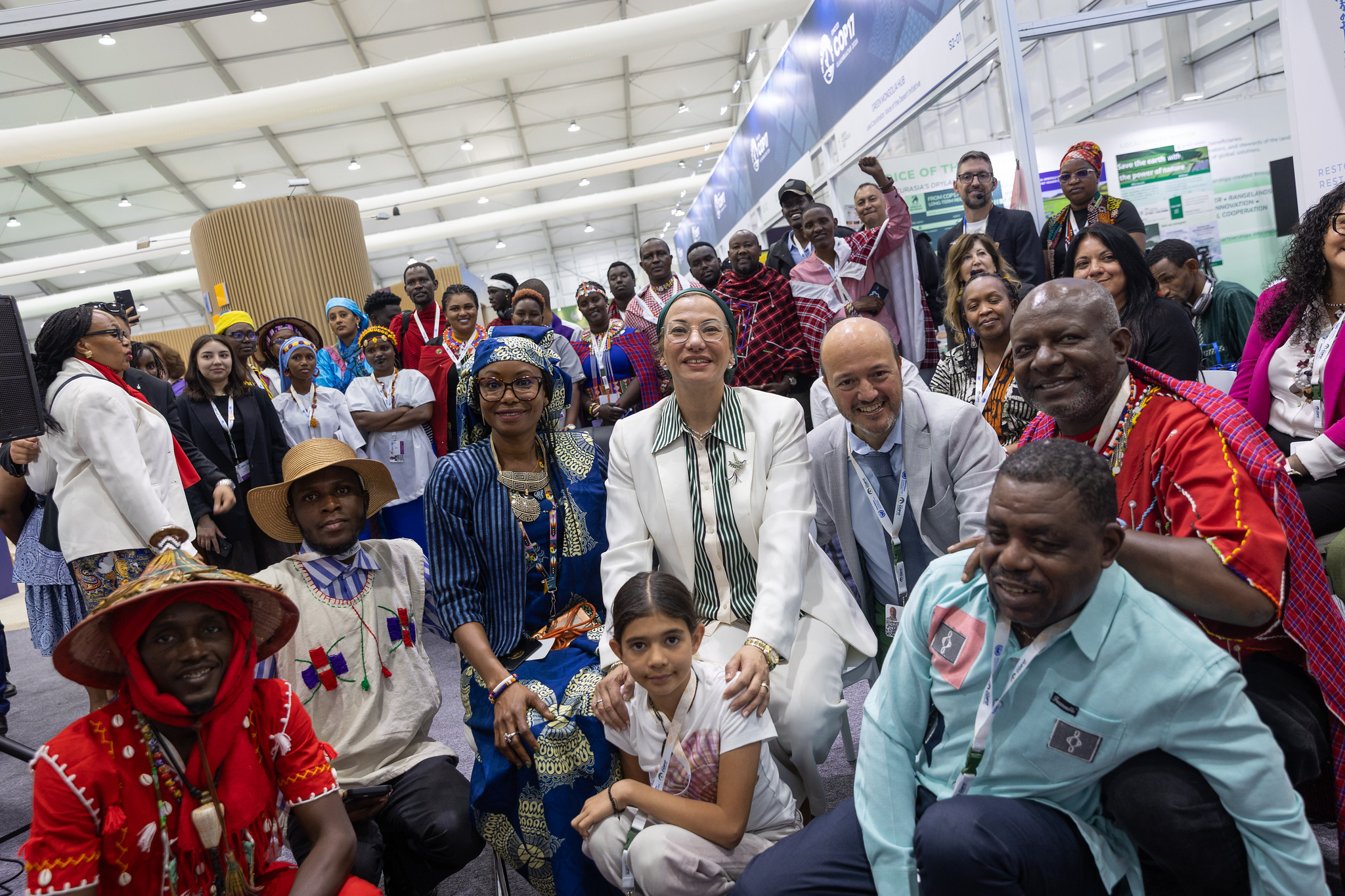
The UNCCD is forming an Intergovernmental Working Group on the Future Strategic Framework (IWG-FSF), as mandated by Decision 4/COP.16. This group will develop proposals for a post-2030 strategy, including potential goals and targets, and will review existing indicators to enhance national reporting on progress. In line with the Convention’s commitment to inclusive decision-making, civil society organizations (CSOs) will play a vital role in this process. The IWG-FSF will bring together three representatives from each regional group and five technical experts, one of whom will be a CSO representative. The UNCCD Secretariat, in collaboration with the CSO Panel, will oversee the selection of the CSO representative through a call for expressions of interest, ensuring compliance with the Terms of Reference and representativity criteria established by the Conference of the Parties. CSOs have long been integral to the work of the Convention, contributing to policy development, implementation and monitoring. At the recent UNCCD COP16 in Riyadh, CSOs actively engaged in discussions on land tenure, sustainable land stewardship and drought resilience, highlighting the importance of grassroots engagement in combating desertification and land degradation. The CSO Panel, elected by accredited organizations, serves as a liaison between civil society and the UNCCD, ensuring that diverse voices inform decision-making processes. The IWG-FSF is expected to present an interim report on its progress at the 23rd session of the Committee for the Review of the Implementation of the Convention (CRIC 23) in December 2025. This initiative underscores the UNCCD commitment to collaborative and inclusive approaches in addressing desertification, land degradation and drought. Photo: (c) IISD ENB/Anastasia Rodopoulou

Bonn/Bogotá, 14 de mayo de 2025 – La República de Colombia acogerá este este 17 de junio la celebración mundial del Día de Lucha contra la Desertificación y la Sequía, poniendo de relieve el compromiso del país para enfrentar la degradación de tierras mediante soluciones basadas en la naturaleza. El evento, que se emmarcará en el Foro Mundial de la Tierra organizado por el gobierno colombiano en Bogotá, subrayará la urgencia de restaurar las tierras degradadas para avanzar en la paz y el desarrollo inclusivo y sostenible. El Día de Lucha contra la Desertificación y la Sequía, que este 2025 se celebrará bajo el lema ‘Restaurar la tierra. Generar oportunidades’, se centrará en los vínculos entre la salud de las tierras y la provisión de alimentos, agua, empleos, y seguridad. La decisión de Colombia de acoger el evento mundial refleja su compromiso con la restauración de tierras a gran escala para proteger tanto los medios de subsistencia como los ecosistemas. Ibrahim Thiaw, Secretario Ejecutivo de la Convención de las Naciones Unidas de Lucha contra la Desertificación (CNULD), ha declarado: “La degradación de tierras no es sólo un problema medioambiental: es una amenaza directa para nuestra salud, la seguridad alimentaria e hídrica y la estabilidad de las sociedades. Cuando perdemos tierras sanas, debilitamos la nutrición, aumentamos el riesgo de enfermedades y exponemos a las comunidades a crisis climáticas y económicas. Agradezco a la República de Colombia que se haya prestado a acoger celebración de este año; una oportunidad de mostrar cómo la restauración de tierras puede proteger la naturaleza, mejorar el bienestar humano y poner las bases de un futuro más resiliente para todos”. La ministra de Agricultura y Desarrollo Rural de Colombia, Martha Carvajalino Villegas, ha destacado el vínculo entre tierras y paz y ha remarcado la importancia de manejar las tierras de forma sostenible: "Proteger los suelos agropecuarios y de la tierra es un imperativo urgente ante las crisis entrelazadas que amenazan nuestra supervivencia: pérdida de biodiversidad, degradación de ecosistemas, hambre, pobreza y desplazamiento. Frente a esto, conmemoramos el Día contra la Desertificación y la Sequía para reafirmar que proteger el suelo es proteger la vida. Esta lucha se sostiene en tres pilares: conservación y restauración de suelos; sistemas agroalimentarios sostenibles, justos y resilientes; y mejora de la calidad de vida rural y urbana”. “Sin suelo fértil, no hay alimentos; sin alimentos, no hay paz. Avanzamos con políticas integrales: redistribución equitativa de la tierra, restitución de derechos a comunidades históricamente marginadas, y garantías para una gestión sostenible de los recursos. Así transformamos el suelo en un escudo contra el hambre, un puente hacia la reconciliación y un legado de dignidad para las futuras generaciones. La tierra no es solo un recurso, es el cimiento de la paz," ha remarcado la ministra. Colombia está tomando medidas frente al grave problema de la degradación de tierras, que afecta 34,39 millones de hectáreas, casi el 30% de su territorio. Para 2030, el país se propone restaurar 100.000 hectáreas de tierras degradadas, conservar 22.000 hectáreas de bosque seco, promover los sistemas agroforestales sostenibles y apoyar a las comunidades rurales con iniciativas de restauración y planificación en todas las regiones prioritarias. Al acoger la celebración mundial, Colombia también ofrece un espacio para que los jóvenes, los pueblos indígenas, los agricultores, los científicos y la sociedad civil puedan compartir soluciones locales. Al fin y al cabo, los esfuerzos de Colombia reflejan un imperativo global: restaurar tierras es indispensable para hacer frente al cambio climático, la pérdida de biodiversidad, la inseguridad alimentaria y los desplazamientos forzados. A pesar del impulso proporcionado por la COP16 de la CNULD, el mundo sigue infravalorando la importancia de unas tierras sanas. La degradación de tierras, la sequía y la desertificación cuestan a la economía mundial unos 878.000 millones de dólares al año. En cambio, restaurar más de 1.000 millones de hectáreas de tierras degradadas podría generar hasta 1,8 billones de dólares anuales, con un retorno de entre 7 y 30 dólares por cada dólar invertido. Sin embargo, el ritmo y la escala de la restauración de tierras a nivel mundial se quedan muy cortos. “Los argumentos económicos a favor de la restauración son claros”, ha subrayado Thiaw. “Cada dólar invertido puede retornar hasta 30 dólares en beneficios. Pero más allá de las cifras, restaurar tierras es proteger la dignidad de las comunidades, garantizar el acceso a largo plazo a los alimentos y al agua, y construir un mundo más estable y equitativo. El liderazgo de Colombia muestra lo que es posible cuando la restauración se convierte en una prioridad nacional”. Acerca del Día de Lucha contra la Desertificación y la Sequía Declarado oficialmente por la Asamblea General de las Naciones Unidas en 1994 (A/RES/49/115), el Día de Lucha contra la Desertificación y la Sequía, que se celebra anualmente el 17 de junio, es una ocasión única para destacar soluciones prácticas para la desertificación, la degradación de tierras y la sequía. En 2025, Colombia acogerá a líderes mundiales, expertos, jóvenes y representantes de toda la sociedad para la celebración oficial en Bogotá. Asimismo, países de todo el mundo se están movilizando para celebrar el Día de Lucha contra la Desertificación y la Sequía con una serie de actividades educativas, culturales y deportivas. Para más información, póngase en contacto con: Oficina de Prensa de la CNULD, press@unccd.int https://www.unccd.int/events/desertification-drought-day Acerca de la CNULD La Convención de las Naciones Unidas de Lucha contra la Desertificación (CNULD) une gobiernos, científicos, responsables políticos, sector privado y comunidades en torno a una visión compartida y una acción global para restaurar y gestionar las tierras del mundo de forma sostenible y aumentar la resiliencia a la sequía. -------------------------------- El Foro Global de la Tierra está organizado por el Ministerio de Agricultura y Desarrollo Rural de Colombia, el CINEP (Centro de Investigación y Educación Popular/Programa por la Paz), la Unión Europea y la Coalición Internacional para el Acceso a la Tierra
