Stories
Latest



By Yasmine Fouad, Executive Secretary of the UN Convention to Combat Desertification

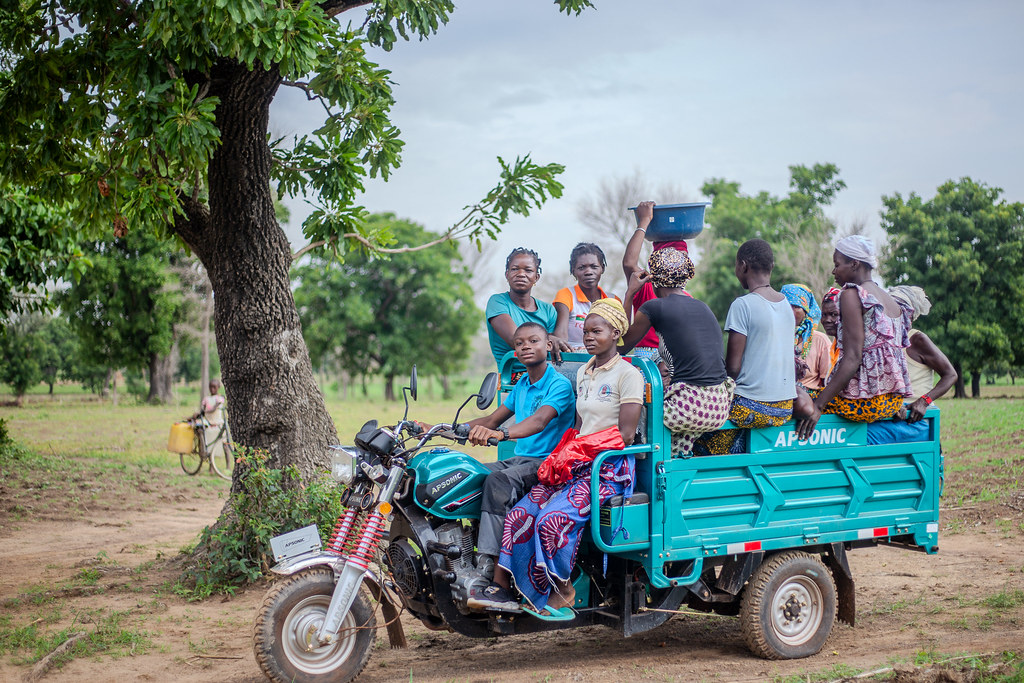
Ahead of Desertification and Drought Day (DDD) on 17 June, and during this important year for the three Rio Convention COPs, attention is increasingly focused on the links between healthy land, resilient livelihoods and long-term stability. Globally, up to 40 per cent of the Earth's land is degraded, affecting nearly half of humanity and threatening food security, biodiversity and economic development.These challenges are particularly acute in the Sahel, where communities face the combined pressures of climate change, land degradation and economic vulnerability. Here, sustainable value chains are demonstrating how private sector engagement can contribute to both environmental restoration and rural development.Few examples illustrate this connection more clearly than the acacia gum sector, which links millions of rural producers to global markets while supporting the restoration of dryland ecosystems. At the center of this effort is Nexira, a global leader in natural ingredients and a member of the UNCCD Business4Land (B4L) Champions’ Council, working alongside SOS SAHEL to strengthen the resilience of communities and landscapes across the Sahel.Why acacia gum mattersGum acacia, or gum arabic, a natural ingredient harvested from acacia senegal and acacia seyal trees, is used worldwide in food, beverage, nutrition and cosmetic products. Yet beyond its functional applications, the gum acacia value chain plays a critical role in some of the world's most fragile dryland regions.The vast “gum belt” stretching across a dozen countries in the Sahel supports millions of people whose livelihoods depend on acacia-based agroforestry systems. In many dryland areas, these trees provide one of the few reliable sources of income while helping communities adapt to increasingly frequent droughts and climate shocks. Beyond their economic value, they help stabilize soils, improve fertility through nitrogen fixation, reduce erosion and strengthen the resilience of dryland ecosystems to drought. As a result, gum acacia production creates a direct link between economic opportunity and sustainable land managementA long-term partnership for people and landscapesFor more than 15 years, Nexira and the NGO SOS SAHEL have worked together through the Acacia Project, an ambitious initiative designed to restore degraded landscapes while strengthening rural livelihoods in Chad. The program combines agroforestry, ecosystem restoration, producer training and community development to create long-term benefits for both people and nature.The first phases of the programme delivered significant results, including the restoration of degraded lands, large-scale tree planting, biodiversity enhancement and support for local communities. The third phase, which is currently in process (2022–2030), aims to scale these efforts further, reaching 200 villages and 50,000 producers while supporting the sustainable management of 300,000 hectares of forest landscapes. The program is also expected to generate substantial carbon sequestration benefits while strengthening the gum acacia value chain and expanding economic opportunities for rural communities.A key feature of the program is its focus on social inclusion. Efforts to strengthen women's participation in producer organizations and leadership structures are helping ensure that the benefits of ecosystem restoration and value chain development are shared more broadly across communities.The broader framework: the Great Green Wall and its AcceleratorThe Acacia Project does not exist in isolation. It is part of a far larger continental ambition. The Great Green Wall initiative, launched by the African Union, aims to restore 100 million hectares of degraded land, sequester 250 million tons of carbon and create 10 million green jobs by 2030 in the Sahel.To accelerate progress toward these targets, the Great Green Wall Accelerator was launched during the One Planet Summit hosted by French President Emmanuel Macron in January 2021, securing USD 19 billion in funding commitments. Hosted by the UNCCD Global Mechanism, the Accelerator was created to strengthen the monitoring of the Initiative's funding and results, and has played a pivotal role in enhancing governance, fundraising efforts, and stakeholder engagement across the Initiative.Among its five pillars, the Accelerator specifically targets investment in small and medium-sized farms and the strengthening of value chains and local markets, the exact terrain where the Acacia Project operates. While governments provide the policy framework, achieving the Great Green Wall's ambitions will depend heavily on private sector investment capable of transforming restoration into viable economic opportunities for local communities. Nexira's long-term commitment in Chad is precisely the kind of private sector engagement the Accelerator was designed to catalyse and scale.Value chains as the engine of restoration: what the evidence showsThe strategic case for nature-based value chains in the Sahel was crystallised in a landmark 2022 report by the World Economic Forum's 1t.org initiative. The Untapped Potential of Great Green Wall Value Chains: An Action Agenda to Scale Restoration in the Sahel, based on interviews with more than 100 stakeholders, identified nine tree crop value chains with the greatest environmental, social and market potential across the region: among them African baobab, shea, moringa and gum acacia, the very crop at the heart of Nexira's Acacia Project.The report's findings paint a striking picture of untapped opportunity. Beyond the environmental benefits of restoration, the Sahel's nature-based value chains represent a significant economic opportunity. Despite a global personal care market worth an estimated $240 billion per year, the Sahel captures only around $5 billion in value across all its products. In the $150 billion superfoods market, GGW products show stronger competitiveness, though production costs remain high and consumer awareness limited. The diagnosis is clear: the raw material, the ecological potential and the communities are there, but the value chains connecting them to global markets remain underdeveloped and underfinanced.Critically, the nine prioritised crops, including gum acacia, are all naturally adapted to Sahelian conditions, require no fertilisation or irrigation, and already deliver a range of co-benefits: community resilience, food security, income opportunities for women, soil quality improvement, biodiversity support and carbon sequestration. The report also flagged that despite significant carbon sequestration potential, almost no natural resource carbon projects were being implemented in the Sahel at the time of writing, pointing to a major financing opportunity still waiting to be unlocked.The report's core recommendation was that multistakeholder partnerships, bringing together public actors, private companies, civil society and local entrepreneurs, are the essential mechanism for scaling these value chains and turning their environmental and economic potential into reality on the ground.Nexira's Acacia Project is precisely this kind of partnership in action. By combining responsible sourcing with long-term landscape investment and producer support in Chad, it demonstrates that closing the gap between the Sahel's natural wealth and global markets is both achievable and transformative, for supply chains, for communities and for the land itself.Business leadership for land restorationNexira's work illustrates the growing recognition that land restoration is not only an environmental imperative but also a business priority. Through responsible sourcing, investment in producer communities and long-term landscape restoration, companies can help build more resilient supply chains while contributing to sustainable development.This approach aligns closely with the objectives of Business4Land (B4L), UNCCD's flagship private sector initiative, which seeks to mobilize companies to address land degradation, strengthen drought resilience and contribute to the global goal of restoring 1.5 billion hectares of land by 2030. Achieving this target will require unprecedented collaboration between governments, businesses, financial institutions and local communities.As one of the founding members of the B4L Champions’ Council, Nexira is helping demonstrate how private sector leadership can translate ambitious land commitments into concrete action on the ground. Celebrating Desertification and Drought Day in ParisTo mark Desertification and Drought Day 2026, Nexira and SOS SAHEL are joining a special public event on 17 June at the Jardin des Serres d'Auteuil, Paris' botanical garden. The event will bring together experts, organizations and the public to explore the resources, knowledge and restoration solutions emerging from the Sahel, while highlighting the importance of combating desertification and strengthening resilience in drylands.The event offers an opportunity to showcase how sustainable value chains, community-led restoration and long-term partnerships can contribute to both environmental recovery and economic opportunity.Investing in land, investing in resilienceThe challenges facing the Sahel are complex and interconnected. Land degradation undermines livelihoods, increases vulnerability to climate shocks and can contribute to instability. At the same time, restoring productive landscapes creates opportunities for income generation, food security and community resilience.The experience of the Acacia Program demonstrates that when businesses, local communities and civil society organizations work together, nature-based value chains can become powerful drivers of sustainable development.In the Sahel, where the health of the land and the wellbeing of communities are deeply interconnected, initiatives such as the Acacia Project demonstrate that restoration can be more than an environmental objective. It can create jobs, strengthen resilience, support local economies and help turn global restoration commitments into tangible results on the ground.

As women’s rights are under increasing pressure worldwide and climate-related crises deepen existing inequalities, UN Women, UNCCD and UN Climate launched the Bonn Hub of the International Gender Champions.

Bonn, Germany, 8 June 2026 – The United Nations Convention to Combat Desertification (UNCCD) and the German Agency for International Cooperation (GIZ) signed a Memorandum of Understanding (MoU) today in Bonn, reinforcing their cooperation on land restoration, drought resilience and sustainable rural development at a time when land degradation and water stress are increasingly affecting communities and economies worldwide. The agreement was signed by UNCCD Executive Secretary Yasmine Fouad and GIZ Executive Board Member Ingrid-Gabriela Hoven during a ceremony attended by representatives of UNCCD, GIZ and the German Federal Ministry for Economic Cooperation and Development (BMZ). Building on longstanding cooperation between UNCCD, GIZ and BMZ, the agreement aims to expand joint work on land restoration, drought resilience and sustainable rural development through technical cooperation, joint initiatives and knowledge exchange. The partnership comes at a time of growing international recognition that desertification, land degradation and drought are not only environmental challenges, but also major risks to food security, water resources, livelihoods, economic stability and resilience. Current estimates indicate that around USD 355 billion per year is needed globally to combat desertification, land degradation and drought, while investment remains significantly below that level. At the same time, experience from many regions shows that sustainable land management can generate strong environmental and economic returns, with studies estimating benefits ranging from USD 7 to 30 for every dollar invested. “Land degradation and drought are increasingly affecting ecosystems, food systems and communities around the world, with impacts that go far beyond the environment,” said UNCCD Executive Secretary Yasmine Fouad. “No single institution can address these challenges alone. Strengthening partnerships and accelerating implementation on the ground will be essential to build resilience, restore productive landscapes and support sustainable development. The scale of the challenge requires the same scale of ambition and cooperation. This agreement reflects our shared commitment to turning cooperation into practical action.” Through the agreement, UNCCD and GIZ will work together to help scale up practical solutions on land restoration and drought resilience, while promoting knowledge exchange, technical cooperation and new investment opportunities. "Land degradation, climate change and biodiversity loss are interconnected challenges that require integrated solutions. Stopping desertification helps the climate, because farmland and forests store significantly more carbon dioxide than deserts. Our deepened partnership can really make a difference,” said GIZ's Ingrid Gabriela Hoven.“As Germany’s National Focal Point to the UNCCD, BMZ strongly supports land- and nature-based solutions and underlines the central role of land for synergies between the Rio Conventions,” said BMZ's Kerstin Henke. “Today’s agreement further strengthens collaboration between UNCCD, BMZ and GIZ in securing land, strengthening resilience and building strong partnerships for sustainable development. Ahead of the seventeenth session of the Conference of the Parties (COP17) to UNCCD , which will take place in Ulaanbaatar, Mongolia, from 17 to 28 August 2026, the agreement reflects growing international attention to land restoration and drought resilience as essential to food security, climate resilience and long-term stability. Under the theme “Restoring Land, Restoring Hope,” UNCCD COP17 will provide an important opportunity to accelerate partnerships, mobilize investment and advance practical solutions at the scale required to address global land degradation and drought challenges. GIZ has long supported sustainable development and international cooperation efforts worldwide, including initiatives related to land restoration, rural development and climate resilience. The agreement will help strengthen collaboration between GIZ and UNCCD in support of the Sustainable Development Goals and global efforts to address desertification, land degradation and drought.

By Yasmine Fouad, Executive Secretary, UNCCD Antalya – Türkiye

The UNCCD secretariat is launching the second round of the UNCCD Women Delegates Fund (WDF) training ahead of COP17 to support the participation and effective engagement of women delegates in the UNCCD process and negotiations. Building on the successful first WDF training implemented at CRIC23 in Panama City, the programme aims to strengthen women’s leadership, negotiation capacities and meaningful participation in multilateral environmental processes.UNCCD COP17 will convene in Ulaanbaatar from 17–28 August 2026 under the theme “Restoring Land, Restoring Hope.” As the global conference of the only legally binding international treaty addressing land degradation and drought, COP17 is expected to bring together governments, civil society, Indigenous Peoples, scientists, youth, women’s organizations and the private sector to advance solutions for land restoration, drought resilience and sustainable land management.The Women Delegates Fund contributes to the implementation of the UNCCD Gender Action Plan (GAP), including its Roadmap which aims to strengthen women’s participation and leadership across all levels of UNCCD decision-making and implementation. Through targeted support and capacity-building activities, the WDF seeks to enhance women delegates’ ability to engage effectively in negotiations and contribute meaningfully to the COP17 process.The initiative is open to women delegates from developing country Parties eligible under the UNCCD Special Trust Fund for Participation, with priority given to Least Developed Countries (LDCs). Governments from all Regional Implementation Annexes are invited to nominate one eligible woman delegate from their official COP17 delegation.Selected participants will benefit from:Participation support for COP17Capacity-building and negotiation support activitiesPre-COP briefings and networking opportunities with fellow women delegatesApplications must be submitted by National Focal Points through an official nomination letter, including the CV or short biography of the proposed delegate. Detailed information is available in the right-hand menu
