News & stories


Latest news & stories
Rangelands Rising, launched at UNCCD COP17, calls on investors and governments to recognize the world’s largest overlooked landscape and to back the 500 million pastoralists who sustain it Ulaanbaatar, 24 August 2026 — Rangelands cover more than half the planet's land surface, hold a third of its key biodiversity areas and generate benefits worth an estimated US$21–47 trillion a year (up to US$5,000 per hectare). Yet these landscapes remain almost invisible to the people who finance and govern the natural world. A new global report launched today at the 17th session of the Conference of the Parties (COP17) to the United Nations Convention to Combat Desertification (UNCCD) makes the economic case for investing in rangelands and recognizes the labor and stewardship of the 500 million pastoralists who manage them. Rangelands Rising: Investing in Sustainable Management and Restoration—published by the International Livestock Research Institute (ILRI), GIZ, the Economics of Land Degradation Initiative, UNCCD and the International Union for Conservation of Nature (IUCN)—overturns a century-old assumption. Mobile livestock herding has long been blamed for driving land degradation. Research increasingly demonstrates that many rangelands have evolved with grazing and that well-managed pastoral systems have created and maintained some of the world's most biodiverse landscapes. Yet that stewardship is under growing strain, as drought intensifies and grazing land is lost to crop expansion, urban encroachment and fragmentation. “For too long, the world has looked at rangelands and seen empty, degraded land, and looked at pastoralists and seen a problem to be fixed,” said Prof. Appolinaire Djikeng, Director General, ILRI. “The evidence tells a different story. These are among the most valuable landscapes on Earth, and the people who manage them are their frontline investors.” Far from being the wasteland they are often taken for, rangelands are a mainstay of the food supply, producing high-value animal protein — meat, milk and more — from land that could not support crops without heavy and costly inputs. In Sub-Saharan Africa, pastoralism contributes an estimated 5–10 per cent of national GDP and accounts for 15–40 per cent of the value added in agriculture. But their full worth — in water, carbon, biodiversity and protection against drought — stays invisible to markets. The cost of that neglect is steep. Land degradation drains trillions of dollars a year in lost services, while restoring rangelands typically returns US$4–6 for every dollar invested, and, where public benefits such as water supply are counted, as much as 36 to one. The report's most striking economic finding is a mismatch between who does the work and who captures the value. In Jordan, reviving a traditional practice of resting grazing land returned just US$0.80 for every dollar the herders themselves spent. But the return to Jordanian society as a whole was 18 to one, driven mainly by groundwater recharge. It is a vivid illustration of the report's central argument. Pastoralists are already the primary investors in rangelands, putting in labour, knowledge, livestock and generations of stewardship, yet they cannot capture the value they create for everyone else. Public investment is needed to reward that stewardship and unlock the private capital that follows. “We are not asking for rangelands to be treated as a special case. We are asking for them to be counted. A landscape worth up to US$47 trillion a year cannot remain a blank space on the investment map,” Jonathan Davies, co-author of the report and independent rangelands researcher. For governments, the report also reframes a familiar budget line. Drought response is overwhelmingly reactive, with aid typically arriving well into a crisis, after families have already started to lose their animals. The bill can be enormous: drought relief reached an estimated 7 per cent of national GDP in Niger during the 2021 crisis. Yet, one evaluation cited in the report found that every US$1 spent on timely support is worth an estimated US$3 in later humanitarian spending. The report's central call to funders and finance ministries is to shift from paying for disasters to investing in resilient rangeland management before they strike. The report also guides where money should go, noting that the strongest returns come not from the most degraded land, but from restoring lightly to moderately degraded rangelands. Restoring the latter can cost as little as US$20 per hectare, against more than US$70,000 for severely degraded land. It also cautions against “green” fixes — planting trees on natural grassland, or ploughing drylands for crops — that often damage ecosystems adapted to open grazing. For most drylands, the smartest investment works with the pastoral systems already there rather than replacing them. But money alone is not the answer. The report is clear that financial investment on its own often fails without the conditions that let it work: secure land rights, strong community institutions and inclusive governance. Where tenure is contested or pastoralists are shut out of decisions, restoration funding may go to waste. Where rights are secure and communities lead, it endures. Getting the governance right, the report argues, is as important as the finance itself. “Rangelands are not marginal landscapes. They cover more than half of the world’s land and are fundamental to food security, biodiversity, water security and resilience to drought,” said Dr. Barron Joseph Orr, UNCCD Chief Scientist. “This report shows that investing in rangelands is not simply about restoring degraded land. It is about recognizing the value of these ecosystems and supporting the pastoralists whose knowledge and management have sustained them for generations. As governments gather at UNCCD COP17, the evidence provides a strong case for putting rangelands more firmly into land restoration, drought resilience and investment decisions.” The climate opportunity hiding in plain sight The report makes the case that rangelands’ neglect is the starkest when it comes to climate policy. The word “rangelands” appears in the national climate plans of just 24 countries under the Paris Agreement; “forests” appear in the plans of 181 countries. That blind spot overlooks two climate services rangelands already provide at scale: they are a vast carbon store and they are one of the world's most effective natural defences against drought. Rangelands offer mitigation, adaptation and resilience to climate change from a single investment across more than half the planet's land. Writing rangelands into national climate plans, and directing climate finance towards them, represents one of the largest and most cost-effective opportunities for governments and investors seeking greater climate returns. The report’s launch comes during the International Year of Rangelands and Pastoralists and at UNCCD COP17 in Mongolia, one of the world's great pastoral nations, where the future of rangelands and the communities who depend on them is a major focus of the conference agenda. The findings bring new economic evidence to COP17 discussions on land restoration, drought resilience and sustainable rangeland management. Notes to editors Read the full report: https://www.ilri.org/rangelands-rising-investing-sustainable-management-and-restorationFunding: This work was funded by the German Federal Ministry for Economic Cooperation and Development (BMZ)Interviews with report authors and pastoralist representatives are available before and during the launchMedia contact: Anne-Marie Schryer-Roy, ILRI, a.schryer-roy@cgiar.org

Fifty lawmakers from Mongolia and around the world are holding a five-day High-level Forum in the margins of UNCCD COP17 in Mongolia in a bid to turn global commitments into national action.Ulaanbaatar, Mongolia, 24 August 2026 – Parliamentarians from around the world are at the UN Convention to Combat Desertification (UNCCD) global conference in Mongolia for a High-Level Parliamentary Forum focused on translating global commitments on desertification, land degradation and drought into concrete national action.The High - Level Parliamentary Forum, titled “From Commitment to Action: Parliamentary Leadership to Address Desertification, Land Degradation and Drought,” is bringing together senior political and UN leaders to examine how parliaments can use legislation, public budgets, government oversight and representation to accelerate implementation of the UN Convention to Combat Desertification. The Forum, taking place during the Convention’s 17th session of the Conference of the Parties (UNCCD-COP17) is co-organized by the G20 Global Land Initiative of the UNCCD, United Nations Staff Systems College (UNSSC) and the State Great Hural (Parliament) of Mongolia. “Parliaments have the power to turn ambition into action. As we welcome parliamentarians from around the world to Mongolia, this Forum is an opportunity to strengthen the political leadership, legislation and investment needed to protect our lands and the communities that depend on them,” said S. Byambatsogt, Chairman of the State Great Hural of Mongolia.The Forum is part of the Global Changemaker Academy for Parliamentarians (G-CAP), an annual five-day leadership programme organised since 2023 by UNCCD-G20 GLI, in collaboration with UNSSC. This year’s G-CAP brings together 26 parliamentarians from 25 countries for dialogue and learning on land conservation, sustainable land management and restoration.“Global commitments only become real when they are translated into national laws, budgets and accountability,” said Yasmine Fouad, UN Under-Secretary-General and Executive Secretary of UNCCD. “Parliamentarians are therefore essential to the architecture of implementation, shaping the enabling policies, allocating resources, overseeing delivery and ensuring that the voices of affected communities are reflected in national action.”The high-level discussion will also feature: Carlos Alvarado Quesada, 48th President of Costa Rica; Prof. Hani Sewilam, Minister of Water Resources and Irrigation of Egypt; and parliamentarians from Mongolia and Türkiye. Representatives from the State Great Hural of Mongolia include Ms. Mandkhai Mendbayar, Chair of the Standing Committee on Environment, Food and Agriculture, and Ms. Bolormaa Enkhbat, a G-CAP 2025 alumnus. Ms. Nilhan Ayan, the COP31 Presidency’s Environment and Climate Envoy, will represent Türkiye’s Parliament.Following the high-level conversation, parliamentarians will move into facilitated discussions to identify practical actions they can take within their national mandates, with a focus on legislation, budgeting, oversight and representation.The recommendations will be consolidated into the Key Messages and Parliamentary Priorities for Action from the COP17 High-Level Parliamentary Forum and will inform the development of a Parliamentarians’ Action Toolkit on Desertification, Land Degradation and Drought, providing practical guidance for lawmakers beyond COP17.The aim is to help turn political commitments into the national policies, budgets and oversight mechanisms needed for implementation at scale.With land degradation increasingly affecting food and water security, biodiversity, climate resilience, livelihoods and economic development, the Forum will highlight the critical role of parliamentarians in ensuring that commitments made at international negotiations result in action on the ground.As countries move from ambition to implementation, parliaments will be central to creating the enabling environment that allows finance, policy and partnerships to deliver measurable results.NOTES TO EDITORSFor more information, please contact Sandhya Balasubrahmanyam, Learning Portfolio Manager, UNSSC (s.bala@unssc.org)About G-CAP The Global Changemaker Academy for Parliamentarians (G-CAP) is an annual five-day leadership academy for selected parliamentarians from around the world, organised by the G20 Global Land Initiative, hosted at the United Nations Convention to Combat Desertification (UNCCD), in collaboration with the United Nations System Staff College (UNSSC). G-CAP equips parliamentarians with the knowledge, networks and practical tools to advance land restoration and sustainable land management through legislation, policy, budgeting and oversight, while fostering dialogue and peer learning among lawmakers across regions. Since its inception in 2023, G-CAP has grown into a global network of 100 parliamentarians from 55 countries.About G20 Global Land Initiative Established by G20 leaders in 2020 and hosted by the UNCCD, the G20 Global Land Initiative was launched with the ambition of achieving a 50% reduction in degraded land across the planet by 2040. The initiative works globally to foster collaboration, strengthen policy coordination, advance the restoration economy, empower grassroots innovators, and secure a sustainable, climate-resilient future for global soil and ecosystems.About UNCCDThe United Nations Convention to Combat Desertification (UNCCD) is the global vision and voice for land. We unite governments, scientists, policymakers, private sector and communities around a shared vision and global action to restore and manage the world’s land for the sustainability of humanity and the planet. Much more than an international treaty signed by 197 Parties, UNCCD is a multilateral commitment to mitigating today’s impacts of land degradation and advancing tomorrow’s land stewardship to provide food, water, shelter and economic opportunity to all people in an equitable and inclusive manner.About UNSSC The United Nations System Staff College (UNSSC) is a trusted interagency learning partner of the UN system. Drawing on our established relationships and credibility across various UN mandates and contexts, we collaborate with UN entities to design and deliver learning solutions that address specific needs and support shared objectives. In 2016 the UNSSC opened its “Knowledge Centre for Sustainable Development” in Bonn. The Centre was created to equip the UN and its partners with the knowledge, skills, and behaviours to implement the 2030 Agenda for Sustainable Development. The UNSSC Bonn Office delivers not only sustainable development learning but also change management and organizational development, as well as academic partnerships.

Ulaanbaatar, Mongolia — Opening the COP17 Youth Forum on 18 August, UNCCD Executive Secretary Yasmine Fouad called for more opportunities for young people to contribute to land restoration and drought resilience, from education and green jobs to entrepreneurship and innovation. “The green transition ... should involve the youth,” she said. “And by doing so, we are restoring hope in the future generation that they can still enjoy the planet and its natural resources like we did.” Mongolia’s Minister of Culture, Sports, Tourism and Youth Aldarjavkhlan Jukov highlighted the role of young scientists, activists and herders in sharing knowledge and developing solutions for more sustainable and resilient rangelands. He called for youth-led initiatives to be connected with funding and for young people to have a more meaningful voice in the process. For Juliet Grace Luwedde of the UNCCD Youth Caucus, Mongolia is already showing what greater engagement can look like. “The Mongolian youth have actually championed youth engagement,” she said. “They've mobilized themselves, they've mobilized more young people to be able to come and engage with this process.” But Luwedde is looking beyond how many young people attend. She hopes the assessment of youth engagement requested by Parties at COP16 will help shape the Convention’s next steps on meaningful youth participation. The assessment shows how quickly the Convention’s youth constituency has grown. The UNCCD Youth Caucus expanded from approximately 200 members in 2019 to around 4,000 in 2026. But growth in participation has not yet translated consistently into influence. In a limited survey of 20 national focal points from 16 countries, 60 per cent of responding countries reported that young people had little or no influence on national UNCCD-related policy development and only 10 per cent reported youth involvement in decision-making. “We now have young people as negotiators in the negotiation room, so there is a lot of potential and opportunities for young people to continue engaging with this process,” Luwedde said. “But we have to be intentional about it.” The Land Youth Negotiator Programme is one way of turning that intention into practice. It prepares young people to join official national delegations and contribute directly to negotiations, building technical knowledge, negotiating skills and leadership experience. The programme has expanded from 100 negotiators from 35 countries in 2024–2025 to 155 from 44 countries in its 2026–2027 cohort. The programme is also drawing recognition from Parties. During COP17 discussions on capacity-building this week, Montenegro, the Dominican Republic, Moldova and the Cook Islands highlighted the Youth Negotiators Academy and the Land Youth Negotiator Programme. Its impact can also be seen in the paths young negotiators are taking through the Convention. Sedona Richardson of Grenada first attended a UNCCD COP as a civil society representative. After joining the Land Youth Negotiator Programme, she returned to COP16 in Riyadh as part of Grenada’s national delegation. “To be able to be in those negotiation rooms and to be able to advocate for my country, that is how it has impacted my life,” Richardson said. At COP17, programme participants described following negotiation tracks, helping draft text, preparing statements and supporting bilateral meetings — substantive work within national delegation teams. The discussion also looked at initiatives already creating practical opportunities for young people to take the lead. Sustainability, Technology and Environmental Preservation Program (STEPP) is designed to engage young nomadic herders around the world amid environmental, technological and socio-economic change. The NomaTech Challenge combined capacity-building, international teamwork, engineering, problem-solving and prototype development ahead of COP17. The Silk Road Caravan connected pastoral landscapes, communities and experiences across countries on its journey to Ulaanbaatar, highlighting challenges shared across rangeland communities and the value of exchanging knowledge across borders. When we spoke with people already engaged in the Convention about young people’s place in its work, Anahi Ocampo-Melgar, a member of the UNCCD Science-Policy Interface, brought the question back to what is at stake for the next generation. “To me, land is where the future of young people begins. I work in many parts of Chile that are experiencing rural abandonment and desertification. To me, therefore, land is a place where I hope there can be greater hope for future generations.” For Luwedde, the longer-term test is the Convention’s next strategic framework. As Parties look beyond the current 2018–2030 framework, she wants young people to have a clearer place in how the Convention works and how their contributions are recognized. The next opportunity to carry that discussion forward comes on 26 August, Land and People Day, with Youth, Land and Livelihoods: Building the next generation of land stewards. The session will bring forward priorities emerging from the COP17 Youth Forum and showcase youth-led solutions while connecting young people with governments, donors, civil society and international partners around participation, access to resources and opportunities to shape decisions. Photos © : UNCCD/Kiara Worth

Ulaanbaatar, Mongolia, 21 August 2026 — About 30 mayors, governors and other local and regional leaders gathered this week at the UNCCD COP17 Mayors' Forum adopted the Ulaanbaatar Declaration, committing to advance local action on sustainable land management and drought resilience, and calling for a stronger, more permanent role for cities and regions in the United Nations Convention to Combat Desertification (UNCCD) process.The Forum, held from 20 to 22 August 2026 in Ulaanbaatar, Mongolia, was hosted by the Governor's Office of the Capital City of Ulaanbaatar and co-organized by the UNCCD Secretariat, the United Nations Human Settlements Programme (UN-Habitat), the Local2030 Coalition and ICLEI – Local Governments for Sustainability (ICLEI), with United Cities and Local Governments (UCLG), through the Global Taskforce of Local and Regional Governments (GTF), as key partner. It brought together over 200 participants from more than 30 countries, including local and regional leaders, international organizations, city networks, financial institutions, academic and research bodies, and private sector representatives.At the Forum, the Ulaanbaatar Initiative was also put forward. Led by the Capital City of Ulaanbaatar, this voluntary effort will test a practical way for cities to measure and report on land degradation, with results shared with the Convention by COP18.What the Ulaanbaatar Declaration commits toThe Ulaanbaatar Declaration builds on the commitments made by local and regional governments at UNCCD COP16 in Riyadh, Saudi Arabia. Ulaanbaatar carries this process forward, moving from political recognition towards sustained engagement and implementation between COPs.The Declaration, titled Local Leadership for Land Resilience: Advancing Implementation across the Rio Conventions, sets out five calls to action addressed to local and regional governments, UNCCD Parties, the UNCCD Secretariat and their partners:Advance integrated local action on sustainable land management, drought resilience, biodiversity, climate resilience, water security and sustainable urban development, while strengthening urban-rural linkages. These interconnected challenges demand integrated, locally led solutions.Strengthen the role of local and regional governments within the UNCCD process itself, including through more structured and regular engagement between sessions of the Conference of the Parties, building on the Riyadh Process.Strengthen coherence across the three Rio Conventions and the water agenda, encouraging more coordinated implementation at the local level and thereby advancing the 2030 Agenda.Support implementation through partnerships and finance, including calls for more direct, simplified and predictable access to finance for local and regional governments.Promote knowledge, innovation and cooperation, including peer learning and the exchange of practical experience such as nature-based solutions.By transitioning from advocacy to implementation alliances, the Declaration directly turns global commitments into concrete, on-the-ground action to advance SDG 6 worldwide — marking a key milestone on the Local2030 Coalition’s "Road to Abu Dhabi: The Local Way"— a dedicated stakeholder engagement journey to shape global agendas ahead of the 2026 UN Water Conference and the 2027 SDG Summit.Signatories commit to advancing local action on sustainable land management, land restoration and drought resilience, deepening cooperation between cities and regions, and promoting inclusive approaches that engage communities, youth, women and Indigenous Peoples. The Declaration also reaffirms the Riyadh Process as the continuing platform for structured dialogue between the UNCCD, its Parties and organized local and regional governments.QuotesB.Purevdagva, Governor of the Capital City and Mayor of Ulaanbaatar: “Land resilience is not an abstract global agenda. It is about whether our cities can provide safe water, clean air, green spaces, secure livelihoods and a healthy future for our children and our communities. Through the Ulaanbaatar Declaration and the Ulaanbaatar Initiative, we are advancing a people-centered, gender-sensitive and child-friendly approach to sustainable urban development, aligned with the Sustainable Development Goals. Ulaanbaatar is proud to help connect local and regional governments across dryland and extreme-climate regions, so that cities can share knowledge, measure land degradation more practically, and turn global commitments into action in our communities. This initiative is our contribution to a stronger regional and global network of cities working together for land, water, climate resilience and future generations.”Yasmine Fouad, Executive Secretary of the UNCCD: “National commitments set the direction, but implementation ultimately happens in cities, regions and communities. Local and regional governments make many decisions that shape how land and water are managed, how communities prepare for drought, extreme heat and other climate-related risks. And how resilient infrastructure and services are delivered. The Ulaanbaatar Declaration is an important step in moving from recognition of their role to sustained engagement and practical action. Their experience, knowledge and proximity to communities are essential if we are to turn global commitments into measurable results on the ground.”Ursula Sautter, Deputy Mayor of Bonn, Germany: "This process started in Bonn in 1999, and it means a great deal to see it reach this point almost thirty years later, with mayors from every region adopting a shared declaration. Bonn will continue to stand behind this work, as a founding partner of this dialogue and as home to the UNCCD Secretariat.”Ji Rimutu, Deputy Mayor of Ordos, China: “Participating in this Mayors' Forum, I deeply feel that local governments are the key implementers in desertification control. Ordos's practice of "holding back the desert with green growth" demonstrates that firm governance commitment and continuous innovative measures can rejuvenate deserts. We look forward to deepening cooperation with all cities, sharing sand-control technologies, jointly shouldering ecological responsibilities, and striving hand in hand to enhance the green well-being of all humanity.”Ingrid Cavalcanti Feitosa, State Secretary for Environment, Sustainability and Climate Action of Sergipe, Brazil: "The impacts of desertification are felt most directly at the local level, which is why subnational governments play a strategic role in developing effective solutions. For Sergipe, supporting the Ulaanbaatar Declaration is an opportunity not only to push for actions on land and drought, but also to share our experience in strengthening protected areas, restoring degraded lands and advancing climate adaptation policies, particularly in the Caatinga — an exclusively Brazilian biome that faces significant challenges related to desertification, many of which are interconnected with those experienced by other territories. Knowledge exchange and international cooperation are essential to strengthening our capacity to respond to a challenge that transcends borders."Oumar Ba, Mayor of Ndiob, President of the Association of Mayors of Senegal, President of UCLG Africa: “Local and regional governments are essential partners in turning global commitments on land restoration and drought resilience into action in our territories. Through UCLG and the Global Taskforce of Local and Regional Governments, we are bringing our collective experience and priorities into the UNCCD process. Building on the progress achieved in Riyadh, the Ulaanbaatar Mayors’ Forum must further strengthen the recognition and meaningful participation of local and regional governments in global land governance.”Anacláudia Rossbach, UN-Habitat Executive Director: “Urbanization, land and water are deeply interconnected challenges that require locally led solutions. The New Urban Agenda recognizes the social and ecological functions of land, while the right to adequate housing is at the heart of sustainable development and linked to access to water, public space and basic services. Following the reviews of SDG 11 and the New Urban Agenda, the Ulaanbaatar Declaration reinforces our commitment to move from global ambition to implementation. As co-chair of the Local2030 Coalition, UN-Habitat is committed to unlocking more direct and predictable finance for local governments. From Ulaanbaatar to Abu Dhabi, we must turn global commitments into tangible improvements, ensuring that no one and no place is left behind.”Prince Faisal bin Abdulaziz bin Ayyaf, Mayor of Riyadh, Saudi Arabia: "Cities are at the heart of sustainable development. They are platforms for advancing innovative solutions and translating ambition into tangible impact. This underscores the importance of empowering local action and strengthening cooperation among cities to address shared challenges. We aspire for the 11th World Water Forum, hosted in Riyadh in 2027, to serve as a global platform for strengthening the role of cities in exchanging experiences that contribute to shaping a more sustainable water future."Building on nearly three decades of city engagementThe Mayors' Forum builds on a process of municipal cooperation on desertification that dates back to the World Forum of Mayors on Cities and Desertification, held in Bonn, Germany, in 1999, and that has since continued through forums in Rome, Italy; Ordos, China; and Riyadh, Saudi Arabia. The 2024 Riyadh Mayors' Forum affirmed the essential role of local and regional governments in addressing land degradation, desertification and drought, a role that this year's Forum sought to deepen further.This year represents a historic junction for global policy, converging the World Urban Forum (WUF13), the global review of SDG11, the midterm review of the New Urban Agenda, and the three Rio Conventions COPs—with the UN Water Conference in Abu Dhabi serving as the crucial capstone. Forum participants highlighted this as a rare opportunity to strengthen coherence across the global agendas on land, biodiversity, climate and water, and to ensure local and regional governments are recognized as central actors in delivering on all three. They also emphasized that localization is the ultimate engine for systems change, turning global policy into local impact, building on lessons from a series of major UN gatherings over the past two years: the Fourth International Conference on Financing for Development in Seville, Spain; the Second World Summit for Social Development in Doha, Qatar; and the UNFCCC Conferences of the Parties in Baku, Azerbaijan, and Belém, Brazil.Over three days, the Forum combined high-level policy dialogue with technical exchange and peer-to-peer learning. Sessions addressed urban ecosystem restoration and sand and dust storms, water scarcity and drought resilience, sustainable urban growth and land use, and financing mechanisms to move commitments into implementation.Following the Forum, the UNCCD Secretariat and partners will work together to track voluntary progress on the Declaration's commitments, with findings to be presented at the next Mayors' Forum and at UNCCD COP18.About UlanbaatarUlaanbaatar is the capital city and economic, political and cultural centre of Mongolia, home to nearly half of the country’s population and serving as the main hub for government, business, education, innovation and international cooperation. Located in a high-altitude valley connected to wider rangeland, forest and river ecosystems, the city faces many challenges common to dryland and extreme-climate cities, including air pollution, water security, land degradation, rapid urban growth and climate-related risks. Guided by its long-term development vision, Ulaanbaatar is working to become a more people-centred, gender-sensitive, child-friendly, green and resilient city, while using the Ulaanbaatar Declaration and the Ulaanbaatar Initiative to strengthen global and regional cooperation and contribute practical solutions for sustainable land management, urban resilience and the localization of the Sustainable Development Goals.About UNCCDThe United Nations Convention to Combat Desertification (UNCCD) is the global vision and voice for land. We unite governments, scientists, policymakers, private sector and communities around a shared vision and global action to restore and manage the world’s land for the sustainability of humanity and the planet. Much more than an international treaty signed by 197 Parties, UNCCD is a multilateral commitment to mitigating today’s impacts of land degradation and advancing tomorrow’s land stewardship in order to provide food, water, shelter and economic opportunity to all people in an equitable and inclusive manner.About ICLEIICLEI – Local Governments for Sustainability (known as ICLEI) is a global network working with more than 2500 local and regional governments committed to sustainable urban development. Active in 125+ countries, we influence sustainability policy and drive local action for zero-emission, nature-based, equitable, resilient and circular development. Our Members and team of experts work together through peer exchange, partnerships and capacity building to create systemic change for urban sustainability.About UCLGUnited Cities and Local Governments (UCLG) is the world’s largest organization of local and regional governments and their associations, representing and advocating for their interests on the global stage. Headquartered in Barcelona and present across all world regions, UCLG brings together cities, metropolitan and regional governments, and national and subnational associations to promote democratic local self-government, strengthen cooperation among territories, and amplify the collective voice of local and regional governments in international decision-making. Through advocacy, policy dialogue, knowledge-sharing and decentralized cooperation, UCLG works to ensure that local and regional governments are recognized as essential partners in addressing global challenges and advancing sustainable development that leaves no one and no place behind.About Local2030 CoalitionThe Local 2030 Coalition is the United Nations System platform to accelerate the localization of the 2030 Agenda, enhancing coherence, efficiency, and the impact of UN action. 14 UN entities drive the Coalition, co-chaired by UN-Habitat and UNECE, ensuring that the UN system is equipped to articulate global goals and national policies with local contexts, needs, and priorities, while securing a single and powerful UN approach to localization.About UN-HabitatUN-Habitat is the United Nations entity responsible for sustainable urbanization. It has programmes in over 90 countries supporting policymakers and communities to create socially and environmentally sustainable cities and towns. UN-Habitat promotes transformative change in cities through knowledge, policy advice, technical assistance, and collaborative action. To know more, visit unhabitat.org or follow us on social media @UNHABITAT.Media contact:Matteo Bizzotto, Senior Officer, Global Communications, ICLEI - Local Governments for Sustainability. matteo.bizzotto@iclei.org

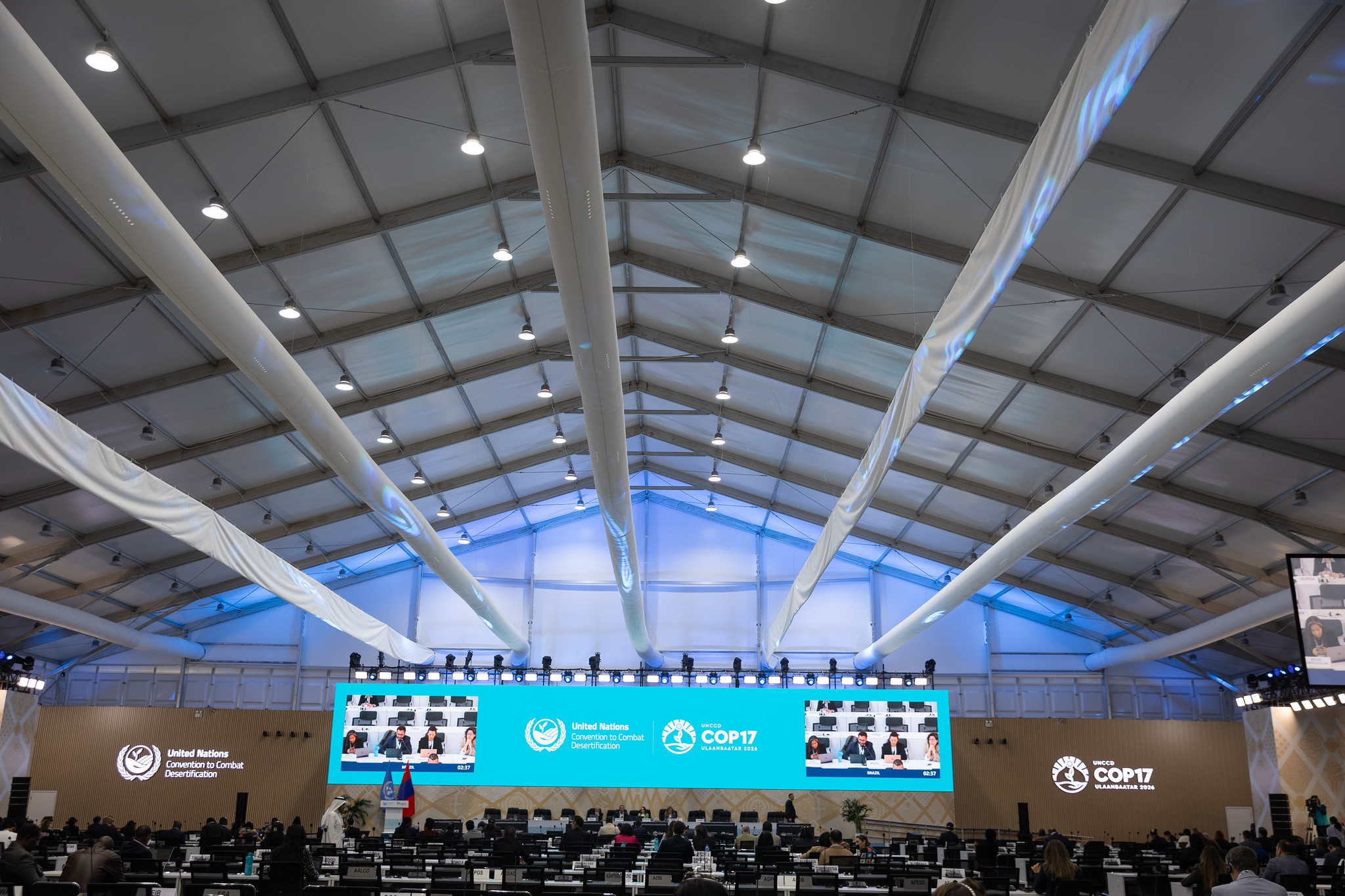
На фоне растущих угроз продовольственной безопасности, источникам средств к существованию и стабильности, связанных с деградацией земель, засухой и нехваткой воды, КС-17 КБО ООН поставит здоровые земли в центр повестки, от которой зависят благополучие и процветание людейОжидается, что с 17 по 28 августа в Улан-Баторе соберутся делегаты от 197 Сторон КБО ООН, международных организаций, финансовых учреждений, сферы бизнеса и сообществ, которые заботятся о земле и управляют еюОдним из ключевых приоритетов КС-17 станет мобилизация государственных и частных инвестиций для ускорения действий по восстановлению земель и повышению устойчивости к засухеПравительства также продолжат работу над решениями по повышению устойчивости к засухе, пастбищным землям, устойчивому сельскому хозяйству и почвам, а также по взаимодействию с частным секторомУлан-Батор, Монголия, 17 августа 2026 года — Сегодня в Улан-Баторе делегаты из 196 стран и Европейского союза собрались на открытие семнадцатой сессии Конференции Сторон (КС-17) Конвенции ООН по борьбе с опустыниванием (КБО ООН). В течение следующих двух недель правительства, финансовые учреждения, бизнес, научное сообщество и гражданское общество будут продвигать практические решения, налаживать новые партнёрства и мобилизовывать инвестиции для восстановления земель и повышения устойчивости к засухе. Одновременно Стороны будут вести переговоры по решениям, касающимся засухи, пастбищных земель, сельскохозяйственных земель и почв, мобилизации ресурсов, взаимодействия с частным сектором и дальнейших стратегических ориентиров Конвенции. Ожидается, что решения, партнёрства и инициативы, запущенные на КС-17 КБО ООН, в ближайшие годы укрепят международное сотрудничество в области устойчивого управления земельными ресурсами, восстановления земель и повышения устойчивости к засухе — в период, когда страны сталкиваются со всё более серьёзными последствиями деградации земель, нехватки воды и изменения климата. По оценкам, деградация земель и засуха ежегодно обходятся мировой экономике почти в 900 млрд долларов США и уже затрагивают до 40 процентов земель мира и 3,2 млрд человек. С 2000 года засухи стали почти на треть чаще и сегодня ежегодно наносят ущерб не менее чем на 300 млрд долларов США. КС-17 открывает в 2026 году серию трёх Конференций Сторон Рио-конвенций — за ней последуют конференции по биоразнообразию и климату. Это даёт возможность укрепить сотрудничество между Рио-конвенциями и ускорить практические действия в ответ на деградацию земель, утрату биоразнообразия, изменение климата, угрозы продовольственной и водной безопасности, а также необходимость повышать устойчивость водных ресурсов. Н. Учрал, Премьер-министр Монголии, заявил: «Главное изменение, которого мы хотим добиться по итогам КС-17, — это перейти от слов к действиям, от целей к их реализации, от обязательств к измеримым результатам. Поэтому Монголия призывает добиться на этой конференции конкретного прогресса.Во-первых, давайте рассматривать земельные ресурсы, климат и биоразнообразие не как отдельные вопросы, а как взаимосвязанные проблемы. Во-вторых, необходимо наращивать инвестиции в восстановление земель и вывести сотрудничество между правительствами, международными финансовыми учреждениями и частным сектором на новый уровень.В-третьих, повышение устойчивости к засухе должно стать не только вопросом экологической политики, но и неотъемлемой частью политики развития. В-четвёртых, знания и участие пользователей пастбищных земель, животноводов и местных сообществ должны занять центральное место в глобальной политике управления земельными ресурсами.В-пятых, необходимо превращать достижения науки, технологий и инноваций в практические решения и реальные инвестиции. В-шестых, давайте вместе создавать условия, необходимые для того, чтобы обязательства приводили к измеримым результатам».Исполнительный секретарь КБО ООН Ясмин Фуад заявила: «Деградация земель и засуха уже не являются отдалёнными экологическими угрозами. Они сказываются на продовольствии, которое мы производим, воде, которая нам необходима, устойчивости нашей экономики и способности сообществ с увереннсотьюстроить своё будущее. Здоровые земли — основа прочных продовольственных систем, устойчивой экономики и стабильного общества. Поэтому КС-17 должна стать конференцией практических действий. Решения у нас уже есть — задача в том, чтобы применять их в необходимом масштабе. Улан-Батор должен дать необходимый политический импульс, привлечь инвестиции и объединить партнёров, чтобы перейти от обязательств к измеримым результатам на местах. Восстановление земель — это не просто экологическая обязанность, а инвестиция в людей, стабильность и устойчивость. В период, когда многостороннее сотрудничество проходит проверку на прочность, КС-17 даёт возможность продемонстрировать, ка страны совместно находят практические решения, которые улучшают жизнь людей. Успех будет измеряться не только принятыми нами решениями, но и тем, какие реальные изменения они принесут сообществам, экономике и ландшафтам во всём мире, а также тем, удастся ли нам интегрировать земельную повестку в новые направления развития, чтобы не допустить дальнейшей деградации земель». Батцэцэг Батмунх, министр иностранных дел Монголии и Председатель КС-17 КБО ООН, заявила: «Для Монголии земля неотделима от жизни нашего народа, его благополучия и нашего общего будущего. В нашей стране пастбищное животноводство по-прежнему играет центральную роль в жизни общества, а деградация земель, засуха и суровые зимы оказывают всё более серьёзное давление на местные сообщества. Мы хорошо знаем, что состояние наших земель напрямую отражается на жизни людей. Проведение КС-17 — это одновременно ответственность и возможность сделать опыт стран с засушливыми территориями и пастбищных сообществ одной из центральных тем глобальных дискуссий. Монголия будет работать со всеми Сторонами, чтобы Улан-Батор стал площадкой, где страны объединятся вокруг практических решений ради здоровых земель, более устойчивых пастбищных угодий и более безопасного будущего для людей, чья жизнь от них зависит». Сандаг-Очир Цэнд, министр окружающей среды и изменения климата Монголии и председатель Национального комитета по организации КС-17 КБО ООН, заявил: «Монголия завершила подготовку к проведению КС-17 КБО ООН и готова принять делегатов и гостей со всего мира. Опустынивание, деградация земель и изменение климата тесно взаимосвязаны и имеют далеко идущие последствия не только для окружающей среды, но и для продовольственной безопасности, экономической стабильности и источников средств к существованию. Поэтому КС-17 станет важнейшей площадкой для укрепления международного сотрудничества и продвижения практических решений. Как принимающая страна, Монголия будет содействовать конструктивному диалогу на основе консенсуса и стремиться обеспечить полноценное участие всех Сторон и заинтересованных сторон. Результаты КС-17 не должны ограничиваться согласованными решениями — они должны воплотиться в конкретных действиях, увеличении инвестиций и укреплении партнёрств, необходимых для того, чтобы остановить деградацию земель и обратить этот процесс вспять, сохранить пастбищные земли и почвы, восстановить деградированные земли и бороться с опустыниванием. Для этого потребуется активное участие правительств, частного сектора, международных организаций и финансовых учреждений. Я уверен, что КС-17 станет важным шагом к укреплению международного сотрудничества и ускорению глобальных действий по борьбе с опустыниванием, деградацией земель и засухой». Для Монголии как принимающей страны данные проблемы — повседневная реальность. Почти 77 процентов земельных ресурсов страны подвержено деградации, а пастбищное животноводство обеспечивает средствами к существованию примерно каждого третьего жителя. В 2023 и 2024 годах сильные летние засухи, за которыми последовали суровые зимы, губительные для животных, привели к гибели более семи миллионов голов скота, вновь показав растущую уязвимость сообществ в засушливых районах и острую необходимость укреплять их устойчивость. Повышение устойчивости к засухе Опираясь на прогресс, достигнутый на КС-16 в Эр-Рияде, правительства продолжат на КС-17 обсуждение глобальной рамочной политики по засухе, одновременно укрепляя практические инструменты, партнёрства и механизмы финансирования, необходимые для перехода от планов по борьбе с засухой к конкретным действиям. Стороны обсудят меры по повышению готовности, развитию систем раннего предупреждения, оценке уязвимости и укреплению международного сотрудничества. Сегодня национальные планы по борьбе с засухой разработаны уже более чем в 70 странах — в 2013 году таких стран было всего три. Это свидетельствует о растущем понимании того, что рисками засухи необходимо управлять заблаговременно, а не начинать действовать лишь тогда, когда она перерастает в гуманитарный и экономический кризис. Каждый доллар, вложенный в повышение устойчивости к засухе, может принести до 10 долларов отдачи, а выгоды от некоторых решений, основанных на природных механизмах, могут в 27 раз превышать затраты. На КС-17 также будут представлены новые инструменты и партнёрства, призванные помочь странам повысить готовность и устойчивость к засухе. В их числе ожидаются объявления, связанные с Глобальным партнёрством Эр-Рияда по устойчивости к засухе, Инвестиционным механизмом по повышению устойчивости к засухе, Международной обсерваторией устойчивости к засухе, а также с другими соответствующими программами и проектами. Преодоление многомиллиардного дефицита финансирования Мобилизация дополнительных государственных и частных инвестиций для восстановления земель и повышения устойчивости к засухе станет одним из определяющих приоритетов КС-17. По оценкам, для борьбы с деградацией земель и засухой ежегодно требуется 355 млрд долларов США, тогда как нынешний объём инвестиций составляет лишь около 77 млрд долларов. Таким образом, ежегодный дефицит финансирования достигает 278 млрд долларов. Несмотря на то, что бизнес в значительной степени зависит от здоровых земель и надёжного водоснабжения, сегодня на долю частного сектора приходится лишь около шести процентов общемирового финансирования восстановления земель и повышения устойчивости к засухе. Одних государственных средств для устранения этого разрыва, вероятнее всего, будет недостаточно, что подчёркивает необходимость более тесного сотрудничества между правительствами, банками развития, бизнесом и инвесторами. На КС-17 будут рассмотрены возможности привлечения новых источников финансирования, усиления стимулов для устойчивого управления земельными ресурсами, снижения инвестиционных рисков и более тесной увязки государственных и частных инвестиций с целями восстановления земель и повышения устойчивости к засухе. В рамках этих обсуждений будут рассмотрены и новые инструменты, способные помочь реализовать уже заявленные обязательства на региональном и национальном уровнях. На конференции будут представлены результаты таких инициатив, как Business4Land, направленной на расширение участия частного сектора и развитие партнёрств в области восстановления земель и повышения устойчивости к засухе. 24 августа форум Business4Land соберёт правительства, компании и инвесторов, чтобы ускорить действия частного сектора и привлечь инвестиции в восстановление и устойчивое управление ландшафтами. Организации — участники Программы действий по восстановлению ландшафтов уже взяли на себя обязательства на сумму более 9 млрд долларов США на восстановление более 210 млн гектаров, а на КС-17 будут представлены новые рекомендации по совершенствованию политики, призванные привлечь дополнительные инвестиции. Пастбищные земли в центре внимания КС-17 проходит в Международный год пастбищных земель и животноводов 2026 и выведет одну из крупнейших и при этом наиболее недооценённых экосистем мира в центр международных дискуссий. Пастбищные земли занимают 54 процента поверхности суши Земли и обеспечивают средствами к существованию около двух миллиардов человек, включая примерно 500 миллионов пастбищных животноводов, которые на протяжении тысячелетий заботятся об этих землях и управляют ими. Пастбищные земли дают шестую часть всего производимого в мире продовольствия и обеспечивают около 70 процентов кормовой базы животноводства. Их значение не сводится к выпасу скота: это стратегически важные экосистемы, от которых зависят продовольственная безопасность, биоразнообразие, устойчивость к изменению климата и средства к существованию людей в засушливых районах мира. При этом до половины пастбищных земель уже уже подвержено или находится под угрозой деградации, а 78 процентов расположено в засушливых районах, где участившиеся засухи, изменение климата и неустойчивое землепользование оказывают всё большее давление на экосистемы и местные сообщества. Ожидается, что правительства рассмотрят новую рамочную основу политики в отношении пастбищных земель и пастбищных животноводов и запустят Флагманскую инициативу по пастбищным землям — глобальное партнёрство, призванное увеличить долгосрочные инвестиции в устойчивое управление пастбищными землями и поддержать устойчивые источники средств к существованию пастбищных животноводов. Открытие КС-17 также знаменует завершение «Каравана Шёлкового пути» КБО ООН — маршрута через несколько стран Евразии, который объединил представителей правительств, учёных, пастбищных животноводов, местные сообщества и молодёжь для обмена знаниями и демонстрации практических подходов к восстановлению земельных ресурсов, устойчивому управлению пастбищными землями и повышению устойчивости к засухе. Следуя по историческому Шёлковому пути, Караван посетил проекты по восстановлению земель и пастбищные сообщества, знакомя участников с практическими решениями и опытом людей, возвращающих к жизни деградированные земли. Прибытие Каравана в Монголию накануне КС-17 символически связывает действия на местах с глобальными переговорами, начинающимися в Улан-Баторе, и становится одной из флагманских инициатив Международного года пастбищных земель и животноводов. От Эр-Рияда к Улан-Батору КС-17 опирается на результаты КС-16 в Эр-Рияде и работу, проведённую с тех пор для укрепления международного сотрудничества в области устойчивости к засухе, устойчивого управления земельными ресурсами, финансирования и взаимодействия с частным сектором. Осама Факиха, заместитель министра окружающей среды Министерства окружающей среды, водных ресурсов и сельского хозяйства Королевства Саудовская Аравия и советник Председательства КС-16 КБО ООН, заявил: «КС-16 в Эр-Рияде стала исторической вехой в глобальном осознании проблемы деградации земель и засухи и переходе к действиям. Итогом встречи в Эр-Рияде стали не новые обещания, а новых партнёрства, дополнительные инвестиции и гораздо более мощный импульс к действиям. Программа действий Эр-Рияда, которая на момент запуска в рамках КС-16 включала 35 инициатив, сегодня объединяет уже более 100. Мы увидели более твёрдую готовность действовать на опережение в борьбе с засухой благодаря Глобальному партнёрству Эр-Рияда по устойчивости к засухе, а также более активное участие частного сектора благодаря инициативе Business4Land. Благодаря этим партнёрствам нам удалось создать глобальную коалицию, которая объединяет правительства, финансовые учреждения, гражданское общество и частный сектор, чтобы превращать амбиции в конкретные действия. Передавая председательство Монголии, мы продолжим работать с Председательством КС-17 и всеми другими партнёрами, чтобы сохранить и усилить глобальный импульс, созданный на КС-16, и вместе строить лучшее будущее». Помимо повестки по засухе и пастбищным землям, страны также рассмотрят будущую рамочную стратегию Конвенции, научные рекомендации по сельскохозяйственным землям и почвам, расширение участия коренных народов, местных сообществ, молодёжи и гражданского общества, укрепление сотрудничества с конвенциями по биоразнообразию и климату, а также пути ускорения действий в рамках Конвенции. От переговоров к действиям Параллельно с официальными переговорами Программа действий КС-17 объединит правительства, международных партнёров, финансовые учреждения, бизнес, научное сообщество, организации гражданского общества, коренные народы, пастбищных животноводов, местные сообщества, женщин и молодёжь. Участники представят практические решения, запустят новые инициативы и создадут партнёрства, способные расширить масштабы практической работы на местах. Четыре тематических дня на второй неделе конференции свяжут переговоры с диалогом на высоком уровне и практическими действиями: День финансирования (24 августа): мобилизация государственных и частных инвестиций для восстановления земель и повышения устойчивости к засухе День воды (25 августа): повышение устойчивости к засухе и укрепление сотрудничества в сфере взаимосвязи земельных и водных ресурсов День «Земля и люди» (26 августа): внимание к роли пастбищных животноводов, коренных народов, местных сообществ, женщин и молодёжи в восстановлении земель и устойчивом управлении ими День продовольственных систем и здоровья почв (27 августа): продвижение здоровых почв и устойчивых продовольственных систем для укрепления продовольственной безопасности и устойчивости источников средств к существованию В рамках сегмента высокого уровня пройдут диалоги на уровне министров и специальные мероприятия, посвящённые устойчивости к засухе, устойчивому управлению пастбищными землями, финансированию восстановления земель, продовольственным системам и здоровью почв, миграции и безопасности, песчаным и пыльным бурям, а также взаимодействию с частным сектором. На КС-17 впервые состоятся официальные заседания Форума коренных народов КБО ООН и Форума местных сообществ. Наряду с ними пройдут Форум Business4Land, Молодёжный форум и Гендерный форум, создавая новые возможности для диалога и партнёрства между правительствами и заинтересованными сторонами. На полях КС-17 также состоятся Форум парламентариев и Форум мэров. В ходе конференции будет представлен ряд крупных научных и аналитических публикаций, в том числе: 24 августа: «Экономика восстановления пастбищных земель» 25 августа: «Высыхающая планета: засуха в цифрах — 2026» 26 августа: «Земельные ресурсы: Глобальный обзор. Малые островные развивающиеся государства» 26 августа: «Земельные ресурсы: Глобальный обзор. Тематический доклад по Центральной Азии» 27 августа: «Здоровье почв: экономические аргументы в пользу инвестиций в основу нашего благополучия» КС-17 завершится 28 августа. Ожидается, что Стороны примут решения, которые будут определять работу Конвенции в ближайшие годы и определят следующий этап глобальных действий по восстановлению земельных ресурсов и повышению устойчивости к засухе. ПРИМЕЧАНИЕ ДЛЯ РЕДАКТОРОВ Для запросов СМИ и организации интервью Пресс-служба КБО ООН: press@unccd.int Пресс-конференция по случаю открытия Дата: 17 августа 2026 года Время: 13:15–14:00 Место: зал пресс-конференций Участники: Сандаг-Очир Цэнд, министр окружающей среды и изменения климата Монголии и председатель Национального организационного комитета КС-17э д-р Ясмин Фуад, Исполнительный секретарь Конвенции ООН по борьбе с опустыниванием Батцэцэг Батмунх, министр иностранных дел Монголии и назначенная Председателем КС-17 КБО ООН д-р Осама Факиха, заместитель министра окружающей среды Королевства Саудовская Аравия и советник Председательства КС-16 КБО ООН Ресурсы для СМИ Программа КС-17 Сайт КС-17 КБО ООН Сайт принимающей страны UN WebTV — прямая трансляция ключевых пленарных заседаний с синхронным переводом на все шесть официальных языков ООН Фото и видеоматериалы можно загрузить по ссылке: Audiovisual material will be available for download here: https://www.flickr.com/photos/94683648@N07/albums/ Визуальные материалы и руководство по стилю КС-17 Бюллетень переговоров по Земле — ежедневные материалы, фотографии и аналитика Следите за @UNCCD в X, Instagram, LinkedIn и Facebook. Основной хэштег: #COP17Mongolia Дополнительные хэштеги: #UNCCDCOP17, #UNited4Land О Конвенции ООН по борьбе с опустыниванием Конвенция ООН по борьбе с опустыниванием (КБО ООН) — это глобальное видение и голос в защиту земли. Она объединяет правительства, учёных, политиков, частный сектор и сообщества вокруг общего видения и глобальных действий по восстановлению земельных ресурсов и управлению ими ради устойчивого будущего человечества и планеты. КБО ООН — это гораздо больше, чем международный договор, подписанный 197 Сторонами. Это многостороннее обязательство уже существующие последствия деградации земель и закладывать основы ответственного управления земельными ресурсами в будущем, чтобы все люди имели доступ к продовольствию, воде, жилью и экономическим возможностям на справедливой и инклюзивной основе.

Land provides the food we eat, the water we drink and the raw materials that power industries and economies. Yet nearly 40 per cent of the world's land is already degraded, threatening ecosystems, livelihoods and businesses alike.Reversing this trend requires action far beyond governments alone, with the private sector playing an increasingly important role in driving innovation, investment and sustainable land management.This is the vision behind Business for Land (B4L), the UNCCD main vehicle for engaging the private sector in sustainable land and water management. Through partnerships, policy dialogue and sustainable finance, B4L works with companies and financial institutions to help manage the risks associated with land degradation and drought while creating opportunities to restore landscapes, strengthen value chains and build more resilient economies.Building on the record level of private sector participation at the sixteenth session of the Conference of the Parties (COP16) to the United Nations Convention to Combat Desertification (UNCCD) in Riyadh, Business for Land will deepen its engagement at UNCCD COP17 in Ulaanbaatar, Mongolia. The Business Land Forum will bring together governments, businesses, investors and development partners to strengthen public-private partnerships and identify practical ways to accelerate investment and action on regenerative landscapes.One of the Forum's key outcomes will be the presentation of a new set of policy recommendations developed by the World Business Council for Sustainable Development (WBCSD), a global, CEO-led organization working with businesses to accelerate the transition to a more sustainable future.At the request of the UNCCD Business for Land initiative, WBCSD led a global consultation involving more than 50 businesses, producers, civil society organizations and ecosystem partners to identify practical policy changes that can unlock investment in regenerative landscapes. Drawing on the experience of businesses across agriculture, forestry, finance, food and manufacturing, the recommendations call for more coherent policy frameworks, stronger public-private collaboration and investment conditions that enable regenerative landscapes to be scaled. The recommendations will be formally presented during the Business for Land Forum on 24 August.“We need a systemic shift in the incentives that drive land use decisions so that sustainable land management becomes the default rather than the exception. I think it is absolutely true that this is an economic necessity and not just an act for the environment,” saidDr. Claudia Hiepe, UNCCD National Focal Point Team, Germany.The recommendations build on months of dialogue between governments and the private sector, including the Public-Private Dialogue on Regenerative Landscapes, co-hosted by the Governments of Germany and Côte d'Ivoire in partnership with WBCSD on 16 July. The dialogue provided an opportunity for governments and businesses to exchange priorities ahead of COP17 and helped shape the recommendations. Through the Action Agenda on Regenerative Landscapes, participating organizations have already committed more than USD 9 billion across over 210 million hectares, demonstrating growing momentum behind private sector action. “Businesses and governments have a shared interest in scaling regenerative landscapes. But achieving this requires trust and collaboration between the public and private sector. Going forward, it’s important that both sectors continue to strengthen their collaboration to co-create country-specific solutions and unlock investment for sustainable land management,” said Emeline Fellus, Senior Director, World Business Council for Sustainable Development.Despite this progress, financing remains one of the greatest challenges. UNCCD estimates that approximately USD 355 billion is needed every year to meet global land restoration and drought resilience commitments, while current investment stands at around USD 77 billion annually. Closing this USD 278 billion gap will require stronger policy frameworks, innovative financial solutions and closer collaboration between governments, businesses and financial institutions. "Restoring land at scale requires more than finance—it requires partnership. Governments create the enabling environment, businesses bring innovation and investment and financial institutions help unlock capital. Business for Land is about bringing these actors together so that ambition is translated into practical action and lasting impact," said Louise Baker, Managing Director of the UNCCD Global Mechanism. Alongside the recommendations, WBCSD has launched a Statement of Support, inviting companies to endorse a shared commitment to regenerative landscapes and closer collaboration with governments. Businesses are encouraged to support the initiative and work with policymakers to adapt and apply the recommendations in ways that respond to national priorities and accelerate investment in sustainable land management. By bringing together governments, businesses and financial institutions, the Business4Land Forum aims to turn growing momentum into practical partnerships that accelerate investment and action on regenerative landscapes.
