News & stories


Latest news & stories
As drought risks intensify, experts urge governments to turn Earth observation data into life-saving decisions

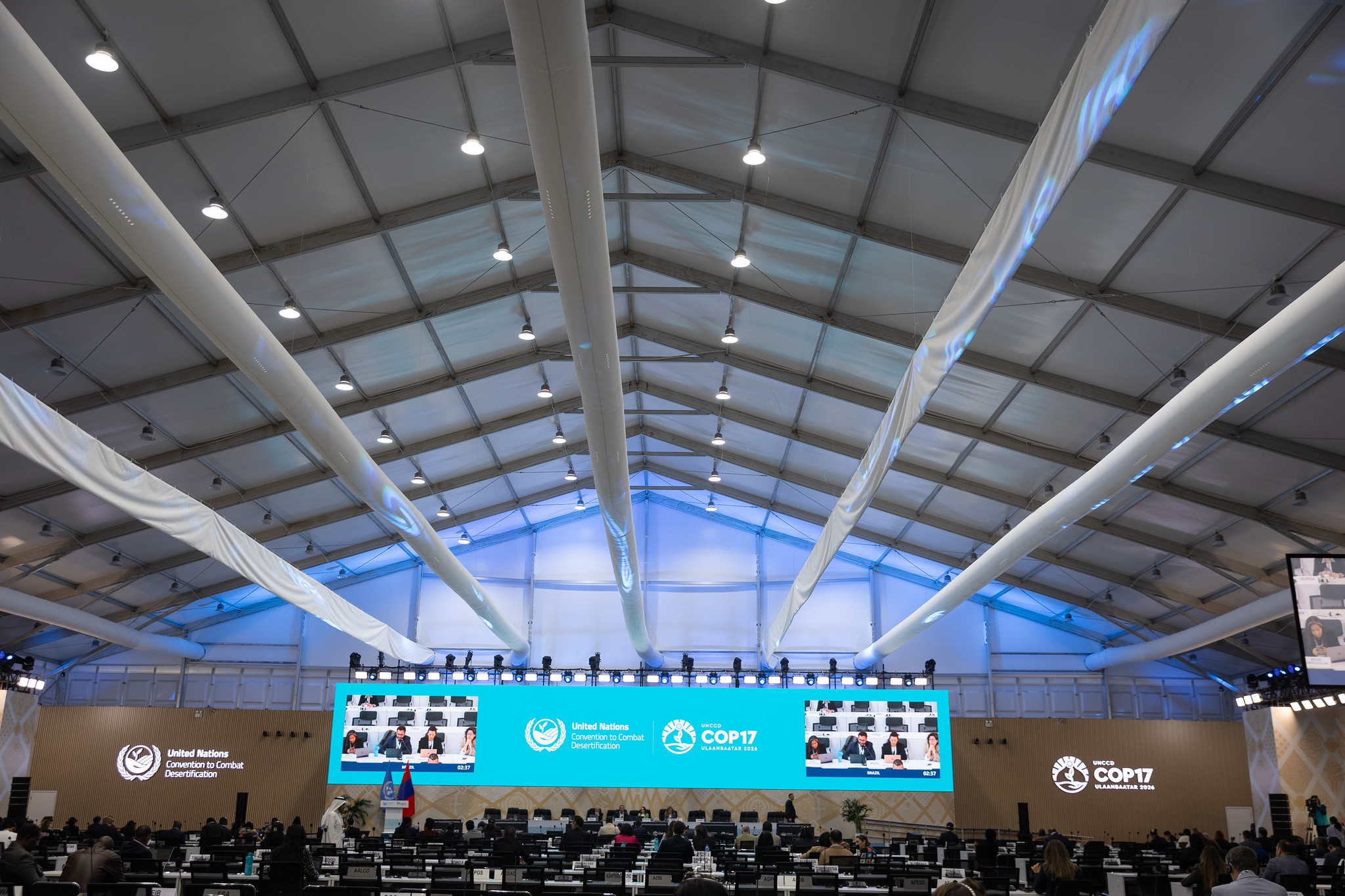
Riyadh, Saudi Arabia, 9 July – The Kingdom of Saudi Arabia and the United Nations Convention to Combat Desertification (UNCCD) are advancing the landmark outcomes of the sixteenth session of the Conference of the Parties (COP16), held in Riyadh in December 2024. As preparations gather pace for COP17 in Ulaanbaatar, Mongolia (17–28 August 2026), the visit underscored the strong partnership between Saudi Arabia and UNCCD and the shared commitment to translating those outcomes into action on land restoration, drought resilience and sustainable development.Implementing COP16 decisions and flagship initiatives was at the center of a high-level mission to the Kingdom from 5 to 9 July, during which UNCCD Executive Secretary Dr. Yasmine Fouad held strategic discussions with senior Saudi officials and regional partners — including H.E. Abdulrahman AlFadley, Minister of Environment, Water and Agriculture and President of COP16, and H.E. Adel Al-Jubeir, Minister of State for Foreign Affairs — on drought resilience, sustainable finance, private-sector engagement and regional cooperation, while also reviewing progress in delivering key COP16 commitments.Discussions with H.E. Adel Al-Jubeir also focused on the growing links between land degradation, drought resilience, stability and security — an issue now firmly on the international agenda, including in the G7 Environment Ministers’ statement of April 2026. The mission comes at a time when land degradation and drought are increasingly recognized not only as environmental challenges, but as systemic economic, social and security risks. Nearly 40 per cent of the world’s land is already degraded, affecting the natural resources that underpin almost half of global gross domestic product (GDP). The combined cost of land degradation and drought now exceeds USD 878 billion each year, while drought alone causes at least USD 300 billion in annual losses globally.The discussions reflected Saudi Arabia’s continued leadership in elevating land restoration and drought resilience on the global agenda following the successful hosting of COP16.“Land degradation and drought are no longer peripheral environmental concerns. They are increasingly shaping economies, food systems, water security, public finances and human security. What we recognized in Riyadh is that prevention must become the new global model — because reacting to crisis after it unfolds is no longer sustainable. The challenge now is to build the financial and institutional systems that can turn resilience into a long-term investment priority and help countries act before risk turns into disaster,” said Dr. Yasmine Fouad, Executive Secretary of UNCCD.A key focus of the mission was accelerating progress on the Riyadh Global Drought Resilience Partnership (RGDRP), launched at COP16 as a flagship initiative to help countries shift from reactive crisis response to prevention, preparedness and long-term resilience.The Partnership is designed to mobilize financing and technical support through three pillars: a Readiness Fund for national drought planning, an Investment Facility for large-scale resilience finance, and a Knowledge Bank to strengthen science, data and innovation.As it moves into its next phase, UNCCD and the United Nations Development Programme (UNDP) are finalizing arrangements to establish a Multi-Partner Trust Fund ahead of COP17, helping translate commitments into action.Political commitments are already translating into investment. The Islamic Development Bank (IsDB) and the OPEC Fund for International Development (OPEC Fund) have each pledged USD 1 billion, in addition to a broader Arab Coordination Group commitment of up to USD 10 billion by 2030 to support drought resilience and land restoration.A major outcome of the mission was the signing of a Memorandum of Understanding between UNCCD and the Middle East Green Initiative (MEGI) — a regional initiative headquartered in Riyadh. Dr. Fouad and H.E. Ibrahim bin Mohammed Alturki, Secretary-General of the Middle East Green Initiative, signed the agreement to strengthen cooperation on land restoration, sustainable land management and drought resilience across the Middle East. The Memorandum of Understanding reinforces a shared commitment to accelerating regional action and translating the outcomes of COP16 into concrete cooperation across the Middle East.Building on the engagement of business leaders during COP16, discussions also focused on scaling private-sector investment in land restoration and drought resilience, including through stronger public-private cooperation and greater private-sector engagement through Business for Land (B4L), UNCCD’s platform for business action on land.These efforts reflect growing recognition that land degradation and water scarcity are increasingly influencing inflation, food prices, public finances and investment decisions — reinforcing their role as strategic economic issues for governments and businesses alike.UNCCD estimates that countries require USD 355 billion annually to address desertification, land degradation and drought, yet current investment stands at only USD 77 billion per year — leaving an annual financing gap of USD 278 billion. Private sector finance accounts for just 6 per cent of current flows, despite its growing exposure to land-related risks across agriculture, infrastructure, finance and supply chains.“Hosting COP16 by KSA was intended to be a historical turning point in the global focus on the significant impacts posed by land degradation and drought and was never intended to be a single event. It marked the beginning of a long-term commitment to accelerate global action on land restoration and drought resilience. We will continue working closely with UNCCD and various international partners to ensure that the significant outcomes achieved in Riyadh translate into tangible results on the ground towards achieving global objectives pertaining to land neutrality and drought resilience” said Osama Ibrahim Faqeeha, Deputy Minister for Environment at the Ministry of Environment, Water and Agriculture (MEWA) of the Kingdom of Saudi Arabia. With key foundations laid at COP16 in Riyadh, COP17 in Mongolia is expected to mark an important shift from political commitment to implementation — accelerating action on land restoration, drought resilience, sustainable food systems, rangelands and the financing needed to deliver them at scale.For UNCCD and its partners, the challenge is no longer whether the world can afford to invest in land restoration and resilience — but whether it can afford not to.With every dollar invested in sustainable land management generating between USD 7 and USD 30 in returns, the foundations established at COP16 in Riyadh, including the Riyadh Global Drought Resilience Partnership and the stronger engagement with the private sector through Business for Land are now moving into implementation. Together, they are helping build a new global financing architecture that reduces systemic risk, strengthens food and water security, unlocks investment and demonstrates that restoring land is not simply an environmental imperative, but one of the smartest investments countries can make for long-term prosperity and resilience.

Москва/Бонн, 26 июня 2026 года — От пастбищ Калмыкии и Северного Кавказа до бескрайних степей, простирающихся через всю Евразию, земля на протяжении веков объединяла людей, культуры и источники средств к существованию в одном из крупнейших пастбищных регионов мира.Сегодня этот общий природный ландшафт также объединяет страны, сталкивающиеся с общими вызовами — от деградации земель и засух до угроз продовольственной безопасности и необходимости повышения устойчивости экосистем.Россия занимает важное место в этом пространстве. Простираясь в Европе и Азии, она располагает примерно 70–80 миллионами гектаров пастбищ и естественных кормовых угодий. Эти территории поддерживают биоразнообразие, традиционное пастбищное животноводство и устойчивое производство продукции животноводства, одновременно способствуя региональным усилиям по борьбе с деградацией земель и засухами.По мере усиления нагрузки на земельные и водные ресурсы Евразии международное сотрудничество приобретает всё большее значение для решения проблем деградации земель и засух. Именно эти общие вызовы стали причиной визита Исполнительного секретаря Конвенции ООН по борьбе с опустыниванием (КБО ООН) Ясмин Фуад в Москву 25–26 июня с целью развития научного сотрудничества, устойчивого управления земельными ресурсами и региональных инициатив в засушливых и пастбищных районах Евразии.Во время своего визита Исполнительный секретарь КБО ООН встретилась с высокопоставленными представителями Российской Федерации, представляющими сферы иностранных дел, охраны окружающей среды и сельского хозяйства, в том числе с помощником Президента Российской Федерации, специальным представителем Президента Российской Федерации по вопросам климата и водных ресурсов Р.С.-Х. Эдельгериевым, Министром природных ресурсов и экологии Российской Федерации А.А. Козловым, Министром сельского хозяйства Российской Федерации О.Н. Лут и заместителем Министра иностранных дел Российской Федерации А.С. Алимовым.Стороны обсудили приоритеты борьбы с деградацией земель и засухами в Евразии, а также подготовку к семнадцатой сессии Конференции Сторон (КС-17) КБО ООН, которая состоится в Улан-Баторе (Монголия) с 17 по 28 августа 2026 года.Переговоры подтвердили многолетнее сотрудничество между Российской Федерацией и КБО ООН и общую приверженность сохранению здоровых и продуктивных ландшафтов региона, подчеркнув важность восстановления земель и повышения устойчивости к засухам для продовольственной безопасности и устойчивого развития.Одним из ключевых результатов визита стало подписание Меморандума о взаимопонимании между КБО ООН и Институтом географии Российской академии наук. Документ укрепляет связь между наукой, государственной политикой и практическими действиями по борьбе с деградацией земель и засухами.Визит состоялся в важный момент, когда страны Евразии усиливают сотрудничество для решения возрастающих проблем, связанных с земельными, водными и продовольственными системами.Во всём мире деградации подверглось до 40 процентов поверхности суши, что затрагивает почти половину населения планеты. Экономический ущерб от деградации земель составляет почти 900 млрд долларов США ежегодно, а ежегодные потери от засух оцениваются не менее чем в 300 млрд долларов США.В своём вступительном слове Р.С.-Х. Эдельгериев, помощник Президента Российской Федерации и специальный представитель Президента по вопросам климата и водных ресурсов, отметил, что подготовка к COP17 вступает в решающую фазу, и подчеркнул, что для стран региона особенно важно подойти к предстоящим переговорам «с общей оценкой, единым пониманием приоритетов и согласованными позициями». Говоря о Караване Шёлкового пути, он назвал его «символом нашей общей ответственности за сохранение земель, водных ресурсов и экосистем», состояние которых является основой стабильности всего региона.Пастбищные территории Евразии простираются более чем на 8 000 км — от Чёрного моря до Монгольского плато — и составляют около четверти всех мировых пастбищ. Они играют важную роль в поддержании местных сообществ, сохранении экосистем и адаптации к засухам и климатической изменчивости.Во всём мире пастбища занимают 54 процентов площади суши и обеспечивают средствами к существованию около двух миллиардов человек, включая примерно 500 миллионов скотоводов. Они обеспечивают одну шестую мирового производства продовольствия и 70 процентов кормовой базы для животноводства.«Российская Федерация является важным партнёром КБО ООН, внося вклад в международные усилия по борьбе с деградацией земель, засухами и развитию устойчивого управления земельными ресурсами», — заявила Исполнительный секретарь КБО ООН Ясмин Фуад.Она подчеркнула, что деградация земель, засухи и проблемы продовольственной безопасности выходят за пределы национальных границ и требуют коллективных решений.Исполнительный секретарь также приняла участие в тринадцатом заседании Сети Северо-Восточной Азии по вопросам опустынивания, деградации земель и засух (DLDD‑NEAN), которое впервые принимала Российская Федерация.Международный год пастбищ и скотоводов 2026 вновь привлёк внимание мирового сообщества к значению пастбищ и людей, жизнь которых зависит от них.В этом году общее наследие было представлено в рамках инициативы «Караван Шёлкового пути» — флагманского проекта КБО ООН, проходящего по историческим маршрутам через пастбищные территории Евразии.Российский этап маршрута прошёл через Дагестан, Калмыкию и Астраханскую область, продемонстрировав как проблемы засушливых территорий, так и возможности устойчивого управления пастбищами и восстановления земель.Благодаря укреплению научного сотрудничества, развитию регионального диалога и практическому взаимодействию на земле страны региона способствуют формированию более устойчивых ландшафтов, местных сообществ и продовольственных систем.

By Yasmine Fouad, Executive Secretary of the UN Convention to Combat Desertification

До половины пастбищных земель мира уже подвержены деградации или находятся под угрозой деградации, причем именно пастбищные территории сильнее всего страдают от засухПастбищные земли обеспечивают средствами к существованию около двух миллиардов человек и дают почти 70 процентов кормовой базы мирового животноводстваВ условиях экстремальной засухи продуктивность евразийских степей сокращалась на 43 процента, тогда как одной из главных угроз для пастбищных земель Южной Америки остается расширение сельскохозяйственного производстваПастбищные земли юга Африки поддерживают источники средств к существованию и местную экономику, при этом около 70 процентов земель используются для выпаса скотаОкруг Килифи, Кения/Бонн, 17 июня 2026 года — От евразийских степей и южноамериканских лугов до саванн юга Африки засухи, изменение климата и неустойчивое землепользование создают все большую нагрузку на пастбищные земли мира. По данным Конвенции ООН по борьбе с опустыниванием (КБО ООН), до половины этих территорий уже подвержены деградации или находятся под угрозой деградации, что ставит под угрозу продовольственные системы, водную безопасность, биоразнообразие, источники средств к существованию и устойчивость общин во всем мире.Ученые предупреждают, что повышение температуры и усиление засух увеличивают нагрузку на пастбищные экосистемы по всему миру, способствуя эрозии почв, дефициту воды и утрате биоразнообразия.Пастбищные земли покрывают более половины поверхности земной суши, обеспечивают средствами к существованию около двух миллиардов человек и обеспечивают почти 70 процентов кормовой базы мирового животноводства, оставаясь одной из важнейших и одновременно наиболее недооцененных систем производства продовольствия. По мере усиления засух и нехватки воды правительства, научное сообщество и местные общины все настойчивее призывают признать, защитить и восстановить пастбищные земли. Они также подчеркивают необходимость поддерживать пастбищные сообщества и тех, кто заботится об этих территориях..В видеообращении по случаю Всемирного дня борьбы с опустыниванием и засухой 2026 года Генеральный секретарь ООН Антониу Гутерриш отметил:«Этот год также является Международным годом пастбищных земель и пастбищных животноводов — что означает возможностьподдержать пастбищные сообщества и коренные народы, чьи традиционные знания помогают сохранять эти экосистемы. Чтобы защитить наше будущее, мы должны защитить землю».Проходящий под девизом «Пастбищные земли: ценить, уважать, восстанавливать», Всемирный день борьбы с опустыниванием и засухой 2026 года был посвящен растущему значению устойчивого пастбищного животноводства, повышению устойчивости к засухе и восстановлению экосистем. Глобальные мероприятия, организованные Правительством Кении, собрали в начальной школе Vipingo Central в округе Килифи высокопоставленных представителей национальных и местных органов власти, общин, молодежи и партнеров по развитию. Засушливые территории и пастбищные земли занимают около 80 процентов территории Кении и обеспечивают средствами к существованию миллионы людей благодаря пастбищному животноводству, производству продукции животноводства и связанным с ними производственно-сбытовым цепочкам.«Я хотел бы отметить усилия Правительства Кении по привлечению внимания мирового сообщества к значению пастбищных земель и пастбищных сообществ. По мере того как засухи усиливаются, а конкуренция за земельные и водные ресурсы возрастает, восстановление пастбищных земель должно стать частью усилий стран по укреплению устойчивости, обеспечению продовольственной безопасности, снижению рисков и поддержке источников средств к существованию. Необходимые знания и решения уже существуют. Теперь задача состоит в том, чтобы наращивать инвестиции и переводить их в практические действия», — заявила Исполнительный секретарь КБО ООН Ясмин Фуад.Кабинет-секретарь Кении по вопросам окружающей среды, изменения климата и лесного хозяйства Дебора М. Бараса заявила: «Кения гордится тем, что принимает у себя это важное глобальное событие. Для нас это не просто очередное международное мероприятие. Это диалог, который напрямую касается повседневной жизни наших людей, особенно скотоводов, фермеров, женщин, молодежи и общин, живущих на пастбищных угодьях, — тех, кто как никто другой понимает ценность земли, воды, скота и природы.Собравшись здесь, в округе Килифи, давайте воспользуемся этой возможностью, чтобы услышать друг друга, обменяться опытом и вновь подтвердить нашу приверженность действиям. Мы должны признать подлинную ценность пастбищных угодий, с уважением относиться к общинам, которые зависят от них и заботятся о них, и вместе работать над восстановлением этих ландшафтов для будущих поколений». ОТ ЕВРАЗИИ ДО ЮГА АФРИКИПо всей Евразии изменение климата, усиление засух и неустойчивое управление земельными ресурсами ускоряют деградацию крупнейшего в мире непрерывного региона пастбищных угодий. Евразийские степи, протянувшиеся более чем на 8000 километров от Черного моря до северного Китая, занимают около четверти мировых пастбищных земель и обеспечивают средствами к существованию миллионы представителей пастбищных сообществ и производителей животноводческой продукции.Путешествие по Шелковому пути, которое проходит через страны Евразии в преддверии КС-17 в Монголии, также привлекает внимание к значению устойчивого пастбищного животноводства и восстановления пастбищных земель на этих территориях.Ученые предупреждают, что повышение температуры и усиление засух способствуют эрозии почв, дефициту воды и утрате биоразнообразия во всем регионе. Согласно результатам недавних исследований, в условиях экстремальной засухи продуктивность евразийских степей сокращалась на 43 процента в год по сравнению с 25 процентами в североамериканских степях.В Южной Америке одни из самых продуктивных лугов и саванн мира трансформируются под воздействием расширения сельскохозяйственного производства, вырубки лесов и интенсивного животноводства. На Гран-Чако, Серрадо и Пампасы все сильнее воздействуют монокультурное земледелие и преобразование земель, тогда как продолжительные засухи и волны жары снижают устойчивость естественной растительности и пастбищных систем.Тем временем на юге Африки, где около 70 процентов земель используются для выпаса скота, общины возрождают традиционные системы выпаса и локализированные подходы к управлению земельными ресурсами, чтобы повысить устойчивость к засухе, восстановить деградированные территории и улучшить способность почв удерживать воду.В таких странах, как Зимбабве и Ангола, инициативы под руководством местных общин, основанные на ротационном выпасе и традиционных системах пастбищного животноводства, помогают восстанавливать экосистемы, улучшать доступность воды и снижать вероятность конфликтов за природные ресурсы.ВОССТАНОВЛЕНИЕ И УСТОЙЧИВОСТЬНесмотря на растущую нагрузку, есть и обнадеживающие новости: эффективные решения уже существуют. Ротационный выпас, мобильное пастбищное животноводство, лесопастбищные системы, традиционные знания коренных народов и общинное управление пастбищными землями все чаще демонстрируют, что деградированные территории могут восстанавливаться, продолжая обеспечивать источники средств к существованию, производство продовольствия и сохранение биоразнообразия.Опыт различных регионов также показывает, что здоровые пастбищные земли зачастую лучше переносят засуху благодаря многолетней растительности и глубокой корневой системе, которые помогают удерживать влагу и защищать почвы в периоды продолжительной засухи.Пастбищные земли и пастбищные сообщества будут в центре внимания на предстоящей семнадцатой сессии Конференции сторон КБО ООН (КС-17), которая пройдет в Улан-Баторе (Монголия) с 17 по 28 августа 2026 года.Ожидается, что КС-17 будет способствовать укреплению международного сотрудничества в области устойчивого управления земельными ресурсами, повышения устойчивости к засухе и финансирования восстановления земельных ресурсов по мере того, как страны активизируют усилия по противодействию опустыниванию, деградации земельных ресурсов и засухе во всем мире.Для редакторовВеб-сайт Всемирного дня борьбы с опустыниванием и засухой 2026 года: https://www.unccd.int/events/desertification-drought-day/2026Аудиовизуальные материалы o глобальнom мероприятиi доступны здесь: https://trello.com/b/krK9EB05/desertification-drought-day-2026Для дополнительной информации:Пресс-служба КБО ООН: press@unccd.intО Всемирном дне борьбы с опустыниванием и засухойОфициально провозглашенный Генеральной Ассамблеей ООН в 1994 году (A/RES/49/115), Всемирный день борьбы с опустыниванием и засухой, ежегодно отмечаемый 17 июня, является уникальной возможностью привлечь внимание к практическим решениям в борьбе с опустыниванием, деградацией земельных ресурсов и засухой. Во всем мире страны проводят образовательные, культурные, научные и общественные мероприятия, приуроченные к этой дате.В этом году Всемирный день борьбы с опустыниванием и засухой отмечался в 18 странах Африки, Азии, Европы и Латинской Америки, включая Египет, Эквадор, Германию, Испанию, Грецию и Кению, а также в рамках инициативы «Путешествие по Шелковому пути», проходящей через несколько стран Евразии. Программа включала научные дискуссии, кампании по восстановлению земельных ресурсов, обмен опытом между пастбищными сообществами и региональные политические обсуждения, посвященные устойчивости к засухе, устойчивому управлению пастбищными землями и восстановлению экосистем.

Ahead of Desertification and Drought Day (DDD) on 17 June, and during this important year for the three Rio Convention COPs, attention is increasingly focused on the links between healthy land, resilient livelihoods and long-term stability. Globally, up to 40 per cent of the Earth's land is degraded, affecting nearly half of humanity and threatening food security, biodiversity and economic development.These challenges are particularly acute in the Sahel, where communities face the combined pressures of climate change, land degradation and economic vulnerability. Here, sustainable value chains are demonstrating how private sector engagement can contribute to both environmental restoration and rural development.Few examples illustrate this connection more clearly than the acacia gum sector, which links millions of rural producers to global markets while supporting the restoration of dryland ecosystems. At the center of this effort is Nexira, a global leader in natural ingredients and a member of the UNCCD Business4Land (B4L) Champions’ Council, working alongside SOS SAHEL to strengthen the resilience of communities and landscapes across the Sahel.Why acacia gum mattersGum acacia, or gum arabic, a natural ingredient harvested from acacia senegal and acacia seyal trees, is used worldwide in food, beverage, nutrition and cosmetic products. Yet beyond its functional applications, the gum acacia value chain plays a critical role in some of the world's most fragile dryland regions.The vast “gum belt” stretching across a dozen countries in the Sahel supports millions of people whose livelihoods depend on acacia-based agroforestry systems. In many dryland areas, these trees provide one of the few reliable sources of income while helping communities adapt to increasingly frequent droughts and climate shocks. Beyond their economic value, they help stabilize soils, improve fertility through nitrogen fixation, reduce erosion and strengthen the resilience of dryland ecosystems to drought. As a result, gum acacia production creates a direct link between economic opportunity and sustainable land managementA long-term partnership for people and landscapesFor more than 15 years, Nexira and the NGO SOS SAHEL have worked together through the Acacia Project, an ambitious initiative designed to restore degraded landscapes while strengthening rural livelihoods in Chad. The program combines agroforestry, ecosystem restoration, producer training and community development to create long-term benefits for both people and nature.The first phases of the programme delivered significant results, including the restoration of degraded lands, large-scale tree planting, biodiversity enhancement and support for local communities. The third phase, which is currently in process (2022–2030), aims to scale these efforts further, reaching 200 villages and 50,000 producers while supporting the sustainable management of 300,000 hectares of forest landscapes. The program is also expected to generate substantial carbon sequestration benefits while strengthening the gum acacia value chain and expanding economic opportunities for rural communities.A key feature of the program is its focus on social inclusion. Efforts to strengthen women's participation in producer organizations and leadership structures are helping ensure that the benefits of ecosystem restoration and value chain development are shared more broadly across communities.The broader framework: the Great Green Wall and its AcceleratorThe Acacia Project does not exist in isolation. It is part of a far larger continental ambition. The Great Green Wall initiative, launched by the African Union, aims to restore 100 million hectares of degraded land, sequester 250 million tons of carbon and create 10 million green jobs by 2030 in the Sahel.To accelerate progress toward these targets, the Great Green Wall Accelerator was launched during the One Planet Summit hosted by French President Emmanuel Macron in January 2021, securing USD 19 billion in funding commitments. Hosted by the UNCCD Global Mechanism, the Accelerator was created to strengthen the monitoring of the Initiative's funding and results, and has played a pivotal role in enhancing governance, fundraising efforts, and stakeholder engagement across the Initiative.Among its five pillars, the Accelerator specifically targets investment in small and medium-sized farms and the strengthening of value chains and local markets, the exact terrain where the Acacia Project operates. While governments provide the policy framework, achieving the Great Green Wall's ambitions will depend heavily on private sector investment capable of transforming restoration into viable economic opportunities for local communities. Nexira's long-term commitment in Chad is precisely the kind of private sector engagement the Accelerator was designed to catalyse and scale.Value chains as the engine of restoration: what the evidence showsThe strategic case for nature-based value chains in the Sahel was crystallised in a landmark 2022 report by the World Economic Forum's 1t.org initiative. The Untapped Potential of Great Green Wall Value Chains: An Action Agenda to Scale Restoration in the Sahel, based on interviews with more than 100 stakeholders, identified nine tree crop value chains with the greatest environmental, social and market potential across the region: among them African baobab, shea, moringa and gum acacia, the very crop at the heart of Nexira's Acacia Project.The report's findings paint a striking picture of untapped opportunity. Beyond the environmental benefits of restoration, the Sahel's nature-based value chains represent a significant economic opportunity. Despite a global personal care market worth an estimated $240 billion per year, the Sahel captures only around $5 billion in value across all its products. In the $150 billion superfoods market, GGW products show stronger competitiveness, though production costs remain high and consumer awareness limited. The diagnosis is clear: the raw material, the ecological potential and the communities are there, but the value chains connecting them to global markets remain underdeveloped and underfinanced.Critically, the nine prioritised crops, including gum acacia, are all naturally adapted to Sahelian conditions, require no fertilisation or irrigation, and already deliver a range of co-benefits: community resilience, food security, income opportunities for women, soil quality improvement, biodiversity support and carbon sequestration. The report also flagged that despite significant carbon sequestration potential, almost no natural resource carbon projects were being implemented in the Sahel at the time of writing, pointing to a major financing opportunity still waiting to be unlocked.The report's core recommendation was that multistakeholder partnerships, bringing together public actors, private companies, civil society and local entrepreneurs, are the essential mechanism for scaling these value chains and turning their environmental and economic potential into reality on the ground.Nexira's Acacia Project is precisely this kind of partnership in action. By combining responsible sourcing with long-term landscape investment and producer support in Chad, it demonstrates that closing the gap between the Sahel's natural wealth and global markets is both achievable and transformative, for supply chains, for communities and for the land itself.Business leadership for land restorationNexira's work illustrates the growing recognition that land restoration is not only an environmental imperative but also a business priority. Through responsible sourcing, investment in producer communities and long-term landscape restoration, companies can help build more resilient supply chains while contributing to sustainable development.This approach aligns closely with the objectives of Business4Land (B4L), UNCCD's flagship private sector initiative, which seeks to mobilize companies to address land degradation, strengthen drought resilience and contribute to the global goal of restoring 1.5 billion hectares of land by 2030. Achieving this target will require unprecedented collaboration between governments, businesses, financial institutions and local communities.As one of the founding members of the B4L Champions’ Council, Nexira is helping demonstrate how private sector leadership can translate ambitious land commitments into concrete action on the ground. Celebrating Desertification and Drought Day in ParisTo mark Desertification and Drought Day 2026, Nexira and SOS SAHEL are joining a special public event on 17 June at the Jardin des Serres d'Auteuil, Paris' botanical garden. The event will bring together experts, organizations and the public to explore the resources, knowledge and restoration solutions emerging from the Sahel, while highlighting the importance of combating desertification and strengthening resilience in drylands.The event offers an opportunity to showcase how sustainable value chains, community-led restoration and long-term partnerships can contribute to both environmental recovery and economic opportunity.Investing in land, investing in resilienceThe challenges facing the Sahel are complex and interconnected. Land degradation undermines livelihoods, increases vulnerability to climate shocks and can contribute to instability. At the same time, restoring productive landscapes creates opportunities for income generation, food security and community resilience.The experience of the Acacia Program demonstrates that when businesses, local communities and civil society organizations work together, nature-based value chains can become powerful drivers of sustainable development.In the Sahel, where the health of the land and the wellbeing of communities are deeply interconnected, initiatives such as the Acacia Project demonstrate that restoration can be more than an environmental objective. It can create jobs, strengthen resilience, support local economies and help turn global restoration commitments into tangible results on the ground.
