News & stories

Latest
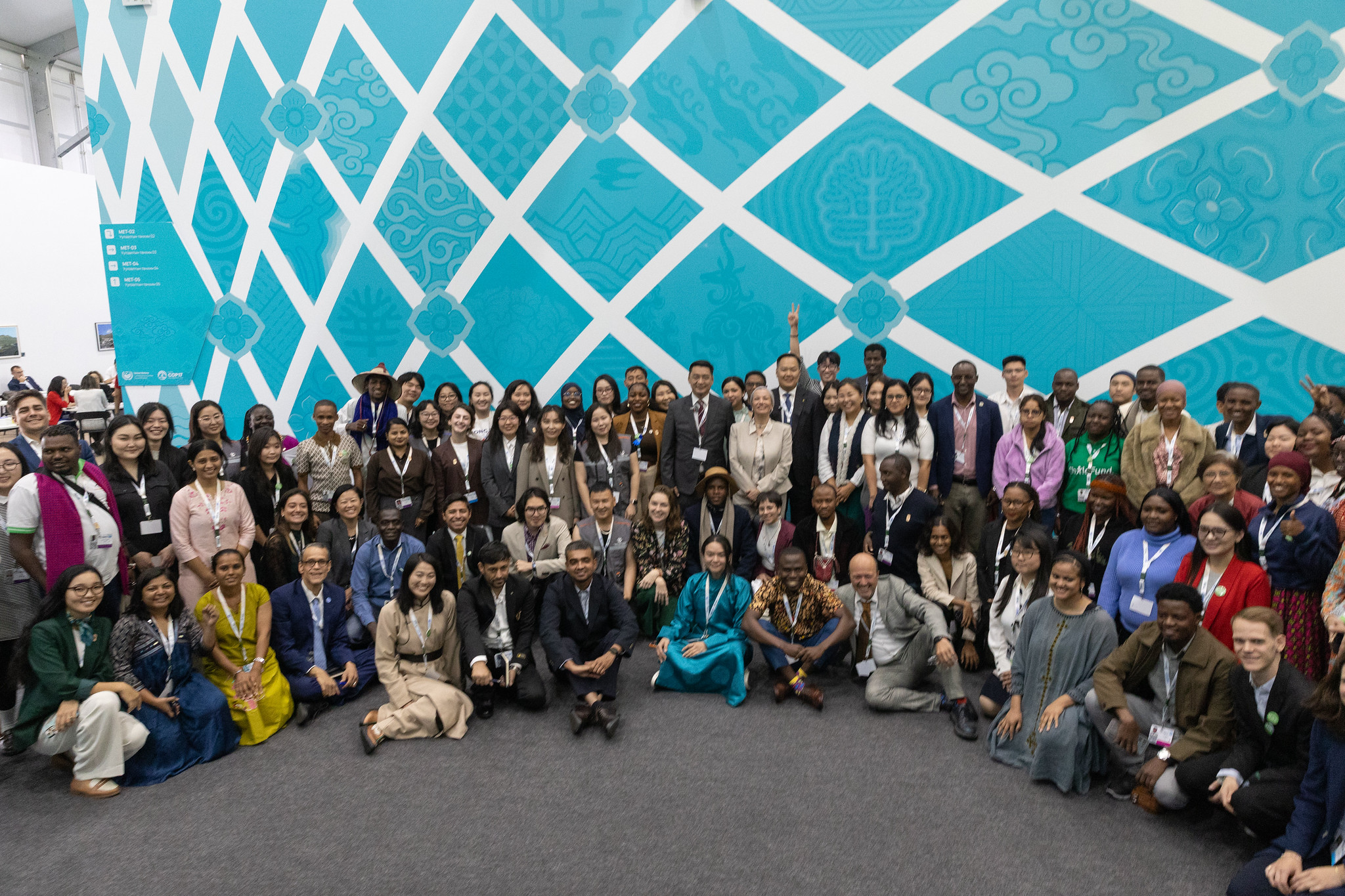


Ulaanbaatar, Mongolia — Opening the COP17 Youth Forum on 18 August, UNCCD Executive Secretary Yasmine Fouad called for more opportunities for young people to contribute to land restoration and drought resilience, from education and green jobs to entrepreneurship and innovation. “The green transition ... should involve the youth,” she said. “And by doing so, we are restoring hope in the future generation that they can still enjoy the planet and its natural resources like we did.” Mongolia’s Minister of Culture, Sports, Tourism and Youth Aldarjavkhlan Jukov highlighted the role of young scientists, activists and herders in sharing knowledge and developing solutions for more sustainable and resilient rangelands. He called for youth-led initiatives to be connected with funding and for young people to have a more meaningful voice in the process. For Juliet Grace Luwedde of the UNCCD Youth Caucus, Mongolia is already showing what greater engagement can look like. “The Mongolian youth have actually championed youth engagement,” she said. “They've mobilized themselves, they've mobilized more young people to be able to come and engage with this process.” But Luwedde is looking beyond how many young people attend. She hopes the assessment of youth engagement requested by Parties at COP16 will help shape the Convention’s next steps on meaningful youth participation. The assessment shows how quickly the Convention’s youth constituency has grown. The UNCCD Youth Caucus expanded from approximately 200 members in 2019 to around 4,000 in 2026. But growth in participation has not yet translated consistently into influence. In a limited survey of 20 national focal points from 16 countries, 60 per cent of responding countries reported that young people had little or no influence on national UNCCD-related policy development and only 10 per cent reported youth involvement in decision-making. “We now have young people as negotiators in the negotiation room, so there is a lot of potential and opportunities for young people to continue engaging with this process,” Luwedde said. “But we have to be intentional about it.” The Land Youth Negotiator Programme is one way of turning that intention into practice. It prepares young people to join official national delegations and contribute directly to negotiations, building technical knowledge, negotiating skills and leadership experience. The programme has expanded from 100 negotiators from 35 countries in 2024–2025 to 155 from 44 countries in its 2026–2027 cohort. The programme is also drawing recognition from Parties. During COP17 discussions on capacity-building this week, Montenegro, the Dominican Republic, Moldova and the Cook Islands highlighted the Youth Negotiators Academy and the Land Youth Negotiator Programme. Its impact can also be seen in the paths young negotiators are taking through the Convention. Sedona Richardson of Grenada first attended a UNCCD COP as a civil society representative. After joining the Land Youth Negotiator Programme, she returned to COP16 in Riyadh as part of Grenada’s national delegation. “To be able to be in those negotiation rooms and to be able to advocate for my country, that is how it has impacted my life,” Richardson said. At COP17, programme participants described following negotiation tracks, helping draft text, preparing statements and supporting bilateral meetings — substantive work within national delegation teams. The discussion also looked at initiatives already creating practical opportunities for young people to take the lead. Sustainability, Technology and Environmental Preservation Program (STEPP) is designed to engage young nomadic herders around the world amid environmental, technological and socio-economic change. The NomaTech Challenge combined capacity-building, international teamwork, engineering, problem-solving and prototype development ahead of COP17. The Silk Road Caravan connected pastoral landscapes, communities and experiences across countries on its journey to Ulaanbaatar, highlighting challenges shared across rangeland communities and the value of exchanging knowledge across borders. When we spoke with people already engaged in the Convention about young people’s place in its work, Anahi Ocampo-Melgar, a member of the UNCCD Science-Policy Interface, brought the question back to what is at stake for the next generation. “To me, land is where the future of young people begins. I work in many parts of Chile that are experiencing rural abandonment and desertification. To me, therefore, land is a place where I hope there can be greater hope for future generations.” For Luwedde, the longer-term test is the Convention’s next strategic framework. As Parties look beyond the current 2018–2030 framework, she wants young people to have a clearer place in how the Convention works and how their contributions are recognized. The next opportunity to carry that discussion forward comes on 26 August, Land and People Day, with Youth, Land and Livelihoods: Building the next generation of land stewards. The session will bring forward priorities emerging from the COP17 Youth Forum and showcase youth-led solutions while connecting young people with governments, donors, civil society and international partners around participation, access to resources and opportunities to shape decisions. Photos © : UNCCD/Kiara Worth

三十多年前,库布其沙漠因流动沙丘和频繁的沙尘暴,被称为中国的“死亡之海”。如今,它已经发生了翻天覆地的变化。本周,第十届库布其国际沙漠论坛在内蒙古鄂尔多斯举行。论坛由联合国防治荒漠化公约(UNCCD)、联合国环境规划署(UNEP)、中国国家林业和草原局及内蒙古自治区政府共同主办,汇聚了国际组织、政府官员、专家学者和企业家,围绕“科学治沙 绿色发展”主题,共同探讨土地恢复的解决方案。 全球挑战,刻不容缓 全球土地退化正在加速。如今,全球已有40%的土地退化,直接影响近一半人口。每年因不可持续的土地利用和气候变化,至少有1亿公顷健康土地流失,相当于一个埃及的面积。经济损失严重:每年因荒漠化、土地退化和干旱损失近9000亿美元。 自2000年以来,干旱发生频率和强度增加了三分之一,每年造成超过3000亿美元损失。预计到2050年,全球四分之三的人口将受到影响。但解决方案是存在的。UNCCD数据显示,每投资1美元在土地修复上,可产生高达27美元的回报,既能增强粮食系统,又能创造就业,还能帮助社区抵御气候冲击。 从“死亡之海”到富饶之地 库布其沙漠展示了科学、政策与社区行动结合所能带来的奇迹。如今,超过50万公顷沙地得到修复,大片沙丘长满植被,减少了沙尘暴,稳定了土壤,也阻止了大量泥沙流入黄河。 可再生能源的引入发挥了重要作用。在退化土地上建立的光伏电站,不仅生产清洁能源,还改善了植被生长条件。这种“光伏+治沙”模式创造了新的就业机会,提高了家庭收入,也证明了治理土地退化能带来繁荣。在内蒙古部分地区,农民如今靠林业和果业获得主要收入,显示健康的生态系统能够支撑可持续经济。 “恢复土地,就是恢复尊严” 在论坛的视频致辞中,UNCCD执行秘书雅斯敏·福阿德强调: “库布其模式告诉我们一个基本真理:恢复土地,就是恢复人的尊严。它创造了逾10万个就业岗位,孕育了支撑家庭的新兴产业,让社区不再把沙漠视为敌人,而是视为共创未来的伙伴。这一转变并非单一部门之功,而是政府、企业和社区并肩携手、同心协力的结晶。” 共享经验,共创未来 论坛不仅关注内蒙古,也汇聚了来自蒙古国、非洲萨赫勒地区、拉丁美洲等受荒漠化严重影响地区的声音。蒙古国林业官员介绍了“十亿棵树”计划,非洲和拉美代表分享了从火灾监测到可持续牧业的经验。 论坛还展示了“UNCCD土地英雄”青年代表的经验。来自马里的企业家罗基娅图·特拉奥雷创立了Herou联盟,通过可持续辣木种植赋能妇女和青年。她说:“中国向世界证明了,只要有政治承诺和社区参与,就能把沙漠变成绿洲。种树不仅保护环境,还能增加GDP和社区收入。科学和技术是我们恢复土地、改善经济的最佳伙伴。” 来自津巴布韦的塔库德扎·阿什利·姆兰博则强调科技的重要性:“论坛让我看到无人机、卫星和物联网等创新方案,以及光伏与动植物结合的模式。如果能在撒哈拉以南非洲推广,我相信我们能够实现土地退化零增长的目标。” 从地方成功到全球目标 库布其的经验对全球具有重要意义。各国已承诺到2030年恢复10亿公顷退化土地,其中近一半是在UNCCD框架下作出的。要实现这一目标,未来五年每天至少需投入10亿美元。但收获的韧性、粮食安全和生计改善,将足以证明这一投资是值得的。 在土地恢复过程中,当地社区、农民和牧民发挥了核心作用:他们植树种草,成立合作社,发展小企业,证明了土地恢复能够带来社会和经济双重收益。 论坛的结论很明确:土地可以恢复,而当它恢复时,人类与自然都会受益。

Civil society is on the frontline of the land challenge — and they are essential partners for the UNCCD. From farmers’ associations to women’s cooperatives and youth networks, civil society organizations (CSOs) bring local realities to the global stage. The CSOs amplify the lived reality that land degradation is not only an environmental issue but as a direct challenge to livelihoods, food security and the future of our communities. Today, nearly 1,200 are accredited to the UNCCD and their engagement supported and coordinated through the UNCCD CSO Panel. This structure ensures that voices from local communities are heard in international negotiations, connecting grassroots experience with global policymaking on the future of our land.At the heart of the Convention’s work is Land Degradation Neutrality (LDN) — the global commitment to balance the amount of healthy and productive land with the land being degraded. The goal is simple but urgent: by 2030, reduce degradation, restore what has been lost and make sure there is no net loss of healthy, productive land. To turn this ambition into action, the Global Environment Facility (GEF) launched the Medium Size Project “Strengthening Civil Society Role in Achieving Land Degradation Neutrality (CS4LDN).” Backed by two million USD in funding, this three-year initiative is implemented by the International Union for Conservation of Nature (IUCN) and executed by Both ENDS on behalf of the Drynet network, with IUCN also serving as co-executor. The project is carried out in close partnership with the UNCCD CSO Panel, the UNCCD Secretariat and other global stakeholders. Through CS4LDN, civil society organizations are better positioned to influence LDN policy and practice — linking community-driven initiatives with international decision-making. The project focuses on two main areas: Influencing LDN – raising the visibility and policy impact of CSOs in LDN efforts. This includes building skills in advocacy and communication, promoting local initiatives and supporting CSO participation in global forums such as UNCCD COP and CRIC events.Leveraging LDN – Improving CSO access to funding by strengthening fundraising skills and building connections with donors. Activities range from training and donor roundtables to a study on funding barriers, with special focus on challenges faced by CSOs in the Global South. CS4LDN follows a collaborative, cross-learning approach. Webinars, mentorships and workshops strengthen CSO capacity, while knowledge is shared through an online platform, newsletters and storytelling. A strong focus is placed on amplifying voices from youth- and women-led initiatives. The project is guided by a Project Management Unit (Both ENDS and IUCN) and a Steering Committee that includes the Drynet Board, IUCN, the UNCCD CSO Panel and the UNCCD Secretariat. It will also support CSO consultations and participation in major gatherings, including UNCCD CRIC23 in Panama this December as well as Désertif’actions and UNCCD COP17 in 2026. Photo: © IISD/ENB Anastasia Rodopoulou

The launch of this 2,028-tree forest at Démé High School in Tsévié is part of global celebrations for the Desertification and Drought Day, observed on June 17. This year’s theme is: “Restore the Land. Unlock the Opportunities” The initiative is led in partnership with the NGO APEVIA, supported by the Togolese government and the United Nations Convention to Combat Desertification.

The Arab Gulf Programme for Development (AGFUND) and UNCCD have established a partnership to launch the "Road to Riyadh and the youth: Elevating land and drought issues on the global agenda" initiative to strengthen youth engagement in tackling critical environmental challenges ahead of UNCCD COP16.Accounting for more than 40 per cent of the global population, the 1.7 billion young people under the age of 25 represent a powerful force for change. As the global environmental crises grow more urgent, youth leadership in driving sustainable solutions is not just evident – it is crucial for securing the future of our planet. Young people are emerging as key advocates in global efforts to protect the environment and promote sustainable practices. Through their passion, innovation and drive, youth can play a vital role in shaping the sustainable development agenda and collaborating with key stakeholders, including governments, to address issues, such as land degradation and drought. In alignment with the UNCCD Youth Engagement Strategy (YES), young leaders will convene in Riyadh from 5 to 7 December 2024 for a Youth Forum, held in parallel with COP16. During this gathering, participants will present recommendations on how young people can play a meaningful role in achieving Land Degradation Neutrality. The conference will also explore opportunities for the creation of green and fulfilling land-based employment, and will identify the challenges that young people are facing due to desertification, land degradation and drought. As the first-ever UNCCD Conference of the Parties is set to take place in the Middle East and North Africa region this December, the project will work to engage youth in the broader discussions and processes of the Convention. It will also contribute to the continued implementation of the YES strategy to ensure robust youth participation in global environmental efforts. The project aims to raise awareness of the importance of combating desertification, land degradation and drought, while upscaling youth involvement in UNCCD implementation. A Youth Declaration, embodying their perspectives and solutions, will be presented at COP16 during a high-level event organized on Peoples’ Day, further solidifying youth engagement in global environmental governance. The initiative also supports ongoing efforts to foster active youth participation in achieving broader national and international sustainability goals, such as the Saudi Arabia’s Vision 2030. This joint initiative of AGFUND and UNCCD underscores a shared vision: positioning young people at the forefront of environmental action. By empowering them as pivotal actors in the fight against desertification, the partnership aims to harness their potential to shape a resilient and sustainable future for generations to come. About AGFUND The Arab Gulf Programme for Development (AGFUND) is a regional entity founded in 1980 through the initiative of the late His Royal Highness Prince Talal bin Abdulaziz, with the support of the leaders of the Gulf Cooperation Council. The primary objective of AGFUND is to tackle the fundamental issues related to human development, focusing on all societal segments without discrimination. AGFUND has founded five distinct organizations dedicated to development, which include the Arab Council for Childhood and Development, the Arab Women Center for Training and Research, Financial Inclusion Banks, the Arab Open University, and the Arab Network for NGOs. AGFUND collaborates with over 450 international, regional, and governmental organizations to facilitate and support various development projects. About UNCCD The United Nations Convention to Combat Desertification (UNCCD) is an international agreement on good land stewardship. It helps people, communities and countries create wealth, grow economies and secure enough food, clean water and energy by ensuring land users an enabling environment for sustainable land management. Through partnerships, the Convention’s 197 Parties set up robust systems to manage drought promptly and effectively. Good land stewardship based on sound policy and science helps integrate and accelerate achievement of the Sustainable Development Goals, builds resilience to climate change and prevents biodiversity loss. For more information, please contact: UNCCD: press@unccd.int | AGFUND: prmedia@agfund.org

德国在波恩举办《联合国防治荒漠化公约》30周年纪念活动 2024年防治荒漠化和干旱世界日公布10 位土地英雄 启动土地与干旱问题青年谈判者的支持计划 2024 年 6 月 17 日,德国波恩——2024年防治荒漠化和干旱世界日纪念活动于6月17日举行,着眼于动员各代成员支持可持续土地管理,标志着全球抗击土地退化和干旱的关键时刻。德国联邦政府通过经济合作与发展部(BMZ)在波恩主办了此次以 “为了土地,团结起来:保护我们的遗产,保障我们的未来” 为主题的活动,来自世界各地的变革者应邀出席。 今年的活动恰逢《联合国防治荒漠化公约》(UNCCD)30周年纪念,该公约是196个国家和欧洲联盟批准的唯一一项致力于可持续土地管理的全球协定。 联合国秘书长安东尼奥·古特雷斯表示:“正如今年世界日的主题所提醒的,我们必须‘为了土地,团结起来’。各国政府、工商界、学术界、社区等必须团结起来,采取行动。我们知道我们需要做什么:《联合国防治荒漠化公约》对此有明确规定。在我们纪念《公约》三十周年之际,全世界必须大幅加快执行步伐;为在利雅得举行的《防治荒漠化公约》缔约方会议第十六届会议创造势头;并确保在谈判中听取年轻人的意见。让我们共同努力,为自然和人类的繁荣未来播下种子。” 德意志联邦共和国总统弗兰克·瓦尔特·施泰因迈尔说:“今天,我们不仅要纪念一年一度的 ‘防治荒漠化和干旱世界日’,还要庆祝《联合国防治荒漠化公约》30周年。没有什么比良好的土壤、安全的食物和清洁的水更重要、更基础的。因此,让我们共同努力!让年轻人参与进来,从而使我们今天做出的决定能够确保他们拥有美好的明天。2024年是决定性的一年:今年所讨论、谈判和决定的将影响我们的世界和我们后代的生活”。 《联合国防治荒漠化公约》执行秘书易卜拉欣·蒂奥说:“我们土地的未来就是我们这个星球的未来。到 2050 年,将有 100 亿人依赖这一重要资源生存。然而,每秒钟就有相当于四个足球场大的土地因退化而消失。” 德国国务秘书约亨·弗拉斯巴特说:“健康的土壤是我们未来的基础。无论谈及气候变化、生物多样性丧失还是粮食危机,应对这些全球性挑战,土壤质量都发挥着核心作用。土壤可以保持水分,让树木和植物生长。只有拥有健康的土壤,我们才能养活人类,应对气候危机及其影响 ”。 土地退化影响着全球多达 40% 的土地和近一半的人口,其中受害最深的恰恰是那些最无力承受土地退化后果的群体——即土著社区、农村家庭、小农户,尤其是青年和妇女。 生活在发展中国家的十亿多年轻人依赖于土地和自然资源生存。让青年参与土地恢复工作可以在未来 15 年内创造约 6 亿个就业岗位,促进经济增长和环境可持续发展。 “长期以来,荒漠化和干旱一直被视为南方国家特有的问题。然而,这些现象正在全球蔓延,影响着我们所有人。去年发生的许多事件提醒我们采取行动的紧迫性。防治荒漠化和干旱世界日以及即将于 12 月召开的UNCCD缔约方会议第十六届会议让我们组织起来,与荒漠化及其后果作斗争。没有时间可以浪费了,"第十五届缔约方会议主席阿兰·理查德·东瓦希强调说。 《联合国防治荒漠化公约》在全球纪念活动上公布了十位 "土地英雄"。这些来自世界各地的年轻变革者正在努力恢复土地、提高抗旱能力、发展可持续农业企业,并利用技术和创新应对全球环境挑战。 《联合国防治荒漠化公约》执行秘书易卜拉欣·蒂奥补充道:“《联合国防治荒漠化公约》充分认可青年作为企业家和变革推动者的才能。他们是改变社区和推动可持续土地管理创新的关键。从巴西到马里,从菲律宾到摩尔多瓦,青年领袖们都致力于恢复土地。我们需要他们的声音来塑造地球的未来。” 纪念活动最后宣布了一系列促进可持续土地管理的声明和承诺。一项培训青年谈判者成为未来土地和干旱问题决策者的新计划已经启动。计划的第一年,来自 30 多个国家的青年谈判者将在 2024 年 12 月于沙特阿拉伯利雅得举行的《联合国防治荒漠化公约》缔约方会议第十六届会议之前接受培训。 波恩市市长卡嘉·多尔纳与《联合国防治荒漠化公约》合作,为该市第一所 "土地友好型 "学校揭幕。这项独特的计划让学生有机会在学校的农田里通过教育和实践课程学习有机耕作。 世界各国也组织了荒漠化和干旱日活动。意大利发行了一枚纪念邮票,欧盟轮值主席国比利时在布基纳法索主办了一场关于土地恢复的纪录片放映和小组讨论。作为植树和宣传活动的一部分,肯尼亚种植了 12 万多株树苗。尼日利亚主办了关于可持续做法的网络研讨会,突尼斯则举办了关于土地退化零增长的在线活动。印度在钦奈讨论了可持续土地管理问题;缅甸发起了一项在线活动,并在内比都举行了一次高级别活动;菲律宾组织了植树活动和利益相关者研讨会。斯里兰卡开展了一次提高认知运动,危地马拉将可持续发展与土地管理联系起来,摩尔多瓦举行了一次关于干旱和土地退化零增长的区域间会议。 媒体垂询,请联系 《联合国防治荒漠化公约》:press@unccd.int Portland Communications:unccd@portland-communications.com 访问 #UNITED4LAND 活动资料以及活动视频和多媒体资料:https://trello.com/b/VdJGolcp/desertification-and-drought-day-2024 补充资料 2024 年土地英雄简介 巴西:Beatriz Azevêdo de Araújo是塞阿拉州的一名环境律师,她把对干旱的亲身经历转化成对可持续发展的使命, 致力于确保能源项目对环境无害,并促进绿色就业。 哥斯达黎加:Astrid Peraza 是一名来自哥斯达黎加的材料科学工程师、气候和性别问题活动家以及故事讲述者。她致力于增强妇女和女童的能力,为她们的成长创造机会,激励她们成为变革者。 德国:Lina Pickhardt正在领导恢复退化土地和改善土壤质量的工作,同时应对野生动物贩运问题。莉娜从目睹环境退化到推动社区主导的恢复项目的过程,是一个令人信服的转型和影响的故事。 印度:Siddhesh Sakore 是一位农民,也是 AGRO RANGERS 的创始人。他热衷于解决农田土壤退化问题,致力于通过农林业的创新模式增强社区小农和边缘化农民的能力。 马里:Rokiatou Traoré 是一位马里企业家,热衷于解决贫困、气候变化和粮食不安全问题。通过开创的社会企业 Herou Alliance,Rokiatou在马里建立了一条可持续的辣木价值链,为妇女和青年赋权。 摩尔多瓦:Aliona Isac 是一位年轻的活动家,通过可持续农业和植树活动与荒漠化作斗争。她的工作是恢复当地景观,确保社区的未来。 摩洛哥: Manal Bidar是摩洛哥的一名气候活动家,也是摩洛哥地区青年政府项目的创始人,该项目重点关注中东和北非地区的土地保护以及抗击干旱和荒漠化。她致力于扩大青年和边缘化群体在全球气候适应能力和土地倡导方面的发言权。 菲律宾:Billie Dumaliang 是马松吉地质保护区基金会(Masungi Geo reserve Foundation)的共同创始人兼宣传总监,该基金会以保护马尼拉市附近的喀斯特生态系统而闻名。该基金会曾获得多个奖项,包括 2022 年联合国可持续发展目标激励奖。 美国: Grace Magny Fokam是弗里亚技术公司(Folia Technologies)的创始人,该公司是一家由年轻人领导的非营利性研究机构,致力于开发人工智能技术,以应对气候危机。他们的旗舰发明 FoliaNet 是一款由人工智能驱动的设备,可以检测农作物的病害。 津巴布韦: Takudzwa Ashley Mlambo发起了该国最大的植树造林计划,目标是到 2030 年种植 10 亿棵树,这一计划正与政府恢复 250 万公顷退化土地的目标相吻合。 关于《联合国防治荒漠化公约》 《联合国防治荒漠化公约》是关于良好土地管理的国际协定。《公约》建设有利环境,支持土地使用者进行可持续土地管理,以此帮助公民、社区和国家创造财富,发展经济,保障获得充足的粮食、清洁水和能源。《公约》的197个缔约方通过伙伴关系建立了强大的系统,以期迅速有效地管理干旱。基于完备政策和科学的良好土地管理有助于整合和加速实现可持续发展目标,增强对气候变化的抵御能力,并防止生物多样性损失。
