News & stories

Latest
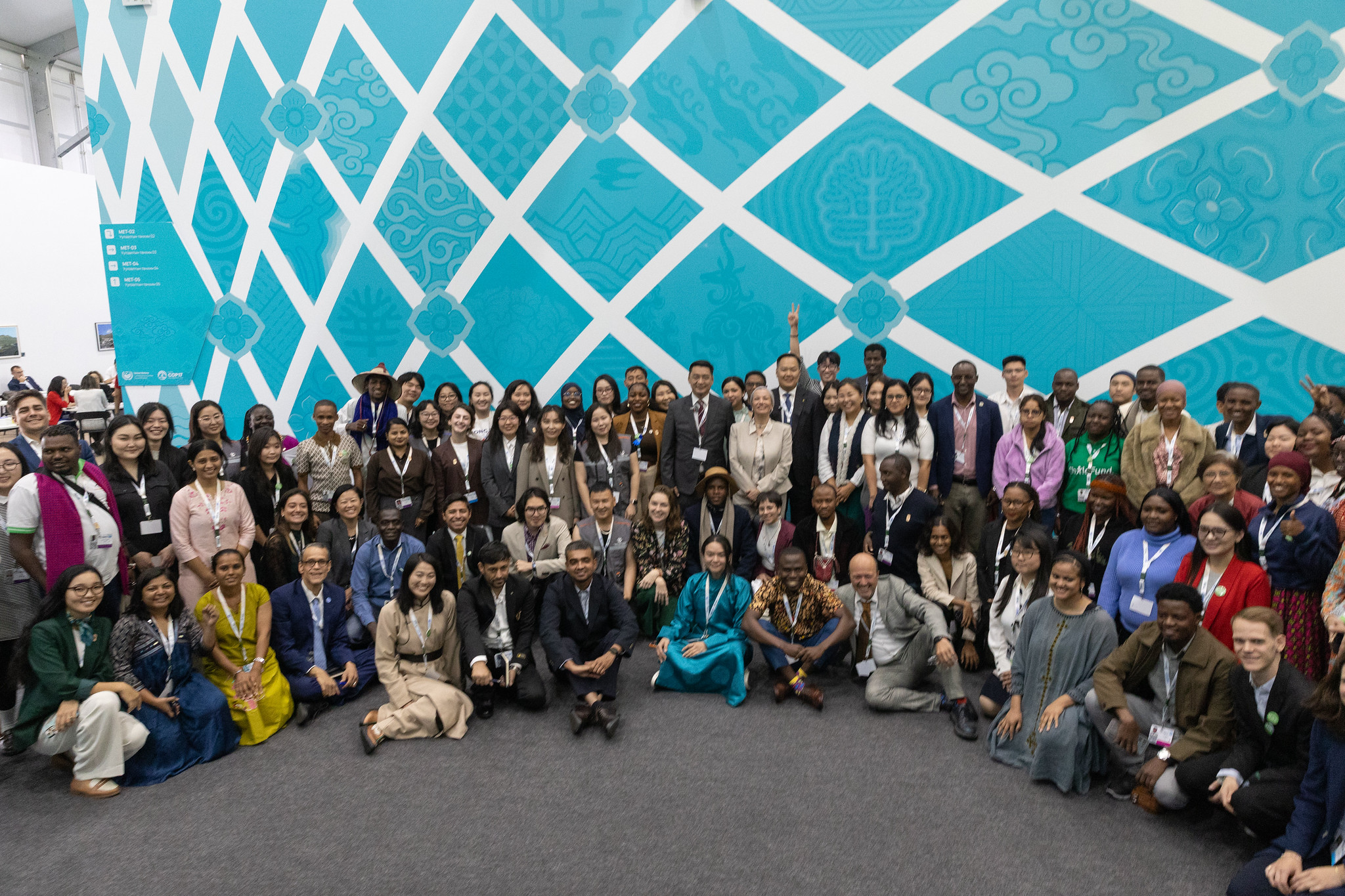


Ulaanbaatar, Mongolia — Opening the COP17 Youth Forum on 18 August, UNCCD Executive Secretary Yasmine Fouad called for more opportunities for young people to contribute to land restoration and drought resilience, from education and green jobs to entrepreneurship and innovation. “The green transition ... should involve the youth,” she said. “And by doing so, we are restoring hope in the future generation that they can still enjoy the planet and its natural resources like we did.” Mongolia’s Minister of Culture, Sports, Tourism and Youth Aldarjavkhlan Jukov highlighted the role of young scientists, activists and herders in sharing knowledge and developing solutions for more sustainable and resilient rangelands. He called for youth-led initiatives to be connected with funding and for young people to have a more meaningful voice in the process. For Juliet Grace Luwedde of the UNCCD Youth Caucus, Mongolia is already showing what greater engagement can look like. “The Mongolian youth have actually championed youth engagement,” she said. “They've mobilized themselves, they've mobilized more young people to be able to come and engage with this process.” But Luwedde is looking beyond how many young people attend. She hopes the assessment of youth engagement requested by Parties at COP16 will help shape the Convention’s next steps on meaningful youth participation. The assessment shows how quickly the Convention’s youth constituency has grown. The UNCCD Youth Caucus expanded from approximately 200 members in 2019 to around 4,000 in 2026. But growth in participation has not yet translated consistently into influence. In a limited survey of 20 national focal points from 16 countries, 60 per cent of responding countries reported that young people had little or no influence on national UNCCD-related policy development and only 10 per cent reported youth involvement in decision-making. “We now have young people as negotiators in the negotiation room, so there is a lot of potential and opportunities for young people to continue engaging with this process,” Luwedde said. “But we have to be intentional about it.” The Land Youth Negotiator Programme is one way of turning that intention into practice. It prepares young people to join official national delegations and contribute directly to negotiations, building technical knowledge, negotiating skills and leadership experience. The programme has expanded from 100 negotiators from 35 countries in 2024–2025 to 155 from 44 countries in its 2026–2027 cohort. The programme is also drawing recognition from Parties. During COP17 discussions on capacity-building this week, Montenegro, the Dominican Republic, Moldova and the Cook Islands highlighted the Youth Negotiators Academy and the Land Youth Negotiator Programme. Its impact can also be seen in the paths young negotiators are taking through the Convention. Sedona Richardson of Grenada first attended a UNCCD COP as a civil society representative. After joining the Land Youth Negotiator Programme, she returned to COP16 in Riyadh as part of Grenada’s national delegation. “To be able to be in those negotiation rooms and to be able to advocate for my country, that is how it has impacted my life,” Richardson said. At COP17, programme participants described following negotiation tracks, helping draft text, preparing statements and supporting bilateral meetings — substantive work within national delegation teams. The discussion also looked at initiatives already creating practical opportunities for young people to take the lead. Sustainability, Technology and Environmental Preservation Program (STEPP) is designed to engage young nomadic herders around the world amid environmental, technological and socio-economic change. The NomaTech Challenge combined capacity-building, international teamwork, engineering, problem-solving and prototype development ahead of COP17. The Silk Road Caravan connected pastoral landscapes, communities and experiences across countries on its journey to Ulaanbaatar, highlighting challenges shared across rangeland communities and the value of exchanging knowledge across borders. When we spoke with people already engaged in the Convention about young people’s place in its work, Anahi Ocampo-Melgar, a member of the UNCCD Science-Policy Interface, brought the question back to what is at stake for the next generation. “To me, land is where the future of young people begins. I work in many parts of Chile that are experiencing rural abandonment and desertification. To me, therefore, land is a place where I hope there can be greater hope for future generations.” For Luwedde, the longer-term test is the Convention’s next strategic framework. As Parties look beyond the current 2018–2030 framework, she wants young people to have a clearer place in how the Convention works and how their contributions are recognized. The next opportunity to carry that discussion forward comes on 26 August, Land and People Day, with Youth, Land and Livelihoods: Building the next generation of land stewards. The session will bring forward priorities emerging from the COP17 Youth Forum and showcase youth-led solutions while connecting young people with governments, donors, civil society and international partners around participation, access to resources and opportunities to shape decisions. Photos © : UNCCD/Kiara Worth

Once known as China’s “Sea of Death” for its shifting dunes and frequent sandstorms, the Kubuqi Desert has changed dramatically over the past three decades. This week, that progress provided the backdrop for the 10th Kubuqi International Desert Forum in Ordos, Inner Mongolia. The gathering, co-organized by the UNCCD and the United Nations Environment Programme (UNEP), alongside China’s National Forestry and Grassland Administration and the Inner Mongolia Autonomous Regional Government, brought together international organizations, government officials, experts, scholars and entrepreneurs to exchange solutions for land restoration under the theme “Combat Desertification Scientifically and Promote Green Development.” A global challenge that cannot wait Across the globe, land degradation is accelerating worldwide. Today, 40 per cent of the world’s land is already degraded, directly affecting nearly half of humanity. Every year, at least 100 million hectares of healthy land are lost-an area the size of Egypt-driven by unsustainable land use and climate change. The economic impact is severe: nearly USD 900 billion is lost annually to desertification, land degradation and drought. Droughts, already more frequent and intense, are now up by one third since 2000, causing more than USD 300 billion in losses each year. By 2050, three out of four people on Earth are expected to be affected. Yet solutions exist. UNCCD data shows that every dollar invested in land restoration can generate up to USD 27 in returns, strengthening food systems, creating jobs and helping communities withstand climate shocks. From “Sea of Death” to productive land Against this backdrop, the Kubuqi Desert shows what is possible when science, policy and community action come together. In recent years, restoration has expanded rapidly across the dunes. Forests and vegetation now cover areas that once produced only sand and dust. More than half a million hectares have been restored, reducing sandstorms, stabilizing soils and preventing huge volumes of sediment from flowing into the Yellow River. Bringing renewable energy into restoration made a real difference. Solar farms established on degraded land not only generate clean power but also create conditions for vegetation to grow. This approach—known as “PV + Desertification Control”—has created new jobs, raised household incomes and demonstrated that tackling land degradation can also drive prosperity. In parts of Inner Mongolia, farmers now earn much of their income from forestry and fruit grown on once-barren land — proof that healthy ecosystems can support sustainable economies. When we restore our land, we restore human dignity In her video message to the Forum, UNCCD Executive Secretary Yasmine Fouad underlined that the lessons of Kubuqi extend far beyond China, showing how land restoration can transform both ecosystems and societies: “The Kubuqi model teaches us a fundamental truth: When we restore our land, we restore human dignity. It means jobs, over one hundred thousand of them. It means new industries that sustain families. It means communities that no longer see the desert as an adversary but as a partner in their future. And this transformation was not the work of one sector alone. It was a collective work — of government, business, and communities standing shoulder to shoulder, working hand in hand.” Shared lessons, shared future The Forum was not only about Inner Mongolia. Delegates from regions severely affected by desertification, from Mongolia to the Sahel, shared their own efforts and highlighted how cooperation is essential. Mongolia’s forestry officials described their national campaign to plant one billion trees, while voices from Africa and Latin America pointed to the value of exchanging technologies and practices — from fire monitoring to sustainable pastoralism. The Forum also featured voices from the UNCCD Land Heroes, which showcases young leaders advancing land restoration and sustainable livelihoods worldwide. Among them was Rokiatou Traoré, a Malian entrepreneur who founded Herou Alliance to empower women and youth through sustainable Moringa production. She highlighted the power of collective action: “China has proven to the world that, with political commitment and community engagement, we can turn a desert into an oasis. Beyond preserving our environment, growing trees can increase GDP and provide income for communities. Science and technology are our best allies to restore degraded land and improve our economies.” Takudzwa Ashley Mlambo of Zimbabwe, Founder and Head of Agroforestry and Innovation at Forestry & Citrus Research (FACIR), where he leads The Greater Green Project, stressed the importance of technology: “The Forum has shown me innovative drone, satellite and IoT solutions for restoring degraded land, alongside models that integrate photovoltaic systems with plants and animals. If scaled to Sub-Saharan Africa, I believe we can achieve our Land Degradation Neutrality goals.” Linking local success to global goals For UNCCD, the experience in Kubuqi offers lessons with global relevance. Governments have pledged to restore one billion hectares of degraded land by 2030, with nearly half of these commitments made under the Convention’s framework. Meeting this goal will require mobilizing at least USD one billion per day over the next five years, but the gains in resilience, food security and livelihoods make it clear this investment is worth it. Local communities, farmers and herders have played a strong role in restoration—from planting vegetation and leading cooperatives to running small businesses. Their efforts demonstrate how recovery of the land can also bring social and economic benefits. As the Forum concludes, its message is clear: land can be restored, and when it is, both people and nature benefit.

Civil society is on the frontline of the land challenge — and they are essential partners for the UNCCD. From farmers’ associations to women’s cooperatives and youth networks, civil society organizations (CSOs) bring local realities to the global stage. The CSOs amplify the lived reality that land degradation is not only an environmental issue but as a direct challenge to livelihoods, food security and the future of our communities. Today, nearly 1,200 are accredited to the UNCCD and their engagement supported and coordinated through the UNCCD CSO Panel. This structure ensures that voices from local communities are heard in international negotiations, connecting grassroots experience with global policymaking on the future of our land.At the heart of the Convention’s work is Land Degradation Neutrality (LDN) — the global commitment to balance the amount of healthy and productive land with the land being degraded. The goal is simple but urgent: by 2030, reduce degradation, restore what has been lost and make sure there is no net loss of healthy, productive land. To turn this ambition into action, the Global Environment Facility (GEF) launched the Medium Size Project “Strengthening Civil Society Role in Achieving Land Degradation Neutrality (CS4LDN).” Backed by two million USD in funding, this three-year initiative is implemented by the International Union for Conservation of Nature (IUCN) and executed by Both ENDS on behalf of the Drynet network, with IUCN also serving as co-executor. The project is carried out in close partnership with the UNCCD CSO Panel, the UNCCD Secretariat and other global stakeholders. Through CS4LDN, civil society organizations are better positioned to influence LDN policy and practice — linking community-driven initiatives with international decision-making. The project focuses on two main areas: Influencing LDN – raising the visibility and policy impact of CSOs in LDN efforts. This includes building skills in advocacy and communication, promoting local initiatives and supporting CSO participation in global forums such as UNCCD COP and CRIC events.Leveraging LDN – Improving CSO access to funding by strengthening fundraising skills and building connections with donors. Activities range from training and donor roundtables to a study on funding barriers, with special focus on challenges faced by CSOs in the Global South. CS4LDN follows a collaborative, cross-learning approach. Webinars, mentorships and workshops strengthen CSO capacity, while knowledge is shared through an online platform, newsletters and storytelling. A strong focus is placed on amplifying voices from youth- and women-led initiatives. The project is guided by a Project Management Unit (Both ENDS and IUCN) and a Steering Committee that includes the Drynet Board, IUCN, the UNCCD CSO Panel and the UNCCD Secretariat. It will also support CSO consultations and participation in major gatherings, including UNCCD CRIC23 in Panama this December as well as Désertif’actions and UNCCD COP17 in 2026. Photo: © IISD/ENB Anastasia Rodopoulou

The launch of this 2,028-tree forest at Démé High School in Tsévié is part of global celebrations for the Desertification and Drought Day, observed on June 17. This year’s theme is: “Restore the Land. Unlock the Opportunities” The initiative is led in partnership with the NGO APEVIA, supported by the Togolese government and the United Nations Convention to Combat Desertification.

The Arab Gulf Programme for Development (AGFUND) and UNCCD have established a partnership to launch the "Road to Riyadh and the youth: Elevating land and drought issues on the global agenda" initiative to strengthen youth engagement in tackling critical environmental challenges ahead of UNCCD COP16.Accounting for more than 40 per cent of the global population, the 1.7 billion young people under the age of 25 represent a powerful force for change. As the global environmental crises grow more urgent, youth leadership in driving sustainable solutions is not just evident – it is crucial for securing the future of our planet. Young people are emerging as key advocates in global efforts to protect the environment and promote sustainable practices. Through their passion, innovation and drive, youth can play a vital role in shaping the sustainable development agenda and collaborating with key stakeholders, including governments, to address issues, such as land degradation and drought. In alignment with the UNCCD Youth Engagement Strategy (YES), young leaders will convene in Riyadh from 5 to 7 December 2024 for a Youth Forum, held in parallel with COP16. During this gathering, participants will present recommendations on how young people can play a meaningful role in achieving Land Degradation Neutrality. The conference will also explore opportunities for the creation of green and fulfilling land-based employment, and will identify the challenges that young people are facing due to desertification, land degradation and drought. As the first-ever UNCCD Conference of the Parties is set to take place in the Middle East and North Africa region this December, the project will work to engage youth in the broader discussions and processes of the Convention. It will also contribute to the continued implementation of the YES strategy to ensure robust youth participation in global environmental efforts. The project aims to raise awareness of the importance of combating desertification, land degradation and drought, while upscaling youth involvement in UNCCD implementation. A Youth Declaration, embodying their perspectives and solutions, will be presented at COP16 during a high-level event organized on Peoples’ Day, further solidifying youth engagement in global environmental governance. The initiative also supports ongoing efforts to foster active youth participation in achieving broader national and international sustainability goals, such as the Saudi Arabia’s Vision 2030. This joint initiative of AGFUND and UNCCD underscores a shared vision: positioning young people at the forefront of environmental action. By empowering them as pivotal actors in the fight against desertification, the partnership aims to harness their potential to shape a resilient and sustainable future for generations to come. About AGFUND The Arab Gulf Programme for Development (AGFUND) is a regional entity founded in 1980 through the initiative of the late His Royal Highness Prince Talal bin Abdulaziz, with the support of the leaders of the Gulf Cooperation Council. The primary objective of AGFUND is to tackle the fundamental issues related to human development, focusing on all societal segments without discrimination. AGFUND has founded five distinct organizations dedicated to development, which include the Arab Council for Childhood and Development, the Arab Women Center for Training and Research, Financial Inclusion Banks, the Arab Open University, and the Arab Network for NGOs. AGFUND collaborates with over 450 international, regional, and governmental organizations to facilitate and support various development projects. About UNCCD The United Nations Convention to Combat Desertification (UNCCD) is an international agreement on good land stewardship. It helps people, communities and countries create wealth, grow economies and secure enough food, clean water and energy by ensuring land users an enabling environment for sustainable land management. Through partnerships, the Convention’s 197 Parties set up robust systems to manage drought promptly and effectively. Good land stewardship based on sound policy and science helps integrate and accelerate achievement of the Sustainable Development Goals, builds resilience to climate change and prevents biodiversity loss. For more information, please contact: UNCCD: press@unccd.int | AGFUND: prmedia@agfund.org

Ten Land Heroes were announced by UNCCD at the global observance event. These young changemakers from around the world are working to restore land, boost resilience to drought, develop sustainable agricultural businesses, and harness technology and innovation to tackle global environmental challenges.
