News & stories

Latest news & stories
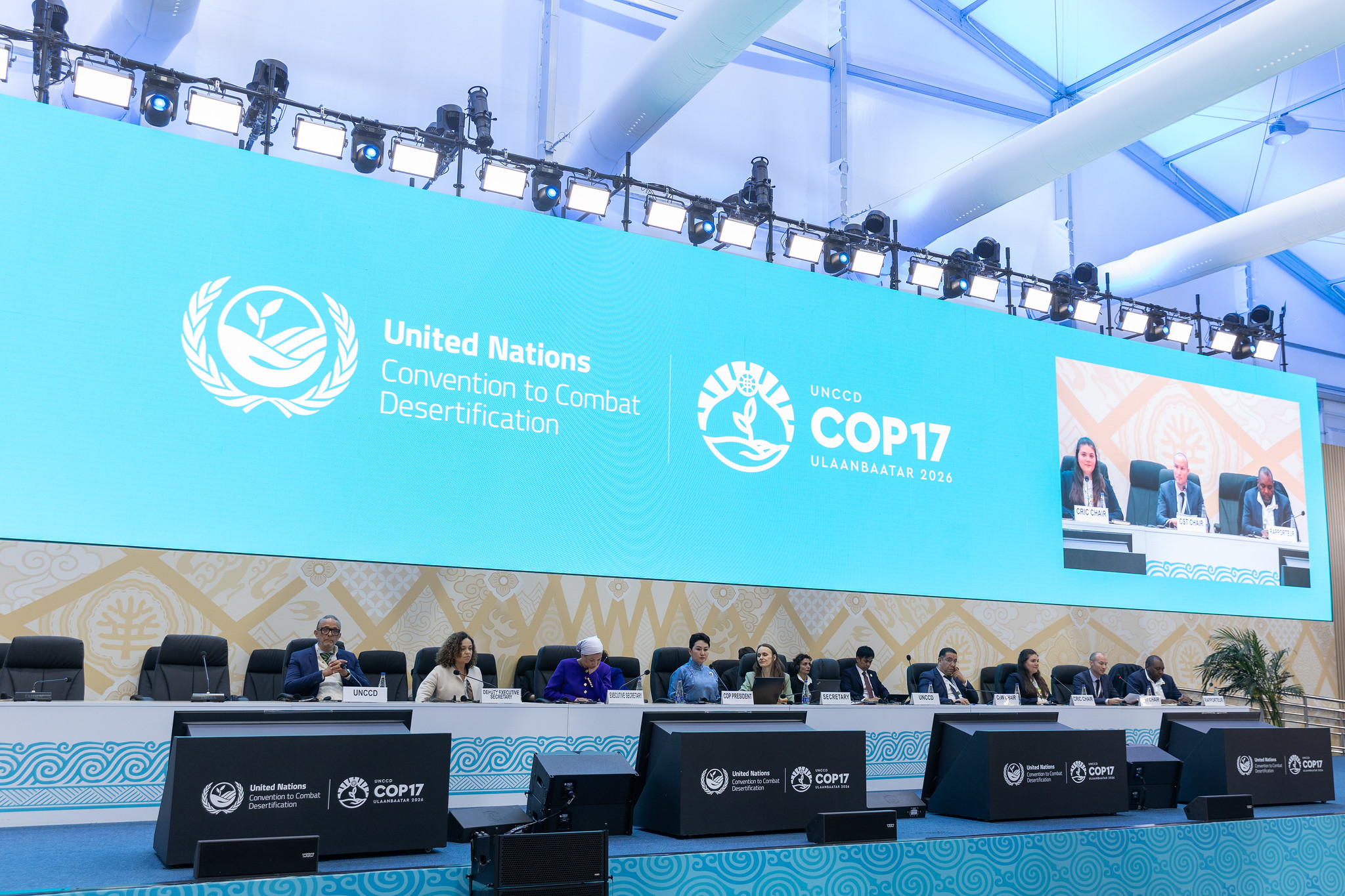
The signs are everywhere: cracked earth, dry rivers, failed crops and families forced to abandon their land. What was once seen as a rare natural disaster has become a persistent and intensifying threat. Drought is no longer confined to distant deserts or erratic seasons. It is advancing—slowly, silently—across borders and climate zones, placing unprecedented stress on people and ecosystems alike. Since 2000, the frequency and intensity of droughts have risen by 29 per cent. More than 1.4 billion people have already been affected. Economically, drought can slash a country’s GDP by up to 10 per cent and drag down growth for years. By mid-century, as much as three-quarters of the global population could face its impacts. For millions, it means far more than dry weather—it means food insecurity, water shortages, price spikes and the erosion of homes and livelihoods. And yet, unlike earthquakes or floods, drought gives us one rare advantage: time. Time to anticipate, adapt and build resilience. The challenge is not only to recognize the warning signs, but to act before the emergency unfolds. That imperative brought a wide range of stakeholders to Cologne, Germany, for the Inaugural Conference of the Riyadh Global Drought Resilience Partnership held on 23-24 June 2025. Over two days of discussion and collaboration, government representatives, UN entities, financing institutions and technical experts worked to transform political intent into practical momentum. “This partnership is not another global fund. It is not just a trust fund. It is not about reacting to drought when it's too late. It is about building integrated, national systems of resilience—rooted in transparency, equity and the voices of local communities. This is how we protect lives, livelihoods and ecosystems before the crisis hits,” said the United Nations Convention to Combat Desertification (UNCCD) Executive Secretary Ibrahim Thiaw. “If we wait until drought hits, it’s already too late. The cost—in human lives, in resources, in stability—is simply too high. This initiative is about shifting from reaction to resilience. It’s about building early warning systems, strengthening national drought plans, investing in risk mitigation and creating partnerships that are inclusive, science-based and focused on the communities most at risk. No one actor can do this alone—we need a collective, global response.” said H.E. Dr. Osama Faqeeha, Deputy Minister of Environment, Water and Agriculture, KSA. Launched at UNCCD COP16 under the leadership of the host country, the Kingdom of Saudi Arabia, the Riyadh Global Drought Resilience Partnershipwas established to help countries move beyond crisis response toward proactive drought risk reduction. At its core is the belief that resilience is not forged in crisis, but through long-term preparation—by enhancing early warning systems, adopting climate-smart agriculture, managing land and water sustainably and putting financial safeguards in place before disaster strikes. The Riyadh Partnership brings these elements together into a coordinated global framework. It offers countries access to technical assistance and funding through a dual financing model: pooled contributions to a multi-donor trust fund and direct bilateral support aligned with nationally identified priorities. The Partnership draws on existing alliances and tools, including the International Drought Resilience Alliance (IDRA), the Integrated Drought Management Programme and regional initiatives such as the Middle East Green Initiative (MGI). Moving from vision to action In Cologne, delegates reached consensus on the Riyadh Partnership's core governance structure and began outlining its operational roadmap. Financing featured prominently, with calls to mobilize diverse instruments and align efforts across existing initiatives. Key announcements included a one-billion-dollar commitment from the Islamic Development Bank for drought resilience projects by 2030, and an indication from the Global Environment Facility that its upcoming funding cycle will call for a greater focus on drought. The United Nations Capital Development Fund also proposed a de-risking mechanism to facilitate access to financing. Several partners—including the United Nations Development Programme (UNDP), the World Meteorological Organization (WMO), the International Water Management Institute (IWMI) and the Consultative Group on International Agricultural Research (CGIAR)—offered technical expertise, while others committed to strengthening synergies with frameworks such as IDRA and MGI to ensure national actions are reinforced by global coordination. Importantly, the first Steering Committee was successfully identified during the Conference, marking a critical milestone in establishing the Partnership’s long-term governance. The agreed governance structure includes a Steering Committee, Secretariat, Fund Trustee, Independent Review function and an Assembly of Partners. The UNCCD will host the Secretariat and the UN Multi-Partner Trust Fund Office will act as Trustee. Work is now underway to finalize the Riyadh Partnership’s governance document—a foundational charter that will define roles, responsibilities and processes. This document, to be completed in the coming months, will reflect the Partnership’s inclusive, regionally representative and institutionally diverse approach. The conference concluded with broad agreement on a shared path forward. In the months ahead, work will focus on finalizing the Steering Committee, launching early flagship projects and putting in place practical financial delivery mechanisms for the most drought-prone countries. “This is just the beginning,” said Louise Baker, Managing Director of the UNCCD Global Mechanism. “We’ve built strong momentum and now we move to implementation—bringing this partnership to life on the ground.” This energy will carry into UNCCD COP17 in Mongolia next year, where countries are expected to review initial progress, share lessons and formally integrate the Partnership into the Convention’s future work. What began in Riyadh as a bold pledge is now taking shape as a long-term platform for action—helping countries anticipate and withstand one of the most pressing environmental challenges of our time.

Desertification and Drought Day 2025 hosted by ColombiaAfrica and Latin America lead global land restoration commitmentsGlobal losses from land degradation three times the amount of annual ODA$1bn per day needed to restore 1.5 billion hectares of land back to health Bonn/Bogotá, 17 June 2025 — If we continue business as usual, land almost the size of South America (16 million square kilometres) will show continued degradation by 2050. Yet, bringing 1.5 billion hectares of land back to health could unlock a trillion-dollar restoration economy, the United Nations noted on this year's Desertification and Drought Day, urging world’ leaders to step up action. In his message, United Nations Secretary-General António Guterres stated: “What’s good for land is good for people and economies. But humanity is degrading land at an alarming rate, costing the global economy nearly $880 billion every year —far more than the investments needed to tackle the problem.” “I urge governments, businesses, and communities to answer the call and accelerate action on our shared global commitments on sustainable land use. We must reverse degradation, and boost finance for restoration — including by unlocking private investment,” he declared. This call for action was highlighted during this year's global observance of Desertification and Drought Day in Bogotá, Colombia, held under the theme ‘Restore the Land. Unlock the Opportunities.’ UNCCD Executive Secretary Ibrahim Thiaw said: “This year’s observance highlights the enormous benefits of reviving our land ---benefits we can’t afford to overlook as the global population is set to reach 10 billion by 2050. There is much at stake in curbing the competition over shrinking natural resources: without nutritious food, clean water and raw materials there are no livelihoods; and without them, there can be no economic prosperity, political stability, or lasting peace. A restored land is a land of endless opportunities, and it depends on all of us to unlock them.” Unlocking global land restoration potential According to the latest analysis by the United Nations Convention to Combat Desertification (UNCCD), restoring one billion hectares of degraded land worldwide could generate up to US$1.8 trillion annually, with every dollar invested returning between US$7 and US$30 through improved ecosystem services and livelihoods. Already, the combined effects of land degradation and drought cost the global economy US$ 878 billion each year, three times the figure for official development assistance (ODA) in 2023. Sub-Saharan Africa, home to 45 per cent of the world’s degraded lands, leads global land restoration commitments with more than 440 million hectares pledged, which could create up to 10 million decent land-based jobs in sustainable agriculture and forestry sectors in vulnerable areas like the Sahel. Latin America and the Caribbean, which accounts for 14 per cent of the world’s degraded lands, has the second largest restoration target of more than 220 million hectares, showing strong potential and commitment to reviving vast swaths of degraded land. In Western Asia and Northern Africa, where nearly 90 per cent of land is already degraded and a combination of rising temperatures, water scarcity, and stressed agricultural systems are placing increasing strain on people and ecosystems alike, more than 150 million hectares have been earmarked for restoration. Land degradation is largely driven by deforestation, unsustainable farming, and urban sprawl; it is further exacerbated by climate change and underpinned by the dual challenges of poverty and overconsumption. Meeting global land restoration targets requires one billion dollars a day between now and 2030, including a much bigger contribution from the private sector, which currently accounts for only six per cent of the global investments to revive the world’s land as the foundation for our societies, economies, and functioning ecosystems. Colombia puts land at the centre of development Colombia, which hosts today’s global observance of Desertification and Drought Day, is one of the countries putting land at the centre of its development, reconciliation, and climate agenda. Land degradation affects nearly 30 per cent of its territory and more than 40 per cent of its soils are vulnerable to salinization, directly impacting the livelihoods of one in ten Colombians. Hence the urgency to conserve, sustainably manage, and revive the land. Today, the country is restoring more than 560,000 hectares of land, expanding agroforestry systems, and advancing land use planning in rural areas. In the past five years, the country has rallied farmers, civil society, and scientists around initiatives to restore critical watersheds, encourage sustainable coffee growing and cattle raising, and improve the quality of productive soils with focus on the Caribbean and Andean regions. The Minister of Agriculture of Colombia, Martha Carvajalino, emphasized the country’s integrated approach to land reform and restoration: “In Colombia, we know that equitable land distribution is not enough; we must also heal our land and soils. Around the world, land restoration lays the foundation for food security and employment, underpins climate and biodiversity action; and is essential to cementing peace and democracy. As we host the global observance of Desertification and Drought Day, we reiterate our commitment to prioritizing land and soil restoration in the spirit of ‘land for life’." UNCCD Deputy Executive Secretary Andrea Meza said: “I commend Colombia for putting healthy lands at the centre of the country’s development, biodiversity, and climate agenda. Restoring the land is not only an environmental necessity, but an environmental justice imperative and a prerequisite for stability and prosperity.” The global observance is part of the Global Land Forum, hosted by the Ministry of Agriculture and Rural Development of Colombia, the Center for Research and Popular Education/Peace Program (CINEP) as lead for a National Organizing Committee of civil society actors, the European Union and the International Land Coalition. *** Notes to Editors: Factsheet and Website on Desertification and Drought Day 2025 Access audiovisual materials on the global observance event here. For more information, please contact: UNCCD Press Office press@unccd.int About UNCCD The United Nations Convention to Combat Desertification (UNCCD) is the global vision and voice for land. We unite governments, scientists, policymakers, private sector and communities around a shared vision and global action to restore and manage the world’s land for the sustainability of humanity and the planet. Much more than an international treaty signed by 197 parties, UNCCD is a multilateral commitment to mitigating today’s impacts of land degradation and advancing tomorrow’s land stewardship in order to provide food, water, shelter and economic opportunity to all people in an equitable and inclusive manner. About Desertification and Drought Day Officially declared by the United Nations General Assembly in 1994 (A/RES/49/115), Desertification and Drought Day, marked annually on 17 June, is a unique occasion to highlight practical solutions to combating desertification, land degradation and drought. The theme of Desertification and Drought Day 2025 is “Restore the land. Unlock the opportunities,” underscoring multiple benefits linked to land restoration. The global observance of Desertification and Drought Day 2025 is hosted by Colombia. The observance was held as part of the Global Land Forum, organized by the Government of Colombia in partnership with the International Land Coalition. Countries and communities around the world organize activities to mark the Day. Previous global Desertification and Drought Day celebrations took place in Germany (2024), USA (2023), Spain (2022), Costa Rica (2021), Republic of Korea (2020), Türkiye (2019), Ecuador (2018), Burkina Faso (2017) and China (2016).

The UNCCD, UNDP and the Centre for Development and Environment (CDE), University of Bern, together with WOCAT, invite UNCCD Country Parties to express interest in joining the GEF-funded project: "Scaling the capacity of UNCCD Parties for inclusive decision support in Land Degradation Neutrality (LDN)." About the project: This two-year project will support eight to ten selected countries to enhance their capacity to assess, monitor and address land degradation through inclusive, participatory processes. The project will co-develop national LDN Decision Support Systems (LDN-DSS), aligned with SDG target 15.3. Benefits for participating countries: Tailored technical support and capacity buildingCo-development of national LDN-DSSParticipatory mapping of land degradation and restoration trendsAccess to global knowledge exchanges and learning platformsInternational recognition at UNCCD COPs and other global forums Countries with hyper-arid regions and small island developing states are especially encouraged to apply. The full text of the call is available in English, French and Spanish in the menu on the right. Application deadline: July 4 To apply, complete the application form, including a signed Expression of Interest from your UNCCD National Focal Point. For questions, please contact: Ingrid Teich – ingrid.teich@unibe.ch Phemo Kgomotso – phemo.kgomotso@undp.org National Focal Points of interested country Parties are cordially invited to participate in one of the online information sessions to be held on Monday 23 June:Webinar 1 (English and French) 11:00 AM CEST: https://unibe-ch.zoom.us/meeting/register/4438c0d9SvOoFXa88xRvEQWebinar 2 (English, French and Spanish) 4:00 PM CEST: https://unibe-ch.zoom.us/meeting/register/Dc-ISTtCSA2jM0N54aszqQ

Leaders to call for global land restoration as basis of peace On 17 June, leaders, civil society organizations, and Indigenous representatives will convene in Bogotá, Colombia to advocate for global land restoration as a foundation of food security, sustainable development, and lasting peace. As the world’s population is projected to reach 10 billion by 2050, the growing demand for nutritious food and clean water means that restoring degraded land is no longer optional—it is an existential imperative. This year’s global observance of Desertification and Drought Day, hosted by Colombia and led by the United Nations Convention to Combat Desertification (UNCCD) under the theme ‘Restore the Land. Unlock the Opportunities will spotlight the undeniable economic, social, and environmental benefits of land restoration for people and the planet. Every US$1 used to restore land yields a return of US$7 to US$30 through enhanced ecosystem services and livelihoods, making for an investment case that the world cannot afford to overlook. Nations need to invest US$1 billion per day by 2030 to bring some 1.5 billion hectares of land back to health in support of human security and dignity, according to UNCCD. Journalists, policymakers, and stakeholders are invited to attend and cover this high-level event. What: Global Observance event of Desertification and Drought Day 2025 When: 18:30 -19:30 hours (Bogota time), 17 June 2025 Where: Cra. 10 #26-21, Bogotá, Colombia Key Speakers: Gustavo Petro Urrego, President of the Republic of Colombia Martha Carvajalino, Minister of Agriculture and Rural Development of Colombia. Lena Estrada, Minister of Environment and Sustainable Development of Colombia Andrea Meza, Deputy Executive Secretary of UNCCD Ayman Ghulam, representative of the UNCCD COP16 Presidency Pallab Chakma, representative of the Global Land Forum Notes How to cover the global observance event: Register here to attend the event in Bogotá; and access the press kit with audiovisual materials on the event. Follow the livestreaming link to the opening and high-level segments on the UNCCD Youtube channel: https://www.youtube.com/@THEUNCCD For media enquiries and interviews requests, please contact: UNCCD Press Office press@unccd.int For more information: Website of Desertification and Drought Day 2025 About the global observance of Desertification and Drought Day in Bogota The global observance is part of the Global Land Forum, hosted by the Ministry of Agriculture and Rural Development of Colombia, the Center for Research and Popular Education/Peace Program (CINEP) as lead for a National Organizing Committee of civil society actors, the European Union and the International Land Coalition. About UNCCD The United Nations Convention to Combat Desertification (UNCCD) is the global vision and voice for land. We unite governments, scientists, policymakers, private sector and communities around a shared vision and global action to restore and manage the world’s land for the sustainability of humanity and the planet. Much more than an international treaty signed by 197 parties, UNCCD is a multilateral commitment to mitigating today’s impacts of land degradation and advancing tomorrow’s land stewardship in order to provide food, water, shelter and economic opportunity to all people in an equitable and inclusive manner. About Desertification and Drought Day Officially declared by the United Nations General Assembly in 1994 (A/RES/49/115), Desertification and Drought Day, marked annually on 17 June, is a unique occasion to highlight practical solutions to combating desertification, land degradation and drought. The theme of Desertification and Drought Day 2025 is “Restore the Land. Unlock the Opportunities,” underscoring multiple benefits linked to land restoration. The global observance of Desertification and Drought Day 2025 is hosted by Colombia. The observance was held as part of the Global Land Forum, organized by the Government of Colombia in partnership with the International Land Coalition. Countries and communities around the world organize activities to mark the Day. Previous global Desertification and Drought Day celebrations took place in Germany (2024), USA (2023), Spain (2022), Costa Rica (2021), Republic of Korea (2020), Türkiye (2019), Ecuador (2018), Burkina Faso (2017) and China (2016).

From the Arctic tundra to the steppe, signs of soil fatigue, erosion and degradation are emerging — and with them, a warning: no region is immune. Land degradation is no longer a remote concern confined to arid zones — it has become a shared, urgent global crisis. Countries with vastly different climates, geographies and land use systems are now grappling with its impacts. The evolving understanding that land degradation transcends climate zones, with implications for food security, climate resilience and economic stability across continents, has placed the issue firmly on the global agenda. Recognizing this, the UNCCD — the only legally binding international agreement focused on land and soil — is prioritizing collaboration across regions and sectors to successfully address these challenges. Russia, once perceived as largely outside the desertification-prone zones, is now facing land degradation on multiple fronts. Although deserts make up only a small fraction of its vast territory, 85 per cent of the country’s primary agricultural production relies on just 7 per cent of the land — land that is now showing signs of vulnerability. In 2023 alone, 1.1 million hectares were officially recognized as disturbed, with the area expanding by 42,000 hectares each year. Industrial activity is the dominant factor, with agriculture contributing 18 per cent of the degradation. These realities were the backdrop to a recent roundtable at the UN House in Moscow, convened to reflect on the outcomes of UNCCD’s 16th Conference of the Parties (COP16) and their relevance for Russia. Organized by the Nature and People Foundation — the first and only accredited Russian observer to the Convention — the meeting brought together stakeholders from government, academia, civil society and international organizations. One of the roundtable’s core messages echoed a major takeaway from COP16: land degradation must be addressed across all ecosystems, including boreal and Arctic regions. Russian scientists noted that methodologies initially designed to assess desertification in drylands are now being effectively adapted to northern environments. This evolving approach reflects the latest science, which connects soil health, climate resilience, biodiversity and food security in a synergetic framework. Representing the UNCCD, the Chief of Science, Technology and Innovation Mr. Johns Muleso Kharika noted that “the shift from dealing exclusively with desertification and drought to addressing the silent crisis that is land degradation in all ecosystems demonstrates a strategic evolution in addressing the problem. The Convention engages a wide range of countries who face land degradation caused by deforestation, urban sprawl, soil erosion and other polluting factors,” he added, emphasizing the role of science as a key factor in shaping future-facing solutions. Nikolay Doronin, First Deputy Chairman of Russia’s Public Chamber Commission on Ecology, highlighted that in 2023, 1.1 million hectares of land were classified as damaged— 0.06 per cent of Russia’s area, exceeding the size of Cyprus or Lebanon and comparable to Qatar. This area is growing by 42,000 hectares annually, with 18 per cent located in agricultural zones. New technologies — including satellite monitoring, advanced planting materials and biotech-based restoration techniques — are becoming essential tools. Russia’s scientific institutions are contributing to emerging approaches in land monitoring, classification and adaptive restoration. But the impact of these efforts depends on national coordination, investment and political will. Private sector engagement was another theme, with businesses urged to take greater responsibility for the lands they affect — particularly given that many degraded areas fall within or near industrial zones. The message was clear: land degradation is not someone else’s problem — and reversing it demands responsibility and action from all sectors. Looking ahead to COP17 in Mongolia, Russian organizations are already preparing new inputs — including scientific findings and policy recommendations — drawing on their experience in land monitoring, scientific exchange and cross-sectoral planning. The roundtable made it clear that land degradation is no longer seen as a fringe issue. As the Convention’s agenda continues to evolve and as land degradation increasingly transcends national and ecological boundaries, one conclusion stands out: desertification is no longer a localized issue — and Russia is bringing both long-standing commitment and fresh scientific insight to the table. Land degradation knows no borders. And neither should the solutions. For more about the meeting, follow this link. Photo (c): naturepeople.org

Three independent scientists will soon have the opportunity to contribute to shaping the future direction of the UNCCD through participation in the Intergovernmental Working Group on the Future Strategic Framework (IWG-FSF).This expert group, established by Decision 4/COP.16, will support the development of key elements for a post-2030 strategic framework. Its work will include a review of the current UNCCD goals and indicators, ensuring future efforts to combat desertification, land degradation and drought (DLDD) are informed by robust, science-based evidence and aligned with global sustainability processes.The IWG-FSF will comprise regional representatives and technical experts, including three independent scientists selected through an open call launched on 5 June 2025, following the approval of the group’s terms of reference. The selection will be based on criteria outlined in the approved terms. Please note that the earlier call issued on 19 May 2025 has been withdrawn. Interested applicants are requested to resubmit their applications.An interim report on the group’s progress is expected at CRIC 23 in December 2025.
