News & stories


Latest news & stories
Rangelands Rising, launched at UNCCD COP17, calls on investors and governments to recognize the world’s largest overlooked landscape and to back the 500 million pastoralists who sustain it Ulaanbaatar, 24 August 2026 — Rangelands cover more than half the planet's land surface, hold a third of its key biodiversity areas and generate benefits worth an estimated US$21–47 trillion a year (up to US$5,000 per hectare). Yet these landscapes remain almost invisible to the people who finance and govern the natural world. A new global report launched today at the 17th session of the Conference of the Parties (COP17) to the United Nations Convention to Combat Desertification (UNCCD) makes the economic case for investing in rangelands and recognizes the labor and stewardship of the 500 million pastoralists who manage them. Rangelands Rising: Investing in Sustainable Management and Restoration—published by the International Livestock Research Institute (ILRI), GIZ, the Economics of Land Degradation Initiative, UNCCD and the International Union for Conservation of Nature (IUCN)—overturns a century-old assumption. Mobile livestock herding has long been blamed for driving land degradation. Research increasingly demonstrates that many rangelands have evolved with grazing and that well-managed pastoral systems have created and maintained some of the world's most biodiverse landscapes. Yet that stewardship is under growing strain, as drought intensifies and grazing land is lost to crop expansion, urban encroachment and fragmentation. “For too long, the world has looked at rangelands and seen empty, degraded land, and looked at pastoralists and seen a problem to be fixed,” said Prof. Appolinaire Djikeng, Director General, ILRI. “The evidence tells a different story. These are among the most valuable landscapes on Earth, and the people who manage them are their frontline investors.” Far from being the wasteland they are often taken for, rangelands are a mainstay of the food supply, producing high-value animal protein — meat, milk and more — from land that could not support crops without heavy and costly inputs. In Sub-Saharan Africa, pastoralism contributes an estimated 5–10 per cent of national GDP and accounts for 15–40 per cent of the value added in agriculture. But their full worth — in water, carbon, biodiversity and protection against drought — stays invisible to markets. The cost of that neglect is steep. Land degradation drains trillions of dollars a year in lost services, while restoring rangelands typically returns US$4–6 for every dollar invested, and, where public benefits such as water supply are counted, as much as 36 to one. The report's most striking economic finding is a mismatch between who does the work and who captures the value. In Jordan, reviving a traditional practice of resting grazing land returned just US$0.80 for every dollar the herders themselves spent. But the return to Jordanian society as a whole was 18 to one, driven mainly by groundwater recharge. It is a vivid illustration of the report's central argument. Pastoralists are already the primary investors in rangelands, putting in labour, knowledge, livestock and generations of stewardship, yet they cannot capture the value they create for everyone else. Public investment is needed to reward that stewardship and unlock the private capital that follows. “We are not asking for rangelands to be treated as a special case. We are asking for them to be counted. A landscape worth up to US$47 trillion a year cannot remain a blank space on the investment map,” Jonathan Davies, co-author of the report and independent rangelands researcher. For governments, the report also reframes a familiar budget line. Drought response is overwhelmingly reactive, with aid typically arriving well into a crisis, after families have already started to lose their animals. The bill can be enormous: drought relief reached an estimated 7 per cent of national GDP in Niger during the 2021 crisis. Yet, one evaluation cited in the report found that every US$1 spent on timely support is worth an estimated US$3 in later humanitarian spending. The report's central call to funders and finance ministries is to shift from paying for disasters to investing in resilient rangeland management before they strike. The report also guides where money should go, noting that the strongest returns come not from the most degraded land, but from restoring lightly to moderately degraded rangelands. Restoring the latter can cost as little as US$20 per hectare, against more than US$70,000 for severely degraded land. It also cautions against “green” fixes — planting trees on natural grassland, or ploughing drylands for crops — that often damage ecosystems adapted to open grazing. For most drylands, the smartest investment works with the pastoral systems already there rather than replacing them. But money alone is not the answer. The report is clear that financial investment on its own often fails without the conditions that let it work: secure land rights, strong community institutions and inclusive governance. Where tenure is contested or pastoralists are shut out of decisions, restoration funding may go to waste. Where rights are secure and communities lead, it endures. Getting the governance right, the report argues, is as important as the finance itself. “Rangelands are not marginal landscapes. They cover more than half of the world’s land and are fundamental to food security, biodiversity, water security and resilience to drought,” said Dr. Barron Joseph Orr, UNCCD Chief Scientist. “This report shows that investing in rangelands is not simply about restoring degraded land. It is about recognizing the value of these ecosystems and supporting the pastoralists whose knowledge and management have sustained them for generations. As governments gather at UNCCD COP17, the evidence provides a strong case for putting rangelands more firmly into land restoration, drought resilience and investment decisions.” The climate opportunity hiding in plain sight The report makes the case that rangelands’ neglect is the starkest when it comes to climate policy. The word “rangelands” appears in the national climate plans of just 24 countries under the Paris Agreement; “forests” appear in the plans of 181 countries. That blind spot overlooks two climate services rangelands already provide at scale: they are a vast carbon store and they are one of the world's most effective natural defences against drought. Rangelands offer mitigation, adaptation and resilience to climate change from a single investment across more than half the planet's land. Writing rangelands into national climate plans, and directing climate finance towards them, represents one of the largest and most cost-effective opportunities for governments and investors seeking greater climate returns. The report’s launch comes during the International Year of Rangelands and Pastoralists and at UNCCD COP17 in Mongolia, one of the world's great pastoral nations, where the future of rangelands and the communities who depend on them is a major focus of the conference agenda. The findings bring new economic evidence to COP17 discussions on land restoration, drought resilience and sustainable rangeland management. Notes to editors Read the full report: https://www.ilri.org/rangelands-rising-investing-sustainable-management-and-restorationFunding: This work was funded by the German Federal Ministry for Economic Cooperation and Development (BMZ)Interviews with report authors and pastoralist representatives are available before and during the launchMedia contact: Anne-Marie Schryer-Roy, ILRI, a.schryer-roy@cgiar.org

Fifty lawmakers from Mongolia and around the world are holding a five-day High-level Forum in the margins of UNCCD COP17 in Mongolia in a bid to turn global commitments into national action.Ulaanbaatar, Mongolia, 24 August 2026 – Parliamentarians from around the world are at the UN Convention to Combat Desertification (UNCCD) global conference in Mongolia for a High-Level Parliamentary Forum focused on translating global commitments on desertification, land degradation and drought into concrete national action.The High - Level Parliamentary Forum, titled “From Commitment to Action: Parliamentary Leadership to Address Desertification, Land Degradation and Drought,” is bringing together senior political and UN leaders to examine how parliaments can use legislation, public budgets, government oversight and representation to accelerate implementation of the UN Convention to Combat Desertification. The Forum, taking place during the Convention’s 17th session of the Conference of the Parties (UNCCD-COP17) is co-organized by the G20 Global Land Initiative of the UNCCD, United Nations Staff Systems College (UNSSC) and the State Great Hural (Parliament) of Mongolia. “Parliaments have the power to turn ambition into action. As we welcome parliamentarians from around the world to Mongolia, this Forum is an opportunity to strengthen the political leadership, legislation and investment needed to protect our lands and the communities that depend on them,” said S. Byambatsogt, Chairman of the State Great Hural of Mongolia.The Forum is part of the Global Changemaker Academy for Parliamentarians (G-CAP), an annual five-day leadership programme organised since 2023 by UNCCD-G20 GLI, in collaboration with UNSSC. This year’s G-CAP brings together 26 parliamentarians from 25 countries for dialogue and learning on land conservation, sustainable land management and restoration.“Global commitments only become real when they are translated into national laws, budgets and accountability,” said Yasmine Fouad, UN Under-Secretary-General and Executive Secretary of UNCCD. “Parliamentarians are therefore essential to the architecture of implementation, shaping the enabling policies, allocating resources, overseeing delivery and ensuring that the voices of affected communities are reflected in national action.”The high-level discussion will also feature: Carlos Alvarado Quesada, 48th President of Costa Rica; Prof. Hani Sewilam, Minister of Water Resources and Irrigation of Egypt; and parliamentarians from Mongolia and Türkiye. Representatives from the State Great Hural of Mongolia include Ms. Mandkhai Mendbayar, Chair of the Standing Committee on Environment, Food and Agriculture, and Ms. Bolormaa Enkhbat, a G-CAP 2025 alumnus. Ms. Nilhan Ayan, the COP31 Presidency’s Environment and Climate Envoy, will represent Türkiye’s Parliament.Following the high-level conversation, parliamentarians will move into facilitated discussions to identify practical actions they can take within their national mandates, with a focus on legislation, budgeting, oversight and representation.The recommendations will be consolidated into the Key Messages and Parliamentary Priorities for Action from the COP17 High-Level Parliamentary Forum and will inform the development of a Parliamentarians’ Action Toolkit on Desertification, Land Degradation and Drought, providing practical guidance for lawmakers beyond COP17.The aim is to help turn political commitments into the national policies, budgets and oversight mechanisms needed for implementation at scale.With land degradation increasingly affecting food and water security, biodiversity, climate resilience, livelihoods and economic development, the Forum will highlight the critical role of parliamentarians in ensuring that commitments made at international negotiations result in action on the ground.As countries move from ambition to implementation, parliaments will be central to creating the enabling environment that allows finance, policy and partnerships to deliver measurable results.NOTES TO EDITORSFor more information, please contact Sandhya Balasubrahmanyam, Learning Portfolio Manager, UNSSC (s.bala@unssc.org)About G-CAP The Global Changemaker Academy for Parliamentarians (G-CAP) is an annual five-day leadership academy for selected parliamentarians from around the world, organised by the G20 Global Land Initiative, hosted at the United Nations Convention to Combat Desertification (UNCCD), in collaboration with the United Nations System Staff College (UNSSC). G-CAP equips parliamentarians with the knowledge, networks and practical tools to advance land restoration and sustainable land management through legislation, policy, budgeting and oversight, while fostering dialogue and peer learning among lawmakers across regions. Since its inception in 2023, G-CAP has grown into a global network of 100 parliamentarians from 55 countries.About G20 Global Land Initiative Established by G20 leaders in 2020 and hosted by the UNCCD, the G20 Global Land Initiative was launched with the ambition of achieving a 50% reduction in degraded land across the planet by 2040. The initiative works globally to foster collaboration, strengthen policy coordination, advance the restoration economy, empower grassroots innovators, and secure a sustainable, climate-resilient future for global soil and ecosystems.About UNCCDThe United Nations Convention to Combat Desertification (UNCCD) is the global vision and voice for land. We unite governments, scientists, policymakers, private sector and communities around a shared vision and global action to restore and manage the world’s land for the sustainability of humanity and the planet. Much more than an international treaty signed by 197 Parties, UNCCD is a multilateral commitment to mitigating today’s impacts of land degradation and advancing tomorrow’s land stewardship to provide food, water, shelter and economic opportunity to all people in an equitable and inclusive manner.About UNSSC The United Nations System Staff College (UNSSC) is a trusted interagency learning partner of the UN system. Drawing on our established relationships and credibility across various UN mandates and contexts, we collaborate with UN entities to design and deliver learning solutions that address specific needs and support shared objectives. In 2016 the UNSSC opened its “Knowledge Centre for Sustainable Development” in Bonn. The Centre was created to equip the UN and its partners with the knowledge, skills, and behaviours to implement the 2030 Agenda for Sustainable Development. The UNSSC Bonn Office delivers not only sustainable development learning but also change management and organizational development, as well as academic partnerships.

Ulaanbaatar, Mongolia — Opening the COP17 Youth Forum on 18 August, UNCCD Executive Secretary Yasmine Fouad called for more opportunities for young people to contribute to land restoration and drought resilience, from education and green jobs to entrepreneurship and innovation. “The green transition ... should involve the youth,” she said. “And by doing so, we are restoring hope in the future generation that they can still enjoy the planet and its natural resources like we did.” Mongolia’s Minister of Culture, Sports, Tourism and Youth Aldarjavkhlan Jukov highlighted the role of young scientists, activists and herders in sharing knowledge and developing solutions for more sustainable and resilient rangelands. He called for youth-led initiatives to be connected with funding and for young people to have a more meaningful voice in the process. For Juliet Grace Luwedde of the UNCCD Youth Caucus, Mongolia is already showing what greater engagement can look like. “The Mongolian youth have actually championed youth engagement,” she said. “They've mobilized themselves, they've mobilized more young people to be able to come and engage with this process.” But Luwedde is looking beyond how many young people attend. She hopes the assessment of youth engagement requested by Parties at COP16 will help shape the Convention’s next steps on meaningful youth participation. The assessment shows how quickly the Convention’s youth constituency has grown. The UNCCD Youth Caucus expanded from approximately 200 members in 2019 to around 4,000 in 2026. But growth in participation has not yet translated consistently into influence. In a limited survey of 20 national focal points from 16 countries, 60 per cent of responding countries reported that young people had little or no influence on national UNCCD-related policy development and only 10 per cent reported youth involvement in decision-making. “We now have young people as negotiators in the negotiation room, so there is a lot of potential and opportunities for young people to continue engaging with this process,” Luwedde said. “But we have to be intentional about it.” The Land Youth Negotiator Programme is one way of turning that intention into practice. It prepares young people to join official national delegations and contribute directly to negotiations, building technical knowledge, negotiating skills and leadership experience. The programme has expanded from 100 negotiators from 35 countries in 2024–2025 to 155 from 44 countries in its 2026–2027 cohort. The programme is also drawing recognition from Parties. During COP17 discussions on capacity-building this week, Montenegro, the Dominican Republic, Moldova and the Cook Islands highlighted the Youth Negotiators Academy and the Land Youth Negotiator Programme. Its impact can also be seen in the paths young negotiators are taking through the Convention. Sedona Richardson of Grenada first attended a UNCCD COP as a civil society representative. After joining the Land Youth Negotiator Programme, she returned to COP16 in Riyadh as part of Grenada’s national delegation. “To be able to be in those negotiation rooms and to be able to advocate for my country, that is how it has impacted my life,” Richardson said. At COP17, programme participants described following negotiation tracks, helping draft text, preparing statements and supporting bilateral meetings — substantive work within national delegation teams. The discussion also looked at initiatives already creating practical opportunities for young people to take the lead. Sustainability, Technology and Environmental Preservation Program (STEPP) is designed to engage young nomadic herders around the world amid environmental, technological and socio-economic change. The NomaTech Challenge combined capacity-building, international teamwork, engineering, problem-solving and prototype development ahead of COP17. The Silk Road Caravan connected pastoral landscapes, communities and experiences across countries on its journey to Ulaanbaatar, highlighting challenges shared across rangeland communities and the value of exchanging knowledge across borders. When we spoke with people already engaged in the Convention about young people’s place in its work, Anahi Ocampo-Melgar, a member of the UNCCD Science-Policy Interface, brought the question back to what is at stake for the next generation. “To me, land is where the future of young people begins. I work in many parts of Chile that are experiencing rural abandonment and desertification. To me, therefore, land is a place where I hope there can be greater hope for future generations.” For Luwedde, the longer-term test is the Convention’s next strategic framework. As Parties look beyond the current 2018–2030 framework, she wants young people to have a clearer place in how the Convention works and how their contributions are recognized. The next opportunity to carry that discussion forward comes on 26 August, Land and People Day, with Youth, Land and Livelihoods: Building the next generation of land stewards. The session will bring forward priorities emerging from the COP17 Youth Forum and showcase youth-led solutions while connecting young people with governments, donors, civil society and international partners around participation, access to resources and opportunities to shape decisions. Photos © : UNCCD/Kiara Worth

Ulaanbaatar, Mongolia, 21 August 2026 — About 30 mayors, governors and other local and regional leaders gathered this week at the UNCCD COP17 Mayors' Forum adopted the Ulaanbaatar Declaration, committing to advance local action on sustainable land management and drought resilience, and calling for a stronger, more permanent role for cities and regions in the United Nations Convention to Combat Desertification (UNCCD) process.The Forum, held from 20 to 22 August 2026 in Ulaanbaatar, Mongolia, was hosted by the Governor's Office of the Capital City of Ulaanbaatar and co-organized by the UNCCD Secretariat, the United Nations Human Settlements Programme (UN-Habitat), the Local2030 Coalition and ICLEI – Local Governments for Sustainability (ICLEI), with United Cities and Local Governments (UCLG), through the Global Taskforce of Local and Regional Governments (GTF), as key partner. It brought together over 200 participants from more than 30 countries, including local and regional leaders, international organizations, city networks, financial institutions, academic and research bodies, and private sector representatives.At the Forum, the Ulaanbaatar Initiative was also put forward. Led by the Capital City of Ulaanbaatar, this voluntary effort will test a practical way for cities to measure and report on land degradation, with results shared with the Convention by COP18.What the Ulaanbaatar Declaration commits toThe Ulaanbaatar Declaration builds on the commitments made by local and regional governments at UNCCD COP16 in Riyadh, Saudi Arabia. Ulaanbaatar carries this process forward, moving from political recognition towards sustained engagement and implementation between COPs.The Declaration, titled Local Leadership for Land Resilience: Advancing Implementation across the Rio Conventions, sets out five calls to action addressed to local and regional governments, UNCCD Parties, the UNCCD Secretariat and their partners:Advance integrated local action on sustainable land management, drought resilience, biodiversity, climate resilience, water security and sustainable urban development, while strengthening urban-rural linkages. These interconnected challenges demand integrated, locally led solutions.Strengthen the role of local and regional governments within the UNCCD process itself, including through more structured and regular engagement between sessions of the Conference of the Parties, building on the Riyadh Process.Strengthen coherence across the three Rio Conventions and the water agenda, encouraging more coordinated implementation at the local level and thereby advancing the 2030 Agenda.Support implementation through partnerships and finance, including calls for more direct, simplified and predictable access to finance for local and regional governments.Promote knowledge, innovation and cooperation, including peer learning and the exchange of practical experience such as nature-based solutions.By transitioning from advocacy to implementation alliances, the Declaration directly turns global commitments into concrete, on-the-ground action to advance SDG 6 worldwide — marking a key milestone on the Local2030 Coalition’s "Road to Abu Dhabi: The Local Way"— a dedicated stakeholder engagement journey to shape global agendas ahead of the 2026 UN Water Conference and the 2027 SDG Summit.Signatories commit to advancing local action on sustainable land management, land restoration and drought resilience, deepening cooperation between cities and regions, and promoting inclusive approaches that engage communities, youth, women and Indigenous Peoples. The Declaration also reaffirms the Riyadh Process as the continuing platform for structured dialogue between the UNCCD, its Parties and organized local and regional governments.QuotesB.Purevdagva, Governor of the Capital City and Mayor of Ulaanbaatar: “Land resilience is not an abstract global agenda. It is about whether our cities can provide safe water, clean air, green spaces, secure livelihoods and a healthy future for our children and our communities. Through the Ulaanbaatar Declaration and the Ulaanbaatar Initiative, we are advancing a people-centered, gender-sensitive and child-friendly approach to sustainable urban development, aligned with the Sustainable Development Goals. Ulaanbaatar is proud to help connect local and regional governments across dryland and extreme-climate regions, so that cities can share knowledge, measure land degradation more practically, and turn global commitments into action in our communities. This initiative is our contribution to a stronger regional and global network of cities working together for land, water, climate resilience and future generations.”Yasmine Fouad, Executive Secretary of the UNCCD: “National commitments set the direction, but implementation ultimately happens in cities, regions and communities. Local and regional governments make many decisions that shape how land and water are managed, how communities prepare for drought, extreme heat and other climate-related risks. And how resilient infrastructure and services are delivered. The Ulaanbaatar Declaration is an important step in moving from recognition of their role to sustained engagement and practical action. Their experience, knowledge and proximity to communities are essential if we are to turn global commitments into measurable results on the ground.”Ursula Sautter, Deputy Mayor of Bonn, Germany: "This process started in Bonn in 1999, and it means a great deal to see it reach this point almost thirty years later, with mayors from every region adopting a shared declaration. Bonn will continue to stand behind this work, as a founding partner of this dialogue and as home to the UNCCD Secretariat.”Ji Rimutu, Deputy Mayor of Ordos, China: “Participating in this Mayors' Forum, I deeply feel that local governments are the key implementers in desertification control. Ordos's practice of "holding back the desert with green growth" demonstrates that firm governance commitment and continuous innovative measures can rejuvenate deserts. We look forward to deepening cooperation with all cities, sharing sand-control technologies, jointly shouldering ecological responsibilities, and striving hand in hand to enhance the green well-being of all humanity.”Ingrid Cavalcanti Feitosa, State Secretary for Environment, Sustainability and Climate Action of Sergipe, Brazil: "The impacts of desertification are felt most directly at the local level, which is why subnational governments play a strategic role in developing effective solutions. For Sergipe, supporting the Ulaanbaatar Declaration is an opportunity not only to push for actions on land and drought, but also to share our experience in strengthening protected areas, restoring degraded lands and advancing climate adaptation policies, particularly in the Caatinga — an exclusively Brazilian biome that faces significant challenges related to desertification, many of which are interconnected with those experienced by other territories. Knowledge exchange and international cooperation are essential to strengthening our capacity to respond to a challenge that transcends borders."Oumar Ba, Mayor of Ndiob, President of the Association of Mayors of Senegal, President of UCLG Africa: “Local and regional governments are essential partners in turning global commitments on land restoration and drought resilience into action in our territories. Through UCLG and the Global Taskforce of Local and Regional Governments, we are bringing our collective experience and priorities into the UNCCD process. Building on the progress achieved in Riyadh, the Ulaanbaatar Mayors’ Forum must further strengthen the recognition and meaningful participation of local and regional governments in global land governance.”Anacláudia Rossbach, UN-Habitat Executive Director: “Urbanization, land and water are deeply interconnected challenges that require locally led solutions. The New Urban Agenda recognizes the social and ecological functions of land, while the right to adequate housing is at the heart of sustainable development and linked to access to water, public space and basic services. Following the reviews of SDG 11 and the New Urban Agenda, the Ulaanbaatar Declaration reinforces our commitment to move from global ambition to implementation. As co-chair of the Local2030 Coalition, UN-Habitat is committed to unlocking more direct and predictable finance for local governments. From Ulaanbaatar to Abu Dhabi, we must turn global commitments into tangible improvements, ensuring that no one and no place is left behind.”Prince Faisal bin Abdulaziz bin Ayyaf, Mayor of Riyadh, Saudi Arabia: "Cities are at the heart of sustainable development. They are platforms for advancing innovative solutions and translating ambition into tangible impact. This underscores the importance of empowering local action and strengthening cooperation among cities to address shared challenges. We aspire for the 11th World Water Forum, hosted in Riyadh in 2027, to serve as a global platform for strengthening the role of cities in exchanging experiences that contribute to shaping a more sustainable water future."Building on nearly three decades of city engagementThe Mayors' Forum builds on a process of municipal cooperation on desertification that dates back to the World Forum of Mayors on Cities and Desertification, held in Bonn, Germany, in 1999, and that has since continued through forums in Rome, Italy; Ordos, China; and Riyadh, Saudi Arabia. The 2024 Riyadh Mayors' Forum affirmed the essential role of local and regional governments in addressing land degradation, desertification and drought, a role that this year's Forum sought to deepen further.This year represents a historic junction for global policy, converging the World Urban Forum (WUF13), the global review of SDG11, the midterm review of the New Urban Agenda, and the three Rio Conventions COPs—with the UN Water Conference in Abu Dhabi serving as the crucial capstone. Forum participants highlighted this as a rare opportunity to strengthen coherence across the global agendas on land, biodiversity, climate and water, and to ensure local and regional governments are recognized as central actors in delivering on all three. They also emphasized that localization is the ultimate engine for systems change, turning global policy into local impact, building on lessons from a series of major UN gatherings over the past two years: the Fourth International Conference on Financing for Development in Seville, Spain; the Second World Summit for Social Development in Doha, Qatar; and the UNFCCC Conferences of the Parties in Baku, Azerbaijan, and Belém, Brazil.Over three days, the Forum combined high-level policy dialogue with technical exchange and peer-to-peer learning. Sessions addressed urban ecosystem restoration and sand and dust storms, water scarcity and drought resilience, sustainable urban growth and land use, and financing mechanisms to move commitments into implementation.Following the Forum, the UNCCD Secretariat and partners will work together to track voluntary progress on the Declaration's commitments, with findings to be presented at the next Mayors' Forum and at UNCCD COP18.About UlanbaatarUlaanbaatar is the capital city and economic, political and cultural centre of Mongolia, home to nearly half of the country’s population and serving as the main hub for government, business, education, innovation and international cooperation. Located in a high-altitude valley connected to wider rangeland, forest and river ecosystems, the city faces many challenges common to dryland and extreme-climate cities, including air pollution, water security, land degradation, rapid urban growth and climate-related risks. Guided by its long-term development vision, Ulaanbaatar is working to become a more people-centred, gender-sensitive, child-friendly, green and resilient city, while using the Ulaanbaatar Declaration and the Ulaanbaatar Initiative to strengthen global and regional cooperation and contribute practical solutions for sustainable land management, urban resilience and the localization of the Sustainable Development Goals.About UNCCDThe United Nations Convention to Combat Desertification (UNCCD) is the global vision and voice for land. We unite governments, scientists, policymakers, private sector and communities around a shared vision and global action to restore and manage the world’s land for the sustainability of humanity and the planet. Much more than an international treaty signed by 197 Parties, UNCCD is a multilateral commitment to mitigating today’s impacts of land degradation and advancing tomorrow’s land stewardship in order to provide food, water, shelter and economic opportunity to all people in an equitable and inclusive manner.About ICLEIICLEI – Local Governments for Sustainability (known as ICLEI) is a global network working with more than 2500 local and regional governments committed to sustainable urban development. Active in 125+ countries, we influence sustainability policy and drive local action for zero-emission, nature-based, equitable, resilient and circular development. Our Members and team of experts work together through peer exchange, partnerships and capacity building to create systemic change for urban sustainability.About UCLGUnited Cities and Local Governments (UCLG) is the world’s largest organization of local and regional governments and their associations, representing and advocating for their interests on the global stage. Headquartered in Barcelona and present across all world regions, UCLG brings together cities, metropolitan and regional governments, and national and subnational associations to promote democratic local self-government, strengthen cooperation among territories, and amplify the collective voice of local and regional governments in international decision-making. Through advocacy, policy dialogue, knowledge-sharing and decentralized cooperation, UCLG works to ensure that local and regional governments are recognized as essential partners in addressing global challenges and advancing sustainable development that leaves no one and no place behind.About Local2030 CoalitionThe Local 2030 Coalition is the United Nations System platform to accelerate the localization of the 2030 Agenda, enhancing coherence, efficiency, and the impact of UN action. 14 UN entities drive the Coalition, co-chaired by UN-Habitat and UNECE, ensuring that the UN system is equipped to articulate global goals and national policies with local contexts, needs, and priorities, while securing a single and powerful UN approach to localization.About UN-HabitatUN-Habitat is the United Nations entity responsible for sustainable urbanization. It has programmes in over 90 countries supporting policymakers and communities to create socially and environmentally sustainable cities and towns. UN-Habitat promotes transformative change in cities through knowledge, policy advice, technical assistance, and collaborative action. To know more, visit unhabitat.org or follow us on social media @UNHABITAT.Media contact:Matteo Bizzotto, Senior Officer, Global Communications, ICLEI - Local Governments for Sustainability. matteo.bizzotto@iclei.org

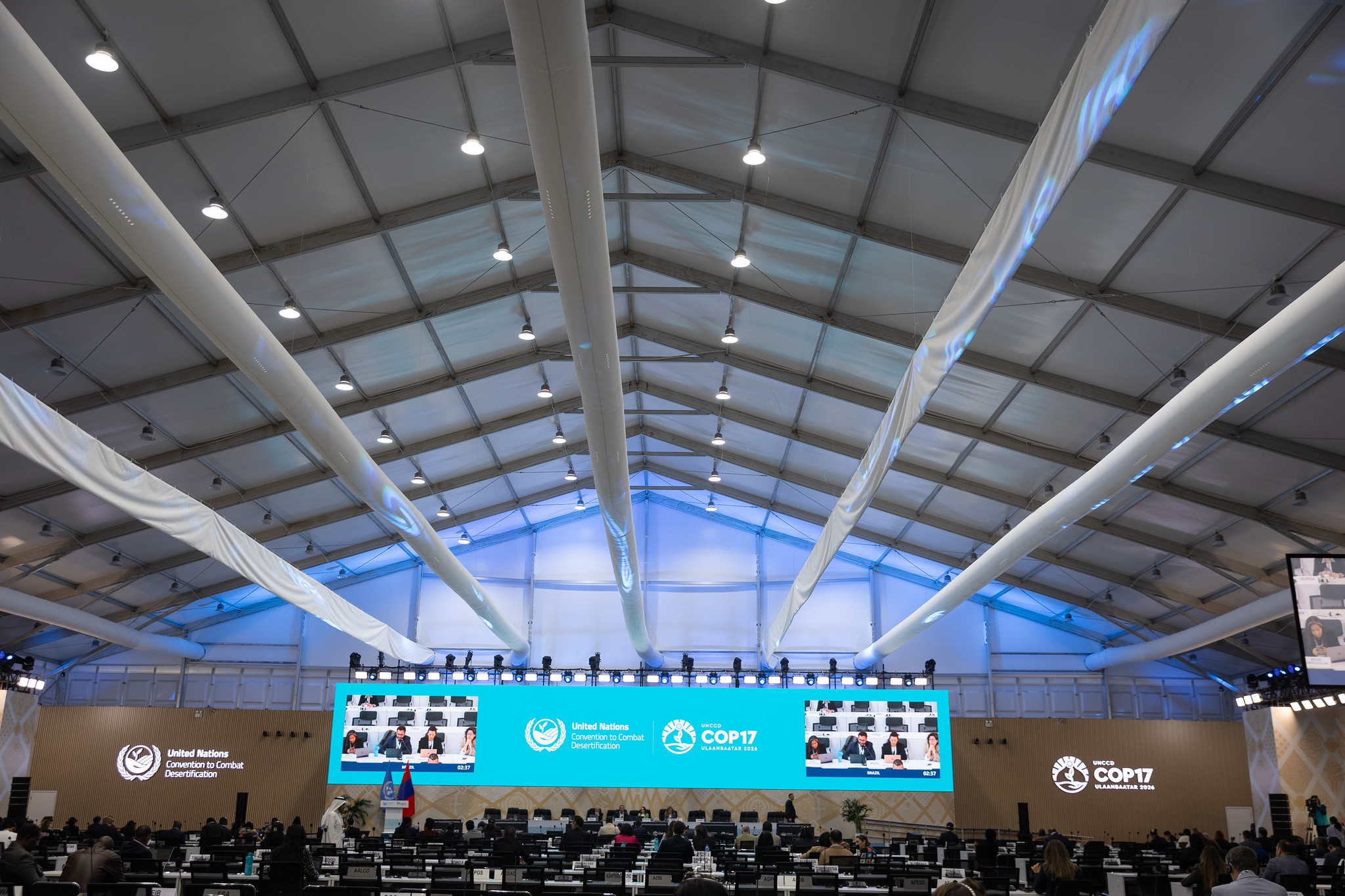
鉴于土地退化、干旱和水资源短缺日益威胁粮食安全、生计与稳定,《联合国防治荒漠化公约》第十七次缔约方大会(UNCCD COP17)将把健康的土地置于人类福祉与繁荣的核心。 来自197个《公约》缔约方、国际组织、金融机构、企业和土地管理者的代表预计将于8月17日至28日齐聚乌兰巴托。 调动公共和私人投资以加速土地恢复和抗旱能力,将是COP17的核心优先事项之一。 各国政府还将推动抗旱能力、牧场、可持续农业与土壤以及私营部门参与等议题做出决定。 蒙古乌兰巴托,2026年8月17日——来自196个国家及欧盟的代表今日齐聚乌兰巴托,出席《联合国防治荒漠化公约》第十七次缔约方大会(UNCCD COP17)的开幕式。 在未来两周内,各国政府、金融机构、企业、科学家和民间社会将共同努力,推进切实可行的解决方案,缔结新的伙伴关系,并为土地恢复和抗旱能力调动投资。同时,各缔约方将就干旱、牧场、农田与土壤、资源调动、私营部门参与以及《公约》未来战略方向等议题进行谈判。 在各国面临土地退化、水资源短缺和气候变化日益严峻的压力之际,预计UNCCD COP17上通过的决定、发起的伙伴关系和倡议,将在未来几年加强在可持续土地管理、土地恢复和抗旱能力方面的国际合作。 据估计,土地退化和干旱每年给全球经济造成近9000亿美元的损失,并已影响到全球高达40%的土地和32亿人口。自2000年以来,干旱发生率增加了近三分之一,现在每年至少造成3000亿美元的损失。 在生物多样性和气候变化大会之前召开的UNCCD COP17,是2026年三大“里约公约”首次召开的缔约方大会。COP17为加强里约公约间的合作,并加速在土地退化、生物多样性丧失、气候变化、粮食和水安全以及水资源韧性方面采取切实行动提供了契机。 蒙古国总理尼·乌其尔勒(H.E. N. Uchral)阁下表示: “我们希望COP17带来的最大改变,是从对话走向行动,从目标走向落实,从承诺走向可衡量的成果。因此,蒙古国呼吁本次会议取得切实进展。 第一,让我们将土地、气候和生物多样性视为相互关联的挑战,而非彼此孤立的问题。 第二,让我们加大对土地恢复的投资,将各国政府、国际金融机构和私营部门之间的合作提升到新的水平。第三,让我们不仅将抗旱能力视为环境政策议题,更将其作为发展政策的核心组成部分。 第四,让我们将草原使用者、牧民和地方社区的知识与参与置于全球土地管理政策的中心位置。第五,让我们将科学、技术和创新转化为切实可行的解决方案和真正的投资。 第六,让我们共同努力,创造条件,将承诺转化为可衡量的成果。” 《联合国防治荒漠化公约》执行秘书亚斯敏·福阿德(Yasmine Fouad)表示: “土地退化和干旱已不再是遥远的环境问题。它们正在影响我们生产的粮食、依赖的水资源、经济的韧性以及社区建设安全未来的能力。健康的土地是健康粮食系统、有韧性的经济和稳定社会的基础。 因此,COP17必须重在落实。世界不缺解决方案,挑战在于如何大规模推广。乌兰巴托必须调动必要的政治领导力、投资和伙伴关系,从承诺走向可衡量的实际成果。恢复土地不仅仅是一项环境义务——它是对人类、稳定性和韧性的投资。 在多边主义面临考验之际,COP17也是一个展示各国能够携手提供改善民生的切实解决方案的机会。我们衡量成功的标准,将不仅仅是我们通过的决定,更是这些决定为全球社区、经济和环境带来的改变,以及我们将土地纳入新发展领域以预防其未来退化的能力。” 蒙古外交部长、UNCCD COP17主席巴特策策格·巴特蒙赫阁下(H.E.Battsetseg Batmunkh)表示:“对蒙古而言,土地与我们的民族、生计和未来密不可分。作为一个牧业仍居于社会核心地位,且土地退化、干旱和白灾(dzud)已对社区造成日益沉重压力的国家,我们深知土地的健康直接关系到人民的生活。 主办COP17既是一项责任,也是一个机遇,以将旱地国家和牧民社区的经验置于全球讨论的中心。蒙古将与所有缔约方共同努力,在各国相聚乌兰巴托之际,为更健康的土地、更有韧性的草原以及依赖这些资源的民众创造更安全的未来,而寻找切实的解决方案。” 蒙古环境与气候变化部长、UNCCD COP17全国组织委员会主席曾德·桑达格-奥奇尔阁下(H.E. Sandag-Ochir Tsend)表示: “蒙古已完成主办UNCCD COP17的各项准备工作,并随时准备欢迎来自世界各地的代表和嘉宾。 荒漠化、土地退化和气候变化是相互关联的全球性挑战,不仅对环境,而且对粮食安全、经济稳定和生计都有深远影响。因此,COP17将为加强国际合作和推进切实解决方案提供一个重要平台。 作为东道国,蒙古将推动建设性、基于共识的对话,并努力确保所有缔约方和利益相关方的包容性参与。 COP17的成果必须超越谈判决定,转化为具体的行动、更多的投资和更强有力的伙伴关系,以遏制和扭转土地退化,保护草原和土壤,恢复退化土地并防治荒漠化。实现这一目标需要各国政府、私营部门、国际组织和金融机构的积极参与。 我相信COP17将成为加强国际合作、加速全球应对荒漠化、土地退化和干旱行动的重要一步。” 对蒙古而言,这些问题关乎日常生活。该国近77%的土地已退化,而牧业支撑着全国三分之一人口的生计。2023年和2024年,夏季严重干旱后,冬季又接连发生破坏性的白灾(dzud),这导致超过700万头牲畜死亡,凸显了旱地社区日益加剧的脆弱性以及加强韧性的紧迫性。 加强抗旱能力 在利雅得UNCCD第十六次缔约方大会(COP16)取得成果的基础上,各国政府将在COP17上继续就全球抗旱政策框架进行讨论,同时加强帮助各国将抗旱计划付诸行动所需的实用工具、伙伴关系和融资机制。各缔约方将讨论加强防备、预警系统、脆弱性评估和国际合作的措施。 目前已有超过70个国家制定了国家抗旱计划,而2013年仅有3个国家,这反映出各国日益认识到必须主动管理干旱风险,而非仅在干旱成为人道主义和经济危机时才采取应对措施。 在抗旱能力方面每投资一美元,可产生高达10美元的回报,而一些基于自然的解决方案的收益可达其成本的27倍。 COP17还将推出帮助各国加强抗旱准备和韧性的新工具与伙伴关系,包括与利雅得全球抗旱伙伴关系、抗旱韧性投资机制、国际抗旱观测以及其他相关计划和项目有关的公告。 缩小数十亿资金缺口 为土地恢复和抗旱能力调动更多公共和私人投资,将是COP17的核心优先事项之一。 据估计,每年需要3550亿美元来应对土地退化和干旱,但目前投资仅为约770亿美元,每年仍有2780亿美元的融资缺口。 尽管私营部门严重依赖健康的土地和可靠的水源供应,但其目前仅提供全球土地恢复和抗旱韧性融资的约6%。仅靠公共资源难以填补这一缺口,这凸显了加强政府、开发银行、企业和投资者之间合作的必要性。 COP17将探讨如何解锁新的资金来源,加强对可持续土地管理的激励措施,降低投资风险,并通过讨论和审视利用区域和国家层面现有承诺的新工具,更好地将公共和私人投资与土地恢复和抗旱目标结合起来。会议将展示 “商业促土地(Business4Land)”等倡议的进展,该倡议旨在加强私营部门参与和伙伴关系,以促进土地恢复和抗旱能力。 8月24日的“商业促土地论坛”( Business for Land Forum)将汇聚各国政府、企业和投资者,加速私营部门在恢复环境方面的行动和投资。参与“恢复环境行动议程”的组织已承诺在超过2.1亿公顷的土地上投入超过90亿美元,同时将在COP17上提出进一步解锁投资的新政策建议。 草原成为焦点 在“国际草原与牧民年”期间举行的COP17,将把世界上这最大但最被忽视的生态系统之一置于国际讨论的中心。 草原覆盖地球陆地表面的54%,支撑着约20亿人的生计,其中包括约5亿世代守护牧场的牧民。牧场生产了世界六分之一的食物,并提供了约70%的牲畜饲料。它们远不止是放牧地,更是支撑全球旱地粮食安全、生物多样性、气候韧性和生计的战略性生态系统。然而,全球多达一半的牧场已经退化或面临退化风险,其中78%位于旱地,那里日益加剧的干旱、气候变化和不可持续的土地利用正给生态系统和社区带来越来越大的压力。 各国政府预计将审议一项关于草原和牧民的新政策框架,并发起“草原旗舰倡议”,这是一个旨在增加对可持续牧场管理长期投资并加强牧民生计的全球伙伴关系。 COP17的开幕也标志着UNCCD“丝路之旅(Silk Road Caravan)”活动的结束。这是一次穿越欧亚大陆的多国旅程,汇集了政府、科学家、牧民、当地社区和青年,交流知识并展示土地恢复、可持续牧场管理和抗旱能力方面的实用方法。沿着历史悠久的丝绸之路,“丝路之旅”访问了恢复项目和牧民社区,展示了切实可行的解决方案以及人们恢复退化土地的经验。其在COP17前抵达蒙古,象征着将地方行动与在乌兰巴托启动的全球谈判联系起来,“丝路之旅”也是“国际草原与牧民年”的旗舰倡议之一。 从利雅得到乌兰巴托 COP17建立在 COP16 于利雅得取得的成果上,这包括了加强国际合作以促进抗旱能力建设、可持续土地管理、融资和私营部门参与等。 沙特阿拉伯王国环境、水和农业部副部长、UNCCD COP16主席顾问奥萨马·法基哈(Osama Faqeeha)表示: “在利雅得举行的COP16是全球应对土地退化和干旱的认知和行动的历史性转折点。世界离开利雅得时带走的不是更多的承诺——而是更多的伙伴、更多的投资和更强的行动势头。 我们看到,在利雅得COP16上启动时包含了35项倡议的‘利雅得行动议程’,目前已发展到包含100多项倡议。我们见证了通过‘利雅得全球抗旱伙伴关系’更坚定地主动应对干旱的承诺,以及通过‘商业促土地(Business for Land)’倡议实现的私营部门更广泛的参与。 通过这些伙伴关系,我们建立了一个全球联盟,动员政府、金融机构、民间社会和私营部门将雄心转化为行动。在我们向蒙古移交主席国之际,我们将继续与COP17主席国和所有其他伙伴合作,维护和扩大在COP16上取得的全球势头,共创更美好的未来。” 除干旱和草原议程外,各国政府还将审议《公约》未来的战略框架、关于农田和土壤的科学指导、增强土著人民、地方社区、青年和民间社会的参与、加强与生物多样性和气候公约的合作,以及加速《公约》下行动的方式。 从谈判到行动 与正式谈判并行,COP17行动议程将汇集各国政府、国际伙伴、金融机构、企业、科学家、民间社会组织、土著人民、牧民、当地社区、妇女和青年,展示切实解决方案,发起新倡议并缔结伙伴关系,以助扩大实地行动规模 会议第二周的四个主题日将把谈判与高级别对话和实际行动联系起来: 金融日(8月24日):为土地恢复和抗旱能力调动公共和私人投资; 水日(8月25日):加强抗旱能力及土地-水纽带关系合作; 土地与人日(8月26日):强调牧民、土著人民、当地社区、妇女和青年在恢复和可持续管理土地中的作用; 粮食系统与土壤健康日(8月27日):推进健康的土壤和可持续的粮食系统,以加强粮食安全和有韧性的生计。 大会的高级别会议部分将包括关于抗旱能力、可持续草原、土地恢复融资、粮食系统与土壤健康、移民与安全、沙尘暴以及私营部门参与的部长级对话和特别活动。 COP17还将主办UNCCD土著人民核心小组和地方社区核心小组的首次正式会议,以及“商业促土地论坛(Business4Land Forum)”、青年论坛和性别核心小组会议,为政府和利益相关者之间的对话与伙伴关系创造新机遇。议员论坛和市长论坛也将在COP17期间举行。 会议期间还将发布若干重要科学和政策出版物,包括: 8月24日:草原恢复经济学(The Economics of Rangelands Restoration) 8月25日:干渴星球:2026年干旱数据(The Drying Planet: Drought in Numbers 2026) 8月26日:全球土地展望-小岛屿发展中国家报告(Global Land Outlook for Small Island Developing States) 8月26日:全球土地展望-中亚专题报告(Global Land Outlook Central Asia Thematic Report) 8月27日:土壤健康:投资于我们根基的商业案例(Soil Health: The Business Case for Investing in Our Foundation) COP17将于8月28日闭幕,届时各缔约方预计将通过一系列决定,为《公约》未来数年的工作提供指导,并塑造下一阶段全球土地恢复和抗旱能力行动。 -完- 编者按 媒体垂询和采访请求 UNCCD 新闻办公室: press@unccd.int 开幕新闻发布会 日期:2026年8月17日 时间:13:15-14:00 地点:新闻发布会厅 发言人: 曾德·桑达格-奥奇尔阁下(H.E. Sandag-Ochir Tsend),蒙古环境与气候变化部长、COP17全国组织委员会主席; 亚斯敏·福阿德博士(Dr. Yasmine Fouad),《联合国防治荒漠化公约》执行秘书; 巴特策策格·巴特蒙赫阁下(H.E. Battsetseg Batmunkh),蒙古外交部长、UNCCD COP17候任主席; 奥萨马·法基哈博士(Dr. Osama Faqeeha),沙特阿拉伯王国环境、水和农业部副部长、UNCCD COP16主席顾问。 媒体资源 COP17 议程 UNCCD COP17 网站 东道国网站 UN WebTV——主要全体会议直播,提供所有六种联合国语言同声传译 UNCCD COP17 视觉资产和品牌资源 《地球谈判公报》(每日报道、照片和分析) 关注UNCCD:X、Instagram、LinkedIn 和 Facebook。 主要话题标签:#COP17Mongolia 其他话题标签:#UNCCDCOP17, #UNited4Land 关于《联合国防治荒漠化公约》 《联合国防治荒漠化公约》(UNCCD)是全球土地的共同愿景与声音。我们联合各国政府、科学家、政策制定者、私营部门和社区,共同推动全球行动,恢复和管理地球土地,以实现人类与地球的可持续发展。UNCCD不仅仅是一份由197个缔约方签署的国际条约,更是减缓当今土地退化影响、推进未来土地治理的多边承诺,旨在为所有人公平和包容地提供食物、水、住所和生计机会。

Land provides the food we eat, the water we drink and the raw materials that power industries and economies. Yet nearly 40 per cent of the world's land is already degraded, threatening ecosystems, livelihoods and businesses alike.Reversing this trend requires action far beyond governments alone, with the private sector playing an increasingly important role in driving innovation, investment and sustainable land management.This is the vision behind Business for Land (B4L), the UNCCD main vehicle for engaging the private sector in sustainable land and water management. Through partnerships, policy dialogue and sustainable finance, B4L works with companies and financial institutions to help manage the risks associated with land degradation and drought while creating opportunities to restore landscapes, strengthen value chains and build more resilient economies.Building on the record level of private sector participation at the sixteenth session of the Conference of the Parties (COP16) to the United Nations Convention to Combat Desertification (UNCCD) in Riyadh, Business for Land will deepen its engagement at UNCCD COP17 in Ulaanbaatar, Mongolia. The Business Land Forum will bring together governments, businesses, investors and development partners to strengthen public-private partnerships and identify practical ways to accelerate investment and action on regenerative landscapes.One of the Forum's key outcomes will be the presentation of a new set of policy recommendations developed by the World Business Council for Sustainable Development (WBCSD), a global, CEO-led organization working with businesses to accelerate the transition to a more sustainable future.At the request of the UNCCD Business for Land initiative, WBCSD led a global consultation involving more than 50 businesses, producers, civil society organizations and ecosystem partners to identify practical policy changes that can unlock investment in regenerative landscapes. Drawing on the experience of businesses across agriculture, forestry, finance, food and manufacturing, the recommendations call for more coherent policy frameworks, stronger public-private collaboration and investment conditions that enable regenerative landscapes to be scaled. The recommendations will be formally presented during the Business for Land Forum on 24 August.“We need a systemic shift in the incentives that drive land use decisions so that sustainable land management becomes the default rather than the exception. I think it is absolutely true that this is an economic necessity and not just an act for the environment,” saidDr. Claudia Hiepe, UNCCD National Focal Point Team, Germany.The recommendations build on months of dialogue between governments and the private sector, including the Public-Private Dialogue on Regenerative Landscapes, co-hosted by the Governments of Germany and Côte d'Ivoire in partnership with WBCSD on 16 July. The dialogue provided an opportunity for governments and businesses to exchange priorities ahead of COP17 and helped shape the recommendations. Through the Action Agenda on Regenerative Landscapes, participating organizations have already committed more than USD 9 billion across over 210 million hectares, demonstrating growing momentum behind private sector action. “Businesses and governments have a shared interest in scaling regenerative landscapes. But achieving this requires trust and collaboration between the public and private sector. Going forward, it’s important that both sectors continue to strengthen their collaboration to co-create country-specific solutions and unlock investment for sustainable land management,” said Emeline Fellus, Senior Director, World Business Council for Sustainable Development.Despite this progress, financing remains one of the greatest challenges. UNCCD estimates that approximately USD 355 billion is needed every year to meet global land restoration and drought resilience commitments, while current investment stands at around USD 77 billion annually. Closing this USD 278 billion gap will require stronger policy frameworks, innovative financial solutions and closer collaboration between governments, businesses and financial institutions. "Restoring land at scale requires more than finance—it requires partnership. Governments create the enabling environment, businesses bring innovation and investment and financial institutions help unlock capital. Business for Land is about bringing these actors together so that ambition is translated into practical action and lasting impact," said Louise Baker, Managing Director of the UNCCD Global Mechanism. Alongside the recommendations, WBCSD has launched a Statement of Support, inviting companies to endorse a shared commitment to regenerative landscapes and closer collaboration with governments. Businesses are encouraged to support the initiative and work with policymakers to adapt and apply the recommendations in ways that respond to national priorities and accelerate investment in sustainable land management. By bringing together governments, businesses and financial institutions, the Business4Land Forum aims to turn growing momentum into practical partnerships that accelerate investment and action on regenerative landscapes.
