Clay Spreading/Delving
Clay spreading involves mixing or covering sandy soils or sand dunes with clay-rich material to bind the particles together to form stable aggregates. This creates a surface layer with improved cohesion and moisture retention capacity, which limits the potential for emissions and creates favourable conditions for agriculture and natural vegetation. If there is a layer of clay beneath sandy soils, a ripper can be used to bring the clay to the surface (clay delving), which improves fertility and reduces wind erosion. Otherwise, clay-rich material must be purchased and transported from an external source for spreading. Either way, clay spreading or delving typically requires the use of heavy machinery.
Case Study
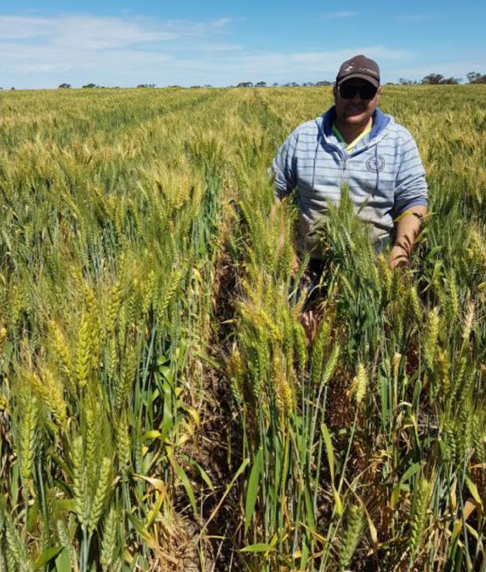
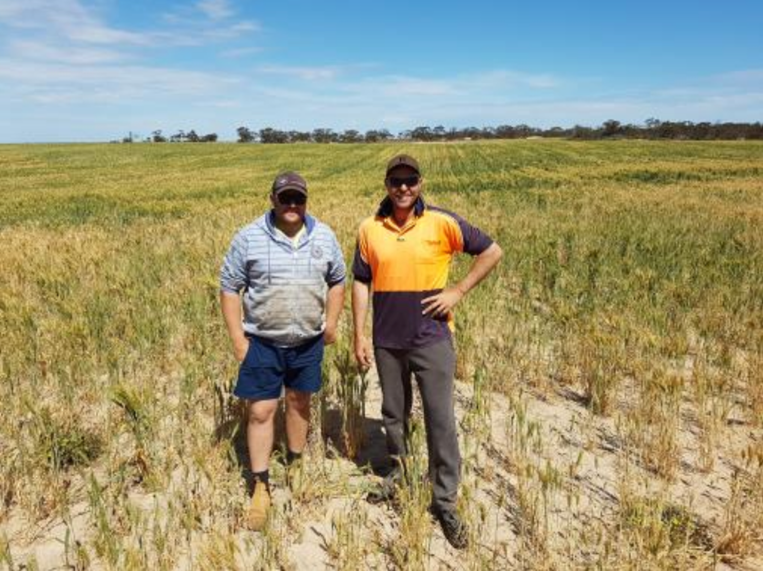
In Australia, the average cost of clay delving and incorporation is AUD 300–450 per hectare, while the average cost of clay spreading and incorporation can range from AUD 370–2,000 per hectare, depending on site conditions, the amount of clay, and the method of incorporation. Between 2007 and 2010, a pasture cropping farmer in South Australia excavated over 600 hectares of sandy soil, extracting approximately 120 tonnes of clay per hectare at a cost of AUD 150 per hectare. This cost was recovered within one year through improved germination rates and yield gains. Over the following decade, treated paddocks demonstrated stronger resistance to wind erosion and drought events.
Delved vs Undelved Paddocks in Australia
References and Good Practice Guidance
- Clay delving still working after ten years
- Government of South Australia Spread, delve, spade, invert: A best practice guide to the addition of clay to sandy soils
- Australian Grain Research and Development Corporation Clay Spreading and Delving Factsheet
- Government of Western Australia Claying to ameliorate soil water repellence
- CSFD Fighting wind erosion. One aspect of the combat against desertification
Biome/Climatic Zone
Anthropogenic/Land Use