News & stories


Latest news & stories
The Olympic snowboarding champion will mobilize young people and sports audiences to support healthy land, resilient communities and ecosystems. Bonn, Germany, 12 July 2026 — The UNCCD has named Chinese Olympic snowboarding champion Su Yiming its newest Sport4Land Champion for Resilience. The appointment recognizes Su’s inspiring journey, his commitment to empowering young people through sport and his growing leadership in promoting resilience both on and the beyond slopes. At just 22, Su has already established himself as one of the world’s leading snowboarders. He first captured global attention at the Beijing 2022 Olympic Winter Games, where he won gold in Big Air and silver in Slopestyle, becoming China’s youngest Winter Olympic champion and the country’s first Olympic gold medallist in snowboarding. At Milano Cortina 2026, he reinforced his place among the sport’s elite with another Olympic gold in Slopestyle and bronze in Big Air, demonstrating the resilience and adaptability required to remain at the highest level of the sport. The same determination also shapes Su’s work beyond elite competition. Inspired by his father’s years of volunteer coaching, Su established the Super Sports Foundation to expand access to sports education, support grassroots initiatives and help more young people pursue their ambitions. He also serves as a Special Olympics East Asia Regional Ambassador, reflecting his belief that sport should create opportunities that are inclusive and open to all. Snowboarding exists because of healthy mountain environments. Reliable snowfall, resilient landscapes and thriving ecosystems are not simply the backdrop to the sport, they make it possible. As climate change accelerates land degradation, biodiversity loss and water stress, athletes like Su can help inspire new generations to understand that protecting nature also means protecting the future of sport and the communities that depend on healthy land. For Su, resilience extends beyond athletic performance. It is also about creating opportunities for others and protecting the natural environments that have shaped his journey. Speaking about his appointment, he said: "Protecting the land is protecting the future of every turn we carve, every run we chase and every moment we find freedom on snow. Today, I call on every young person to be a champion for their own corner of the Earth—one small daily act at a time. Let’s turn our love for the outdoors into action that heals the ground beneath us.”Su joins a growing network of Sport4Land Champions using the universal language of sport to raise awareness of land restoration, drought resilience and sustainable land management. Launched during the Paris 2024 Olympic and Paralympic Games, the UNCCD initiative brings together athletes from around the world to inspire action for healthy land and encourage fans to become part of the solution. As Sport4Land Champion for Resilience, Su will work with UNCCD to help engage young people and sports communities in protecting and restoring land. Through advocacy, awareness-raising and public engagement, he will champion the idea that resilience is built not only through perseverance and determination, but also through safeguarding the natural environments that sustain life, livelihoods and sport itself.

Ulán Bator, Mongolia, 7 de agosto de 2026 – La Caravana de la Ruta de la Seda, una campaña de divulgación mundial que pone el foco en los pastizales y los pastores, inicia hoy su recorrido por Mongolia, a pocos días del inicio de la decimoséptima sesión de la Conferencia de las Partes (COP17) de la Convención de las Naciones Unidas de Lucha contra la Desertificación (CNULD), que se celebrará en Ulán Bator el 17 de agosto. Durante milenios, la estepa mongola ha sido testigo del movimiento de personas, mercancías e ideas a lo largo de Eurasia. El valle del Orkhon, uno de los paisajes históricos más importantes de Mongolia, sirvió como centro político y cultural de sucesivosimperios nómadas, mientras que generaciones de pastores desarrollaron un modo de vida que aún hoy define a Mongolia. Este mes de agosto, esa historia continúa. Antes de la COP17 de la CNULD, la Caravana de la Ruta de la Seda de la CNULD llega a Mongolia tras recorrer más de 6.000 kilómetros a través de Eurasia. A lo largo del camino, ha reunido a pastores, científicos, responsables políticos, jóvenes y comunidades locales para compartir experiencias y soluciones prácticas destinadas a restaurar los pastizales y reforzar la resiliencia ante las condiciones de sequía cada vez más severas. La Caravana de la Ruta de la Seda, inspirada en las rutas históricas que en su día unieron Asia y Europa, ha sido impulsada por la CNULD en apoyo del Año Internacional de los Pastizales y los Pastores 2026 (IYRP 2026). Desde su salida de Turquía enmayo, los participantes han atravesado la Federación de Rusia, Uzbekistán, Kazajistán, Kirguistán y China, visitando iniciativas de restauración y reuniéndose con comunidades locales a lo largo del camino. El viaje ha puesto de relieve cómo los esfuerzosdedicados y la cooperación a todos los niveles pueden ayudar a restaurar las tierras degradadas. La Dra. Yasmine Fouad, secretaria ejecutiva de la CNULD, ha afirmado: “A lo largo del recorrido de la Caravana de la Ruta de la Seda, hemos podido comprobar cómo los países y las comunidades gestionan y restauran los pastizales, que son parte inseparable de sus identidades, culturas, economías y modos de vida”. Cada parada a lo largo del recorrido ha reforzado una realidad: las personas son el núcleo de la restauración de tierras. Esas experiencias nos recuerdan que no existe un único camino hacia la restauración. Ahora que nos reunimos en Mongolia para la COP17, nuestra responsabilidad es convertir estas experiencias locales en acciones a escala mundial, reforzando la cooperación internacional e invirtiendo en las personas que han cuidado estos paisajes durante generaciones”. Tsagaankhuu Iderbat, ministro de Alimentación, Agricultura e Industria Ligera de Mongolia, ha declarado: “Mongolia cuenta con una larga tradición de pastoreo y un profundo vínculo con sus vastos pastizales, que han moldeado nuestra cultura nómada durante generaciones. Consciente de la importancia mundial de los pastizales y los pastores, Mongolia se enorgullece de haber presentado la propuesta que llevó a la Asamblea General de las Naciones Unidas a proclamar 2026 como el Año Internacional de los Pastizales y los Pastores. La llegada de la Caravana de la Ruta de la Seda a Mongolia, seguida de la COP17 de la CNULD, ofrece una oportunidad única para llamar la atención mundial sobre los pastizales, la degradación de tierras y el cambio climático. También nos recuerda que los conocimientos y la experiencia de los pastores, desarrollados a lo largo de generaciones de convivencia en armonía con la naturaleza, siguen siendo una parte esencial de las soluciones que necesitamos hoy en día”. Los pastizales cubren el 54 % de la superficie terrestre, sustentan a unos 2.000 millones de personas, proporcionan casi el 70% del pienso para el ganado a nivel mundial y almacenan enormes cantidades de carbono. Sin embargo, hasta la mitad de ellos ya estándegradados, lo que pone en peligro la biodiversidad, la producción alimentaria y los medios de vida rurales. Las experiencias recopiladas a lo largo de la Caravana se trasladarán ahora a la COP17, donde los países estudiarán los próximos pasos para restaurar y proteger los pastizales. En Mongolia, los pastizales son la base de la vida pastoral. Abarcan alrededor del 70% del territorio nacional, sustentan los medios de vida de aproximadamente un tercio de la población y constituyen uno de los paisajes pastorales más extensos que quedan enel mundo. Sin embargo, estos mismos paisajes se ven sometidos a una presión cada vez mayor. Casi el 77% del territorio de Mongolia se ve afectado por la degradación. Las sequías son cada vez más frecuentes, mientras que el número anual de días con tormentas de arena y polvo se ha más que triplicado desde la década de 1960. En 2023-2024, una combinación devastadora de sequía estival seguida del duro invierno conocido como dzud provocó la pérdida de más de siete millones de cabezas de ganado. El desastre puso de manifiesto lo expuestas que están las comunidades pastorales a la sequía y a los fenómenos climáticos extremos. Avirmed Gan-Ochir, especialista en cría de animales del Centro de Investigación de Pastizales de Mongolia Greengold y participante en la Caravana de la Ruta de la Seda, ha explicado: “Como persona que creció en los pastizales de Mongolia, ha sido inspirador viajar por Uzbekistán y Kazajistán y conocer a pastores cuyas vidas son tan diferentes y, a la vez, tan similares a la mía. Cada comunidad nos ha enseñado algo nuevo, desde cómo se adaptan a los cambios climáticos hasta cómo protegen las tradiciones que se han transmitido de generación en generación. Me enorgullece que la Caravana llegue ahora a Mongolia, y estoy deseando dar la bienvenida a todos a nuestro país, compartir nuestras propias experiencias y continuar este intercambio de conocimientos de cara a la COP17”. Aldarjavkhlan Jukov, ministro de Cultura, Deportes, Turismo y Juventud de Mongolia, ha declarado: “Durante siglos, la Ruta de la Seda ha conectado países, pueblos y civilizaciones. La llegada de la Caravana a Mongolia nos brinda la oportunidad de compartir nuestra cultura nómada, nuestras tradiciones y nuestro arraigado legado de convivencia con la naturaleza. Acoger la etapa final de la Caravana y la COP17 de la CNULD conecta el patrimonio cultural de Mongolia con los retos globales actuales,incluyendo la degradación de tierras. Todo ello es una oportunidad para aprender de los conocimientos del pasado mientras trabajamos juntos por un futuro más sostenible”. Los retos a los que se enfrenta Mongolia son comunes a muchos países de zonas áridas. Del 17 al 28 de agosto, la COP17 reunirá en Ulán Bator a gobiernos, científicos, pueblos indígenas, pastores, organizaciones de la sociedad civil, empresas y organizacionesinternacionales para debatir soluciones prácticas para la restauración de tierras, la sequía y la gestión sostenible de los pastizales. Al ser la primera de las tres Conferencias de las Partes (COP) de las convenciones de Río que se celebran este año, se espera que contribuya a definir la agenda internacional sobre tierras. Coincidiendo con el Año Internacional de los Pastizales y los Pastores, la COP17 de la CNULD también pondrá de relieve el papel fundamental de los pastizales en el apoyo a la seguridad alimentaria, la conservación de la biodiversidad, la resiliencia climática y los medios de vida rurales. Los participantes en la Caravana de la Ruta de la Seda pasarán una semana recorriendo Mongolia, desde el desierto de Gobi hasta los bosques y praderas del centro del país. Se reunirán con familias de pastores nómadas, investigadores, autoridades locales y cooperativas pastorales, y visitarán proyectos de restauración de tierras. La ruta incluye el Parque Nacional de Hustai, el Paisaje Cultural del Valle del Orkhon, declarado Patrimonio de la Humanidad por la UNESCO, el lago Ugii, incluido en la Lista de Ramsar, y el festival ‘Mini Naadam’. Los participantes podrán ver de primeramano cómo las comunidades de los pastizales de Mongolia están haciendo frente a la degradación de tierras y la sequía. También participarán en actividades conmemorativas del Año Internacional de los Pastizales y los Pastores antes de llegar a Ulán Bator a tiempo para la COP17. NOTA PARA LOS EDITORES Oportunidades para los medios de comunicación Durante la etapa mongola de la Caravana de la Ruta de la Seda, los medios de comunicación acreditados tendrán la oportunidad de: Visitar ejemplos de restauracón de tierras en el desierto de Gobi y en el centro de Mongolia. Conocer a familias de pastores nómadas y cooperativas pastorales. Informarse sobre la restauración comunitaria de pastizales y las prácticas de pastoreo sostenible. Visitar el Parque Nacional de Hustai, el Paisaje Cultural del Valle del Orkhon, declarado Patrimonio de la Humanidad por la UNESCO, y el lago Ugii, incluido en la Lista de Ramsar. Entrevistar a participantes internacionales de la Caravana, a expertos mongoles y a representantes de la CNULD. Cubrir la clausura de la Caravana de la Ruta de la Seda antes de la inauguración de la COP17 de la CNULD. Acreditación de medios Ya está abierta la acreditación para los representantes de los medios de comunicación que cubran la COP17 de la CNULD. Se anima a los periodistas a presentar su solicitud a través del Sistema de Inscripción en Línea (ORS) de las Naciones Unidas, la plataforma oficial para acreditar a los medios de comunicación. Sigue la COP17 Encontrarás más información para los medios de comunicación en la página de prensa de la COP17. Sigue a @UNCCD en X, Instagram, LinkedIn y Facebook. Etiqueta oficial. #COP17Mongolia Etiquetas adicionales: : #UNCCDCOP17 | #RestoringLandRestoringHope | #UNited4Land | #HerLand | #Sport4Land | #Youth4Land Recursos Dossier de prensa Página web de la COP17 de la CNULD Página web del país anfitrión UN WebTV: retransmisión en directo de las sesiones plenarias clave con interpretación simultánea en los seis idiomas oficiales de la ONU Recursos visuales y de imagen de marca de la COP17 de la CNULD Boletín de Negociaciones de la Tierra (cobertura diaria, fotografías y análisis) Acerca de la Caravana de la Ruta de la Seda Durante siglos, las caravanas que recorrían la Ruta de la Seda transportaban no solo mercancías, sino también ideas, culturas y conocimientos entre civilizaciones. La Caravana de la Ruta de la Seda pretende revivir ese espíritu de conexión, compartiendohistorias de personas que trabajan para restaurar la tierra, proteger los ecosistemas y mantener los modos de vida pastorales en regiones donde la cultura, la tierra y el clima están profundamente entrelazados. La Caravana de la Ruta de la Seda es una campañaemblemática de la CNULD que une la COP16 en Riad (2024) con la COP17 en Ulán Bator (2026), en apoyo del Año Internacional de los Pastizales y los Pastores 2026. Desde los desiertos de la Península Arábiga hasta las vastas praderas de Eurasia, este viajesimbólico y físico de la caravana pondrá de relieve los ecosistemas de pastizales y las comunidades pastorales que han dado forma a la vida a lo largo de estas rutas durante generaciones. Su objetivo es sensibilizar sobre el papel fundamental de los pastizales, que cubren más de la mitad de la superficie terrestre y sustentan a dos mil millones de personas en todo el mundo. Mediante una combinación de visitas sobre el terreno, relatos y un documental, la iniciativa pone de relieve tanto los retos que plantea la degradación del suelo como las soluciones que surgen de las comunidades locales. Más información sobre la Caravana de la Ruta de la Seda: silkroadcaravan.org Acerca de la CNULD La Convención de las Naciones Unidas de Lucha contra la Desertificación (CNULD) es la visión y la voz global en materia de tierras. Unimos a gobiernos, científicos, responsables políticos, el sector privado y las comunidades en torno a una visión compartiday una acción global para restaurar y gestionar las tierras del mundo en pro de la sostenibilidad de la humanidad y del planeta. Mucho más que un tratado internacional firmado por 197 Partes, la CNULD es un compromiso multilateral para mitigar los efectosactuales de la degradación del suelo y promover la gestión responsable de tierras en el futuro, con el fin de proporcionar alimentos, agua, vivienda y oportunidades económicas a todas las personas de manera equitativa e inclusiva.

A new report shows progress in restoring land, creating jobs and building resilience across the Sahel—while highlighting the scale of the work still aheadIn Garaké, Niger, a pond once choked by invasive plants has become a source of food, income and hope. After restoration work cleared the water and opened the land for crops, Abdoulaye Aboubacar began growing rice, maize, sugar cane, potatoes and sweet potatoes. He now feeds his family, sells the surplus and invests the income in other small businesses.Stories like his bring to life a new report marking five years of the Great Green Wall Accelerator an effort launched to help turn one of Africa’s most ambitious environmental visions into tangible progress for communities on the ground.Led by African countries and supported by partners including the United Nations Convention to Combat Desertification (UNCCD), the Great Green Wall (GGW) initiative has evolved from a bold vision into a growing effort to deliver results on the ground and at scale.Senegal / Kaolack regionThe world's largest living structureOften described as the world’s largest living structure, it spans a vast mosaic of restored landscapes, farms, water systems and communities stretching across Africa’s drylands. Founded in 2007 by the African Union and UNCCD, the Great Green Wall extends across 156 million hectares — from the Senegal River Basin in the west to the Horn of Africa in the east. The 11 founding member countries are Burkina Faso, Chad, Djibouti, Eritrea, Ethiopia, Mali, Mauritania, Niger, Nigeria, Senegal and Sudan.Five years into the Accelerator, the story is evolving—from ambition and scale to a stronger focus on tracking impact, improving transparency and building systems that can show what is working. It is no longer just about planting trees, but about whether large-scale restoration can deliver real change, fast enough, in one of the world’s most vulnerable regions.The initiative has long been thought of as a wall of trees. It’s more. A continental effort to restore degraded land, strengthen food systems and create new economic opportunities, while expanding access to clean energy and building resilience in one of the regions most exposed to climate change, land degradation and drought.Fetching water in NigerThe GGW Accelerator: Turning pledges into results on the groundLaunched in 2021 after the One Planet Summit, where major technical and financial partners pledged more than $19 billion, the Accelerator was created to improve coordination, track funding and help countries measure results. Five years later, the picture that emerges is still taking shape—but it is beginning to show how this effort is changing the way the Great Green Wall is planned, financed and monitored.Central to the Accelerator's success is its close partnership with the Panafrican Agency of the Great Green Wall (PAGGW), the intergovernmental body that coordinates regional implementation across borders. Together, the GGW Accelerator and the PAGGW work to convert financial commitments into tangible, measurable results across Africa's drylands, building the institutional architecture required for reporting and monitoring progress. The Observatory now tracks over 389 projects. But the data also tells a more complex story. Fewer than 90 currently report data aligned with the initiative’s harmonized indicators, highlighting both early progress and significant gaps in reporting that are still being addressed. Stonewall construction in Ethiopia's Tigray regionEven with these limitations, the available data points to early but meaningful gains: 1.66 million hectares under restoration, 24 million tons of CO₂ equivalent sequestered or mitigated, 4.6 million jobs created, 46 million beneficiaries reached and 2,315 MWh of clean energy produced.These results should be understood in the context of long-term land restoration processes, which can take years—sometimes decades—to fully materialize at scale, especially since reporting on the totality of GGW projects remains an iterative process that remains undergoing.For partners already investing in the Great Green Wall, the report offers a clearer —though still evolving— sense of how support is translating into results on the ground. For those considering future engagement, it points to something equally important: a growing architecture for transparency, accountability and investment readiness.Employment, women's leadership and the human face of restorationThe jobs figure is among the strongest early indicators of momentum. Against a 2030 target of 10 million jobs, the reported total suggests that restoration is not only an environmental undertaking but also an economic one. Across the Sahel, the Great Green Wall is increasingly being framed as a platform for rural enterprise, women’s leadership, youth employment and locally led adaptation.Reversing land degradation in Burkina FasoThe report’s human stories bring that shift into focus. In Mali, a women’s cooperative received tools, training and a tricycle that transformed the daily work of transporting organic fertilizer. The cooperative later expanded into processing local crops into enriched flour and was granted four hectares of land by the municipality. "We are leaders, innovators, and providers. Our daughters now see a future. Our municipality recognized our progress by granting us four hectares of land to scale up production. This is proof that women's leadership can inspire trust and collective action." — Florence Banou, 55, leader of the AMAKENE women's cooperative, Bandiagara, Mali — supported through WFP's Integrated Resilience ProgrammeIn Chad, women trained to install and repair solar panels turned clean energy access into a new source of income and independence."Since solar panels have come to Chad, families have benefitted a lot and women's lives have been transformed. Before, I depended on my husband. But today, we make a profit from each installation. Ever since I learned this job, I've wanted my sisters to follow my example." — Adouia Brema, Chad — trained to install and repair solar panels through a World Bank-supported initiativeSuch examples help reframe the Great Green Wall for its next phase—one that places greater emphasis on systems, data, and investment readiness alongside on-the-ground impact. They also point to three areas shaping what comes next: communication, innovative finance and transboundary land and water management. Together, they aim to build a stronger narrative, unlock financing tools such as green bonds, carbon credits and blended finance and align land restoration with shared water governance across borders. The next generation of land stewardsOne framework, one platform: Building a common evidence baseA central achievement is the move toward a common evidence base. This responds directly to longstanding challenges around fragmented data, coordination, and visibility of results. The Harmonized Results Management Framework, developed and validated with ten of the 11 countries in close collaboration with the PAGGW, gives partners a shared language for measuring progress. The GGW Observatory — launched in Ouagadougou in 2024 and now endorsed by 10 countries — builds on that foundation, offering a single platform for tracking projects, finance, results and geospatial data. Its indicators feed directly into real-time dashboards used by the GGW governments, donors and local communities.The Accelerator also supported the establishment of National Coalitions in nine of the 11 countries — bringing together Finance, Planning, Environment and Forestry ministries alongside civil society, academia, the private sector and media into whole-of-society platforms for GGW governance.Planting the seeds of the next harvest in SudanThe report also places the Sahelian effort within a wider continental frame, noting that the updated African Union Great Green Wall Strategy expands the initiative’s reach while keeping the Sahel as its foundation.The work ahead: From commitment to lasting impactThe work ahead remains substantial. Challenges persist, particularly in data completeness, coordination across actors, and the time required to translate financial commitments into on-the-ground results. Stronger national validation, more complete reporting and sustained political leadership will be needed to turn commitments into lasting impact. National coalitions, already supported in nine of the 11 countries, are expected to play a growing role in aligning ministries, donors, civil society and local actors.The PAGGW and the Accelerator will continue to use the COPs and Ministerial Councils to sustain political visibility and accountability, driving a unified 'One Africa GGW' momentum toward Mission 2030.This progress is supported by a broad coalition of partners working across the region. The next five years will be critical in turning these systems into real impact on the ground. The Great Green Wall is beginning to move from ambition to more visible and coordinated results—grounded not only in restoration, but in jobs, resilience and opportunity across Africa’s drylands.

The journey across Eurasian rangelands links land restoration with viable pastoral livelihoods on the road to Ulaanbaatar Bonn, Germany/Xilinhot, Inner Mongolia, China (17 July 2026 ) — The Silk Road Caravan today reached its 6,000-kilometer mark in northern China, exactly one month before the seventeenth session of the Conference of the Parties (COP17) to the United Nations Convention to Combat Desertification (UNCCD) opens in Ulaanbaatar, Mongolia. Since leaving Erzurum, Türkiye on 6 May on a symbolic journey connecting Riyadh COP16 to Ulaanbaatar COP17 in support of the International Year of Rangelands and Pastoralists 2026, the Caravan has travelled through Russia, Uzbekistan, Kazakhstan and Kyrgyzstan before arriving in China earlier this week. Pastoralists and researchers from Africa, Asia, Europe and South America have joined UNCCD Goodwill Ambassadors and Sport4Land champions to explore how communities across countries are restoring degraded rangelands while sustaining the livelihoods that depend on them. Rangelands cover more than half of the Earth’s land surface, support around two billion people and provide nearly 70 per cent of global livestock feed. Yet up to half are degraded or at risk. At UNCCD COP16 in Riyadh, countries adopted the Convention’s first decision devoted to rangelands, calling for stronger policies and investment, action against conversion, overexploitation and fragmentation, and a greater role for pastoralists in decisions on land management and tenure. Along the way, the Caravan has served as a living showcase of restoration in practice, gathering ideas and experiences that will help inform discussions at COP17. From dune stabilization to sustainable grazing and value-added livestock products, each stop has offered a different perspective on the Eurasian rangelands—the world's largest continuous grazing region stretching 8,000 kilometers—that are under increasing pressures from the combined effects of drought and soil erosion. Carrying the knowledge, experiences and voices gathered along the route, the Silk Road Caravan journey will continue across Mongolia before culminating at UNCCD COP17 taking place from 17-28 August under the theme of “Restoring Land, Restoring Hope.” Insights from the journey In China’s Otindag Sandy Land, willow branches are woven into grids across shifting dunes, stabilizing the sand long enough for grasses to take root. But restoration does not end with planting. Sites are monitored over time, and livestock numbers are matched to the land’s carrying capacity and local communities—including women— receive technical support and incentives to maintain restored areas. China is just one example of a broader pattern that emerged across the Silk Road Caravan's journey. Each country offered different solutions, but many pointed to the same underlying principles. In Türkiye, seasonal mobility distributes grazing pressure across the landscape and gives pastures time to recover. Around Erzurum, it also supports household economies, with milk processed locally into cheese and other products. The system depends on secure access to grazing land and the transmission of pastoral knowledge between generations. In Russia's Kalmykia region, one of the most affected by desertification, hardy dzhuzgun shrubs are transforming shifting sands into productive pasture, with survival rates of around 95 per cent. The shrubs stabilize the dunes and reduce wind erosion, allowing fodder grasses to be planted between the dzhuzgun rows. As vegetation recovers, degraded land gradually returns to productive pasture. Mobile research units monitor the results while training students in the field. Restoration here follows a sequence: stabilize the soil, rebuild vegetation, recover grazing value and monitor results. Meanwhile, Uzbekistan offered a lesson in the economics of patience. In Nurabad District, drought-tolerant pistachio trees are being established on degraded, low-productivity pastures. Local residents are paid to plant and maintain them; once the trees mature, five-hectare plots are intended for lease to lower-income families. The trees take years to yield. The model addresses a gap many restoration programmes leave open: communities need income while land recovers, and a lasting stake once it becomes productive. In Kazakhstan, soil science and new technologies are helping transform the way rangelands are managed. Decades of soil surveys, herbarium records and aerial imagery are being integrated with GPS, satellite data and digital agricultural maps. These systems can track pasture condition, water infrastructure and early signs of degradation, while supporting reporting under the UNCCD Land Degradation Neutrality framework. The resulting evidence helps detect degradation early, before land's health and productivity are compromised. In Kyrgyzstan, the Caravan journey highlighted another dimension of restoration ---one rooted in people and culture. Young activists from the Innovation Center in Bishkek brought elders and youth together through an intergenerational exchange on pastoral knowledge. On Desertification and Drought Day, 17 June, a dialogue at the Ministry of Agriculture convened policymakers, UN and international partners, researchers and pastoralists to develop recommendations on rangeland restoration and sustainable pasture management. Near Lake Issyk Kul, an association of women artisans invited Caravan participants to weave a commemorative felt carpet, demonstrating how traditional skills, value-added local products, and fair market access create resilient rural livelihoods. Message to COP17 Together, these experiences showed that while restoration solutions differ from place to place, the conditions for success are remarkably consistent and extend far beyond the countries visited by the Silk Road Caravan. What unites these examples ---and makes them scalable--- is a common set of principles: communities need the authority and incentives to sustainably manage their land; grazing pressure must remain within ecological limits; land restoration must generate economic value; women and youth must have a voice in decision-making and land health must be monitored over time. In Ulaanbaatar, the Silk Road Caravan will deliver a clear message: the most successful restoration efforts are those that strengthen livelihoods, build resilience and create economic opportunity, showing that restoring rangelands is as much a development challenge as an environmental one.

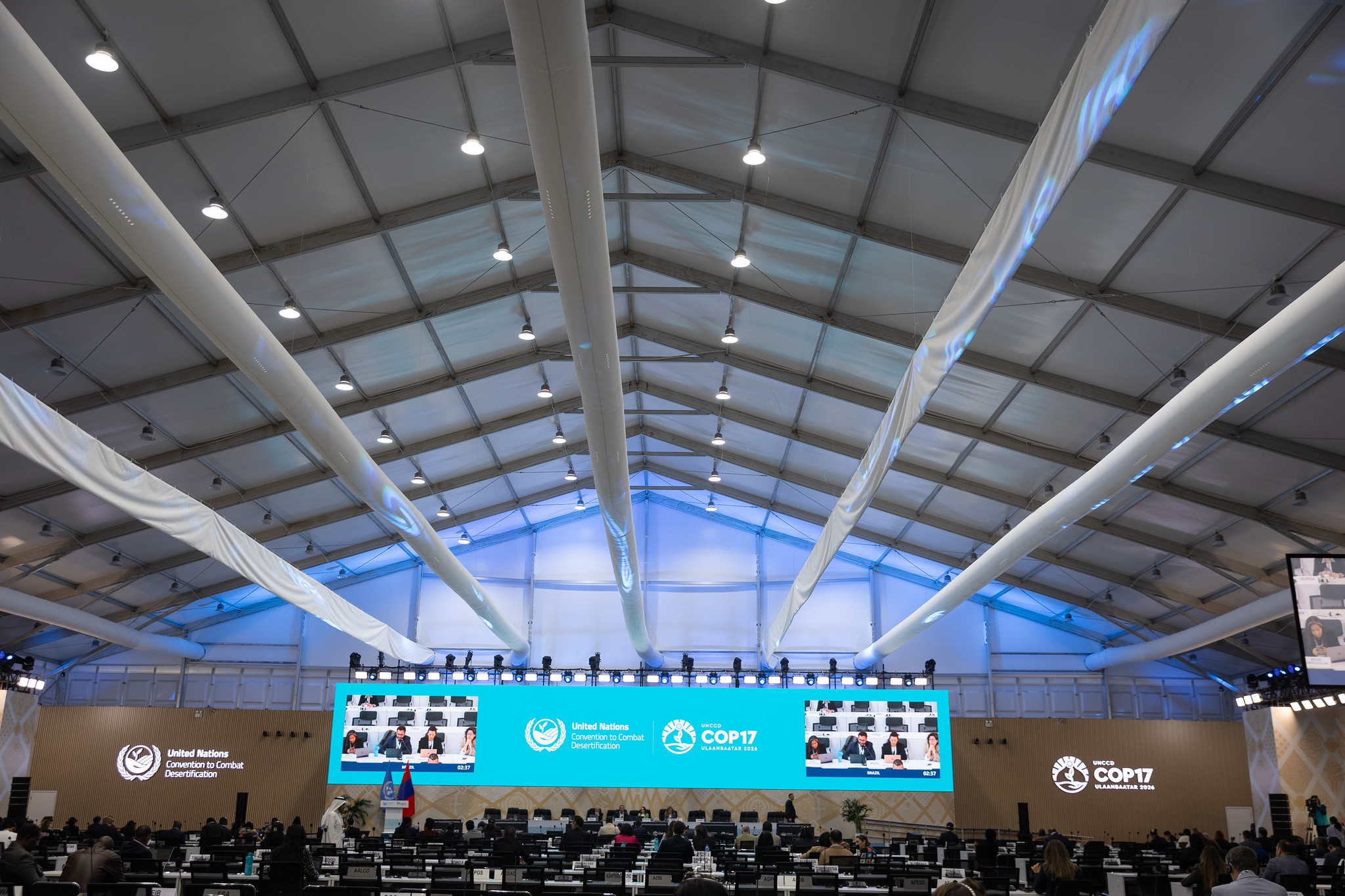
UNCCD COP17: Ulaanbaatar, Mongolia | 17–28 August 2026: Media accreditation is open

medida que la degradación de tierras, la sequía y la escasez de agua se intensifican en todas las regiones, los países buscan cada vez más formas de restaurar los ecosistemas, reforzar los sistemas alimentarios, salvaguardar los medios de vida y fomentar la resiliencia.
