News & stories


Latest news & stories
The UNCCD and the International Drought Resilience Alliance (IDRA) are launching the Land and Drought Media Reporting Fellowship for six journalists to cover COP17 in Ulaanbaatar, Mongolia (August 17–28, 2026).

New global assessment reveals deep gaps in land tenure security, governance and women’s land rights For billions of people, land is more than property. It is their livelihood, income, identity and stability. Yet that stability is increasingly fragile. Only about one-third of the world’s land is formally documented. More than one billion people – nearly one in four adults globally – feel insecure about their rights to land or housing and fear they could lose them within the next five years. A new global assessment, The Status of Land Tenure and Governance, sheds light on this growing insecurity. Co-published by the Food and Agriculture Organization of the United Nations (FAO), the International Land Coalition and the French Agricultural Research Centre for International Development (CIRAD), under the Global Land Observatory, it brings together data from governments, researchers and civil society to show who holds land, how secure those rights are and where governance gaps remain. With up to 40 per cent of the world’s land already degraded, secure land tenure is essential to restoring land at scale. A widening gap between land management and recognition Although states legally own most of the world’s land, much of it is governed in practice through customary systems. Indigenous Peoples and local communities manage 42 per cent of global land, yet only a small portion of those territories are formally recognized as theirs. This gap between management and legal recognition means that many communities who depend on land do not have formal protection of their rights. In contexts characterized by high land concentration and ongoing large-scale land acquisitions, the absence of recognition can leave customary landholders with limited legal safeguards. Where land rights are unclear or unprotected, adoption of sustainable land management practices becomes more difficult. Farmers and communities are less likely to invest in restoring degraded soils, conserving water, or adopting sustainable practices if their claims to land are uncertain. “The findings of the Status of Land Tenure and Governance Report confirm that secure and equitable land tenure is a prerequisite for sustainable land management,” said Ward Anseeuw, Senior Land Tenure Officer at FAO. “Strengthening land governance is therefore essential to achieving the objectives of the UNCCD, particularly in advancing land degradation neutrality and enabling local land users to invest confidently in the long-term health and productivity of their land.” Rising insecurity and persistent inequality Land insecurity is increasing globally. Since 2020, the share of adults who feel insecure about their land or housing rights has risen from 19 per cent to 23 per cent worldwide – affecting more than 1.1 billion people. In several regions, more than one-quarter of adults' report feeling insecure, with youth facing particularly high levels of uncertainty. Gender disparities remain pronounced. Across 108 countries assessed, 48 per cent of men report being sole or joint landowners, compared to 40 per cent of women. In agricultural contexts, the gap is often wider. Women produce roughly half of the world’s food yet own less than one-fifth of land globally. Where women lack secure tenure – due to inheritance barriers, limited legal protections or discriminatory customary norms - their ability to invest in soil restoration and sustainable practices is constrained. Advancing women’s land rights is therefore not only a matter of equality. It is essential for resilient food systems and sustainable land management. Customary lands, climate and resilience Customary land systems often overlap with areas of high biodiversity and significant carbon storage. Communities managing these territories have demonstrated long-standing stewardship practices that contribute to ecosystem stability. Healthy land, including soils and water, plays a significant role in climate mitigation and adaptation. According to the UNCCD estimates, drought losses now exceed USD 300 billion annually, and large parts of the world are becoming progressively drier. Billions of people could face increasing aridity in the coming decades. In this context, strengthening recognition of customary tenure is not only about justice – it is about safeguarding ecosystems and supporting communities that are already on the frontlines of climate stress. A structural data and governance gap Land is central to food security, climate action and sustainable development – yet information about land tenure arrangements and the security of those rights remains patchy. Only a limited number of countries report fully on land-related Sustainable Development Goals (SDG) indicators. Compared to sectors such as health or public finance, land tenure data are far less available and often not publicly accessible. The assessment calls for stronger national data systems, clearer legal frameworks and better alignment with international standards, including the Voluntary Guidelines on the Responsible Governance of Tenure of Land, Fisheries and Forests (VGGT), endorsed by the Committee on World Food Security and supported by FAO – the only globally agreed framework that sets standards for how land tenure rights should be recognized and protected. These guidelines form the foundation for a number of critical policy decisions of the UNCCD Conference of the Parties. Without reliable and transparent information, it becomes harder for governments to track progress and meet commitments under the SDGs and the Rio Conventions – the three global agreements on climate change, biodiversity and desertification. Governance at the heart of restoration These themes were further explored during a joint side event convened by the UNCCD together with TMG Think Tank for Sustainability – an independent research and policy institute focused on land governance and environmental justice – as well as the Robert Bosch Foundation and other partners. The discussion underscored that restoration, food security, and resilience cannot be separated from land governance systems. Transparent land administration, inclusive decision-making, and legal certainty are foundational conditions for sustainable land management. Governments have pledged to restore one billion hectares of degraded land by 2030, with nearly half of that commitment under the UNCCD framework. Achieving this ambition will require more than finance and technical solutions. It will require trust and equity for the people who depend on the land. “Land underpins food systems, climate stability and livelihoods,” said Dr Barron Joseph Orr, Chief Scientist of the UNCCD. “Without responsible and inclusive land governance that safeguards land tenure, the intended positive impacts of restoration efforts risk being temporary. Securing land rights is not simply about the four "R's" of Redistribution, Restitution, Recognition, and Regulation - it is about creating the conditions that allow communities to restore land and sustain it for generations to come.” Photo (c) : FORESCA

Across Southern Africa, drought is no longer an occasional shock — it is a recurring reality shaping landscapes, economies and daily life. As climate variability increases, pressure on land, water systems and rural livelihoods continues to grow. In Zimbabwe, Mozambique and Madagascar, the impacts are increasingly severe and they fall hardest on women and local communities who depend on land and natural resources to feed families and earn an income. In Madagascar, more than 9 million hectares (over 15 per cent of the country’s land area) are affected by drought, with some regions experiencing near-total crop failure during prolonged dry events. Mozambique faces frequent seasonal droughts that threaten food security for over 4 million people, particularly in its central and southern provinces. In Zimbabwe, recurring drought episodes have put nearly three million hectares of farmland at risk, with smallholder farmers and pastoralist communities most affected. Across these countries, drought disproportionately impacts women, who make up the majority of smallholder farmers, and other vulnerable groups dependent on agriculture and natural resources for their livelihoods. Yet the story is not only about risk. It is also about opportunity: how these countries are designing gender-smart, community-led solutions that turn drought resilience into livelihoods, restore degraded land and protect food and income while advancing sustainable land management and Land Degradation Neutrality (LDN). A key shift is placing women and local communities at the center — not only as beneficiaries, but as leaders of resilient livelihoods and value chains. This means recognizing women’s role in managing farms, water and household food security while tackling the barriers they face in accessing land, finance, skills, markets and decision-making. It also means strengthening community institutions so local knowledge and priorities shape what resilience looks like on the ground. Another big change is using drought risk data together with economic and livelihood analysis to identify where resilience investments can create real opportunities. In practice, this helps countries move from broad vulnerability profiles to concrete ideas that match local realities: which landscapes are most at risk, which groups are most exposed, what options can reduce pressure on land and water, and which interventions can generate reliable incomes even during dry periods. Countries are also working to develop scalable investment ideas — from climate-resilient agriculture to water management — that can attract blended finance and align with national priorities. Examples discussed through this work include community-based water management that secures access during dry spells, climate-resilient agriculture that stabilizes yields, and women-led enterprises that diversify income while reducing vulnerability and restoring degraded land. These solutions are designed to be practical, locally anchored and capable of expanding beyond pilot sites. “Women and local communities are already on the front line of drought. When they lead the solutions — supported by secure land tenure together with access to finance and investment-ready plans — resilience becomes real: it protects food and incomes today and restores land for generations to come,” emphasizes Louise Baker, Managing Director of the Global Mechanism of the UNCCD. This work is being advanced through the Gender-Transformative Drought Resilience in Transition States in Southern Africa (GRDSA) Project, supporting Madagascar, Mozambique and Zimbabwe to help countries prepare drought investment plans, strategies and pipelines. The GRDSA Project does not finance investments directly. Instead, it focuses on project preparation so countries can later mobilize additional public and private finance, building on existing national policies, drought monitoring systems and vulnerability assessments rather than duplicating them. National inception workshops held in 2025, alongside a regional exchange, helped set this work in motion. The project is financed by the African Development Bank (AfDB) and the Government of Canada and implemented by the Global Mechanism of the UNCCD. Photography (c) : Global Water Partnership Southern Africa, Krees Raharison

The Guna use eco-taxes to protect their forests, feed their people and save their culture

How carbon markets can deliver real benefits for land and livelihoods

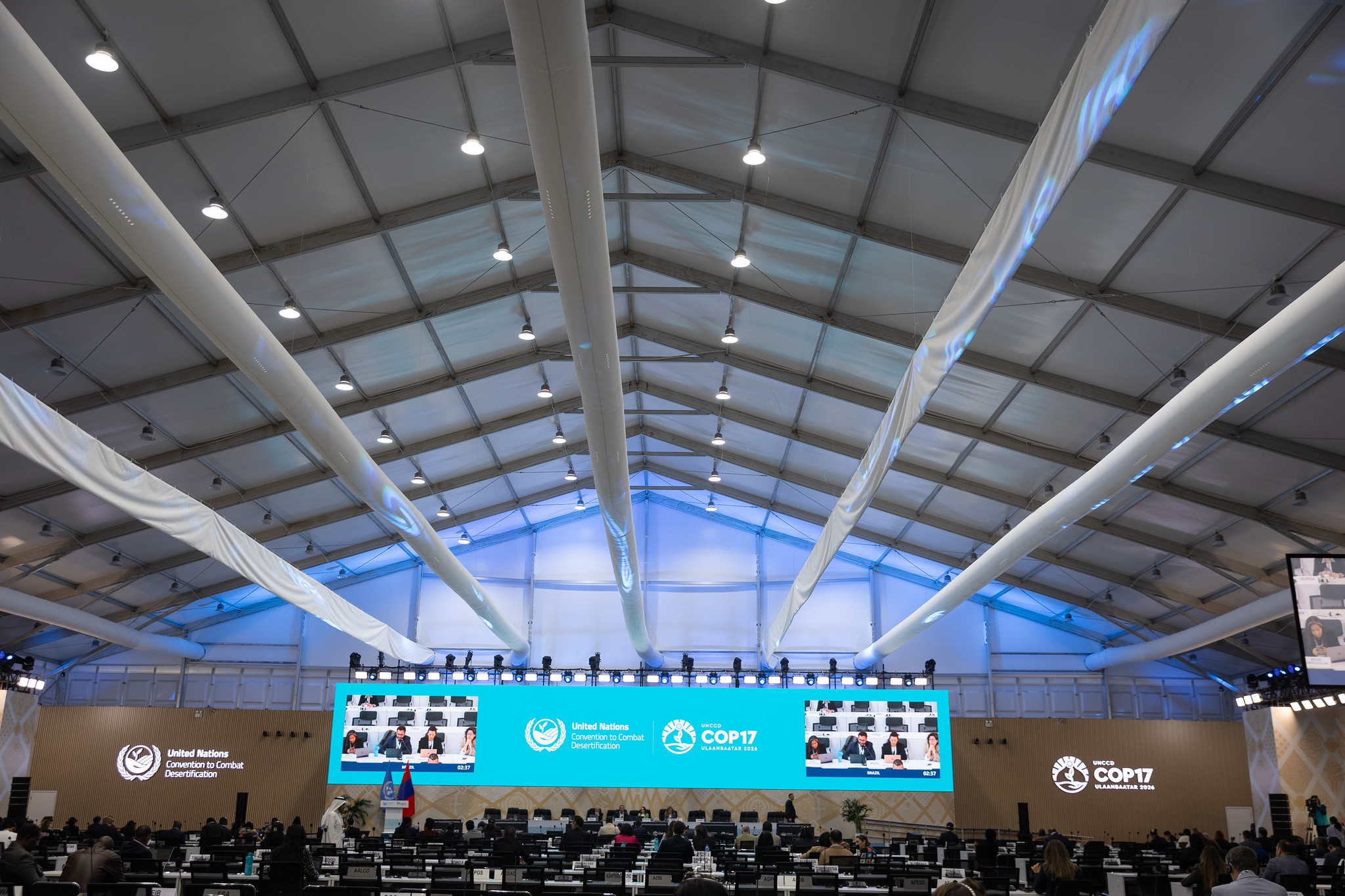
La COP17 de la CNULCD se tiendra à Oulan-Bator (Mongolie) du 17 au 28 août 2026Oulan-Bator/Bonn, 5 février 2026 – La Mongolie et la Convention des Nations Unies sur la lutte contre la désertification (CNULCD) ont annoncé aujourd’hui le thème de la dix-septième session de la Conférence des Parties (COP17). Cette conférence mondiale majeure sur la désertification, la dégradation des terres et la sécheresse se tiendra à Oulan-Bator, en Mongolie, du 17 au 28 août 2026, alors que les préparatifs s’intensifient. Le thème - « Restaurer les terres, restaurer l’espoir » - a été annoncé lors de réunions de haut niveau entre la CNULCD et les dirigeants mongols visant à faire avancer les préparatifs de la COP17.« Les terres constituent notre infrastructure la plus essentielle : elles soutiennent la sécurité alimentaire, l’eau, les moyens de subsistance et la stabilité. Lorsque les terres se dégradent, l’insécurité progresse - à travers la perte de moyens de subsistance, les déplacements forcés et l’intensification de la concurrence pour des ressources rares. Avec la COP17 de la CNULCD, la Mongolie adresse au monde un message puissant : restaurer les terres, restaurer l’espoir n’est pas seulement un programme environnemental, mais une priorité de développement et de résilience. Alors que la sécheresse s’intensifie et que la dégradation des terres s’accélère, la conférence doit déboucher sur des solutions concrètes et finançables - de la restauration des terres et des sols dégradés au renforcement du lien entre terres et eau - afin que les communautés puissent prospérer », a déclaré Yasmine Fouad, Secrétaire exécutive de la CNULCD.« La Mongolie est pleinement consciente de la responsabilité qu’implique l’accueil de la COP17 de la CNULCD, et nous sommes déterminés à faire en sorte que la Conférence aboutisse à des résultats concrets, porteurs d’action et durables. En tant que pays dont le développement, les moyens de subsistance et le patrimoine culturel sont profondément liés à la terre, nous sommes convaincus que la restauration des terres constitue un pilier fondamental de la paix, du développement durable et d’une croissance socio-économique inclusive. L’accueil de la COP17 en 2026, durant l’Année internationale des parcours et des pasteurs, offre une occasion unique de faire passer les parcours et les moyens de subsistance des pasteurs de la sensibilisation à la mise en œuvre et à l’investissement, et de renforcer la coopération mondiale pour lutter contre la désertification, la dégradation des terres et la sécheresse », a souligné le Premier ministre de la Mongolie, M. Gombojavyn Zandanshatar.Première des trois Conférences des Parties des Conventions de Rio prévues en 2026 - sur les terres, la biodiversité et le climat - la COP17 de la CNULCD vise à catalyser une action collective pour protéger les moyens de subsistance fondés sur les terres et renforcer la résilience à travers une approche centrée sur les populations.La COP17 devrait réunir des délégués des 197 Parties à la CNULCD, ainsi que des responsables gouvernementaux, des représentants du secteur privé et de la société civile, des scientifiques, des jeunes, des peuples autochtones, des pasteurs et des petits exploitants agricoles.Ensemble, ils chercheront à élaborer des solutions aux défis interconnectés de la désertification, de la dégradation des terres et de la sécheresse, tout en soulignant que la restauration des terres est essentielle pour réduire l’instabilité, prévenir les déplacements et renforcer la sécurité humaine et nationale dans les régions vulnérables.La dégradation des terres affecte déjà jusqu’à 40 % des terres mondiales, avec des conséquences majeures sur la production alimentaire, la disponibilité de l’eau, les moyens de subsistance et la stabilité économique. La COP17 représente un moment déterminant pour renforcer la mise en œuvre et mobiliser davantage d’investissements en faveur de la résilience à la sécheresse et de la gestion durable des terres.Avec un territoire de 1,56 million de kilomètres carrés, la Mongolie figure parmi les pays les plus touchés par la désertification et la dégradation des terres, près de 77 % de ses terres étant déjà dégradées. L’accueil de la COP17 de la CNULCD à Oulan-Bator placera au centre de l’attention internationale les priorités en matière de restauration des terres, notamment les approches qui protègent les moyens de subsistance, la sécurité alimentaire et les écosystèmes des régions arides.La COP17 se tient durant l’Année internationale des parcours et des pasteurs, proclamée par l’Assemblée générale des Nations Unies et soutenue par la Mongolie. Cela constitue une occasion majeure d’accélérer l’action en faveur de la gestion durable, de la restauration et de la conservation des parcours, tout en mettant en lumière les besoins des communautés pastorales qui dépendent directement de ces écosystèmes pour leur subsistance.Les parcours couvrent plus de la moitié de la surface terrestre de la planète, soutiennent directement les moyens de subsistance d’environ 500 millions de personnes et fournissent un sixième des besoins nutritionnels mondiaux, tout en restant parmi les écosystèmes les plus négligés et de plus en plus dégradés.Au cours des deux semaines de la conférence, les participants prendront part à un segment de haut niveau comprenant des dialogues ministériels, ainsi qu’à des forums multipartites et des discussions thématiques sur l’interface science-politique, l’innovation et les solutions, les outils et technologies, ainsi que le financement. En parallèle des négociations formelles, la COP17 devrait catalyser une action collective sur les parcours, la résilience et l’eau, ainsi que sur les systèmes alimentaires et la santé des sols.En préparation de la COP17, la Mongolie a lancé des initiatives nationales reliant la restauration des terres aux moyens de subsistance et au développement rural, notamment la campagne nationale « Un milliard d’arbres », dirigée par le Président, lancée en 2021 et visant à planter un milliard d’arbres d’ici 2030. La Mongolie a également renforcé la mobilisation du public et la participation des jeunes à travers des dialogues nationaux et des activités de sensibilisation, dont le Forum national « Youth4Land ». Par l’intermédiaire du Conseil des entreprises de Mongolie, la Présidence de la COP17 mobilise le secteur privé national en soutien à l’initiative Business 4 Land de la CNULCD, qui vise à accélérer l’action du secteur privé en faveur de la gestion durable des terres.« Les initiatives de la Mongolie illustrent le type d’approches intégrées de restauration des terres et de renforcement de la résilience que la COP17 de la CNULCD cherche à promouvoir. Elle vise à générer une dynamique politique renforcée et des résultats concrets - en aidant les pays à mobiliser des ressources et à renforcer les partenariats afin d’accélérer la restauration des terres et de bâtir la résilience là où elle est la plus nécessaire », a conclu la Secrétaire exécutive Fouad.Contacts presseBureau de presse de la CNULCD : press@unccd.int À propos de la CNULCD La Convention des Nations Unies sur la lutte contre la désertification (CNULCD) est la vision et la voix mondiales pour la terre. Elle réunit gouvernements, scientifiques, décideurs, secteur privé et communautés autour d’une vision commune et d’une action mondiale visant à restaurer et gérer les terres de la planète pour la durabilité de l’humanité et de la Terre. Bien plus qu’un traité international signé par 197 Parties, la CNULCD constitue un engagement multilatéral pour atténuer les impacts actuels de la dégradation des terres et promouvoir une gestion responsable de la terre pour garantir nourriture, eau, logement et opportunités économiques à toutes et tous, de manière équitable et inclusive.
