Artificial Windbreaks
Artificial windbreaks (also known as wind fences or sand fences) are permeable structures designed to reduce wind speeds and trap airborne or shifting sediments. They are typically made from synthetic, heat- and sun-resistant netting stretched across evenly spaced wooden or metal slats. Similar to natural windbreaks, these structures allow partial airflow, minimising turbulence while maximising deposition of sand and dust particles. Wind shelter efficiency is determined by its height, overall porosity and distribution, and directional orientation. Well-designed structures can reduce sand and dust emissions by 70–90%. Wind fences located upwind of crops can reduce evapotranspiration, potentially boosting yields by 30–100%. Compared to natural windbreaks, wind fences take up less space, are effective immediately upon construction, do not require water or suitable soil conditions for plant growth, and can have a lifespan of up to 10 years.
Wind Fences in Brazil 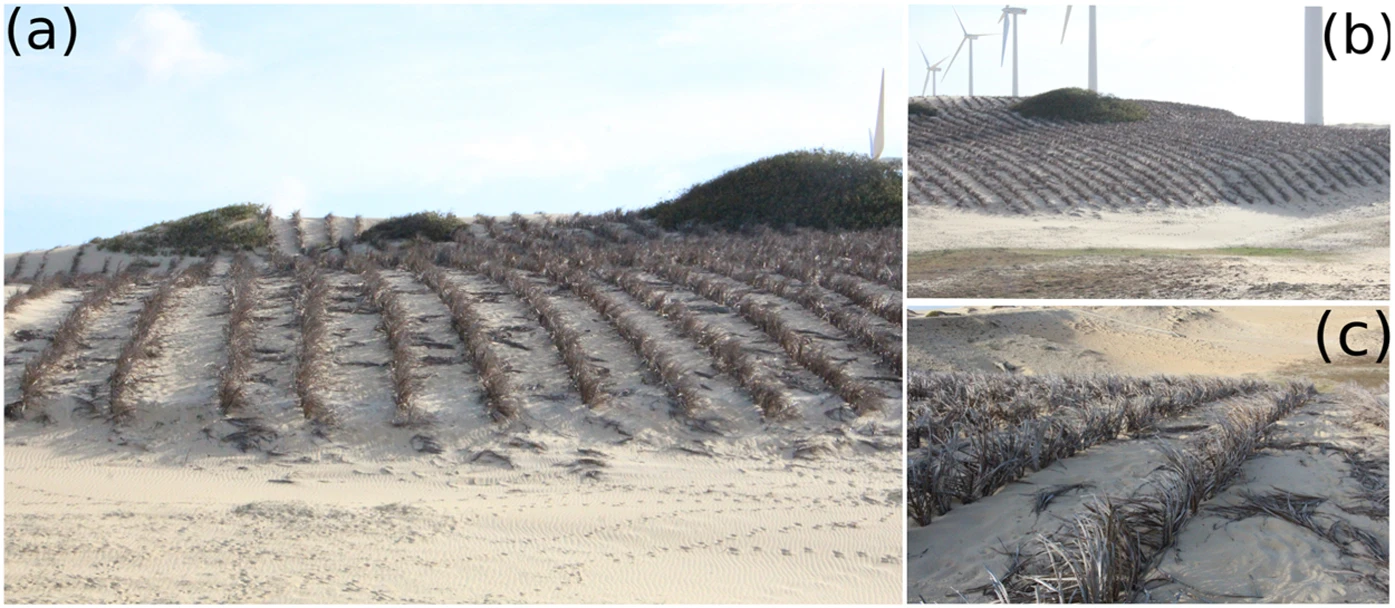
Although the design specifications will vary, artificial windbreaks can be implemented across several land use and land cover contexts. Typically, they require significant ongoing maintenance. In cropland areas, they can serve dual purposes such as livestock exclosures, creating snow barriers. or preventing weed encroachment. In transport corridors and industrial areas, they can be engineered to meet specific site requirements without taking up much space. When used to control shifting dunes, sand can inundate the fences which requires them to be dug out and raised again, or new fences to be installed, until the dune profile is balanced.
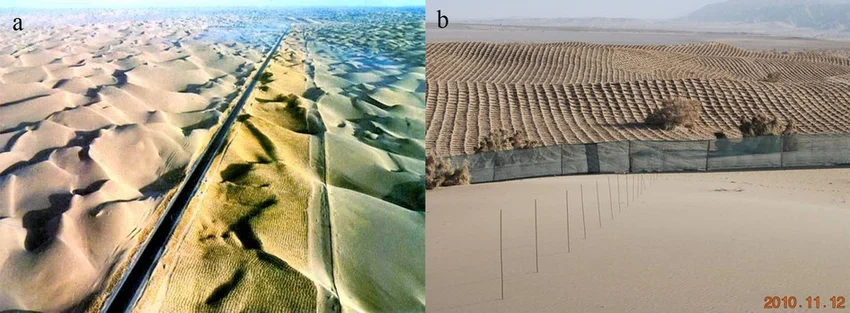
Sand Fences in China
References and Good Practice Guidance
- Optimal array of sand fences
- Evaluating the optimal porosity of fences for reducing wind erosion
- Layout and design criteria for livestock windbreaks
- Description and Costs of Potential Dust Control Options for Great Salt Lake
- US EPA Wind Fences and Sand Fences
- CSFD Fighting wind erosion: One aspect of the combat against desertification
- Dove Horticultural Windbreaks
- Citrus Australia Windbreaks for Citrus
Biome/Climatic Zone
Anthropogenic/Land Use