Farmer-Managed Natural Regeneration
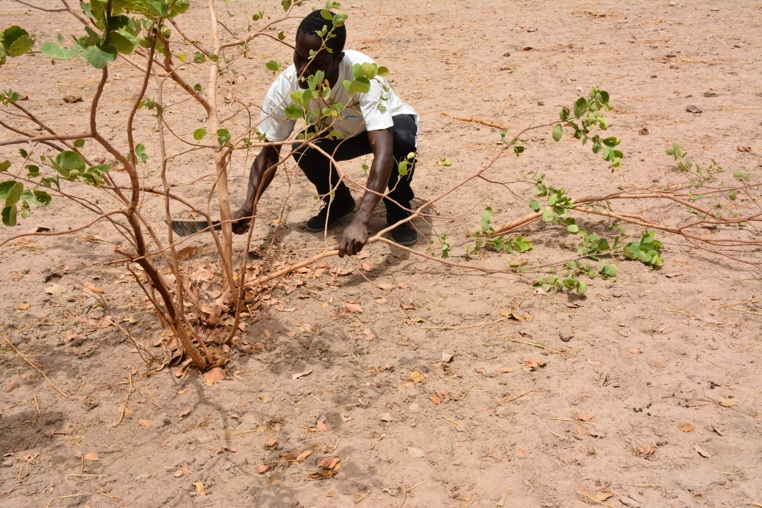
Assisted natural regeneration is the broad term used to describe the protection and preservation of woody vegetation that regenerates naturally on forest land, abandoned agricultural land, or in livestock exclosures. Farmer-Managed Natural Regeneration (FMNR) is a similar practice, typically carried out on agricultural land. It involves selecting, pruning, thinning, and protecting trees that have regenerated from re-sprouting rootstock or seeds. As a result, this practice restores vegetation while requiring little to no seedling propagation or planting. Costs can be significantly lower than those of reforestation/afforestation or agroforestry methods. FMNR has enabled the rapid and affordable rehabilitation and restoration of native trees and shrubs across large areas, particularly in the arid and semi-arid regions of Africa. FMNR is generally preferred to tree planting, wherever appropriate, due to higher survival rates, lower costs, and the use of locally adapted species. Depending on the selection of trees, FMNR typically produces scattered tree cover, which can limit its suitability for specific agroforestry systems such as alley cropping.
FMNR in Senegal
Case Studies
In Niger, assisted natural regeneration was a cost-effective method of developing an agroforestry system. Native trees lowered the soil temperature, reduced evapotranspiration and acted as windbreaks, thereby reducing wind erosion. In the Medhakachapia National Park in Bangladesh, assisted natural regeneration was employed to accelerate natural forest succession at a low cost.
Following the implementation of FMNR in Ethiopia, over 80% of surveyed farmers reported reduced on-farm soil erosion, while 74% reported increased soil fertility. Participants also identified additional benefits, such as increased rainfall, improved air quality, and lower air temperatures. In Ghana, FMNR practices have restored hundreds of hectares of degraded land and helped to mitigate the challenges of wind erosion and poor soil water retention. One study suggested that, by implementing FMNR alongside crop rotations, farmers in northern Ghana could experience an 86% increase in crop productivity within just five years.
References and Good Practice Guidance
- Conservation International Assisted Natural Regeneration – A Guide for Restoring Tropical Forests
- FAO Restoring Forest Landscapes Through Assisted Natural Regeneration: A Practical Manual
- FAO Advancing the role of natural regeneration in large-scale forest and landscape restoration in the Asia-Pacific region
- Application of assisted natural regeneration to restore degraded tropical forestlands
- World Vision Farmer Managed Natural Regeneration Manual
- Opportunities and constraints for using farmer managed natural regeneration for land restoration in sub-Saharan Africa
- Farmer Managed Natural Regeneration in Senegal
- Farmer-managed and community-based dryland and tree restoration
- The Case for Farmer Managed Natural Regeneration (FMNR) in the Upper West Region of Ghana
- Drivers of farmer-managed natural regeneration in the Sahel. Lessons for restoration
Biome/Climatic Zone
Anthropogenic/Land Use