News & Stories

Related News



Honorable Ministers, colleagues, and friends. Firstly. Thank you. It is a great pleasure being here – even if virtually. The Sahel is seen as the crucible of existential challenges. Irregular migration, armed conflicts, non-state actors, terrorism and organized crime, as well as poverty and food insecurity. Yet amazing things can happen if we have the commitment and passion of political leaders. With faith and investment in the ingenuity of the people. And with a bold and joint international response and actions. The Great Green Wall is such an example! True, in the back of our minds, we have always thought of the Great Green Wall as an impossible dream. But that is no longer the case. And we must adjust our mindsets. Slowly but surely, the Great Green Wall Initiative is regreening the Sahel; restoring degraded lands and providing decent livelihoods for its people; snaking the Sahel all the way from Senegal in the West to Djibouti in the East; restoring degraded lands and providing jobs and opportunities for millions of people in Africa. In January 2021, US$ 19 billion has been pledged at the One Planet Summit. This is a huge commitment from the international community. The partners committed themselves to work at an accelerated pace. We have collectively agreed to a harmonized results framework. National coalitions are being set up. There is a real sense of buzz about the Great Green Wall. In Africa and around the world. And that is critical. In a world that looks at the Sahel region and sees only despair, the Great Green Wall offers hope. In a world struggling to work out what “building back better”, or climate resilience or sustainable development or nature-based solution really looks like, the Great Green Wall makes tangible and practical sense. The concept of the GGW works because it addresses the loss of natural resources - as the root cause of a myriad of other challenges. But it also works because it is rewriting the narrative of the Sahel - restoring lost livelihoods and generating jobs and income for the people. There is bold African leadership. There is a plan to harness the potential of the region and its people. And the international community has rallied and is getting coordinated. The 11 GGW countries have a huge role to play, to make it happen. The good news is, it can be done. It must be done. It will be done. And today we are here to discuss how we will get it done – faster and most effectively. Pipelines of bankable projects are emerging, though I have to admit, projects are only slowly emerging. As your loyal and unwavering partner, the UNCCD is committed to help sweep away the many bottlenecks to action at the national level. More than a year has passed since the pledges were made. However, implementation remains scanty. There are multiple administrative hurdles that are slowing us down; bureaucratic issues are preventing people of the Sahel from having access to resources they badly need. These challenges must be overcome quickly, if we want to turn the tide on the vicious circle observed in the Sahel. For long, we have been advising to bring together honorable environment with treasury and planning Ministers to unlock some of the challenges that have been observed. Indeed, we hope that countries will use an “all of government” approach to getting it done – faster and with more direct benefits to the people of the Region. Allow me to insist on the role of Ministers of Finance, Economy or Planning. The pledges made last year will be delivered with the full participation of fund authorization officers at the national level. Through an integrated approach where different sectoral departments will be brought together: from agriculture to the environment; from energy to livestock; from local authorities to civil society and research. The GGW belongs to all: youth; women; farmers and pastoralists. In short, the GGW will be achieved with the people of the Sahel. Or will never be. Thank you all for being here. Together, I am sure we can make it happen. Thank you.

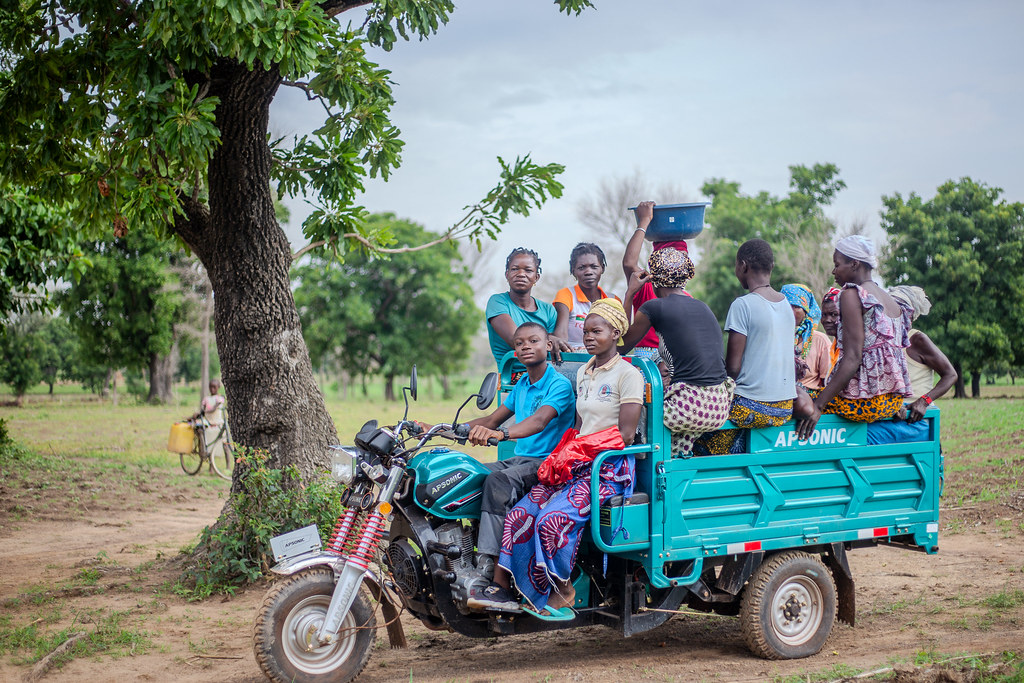
The UNCCD is partnering with GLOBHE on the use of innovative technology to better assess tree populations along the Great Green Wall GLOBHE is a drone service company that provides earth observations for a sustainable future, deploying drones through local operators to collect high-resolution data, which helps organizations and researchers to plan and action at the right place, at the right scale and at the right time. The joint project with UNCCD will focus on combining macro satellite data with high-resolution micro data from drones to accelerate the verification of tree species in Northern Ghana, supporting the implementation of the Great Green Wall, an African-led movement to restore 100 million hectares of currently degraded land, sequester 250 million tons of carbon and create 10 million green jobs by 2030. Baobab is the icon of the African landscape, revered as the tree of life that provides essential shelter, produces nutrient-dense fruits and stores water from the rainy season for the dry season. They can live up to 3,000 years, growing to 50 meters in circumference and reach up to 30 meters high. We, at GLOBHE, are proud to be part of this unprecedented initiative with the UNCCD and its partners. By improving the understanding of tree populations, stakeholders will be in a position to accelerate the development of sustainable business models that directly benefit local communities. We love these types of initiatives that put drone technology to good use for both the people and the planet – Arnaud Henneville-Wedholm, Head of Sales & Business Development at GLOBHE image (c) MakeWaves Media

As rich in culture, music and inspired people as the Sahel itself, the UNCCD event at Expo Dubai 2020 “Spotlight on Africa | Spotlighting the Sahel: Climate-Resilient Solutions towards achieving Food Security” marked a big step toward changing the world’s perception of the region. Rather than an area hindered by civil unrest and economic turmoil, the positive narrative of the Sahel’s showcases its potential: the abundance of natural resources, infinite deposits of renewable energy and the youngest population in the world. Along with a strong momentum for positive change, Sahel faces major development challenges, including the pressing need to adapt to changing climate and create opportunities for the new generation. In his opening remarks, the UNCCD Executive Secretary Ibrahim Thiaw highlighted that the potential of the Sahel to overcome these hurdles lies in the abundant resources including vast landscapes waiting to be restored to productivity. Sahel’s natural endowments offer immense potential for economic diversification, value-chain development and livelihoods. And its population is the youngest in the world – a challenge that can be turned into an opportunity. — UNCCD Executive Secretary Ibrahim Thiaw The event at Dubai Expo placed youth, women and smallholder farmers, herders and social entrepreneurs at the center of the conversation on the challenges and opportunities facing the Sahel. It featured initiatives that are accelerating socio-economic growth and enabling shared prosperity in the Sahel, such as Great Green Wall, to find solutions to address food security and climate change in the Sahel, including in implementing the Agenda 2030. Reflecting on the progress of the Great Green Wall Initiative, the participants agreed that it has far surpassed its initial vision of planting trees, becoming a platform that translates positive thinking into actions. The restoration of 20 million hectares of land in the Sahel, creation of 350,000 jobs, training of 10 million people on sustainable ways to manage the land and water and subsequent mobilization of nearly 20 billion hectares to move forward has inspired action at the local level. Harnessing indigenous knowledge and creating diversified value chains have been emphasized as essential to supporting the future progress of the initiative. The event showcased successful green entrepreneurs, many of them young women, who are convinced that in the Sahel, all the opportunities the youth needs exist at home. From agroforestry to producing eco-friendly coffee alternatives, the Sahel is awaiting young hands to revive the land, mine its “green gold,” drive climate action and achieve zero hunger. Performances of Sahelian visual and music artists, including the Malian singer and UNCCD Land Ambassador Inna Modja, have also made the event very memorable. Inna shared what motivated her to travel along the Great Green Wall and meet with communities engaged in land restoration: “I am awed by the ambition of the project and what it can achieve. The Great Green Wall is the future. We sow the seeds in this lifetime, so that the future generations can reap the harvest.” The event was co-organized by UNCCD and the African Union in association with the United Arab Emirates Ministry of the Environment and Climate Change. Learn more: Watch the recording Land and the Sustainable Development Goals Achieving Land Degradation Neutrality Great Green Wall Accelerator

The Great Green Wall is a symbol of hope in the face of one of the biggest challenges of our time – desertification. Launched in 2007 by the African Union, this game-changing African-led initiative aims to restore Africa’s degraded landscapes and transform millions of lives in one of the world’s poorest regions, the Sahel. Once complete, the Wall will be the largest living structure on the planet – an 8,000 km natural wonder of the world stretching across the entire width of the continent.

The latest episode of the 'Inside UN Bonn' podcast, released on 2 February, features the Malian musician and UNCCD Land Ambassador Inna Modja who talks about her work for the Great Green Wall (GGW) Initiative. "We're growing new lungs for the planet" – this is how Inna describes the GGW Initiative that aims to restore Africa’s degraded landscapes, fight the climate crisis and transform millions of lives. Inna says that her passion for the project reflects in all her work – as a musician, visual artist and women's right advocate. It also inspires her to explore new outlets to generate support for the GGW. In collaboration with other digital artists, she recently launched a charitable non-fungible token (NFT) art drop to help finance women-led land restoration solutions in the Sahel. The podcast is available on Spotify | Google podcasts | Apple podcasts Read more: Great Green Wall initiative Land and gender Land and climate UNCCD Land Ambassadors Charitable NFT event will fund women-led solutions along the Great Green Wall

Women and climate is the focus of a new charitable non-fungible token (NFT) art drop, launched 21 January on the margins of the World Economic Forum’s digital edition of Davos. It will land on the pioneering marketplace SuperRare, featuring digital artwork inspired by the interlinked challenges of gender equality and climate justice. This carbon-net negative event is a collaboration between the climate tech non-profit Code Green co-founded by UNCCD Land Ambassador Inna Modja and the World of Women NFT collection that unites female artists to celebrate women’s diversity and power. Inna says she was inspired to create this auction by her experience traveling along the Great Green Wall — an African-led initiative growing an 8000-km green corridor across the continent to improve the lives of millions of women on the frontline of climate change. "Being from Mali, I have seen with my own eyes that women and girls disproportionately bear the brunt of the global climate emergency. They are the main stewards of natural resources like land, making up 80 per cent of the agricultural workforce. Through absolutely no fault of their own, climate change is destroying their livelihoods and sparking widespread food insecurity, mass migration and conflict. The Great Green Wall is a powerful solution that can help empower women to take charge of their own destinies." — Inna Modja Inna contributed some of her own artwork to the Women and Climate charitable NFT drop that will channel 70 per cent of all proceeds to women-led land restoration solutions along the Great Green Wall. Image: Twin Mamas by Inna Modja Read more: Great Green Wall initiative Land and gender UNCCD Land Ambassadors NFT community supports climate action, sustainably

Agenda item on Relations with Conventions and other International Institutions (Agenda item.10) Co-Chairs, Council members, Ladies and Gentlemen, I am grateful for this opportunity to brief the Council again. The Council meets at a time when the world is grappling with the increasing challenges in the path to sustainable development. You are meeting this time round when land restoration is becoming more relevant by the day. I see the beginning of a large-scale land restoration movement across the world. When World Leaders speak of trillion trees to be planted, we should translate these into hectares of land being restored. Restoring degraded lands, as you know, generates revenues for poor populations. Land restoration also brings more food to the hungry and to the markets. It’s restoring ecosystems and biodiversity. When they say planting trees, we should hear enhancing resilience to the climate crisis while sequestering large quantities of carbon from the atmosphere and bringing carbon back to where it belongs, to the soil. Just last month at the UNFCCC COP26 in Glasgow, more than 140 countries agreed on a common declaration, namely the Glasgow Leader’s Declaration on Forests and Land Use. Leaders committed to working together to reverse forest loss and land degradation by 2030. We now need to move rapidly from Summit Declarations to real implementation on the ground. Another positive outcome of Glasgow was the Bezos Earth pledge of $1 billion dollars for landscape restoration in Africa, especially for the implementation of the Great Green Wall. The pledges to the Great Green Wall are now totaling more than 19 billion dollars. This Africa-led land restoration initiative, which you are familiar with, would not be possible without the incubation of the GEF. The Great Green Wall is one the concrete examples of a program, which, from its early stages, benefited from the support of the GEF. When only few believed on the Great Green Wall, the GEF saw the potential of a glass half full. Today, banks and other financial institutions are investing on the Great Green Wall. This is a concrete demonstration that investing in nature can be a profitable business, even in the Sahel, one of the harshest conditions on Earth. UNCCD is working closely with all partners and the 11 countries of the GGW to develop mechanisms that allow better access to the existing funds to help address land restoration, drought, renewable energies, youth and women’s employment across the Sahel region. I would like to express our gratitude once again to you, as members of the Council, and to the GEF Secretariat, for your trust and support. Today, we are happy to see similar initiatives being developed in other parts of the world. Again, a concrete case of what a successful demonstration programme can do, namely, to serve as an example and to emulate. In that respect, the Middle East Green Initiative announced in March 2021 was launched in Riyadh last month. It aims, among others, to restore 200 million hectares across the Greater Middle East. In parallel, Saudi Arabia launched its own national green initiative, which aims at restoring 40 million hectares of degraded land. Similar initiatives are already in place in India, Pakistan, China. We are pleased to see other countries developing similar plans, including Mongolia, the countries of the dry corridor of Latin America, as well the countries of Southern Africa, under the SADC umbrella. In addition, just two weeks ago, I signed in Riyadh an agreement with the Kingdom of Saudi Arabia to set up the Secretariat of the "G20 Global Initiative on Reducing Land Degradation and Enhancing Conservation of Terrestrial Habitats”, that is the initiative launched by the G20 leaders under the Saudi G20 Presidency in November 2020. Under this initiative, the G20 leaders aim to prevent, halt and reverse land degradation across the world through private sector engagement, civil society empowerment, knowledge sharing and development. The ambition here is to achieve a 50% reduction in degraded land by 2040. This will support other existing initiatives, adding momentum to the UN Decade on Ecosystem Restoration. Ladies and Gentlemen, Dear Council members, We, at UNCCD, are now focusing on our upcoming COP15, which will be held in Abidjan, Cote d’Ivoire – the 2nd and 3rd weeks of May of 2022. Two topics are likely to be discussed by Parties amongst others: Firstly: Parties will review the report of the Intergovernmental working Group on drought, which was set up by the previous COP in New Delhi. Unfortunately, droughts are hitting every year more countries, more communities, more economies, and more ecosystems. As we speak, millions of people are deprived from food and basic needs in Eastern Africa and in Madagascar. It is really heartbreaking to see people starving, large mammals drying literally in the deserts; and millions of hectares of forests burning all over the world. Secondly: Large scale land restoration is likely to come up as a big topic at the next COP, the world seems to be finally waking up to the importance of nature-based solutions. This movement is now unstoppable. The smartest private investors have gotten the message. It is a critical moment for the GEF as we have on sight the early results of our 30 years of investment in nature. Thirty years of demonstration, research, and science. The moment has now come to move to large scale. In my recent trip to Abidjan, Cote d’Ivoire, Government authorities expressed their interest in developing what they call a « legacy programme ». As proud hosts to UNCCD COP15 and a country whose economy is largely dependent on agriculture, they want to invest on their best asset, namely: LAND. Hence, boosting long term environmental sustainability across major value chains. Investing in large-scale sustainable management of land and soils in Côte d’Ivoire is investing in the country’s best asset: its natural capital. This will help protect and restore forests and lands and improving communities’ resilience to climate change. It’s an opportunity for UNCCD, GEF and other partners to work together to support this programme, which will help restore land and ensure sustainable development. That is the large-scale land management we are inviting GEF partners to consider, when moving ahead with the eighth replenishment of the facility. Keeping in view the emerging challenges that today’s world is facing, we hope that the replenishment of GEF-8 will find innovative, and creative ways to address these challenges. UNCCD will continue working with its Parties to set and update their voluntary land degradation neutrality targets and to develop projects to meet these targets. Most parties have developed national drought plans with UNCCD’s assistance; they are looking for support to implement these plans. Drought is an increasing threat due to the unpredictable changes in the world’s environment and there is a dire need of financing to enhance resilience and implement measures to combat effects of drought. So, allow me to close reminding us of the two issues that come high in the world’s attention: Drought management and mitigating the impacts of drought. Second, sustainable land management, large-scale land restoration. These, ladies and gentlemen, are important issues that also concern climate change, biodiversity, food, and human wellbeing. They are at the heart of what GEF is all about, and what GEF-8 should be focusing on. I thank you.

Excellence, monsieur Mohamed Cheikh El Ghazouani, Président de la République Islamique de Mauritanie, président en exercice de la Grande Muraille Verte, Excellence, messieurs les Présidents, Excellence, monsieur le Président de la Commission de l’Union africaine, Excellence, mesdames et messieurs, à vos grades et rangs respectifs, La Grande Muraille Verte est considérée comme l’œuvre de restauration des terres la plus complexe au monde. Sans doute la plus ambitieuse, à date. Ce programme est porté par un géant politique, l’Union africaine, dans une région, le Sahel, dont les potentialités sont, à regret, éclipsées par un récit historiquement négatif. Les onze pays membres de l’Agence Panafricaine de la Grande Muraille Verte totalisent une population avoisinant le demi-milliard d’habitants, avec des projections dépassant le milliard et demi d’ici la fin du siècle. Comment nourrir, éduquer, soigner, vêtir et répondre aux besoins d’une population, plutôt jeune et exigeante, dont les revenus dépendent essentiellement de ressources naturelles ? Des ressources par ailleurs agressées au quotidien par les aléas d’un climat hostile et d’un environnement austère. La GMV, c’est planter l’espoir auprès de cette jeunesse pétillante de volonté. A la fois ubiquiste et opportuniste, ce Programme doit aider à transformer les défis en opportunités : le soleil, le vent, les espaces et les terres, les points d’eau et même les dunes. Transformer les défis démographiques en dividendes. Prévenir des ruptures de charge et des crises, notamment en milieux rural et péri-urbain. L’une des plus grandes forces de la GMV, c’est l’engagement politique des États, au plus haut niveau, manifesté aujourd’hui encore par votre Sommet. D’accepter de mutualiser vos efforts, de rechercher la complémentarité, et de mobiliser votre organisation continentale, ainsi que vos instances sous-régionales. C’est inédit pour un programme de terrain, pour être souligné. Cet engagement porte ses fruits. Lentement certes, mais sûrement, la communauté internationale convient que la gestion des ressources naturelles du Sahel doit s’inscrire parmi les réponses aux défis mondiaux à savoir : la désertification, la sécheresse, le changement climatique, la perte de la biodiversité et leurs corollaires économiques, sociaux et bien entendu environnementaux. Directement ou indirectement, la GMV contribuera à la paix, la sécurité et à la stabilité du Sahel. La vraie bataille du Sahel, c’est celle du développement durable et de la gouvernance inclusive. Traiter les symptômes sans s’attaquer à la racine du mal, ne guérira point le malade. Le Sahel est avant tout malade de la dégradation de son socle productif, de ses sols érodés et son environnement détruit, à ajouter à l’espoir évaporé de ses jeunes. En 2020, un bilan des dix premières années de la GMV a donné des résultats plutôt mitigés. Pour parvenir aux objectifs fixés en 2030, il faut restaurer, annuellement, plus de 8 millions d’hectares de terres agricoles, pastorales, de points d’eau et d’espaces naturels. Des investissements annuels à hauteur de 4 milliards de dollars US sont nécessaires. La bonne nouvelle, c’est que c’est faisable. Le faire, c’est répondre aux immenses besoins de développement de la région. Mais c’est aussi contribuer aux objectifs mondiaux de lutte contre le changement climatique, contre la désertification, et répondre à bien d’autres objectifs du développement durable. L’autre bonne nouvelle, c’est la promesse de financement, sur plus de 19 milliards de dollars pour l’horizon 2025. Nous sommes honorés de travailler avec vous, leaders Sahéliens, mais aussi avec le Président français, Emmanuel Macron, le Prince Charles du Royaume-Uni et bien d’autres. Nous pensons que l’heure est maintenant venue de passer à l’échelle et mener des actions concrètes : soutien aux communautés ; gérer les écosystèmes et booster la résilience d’économies fragiles. Accélérer et simplifier les procédures de décaissement, tout en assurant la plus grande transparence de gestion. Accroître la capacité et la qualité d’absorption des ressources. Les pays de la GMV voudront peut-être intégrer, si ce n’est déjà le cas, la GMV dans leurs Plans Nationaux de développement. Chaque pays voudra peut-être développer un programme national multisectoriel, intégré et cohérent par rapport aux piliers de l’Accélérateur de la GMV. Ceci permettra d’accélérer la mobilisation des ressources promises par les partenaires. Pour parvenir à nos ambitions, dans une région faisant face à autant de défis, les partenaires techniques et financiers devraient pour leur part considérer adopter des procédures souples et accélérées. Les sociétés sahéliennes attendent, avec une impatience compréhensible, la concrétisation des annonces de Sommets en actions sur le terrain. Pour y parvenir, une réforme institutionnelle est nécessaire. Le Conseil des Ministres a déjà adopté une décision dans ce sens. Un renforcement du capital humain de l’agence régionale semble urgent. Les structures actuelles mèneront difficilement leurs missions de suivi-évaluation et de pilotage d’un programme d’une telle dimension. Certains estiment qu’à terme, la GMV pourrait être la plus imposante œuvre humaine sur terre. L’Afrique a fourni plusieurs trésors à l’humanité. Ses civilisations, ses cosmogonies, ses technologies et ses pyramides, entre autres. Avec la GMV, l’Afrique peut montrer qu’elle n’a pas fini de surprendre le monde. Je vous remercie.

As the COP26 closes with a call for more ambitious and measurable climate actions by governments, activists around the world are ramping up their efforts to continue work outside the conference halls. Our Land Ambassador, a Malian-French singer and songwriter Inna Modja, in her recent interview with CNN presented the CodeGreen, a new coalition of artists and coders who want to use non-fungible token (NFT) auctions to raise money for climate projects. Inna, who is a co-founder of CodeGreen, discussed its potential to mobilize funds for projects along the Great Green Wall. In the Sahel, where 80 per cent of the population rely on agriculture for their livelihood, the Great Green Wall goes beyond growing trees to create opportunities for vulnerable populations, especially, for youth and women. The first CodeGreen is planned for the World Economic Forum in Davos. Watch the interview here

Inna Modja is a Malian actress and singer who topped the charts across continents. She has appeared in the Great Green Wall documentary, making an extraordinary journey along this new world wonder. Inna actively engaged with communities involved in the visionary initiative and later said that during her trip from west to east of the Sahel, following the route of the Great Green Wall planted by surrounding communities, she witnessed first-hand the importance of land for a world at peace. Women, young people and everyone can work the land and reap the benefits when the land remain productive. It is when land is degraded and depleted, that communities are forced to migrate or the conflicts over access to resources arise. Inna says that it is her hope that the Great Green Wall will continue to grow, allowing all who live around it to coexist in peace, health and safety. As a proud UNCCD Land Ambassador, Inna is among young people who are changing the narrative of the Sahel. Her music, energy, commitment and humanitarian work resonate with audiences worldwide. Read more: The Great Green Wall of Africa UNCCD Land Ambassadors
