News & stories


Latest news & stories
Drought does not arrive with sirens. It builds quietly—through drying soils, shrinking water supplies and wilting crops—until its impacts ripple across farms, cities and entire economies. By the time it is fully visible, the damage is often already widespread and costly, affecting everything from food and energy production to transportation and health.With droughts projected to affect three in four people worldwide by 2050, and three quarters of the world’s land already permanently drier due to unsustainable land management and climate change, how should countries act to prevent drought from escalating into crisis?Much like the Human Development Index reshaped how countries understand progress, the new Drought Resilience Index aims to provide a clear, shared benchmark to help governments manage drought risk and prevent irreversible impacts—including lost lives and shattered livelihoods.Now under development through the United Nations Convention to Combat Desertification (UNCCD), the International Drought Resilience Alliance (IDRA) and partners, the index is designed to give decision-makers a clearer picture of where vulnerabilities lie —helping them assess preparedness, create policies and act before drought turns into disaster.A three-day workshop recently hosted by the European Commission Joint Research Centre in Italy brought together a wide range of international partners—spanning multilateral, scientific, academic, technical, and government institutions—to fine-tune the tool, which is expected to launch as part of a broader AI-powered data visualization platform.We spoke with Edgar Gutiérrez-Espeleta, senior policy consultant at UNCCD advising on the development of the tool, to understand how the Drought Resilience Index works—and why it could reshape how countries prepare for a new drought era. From data overload to clarityThe Drought Resilience Index, part of the broader International Drought Resilience Observatory (IDRO), is designed to turn complex and fragmented data into simple scores that policymakers can use to make decisions. “Drought is one thing. Resilience to drought is another,” says Gutiérrez-Espeleta. “The aim is to help countries assess their capacity to anticipate, prepare for and adapt to drought, and to highlight where action is most needed so they can use limited resources effectively.”To capture this, the Drought Resilience Index is built around three dimensions: anticipation, preparation and adaptation. These reflect the full lifecycle of drought risk. Each dimension is assessed across four areas that shape resilience: the built environment; the natural environment, including soils, forests and wetlands; communities; and the economy —together offering a multidimensional picture of how well countries manage drought risk.Across each of these areas, experts identify one or two indicators to capture the most critical aspects of resilience, drawing on available, UN-vetted global datasets. These indicators are then standardised and combined into a composite score, enabling countries to assess their capacity to manage drought risk.For example, in anticipation, the health of ecosystems—such as forest cover or watershed integrity—can indicate how well the natural environment buffers drought impacts. In preparation, the efficiency and reach of water supply systems reflect the capacity of the built environment to conserve and distribute scarce resources. In adaptation, the share of livelihoods diversified beyond water-intensive activities shows how well the economy can withstand recurring drought conditions.“Low scores act as warning signals, pointing decision-makers to areas that require urgent attention,” explains Gutiérrez-Espeleta.Built through collaborationThe index is not being developed in isolation. It builds on years of work within the UNCCD’s Science-Policy Interface and has been shaped through consultations with top drought resilience experts from different regions, including the European Union’s Joint Research Centre, the US National Drought Monitor, the World Meteorological Organization and Yale Center for Ecosystems and Architecture.In the lead up to the 17th session of the Conference of the Parties to the UNCCD (UNCCD COP17), specialists are refining the selection of indicators, assessing available datasets and ensuring that the index is both scientifically robust and practical for policymakers.One of the key challenges is data availability. Not all countries have the same level of information, and some indicators may only exist for some parts of the world.“We are starting with the best data currently available and building from there,” Gutiérrez-Espeleta says. “As the index evolves, it will also help drive stronger and more comprehensive data collection, as has been the case with the Human Development Index.”A tool shaped by experienceThe idea for the Drought Resilience Index is rooted in experience. In 2015, as Costa Rica’s Minister of Environment, Gutiérrez-Espeleta faced a severe drought that demanded urgent, cross-sector decisions—but without a clear overview, it was difficult to prioritize action. That gap is what the Index is designed to fill. By bringing diverse data into a single framework that everybody can understand, it helps policymakers identify where systems are weakest and where action is most needed—offering, in his words, “a way to quickly see the big picture.”Rather than prescribing solutions, the Index works as a signal, highlighting where problems are most acute and pointing decision-makers towards the areas that require attention.The ambition is simple. When ministers see it at COP17, Gutiérrez-Espeleta hopes their reaction will be immediate: “This is what we needed.” From there, governments can mobilize resources and act—because while drought cannot be prevented, the vulnerability of people, economies and ecosystems can be greatly reduced.Photo : Participants at the IDRO Drought Resilience Index workshop hosted in Italy by the European Commission Joint Research Centre, including representatives of: Yale Center for Ecosystems and Architecture, National Center for Meteorology of the Kingdom of Saudi Arabia, World Meteorological Organization, United Nations Environment Programme, United Nations University Institute for Water, Environment and Health, Global Water Partnership, US National Drought Mitigation Center, NASA Goddard Space Flight Center, CIMA Research Foundation, Sahara and Sahel Observatory, CSIC-CEBAS, Ministry of Ecological Transition and Demographic Challenge of Spain, Ministry of Environment and Sustainable Development of Senegal, Center for Hydrometeorology and Remote Sensing, UK Centre for Ecology & Hydrology, Deltares, International Rice Research Institute, IGAD Climate Prediction and Applications Centre, University of Southern Queensland, UNEP-DHI Partnership, Tree Aid.

مع تزايد الضغوط العالمية على الأراضي والنظم الغذائية وموارد المياه، تدخل التحضيرات للدورة السابعة عشرة لمؤتمر الأطراف في اتفاقية الأمم المتحدة لمكافحة التصحر (COP17) مرحلة حاسمة. وخلال زيارة استمرت يومين إلى أولانباتار، التقت الأمينة التنفيذية لاتفاقية الأمم المتحدة لمكافحة التصحر، الدكتورة ياسمين فؤاد، بقيادة منغوليا لدفع التحضيرات للمؤتمر، المقرر عقده في العاصمة المنغولية خلال الفترة من 17 إلى 28 آب/أغسطس 2026 تحت شعار "استعادة الأراضي، واستعادة الأمل". ويأتي هذا التحرك في وقت تتزايد فيه الضغوط العالمية على الأراضي والموارد الطبيعية. إذ إن ما يصل إلى 40 بالمئة من أراضي العالم متدهور بالفعل، مما يقوّض إنتاج الغذاء وتوافر المياه وسبل العيش. وفي الوقت ذاته، ارتفع معدل حدوث موجات الجفاف بنحو الثلث منذ عام 2000، مما يزيد من الأعباء على المجتمعات، لا سيما في المناطق الجافة التي يعتمد فيها السكان بشكل مباشر على الأراضي السليمة. ويكلّف الجفاف وحده الاقتصاد العالمي ما لا يقل عن 300 مليار دولار سنويًا، مع آثار تمتد عبر النظم الغذائية وسلاسل الإمداد وسبل العيش. من تحدٍّ عالمي إلى واقع وطني في منغوليا، لم تعد هذه التحديات نظرية. إذ تتأثر نحو 77 بالمئة من أراضي البلاد بتدهور الأراضي، بينما تؤدي موجات الجفاف المتزايدة، التي تعقبها فصول شتاء قاسية، إلى فرض ضغوط متزايدة على سبل عيش الرعاة، الذين يشكّلون ركيزة أساسية للاقتصاد ونمط حياة لما يقرب من ثلث السكان. وتندرج هذه الضغوط ضمن اتجاه عالمي أوسع. فالمراعي، التي تغطي أكثر من نصف مساحة اليابسة على كوكب الأرض وتدعم سبل عيش نحو ملياري شخص، تواجه ضغوطًا متزايدة نتيجة تغير المناخ وأنماط استخدام الأراضي غير المستدامة، حيث إن ما يصل إلى نصفها متدهور بالفعل أو مهدد بالتدهور. وقد بدأ تراجع خصوبة التربة وانخفاض قدرتها على الاحتفاظ بالمياه وتدهور النظم البيئية يؤثر بالفعل على إنتاج الغذاء والدخل والقدرة على الصمود. وفي المقابل، تتواصل الجهود للاستجابة لهذه التحديات. إذ تسهم المبادرات الوطنية في مجالات استعادة الأراضي وإدارة المراعي وتطوير نظم الثروة الحيوانية المستدامة في التخفيف من هذه الضغوط، مع إبراز كيف يمكن أن تسير الاستدامة البيئية والمرونة الاقتصادية جنبًا إلى جنب. مؤتمر يركز على التنفيذ وتحقيق النتائج ركزت المناقشات خلال الزيارة ليس فقط على الجوانب التنظيمية للمؤتمر، بل أيضًا على ضمان تحقيقه نتائج ملموسة وقابلة للقياس. ويشمل ذلك توسيع نطاق الاستثمار في استعادة الأراضي وتعزيز القدرة على الصمود في مواجهة الجفاف، وتقوية النظم الغذائية المستدامة، ودعم المجتمعات في الخطوط الأمامية لتدهور الأراضي. وقالت الأمينة التنفيذية للاتفاقية، الدكتورة ياسمين فؤاد: "تشكل الأراضي السليمة أساس الأمن الغذائي وسبل العيش والاستقرار. وتدخل التحضيرات لمؤتمر الأطراف السابع عشر الآن مرحلة حاسمة. ونعمل مع منغوليا لضمان أن يحقق المؤتمر نتائج حقيقية، بدءًا من توسيع الاستثمار في استعادة الأراضي وتعزيز القدرة على الصمود في مواجهة الجفاف، وصولًا إلى دعم النظم الغذائية ومساندة المجتمعات الأكثر عرضة للمخاطر." كما شددت السلطات المنغولية على التزامها بدفع عجلة التنمية الخضراء واستثمار مؤتمر الأطراف السابع عشر لتعزيز العمل على المستويين الوطني والعالمي. وقال رئيس وزراء منغوليا، أوتشـرال نيـام-أوسور: "أصبح التصحر قضية تؤثر في البيئة المعيشية لكل مواطن في بلدنا. ولذلك ستجعل حكومة منغوليا التنمية الخضراء أولوية وطنية. وسنقدّم مشروع قانون تغير المناخ إلى البرلمان، ونعمل على الترويج لسياساتنا في مجال التنمية الخضراء عالميًا، وجذب الاستثمارات، وخلق فرص جديدة، فضلًا عن تسريع تطوير البنية التحتية والمشاريع". لماذا يكتسب هذا أهمية الآن يُنظر بشكل متزايد إلى تدهور الأراضي والجفاف باعتبارهما عاملين مضاعفين للمخاطر، إذ يزيدان من التنافس على الأراضي والمياه، ويقوضان سبل العيش، وقد يسهمان في النزوح وعدم الاستقرار. وفي العديد من مناطق العالم، ترتبط هذه الضغوط بالفعل بارتفاع مستويات انعدام الأمن الغذائي وتزايد الضغوط الاجتماعية والاقتصادية. وعندما تفقد الأرض قدرتها على إعالة المجتمعات، تمتد الآثار لتطال أنظمة بأكملها، من سبل العيش المحلية إلى الاستقرار الوطني. ولا تقتصر هذه التأثيرات على البيئة، بل تمتد لتشكل النظم الغذائية والمرونة الاقتصادية والتماسك الاجتماعي، خاصة في المناطق التي تعاني أصلًا من ضغوط متزايدة. ومن ثم، فإن مواجهة هذه التحديات ليست أولوية بيئية فحسب، بل هي أيضًا ضرورة تنموية واقتصادية، واستثمار في الاستقرار، يسهم في تخفيف الضغط على الموارد المحدودة وتعزيز سبل العيش ودعم مجتمعات أكثر قدرة على الصمود. نحو مؤتمر الأطراف السابع عشر سيجمع مؤتمر الأطراق السابع عشر الحكومات والمؤسسات المالية والعلماء والمجتمع المدني والقطاع الخاص لتسريع العمل في مجال استعادة الأراضي وتعزيز القدرة على الصمود في مواجهة الجفاف. وتشمل الأولويات الرئيسية توسيع نطاق التمويل، وتعزيز الاستعداد لمخاطر الجفاف، وتطوير الإدارة المستدامة للأراضي، وإبراز دور المراعي والمجتمعات الرعوية، لا سيما في سياق السنة الدولية للمراعي والرعاة في عام 2026. وباعتباره أول مؤتمرات الأطراف لاتفاقيات ريو في عام 2026، يأتي COP17 في لحظة تتضح فيها حجم التحديات وتكلفة التقاعس. وينصب التركيز الآن على تحويل الالتزامات إلى نتائج ملموسة، وضمان وصول الحلول إلى أرض الواقع. وفي منغوليا، حيث تتجلى هذه التحديات بالفعل، لا يعد هذا الطموح مجرد تصور نظري، بل يتعلق بما سيحدث لاحقًا وبالإرث العملي الذي سيتركه مؤتمر الأطراف. للاستفسارات الإعلامية مكتب الصحافة في اتفاقية الأمم المتحدة لمكافحة التصحر press@unccd.int نبذة عن اتفاقية الأمم المتحدة لمكافحة التصحر اتفاقية الأمم المتحدة لمكافحة التصحر هي الرؤية والصوت العالمي للأراضي. تجمع الاتفاقية الحكومات والعلماء وصانعي السياسات والقطاع الخاص والمجتمعات حول رؤية مشتركة وعمل عالمي يهدف إلى استعادة أراضي العالم وإدارتها على نحو مستدام بما يخدم الإنسان والكوكب. ولا تقتصر الاتفاقية على كونها معاهدة دولية تضم 197 طرفًا، بل تمثل التزامًا متعدد الأطراف للحد من آثار تدهور الأراضي اليوم وتعزيز الإدارة المستدامة للأراضي في المستقبل، بما يضمن توفير الغذاء والمياه والمأوى والفرص الاقتصادية لجميع الناس على نحو عادل وشامل.

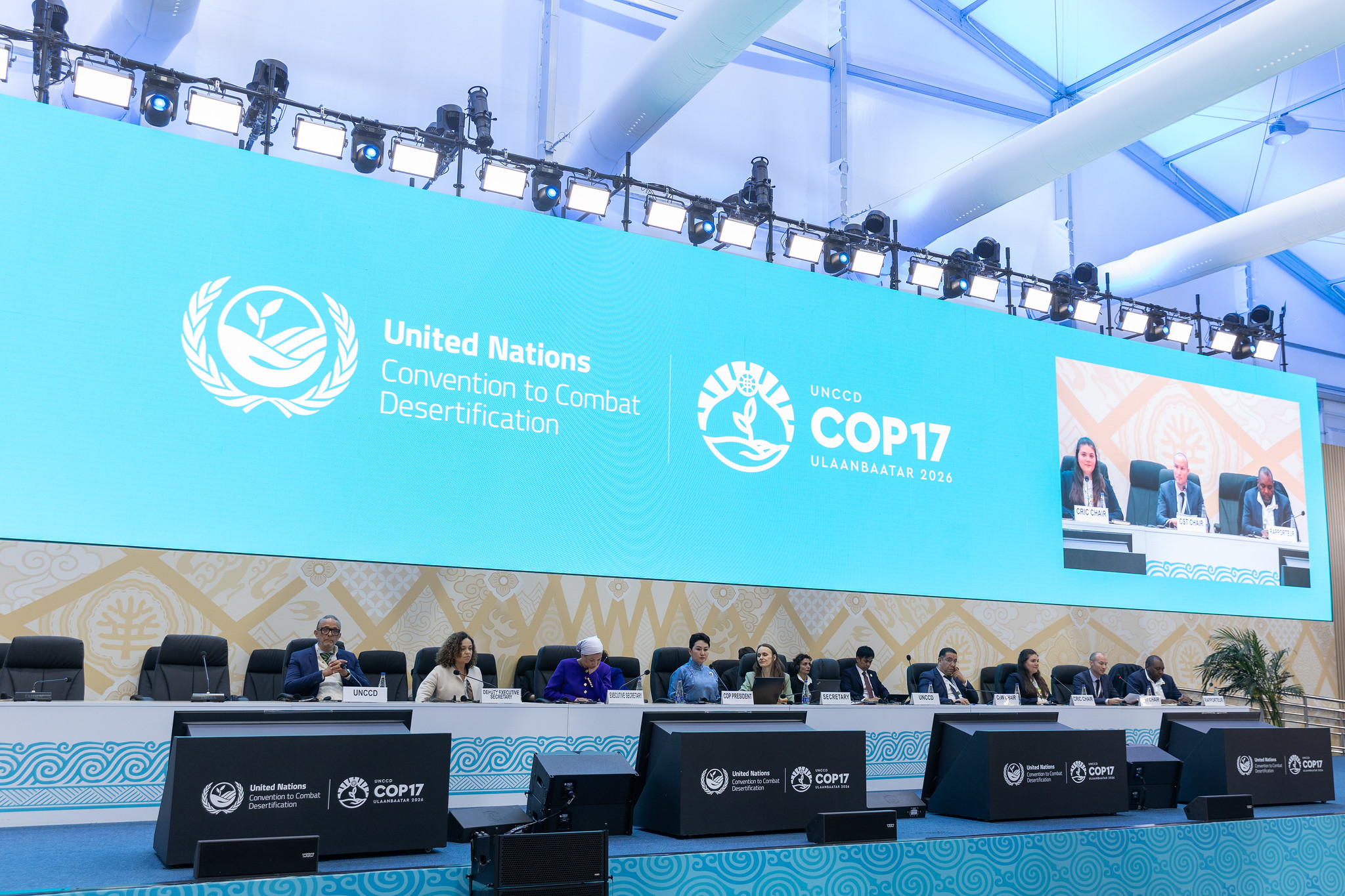
Distribution: To United Nations Secretariat units and bodies, specialized agencies and related organizations and intergovernmental organizations accredited as observers to the Conference of the Parties. The secretariat of the United Nations Convention to Combat Desertification (UNCCD) would like to inform that the seventeenth session of the Conference of the Parties (COP17), the twenty-fourth session of the Committee for the Review of the Implementation of the Convention (CRIC24) and the seventeenth session of the Committee on Science and Technology (CST17) to the UNCCD will take place in Ulaanbaatar, Mongolia, from 17 to 28 August 2026. The secretariat of the UNCCD has the honour to invite the representatives of your organization to participate in COP17 under the overarching theme “Restoring Land, Restoring Hope”. Regional in person consultations of affected country Parties of the Convention’s regional implementation annexes for Africa, Asia, Latin America and the Caribbean, Northern Mediterranean and Central and Eastern European country Parties in preparation to COP17 will be convened in Ulaanbaatar prior to the session from 15 to 16 August 2026, at the COP17 venue. Regional virtual consultations meetings will be implemented from 26 March until 9 July 2026. During the initial segment, from 17 to 21 August, in addition to the CST17 and CRIC24 sessions, the Committee of the Whole (COW) would initiate its work. In order to ensure the effectiveness of the civil society input in the deliberations of the COP, two half-days of open dialogue sessions have been planned on 20 August in the morning and 24 August in the afternoon. Also, in line with decision 36/COP.16 paragraph 2 and further to the request in decision 25/COP.16 paragraph 8, the convening of the Gender Caucus and other mandated events are included in programme of work. The High-Level Segment will take place during the second week of the COP, starting with a Heads of States Summit that will be organized by the Government of Mongolia on 23 August. The ministerial segment will follow, including ministerial dialogues and high-level special events that will be organized under thematic days, starting on August Monday 24 with Finance Day, Tuesday 25 with Water Day, Wednesday 26 Land and People Day, Thursday 27 Food Systems and Soil Health Day. During these days the agenda includes among others the following official events: on Monday (a) Ministerial Dialogue on innovative financial mechanisms for healthy land and drought resilience, and (b) the Business for Land Forum; on Tuesday (c) Ministerial Dialogue on accelerating drought resilience, (d) Special High Level event on Sand and Dust Storms; on Wednesday (e) Ministerial Dialogue on the Restoration of Rangelands and the well-being of Pastoralists’ Communities, (f) Youth Forum, (g) Gender Caucus, (h) Special Event on Indigenous Peoples and Local Communities Caucuses; on Thursday (i) Special Ministerial and High-Level event on Food Systems and Soil Health. During the thematic days, other high-level meetings, forums and side events will take place as part of an ambitious Riyadh-Ulaanbaatar Action Agenda for COP17, which is conceived as a platform to accelerate action and showcase solutions, innovations on finance, policy, coalitions, partnerships, technologies, operations in value chains to restore degraded land, manage and protect water, proactively manage drought, support food security, and build resilience economies and societies. The events will include the participation of political leaders, country delegates, representatives of financial institutions, CEO’s, mayors, academia, civil society organizations, parliamentarians, indigenous and local communities. Specific information about the thematic days and the events will be uploaded at https://www.unccd.int/cop17. During the concluding segment, the COP will consider all decisions not previously adopted. It will decide inter alia on the programme of work and date and venue of the eighteenth session of the COP and of the twenty-fifth session of the CRIC and any further decision on the matter taken during the current session. In order to assist delegations in preparing for the conference, a provisional agenda and relevant documents for the session will be made available on the UNCCD website. All relevant information for participation at COP17 will be made available on the UNCCD COP17 webpage at the following link: https://www.unccd.int/cop17/participate and on the host country COP17 website: https://unccdcop17.org. Please also note that COP17 will be a paperless session. Accordingly, official pre-session documents for COP17/CRIC24/CST17 sessions will be made available on the UNCCD website and the UNCCD Conference app. Official documents prepared in session will also be posted on the website and the Conference app. Limited quantities may be printed on site on demand only. Online registration will be available from 1 May 2026 on this link: https://indico.un.org/e/unccd-cop17. All participants are required to upload an official nomination letter confirming their capacity to attend the COP17 session. For more information on the online registration, please refer to the UNCCD COP17 webpage. The secretariat would like to draw your attention that participants are responsible for getting their own visas, hotel reservations and any type of health or other insurance they may need. Participants requiring visas must therefore obtain these from the Embassies or Consulates of Mongolia in their country or through electronic means, before their departure to Ulaanbaatar. Additional information on the session will be communicated in due course. Sincerely yours, Yasmine Fouad Executive Secretary

UNCCD Executive Secretary Dr. Yasmine Fouad visited the students of TH Köln with a simple message: land belongs to all of us.

محطة مؤسسية مهمة مع تحذير من المخاطر النظامية لتدهور الأراضي والجفافبون، ألمانيا، 2 أبريل 2026 — أدّت الدكتورة ياسمين فؤاد، الأمينة التنفيذية لاتفاقية الأمم المتحدة لمكافحة التصحر (UNCCD)، اليمين في 31 مارس بمقر الأمم المتحدة بنيويورك، مُتممةً بذلك تولّيها الرسمي لمهامها ضمن منظومة الأمم المتحدة. وقد أدّت اليمين أمام الأمين العام للأمم المتحدة، متعهدةً بأداء مهامها «واضعةً مصالح الأمم المتحدة وحدها نصب عينيها». ويؤكد هذا الحدث دورها المحوري في قلب منظومة الأمم المتحدة في وقت تتزايد فيه التحديات العالمية.ويمثل هذا الحدث محطة مؤسسية مهمة، تُثبت صفتها كموظفة دولية في الأمم المتحدة، مكلفةً بأداء مهامها باستقلالية ونزاهة، وبما يخدم حصريًا مصلحة المنظمة.وعقب مراسم أداء اليمين، التقت الأمينة التنفيذية بالأمين العام للأمم المتحدة لبحث سبل تعزيز مكانة قضايا تدهور الأراضي والجفاف والصمود ضمن الأجندة الأوسع للأمم المتحدة، بما يشمل أولويات خطة التنمية المستدامة لعام 2030، والعمل المناخي، ونُظم الغذاء، والاستقرار.وفي معرض حديثها عن إلحاح التحديات، قالت الدكتورة فؤاد:"الأرض ليست مجرد قضية بيئية، بل هي أساس اقتصاداتنا، وأنظمتنا الغذائية، واستقرارنا. ومع ذلك، فهي تتدهور بوتيرة غير مسبوقة. وإذا لم نتحرك الآن، ستستمر المخاطر في التفاقم عبر المياه والغذاء وسبل العيش. وهذا يتطلب تحركًا مستدامًا لاستعادة الأراضي وتعزيز القدرة على مواجهة الجفاف، باعتبارهما ركيزتين أساسيتين للاستقرار العالمي والتنمية المستدامة"ويُنظر بشكل متزايد إلى تدهور الأراضي والجفاف على أنهما مخاطر عالمية نظامية تؤثر على ما يقرب من نصف البشرية، وتتسبب في خسائر اقتصادية كبيرة. إذ يُكلّف تدهور الأراضي الاقتصاد العالمي نحو 900 مليار دولار سنويًا، بينما تتسبب موجات الجفاف في خسائر لا تقل عن 300 مليار دولار سنويًا. وتمتد آثارها لتشمل النظم الغذائية، وتوافر المياه، وسلاسل الإمداد، وسبل العيش.ويُعد سد الفجوة بين مستويات الاستثمار الحالية وحجم التحدي أمرًا حاسمًا لتسريع العمل في مجال استعادة الأراضي وتعزيز القدرة على مواجهة الجفاف.وتعمل اتفاقية الأمم المتحدة لمكافحة التصحر عند تقاطع هذه الأولويات العالمية. وباعتبارها المنصة الأممية المعنية بالأراضي، تضطلع الاتفاقية بدور محوري في الربط بين أجندات البيئة، والتنمية والمناخ والسلام. كما تسهم في تحقيق أهداف التنمية المستدامة، وتعزيز القدرة على التكيف مع تغير المناخ، ودعم الاستقرار في المناطق الهشة. ويُعد تدهور الأراضي والجفاف أيضًا من العوامل المضاعِفة للمخاطر، حيث يسهمان في زيادة الضغوط الاقتصادية، والنزوح، والهشاشة.وفي هذا السياق، وخلال وجودها في نيويورك، التقت الأمينة التنفيذية أيضًا بنائبة الأمين العام للأمم المتحدة أمينة محمد، كما أجرت مشاورات مع الدول أعضاء الاتفاقية، بما في ذلك ممثلو رئاسات مؤتمر الأطراف، (COP17) المملكة العربية السعودية و(COP16) منغوليا.كما عقدت سلسلة من الاجتماعات الثنائية لتعزيز الشراكات وحشد الدعم لاستعادة الأراضي وتعزيز القدرة على مواجهة الجفاف.وركزت هذه المناقشات على تسريع التنفيذ على أرض الواقع، بما يشمل زيادة التمويل، وتعزيز مشاركة القطاع الخاص، وتعميق التعاون داخل منظومة الأمم المتحدة ومع الشركاء الدوليين. كما تم التأكيد على أهمية تحويل الزخم السياسي إلى حلول قابلة للتوسع واستثمارات ملموسة. وسلطت الضوء أيضًا على دور الأراضي في معالجة التحديات المترابطة، مثل ترابط الأرض والمياه والغذاء، وإدارة مخاطر الجفاف، والتأثيرات المتزايدة للعواصف الرملية والترابية.ومع تقدم التحضيرات للدورة السابعة عشرة لمؤتمر الأطراف (COP17)، المقرر عقدها في أولان باتور، منغوليا، في أغسطس 2026، تعمل الاتفاقية مع شركائها على ترجمة هذه الجهود إلى إجراءات ملموسة، من خلال توسيع نطاق استعادة الأراضي، وتعزيز القدرة على مواجهة الجفاف، وحشد الاستثمارات اللازمة.ومن خلال وضع الأراضي في صميم الأجندة العالمية، تهدف اتفاقية الأمم المتحدة لمكافحة التصحر إلى دعم الدول في بناء اقتصادات أكثر صمودًا، ومجتمعات أكثر استقرارًا، ومستقبل أكثر استدامة. وسيشكل مؤتمر الأطراف COP17 محطة حاسمة لإظهار التنفيذ وتسريع العمل العالمي.-انتهى-لمزيد من المعلومات، يرجى التواصل مع المكتب الإعلامي لاتفاقية الأمم المتحدة لمكافحة التصحر:press@unccd.int نبذة عن الاتفاقية:تُعد اتفاقية الأمم المتحدة لمكافحة التصحر (UNCCD) الصوت والرؤية العالمية المعنية بالأراضي. حيث توحّد الحكومات والعلماء وصنّاع السياسات والقطاع الخاص والمجتمعات حول رؤية مشتركة وعمل عالمي لاستعادة وإدارة أراضي العالم بما يضمن استدامة البشرية والكوكب. وهي أكثر من مجرد معاهدة دولية موقعة من 197 طرفًا، إذ تمثل التزامًا متعدد الأطراف للتصدي لتأثيرات تدهور الأراضي اليوم، وتعزيز إدارة الأراضي مستقبلًا، بما يوفر الغذاء والمياه والمأوى والفرص الاقتصادية للجميع بشكل عادل وشامل.

Standing on a rocky stretch just outside Riyadh, the land opens out in every direction, sand, stone and dry air, with little to interrupt it. It is a landscape shaped by scarcity, where water is limited and vegetation survives under pressure. That strain is increasing as temperatures rise and rainfall becomes more unpredictable.This pressure is not unique to Saudi Arabia. Globally, land degradation is accelerating. It affects up to 40 per cent of the land globally and puts nearly half of humanity at risk, even as countries have committed to restoring one billion hectares by 2030.In this context, Saudi Arabia, in just four years, has restored its first one million hectares of degraded land under the Saudi Green Initiative, its national programme launched as part of Vision 2030 to scale up land restoration, increase vegetation cover and strengthen ecosystem resilience.What makes this milestone relevant beyond the country are its scale, and where and how it was delivered.The challenges, where restoration is happening and how it is being doneThe restored land is not located in a single area. It spans multiple regions and ecosystems, including the King Salman bin Abdulaziz Royal Reserve, the Imam Abdulaziz bin Mohammed Royal Reserve, Sharaan Nature Reserve in AlUla and Qassim National Park, among others.These areas vary in their ecological conditions and land-use pressures. They include landscapes under stress and protected areas undergoing active rehabilitation. Working across such varied conditions requires a structured approach. In Saudi Arabia, restoration efforts are guided by ecological assessments that determine what each landscape can sustain. Native species are used to improve survival rates, while water use is carefully managed to reduce pressure on already limited resources.Restoration is supported by complementary measures, including expanding protected areas, improving early warning systems for sand and dust storms, and strengthening climate adaptation tools.Equally important is how results are verified. Satellite monitoring, geographic information systems and field inspections are combined to assess changes in vegetation cover, soil stability and land productivity.This makes it possible to track progress consistently and helps build confidence that restoration efforts are delivering tangible ecological outcomes.Going to scale and linking national action to global targetsThe scale of land degradation has led to global targets that are equally ambitious. Through the United Nations Convention to Combat Desertification (UNCCD), countries are committed to restoring one billion hectares of degraded land by 2030. To advance these global commitments, the Group of 20 countries (G20) through the Global Land Initiative hosted by UNCCD, is committed to reducing degraded land by 50 per cent by 2040, underscoring the importance of scaling restoration across all ecosystems. Through this initiative, countries are promoting large-scale restoration, exchanging practical experiences across different contexts and engaging the private sector to mobilize the required investments.Saudi Arabia’s progress provides one example of how to restore land at scale across different landscapes, including in environments where water scarcity and climate conditions make recovery more complex. UNCCD Executive Secretary Dr Yasmine Fouad notes: “The priority now is scaling what works. What this experience shows is that restoration can be delivered across vastly different landscapes, including in water-scarce environments, when it is supported by the right policies, science and long-term commitment. This is essential if global targets are to be met.”This work also draws on approaches supported by UNCCD, including monitoring frameworks, tracking land degradation in real time and knowledge-sharing across countries.Restoring land brings a wide range of benefits. Improved land productivity, more stable soils and restored vegetation help communities withstand drought, protect livelihoods and reduce long-term risks linked to land degradation. In many of these areas, restoration is closely linked to livelihoods, particularly in rangelands where land conditions directly affect pastoral communities. By engaging the private sector, there is growing momentum to create new jobs built on a budding restoration industry. Carrying momentum forwardSaudi Arabia hosted the sixteenth session of the Conference of the Parties (COP16) to the UNCCD in Riyadh in December 2024, where countries called for scaling up action on land restoration, strengthening drought resilience and increasing investment. Often, the vital role COP hosting plays in mobilizing political will to restore land at country level is often underestimated. The COP16 shift and momentum from commitment to implementation is expected to continue at COP17, which will take place in Ulaanbaatar, Mongolia, from 17 to 28 August 2026.The challenge now is less about identifying solutions and more about applying them at scale across different regions and ecosystems.Restoring land in arid environments is complex. Limited water availability, long recovery periods and the need for sustained monitoring mean that results depend on long-term commitment.What this experience makes clear is that restoration is already moving from commitment to implementation, including in the most constrained environments, and bringing with it multiple benefits – from jobs and livelihoods to resilience, long-term stability and security.
