Stories
Latest
Mongolia has unveiled the official logo for the 17th session of the Conference of the Parties (COP17) to the United Nations Convention to Combat Desertification (UNCCD), taking place in Ulaanbaatar from 17 to 28 August 2026. The emblem blends deep cultural symbolism with a call to global action, reflecting UNCCD’s mission to unite nations in finding solutions to desertification, land degradation and drought. The unveiling of the logo marks the beginning of one-year countdown to UNCCD COP17. More than a visual identity, it is an invitation to join hands in planting seeds of unity, resilience and shared trust — so that lands once degraded may flourish again. At the top of the logo, radiating sunrays recall the eternal expanse of the sky — a life-giving force in Mongolian cosmology — which echoes the Sustainable Development Goals and represents the solutions to environmental challenges faced by humanity. The rays flow into the silhouette of a traditional Mongolian ger (yurt), crowned with a toono — the circular opening through which the sky enters the home. This symbol of harmony between people and nature echoes the timeless wisdom of nomadic life and the belief that the earth is both homeland and heritage. Beneath, an open hand cradles the Earth with gentle strength, a gesture of stewardship and protection, while from the palm a green sprout emerges — a sign of resilience, renewal and the promise of a restored world. Together, these elements express COP17’s central message: that our collective efforts, diverse knowledge and shared responsibility can transform the challenges of land degradation into opportunities. With over 75 per cent of its land affected by degradation, Mongolia has made land restoration a national priority through initiatives such as the “Billions of Trees” movement, the “White Gold” rural development programme and the “Food Revolution” agri-soil campaign. Hosting UNCCD COP17 will provide a platform to share these experiences while catalyzing global cooperation to address the interlinked crises of land degradation, climate change and biodiversity loss. UNCCD COP17 will bring together delegates from 197 Parties, academia, civil society and private sector to advance drought resilience and land restoration goals. The conference aligns with the UN International Year of Rangelands and Pastoralists (IYRP 2026), an initiative championed by Mongolia to highlight sustainable rangeland management and the needs of over one billion people who depend directly on these ecosystems.

In the desert village of Lodhera, Rajasthan, a grassroots environmental initiative has taken shape under the leadership of UNCCD Land for Life Award laureate Professor Shyam Sunder Jyani and Kavita Jyani, co-founder of the Familial Forestry movement. As part of the broader Familial Forestry Mission, the duo has launched the “Plastic-Free Kitchen” campaign—starting with a small but symbolic step: replacing plastic tea strainers with safer alternatives. The initiative aims to raise awareness about the potential health and environmental risks associated with everyday plastic utensils. While scientific consensus on long-term health effects is still evolving, microplastic pollution from common plastic items has become a growing concern worldwide. Items like plastic tea strainers, when exposed to heat, can degrade over time and contribute to microplastic presence in domestic environments. This local campaign was introduced at a community gathering, where women from Lodhera village pledged to avoid plastic tea strainers in favor of more durable and eco-friendly materials such as stainless steel and natural fibers. Speaking at the event, Kavita Jyani emphasized how behavioral change at the household level can reinforce broader environmental values. “Transforming small habits in our kitchens can help build a culture of sustainability and health,” she said. The plastic-free campaign is closely linked with the Familial Forestry approach, which integrates environmental responsibility into family and community life. A unique concept developed by Professor Jyani, it treats each planted tree as a green “family member”. Placing the family at the center of environmental stewardship, the concept embeds ecological values into everyday family life. Since 2006, more than one million families from over 15,000 desert-prone villages in northwest Rajasthan have planted over 2.5 million saplings, with the active participation of students and desert dwellers. Addressing the rally, Professor Jyani spoke about the importance of community-led ecological action and the relevance of native vegetation in addressing climate challenges. “From tree planting to kitchen choices, each decision contributes to a more resilient ecosystem,” he said. The Plastic-Free Kitchen campaign brings a domestic dimension to the broader goals of land conservation and sustainability, aligning closely with UNCCD priorities to promote ecosystem health and sustainable livelihoods. As governments meet in Geneva the week of 4 August for the final round of negotiations on a global plastics treaty, grassroot initiatives like the one in Lodhera highlight the power of community-led action alongside global policymaking.

Land degradation and drought are fueling a hidden health crisis – but we still have time to act. When we speak of desertification or drought, we often think of dry rivers, cracked soil and failed harvests. But there is another, less visible toll - one that strikes deep into the lungs, hearts and daily lives of the world’s most vulnerable people. A new policy brief from the UNCCD reveals the far-reaching health impacts of land degradation and drought — and it delivers a stark message: the health of the planet and the health of people are inseparable. Around the world, land is deteriorating at an alarming pace. Between 2015 and 2019, more than 100 million hectares of productive land were lost each year. That’s an area roughly the size of Egypt — gone annually. This degradation doesn’t just threaten biodiversity and food production. It destabilizes communities, weakens immune systems and increases the spread of disease. The damage is particularly acute in regions like sub-Saharan Africa, Latin America and Southeast Asia, where fragile ecosystems support large and growing populations. As land dries out or is stripped of its fertility, the impact cascades: water becomes scarce, crops fail, dust storms multiply and health systems buckle under the strain. And the data is clear. In drylands — which already cover more than 40 per cent of the Earth’s surface — rates of malnutrition, respiratory illness and waterborne disease are rising. Children are particularly at risk. Malnutrition, stunting and underweight are now among the top drivers of childhood disease burden globally. In places like Zambia, droughts have pushed up food prices, leaving pregnant mothers undernourished and babies born weaker. In parts of South America, dust from degraded soil increases the risk of respiratory illness and exposure to infectious diseases. In Australia, prolonged drought has been linked to rising levels of anxiety, depression and rural suicide. This is not a coincidence. These are complex, systemic failures driven by the intertwined forces of environmental degradation and climate change. The UNCCD brief lays out how drought, land degradation and desertification — collectively referred to as DLDD — contribute to a spectrum of public health challenges, ranging from infectious diseases like cholera, malaria and even HIV, to chronic conditions such as asthma and cardiovascular disease. Poor air quality from wildfires and sandstorms, unsafe water due to reduced availability and contamination and disrupted food systems all contribute to rising illness and mortality. What’s more, DLDD increases the risk of emerging zoonotic diseases — illnesses transmitted from animals to humans — by disturbing ecosystems and bringing humans into closer contact with disease reservoirs. This is how Ebola spreads. This is how pandemics begin. It’s critical that we connect the dots: land degradation, desertification, and drought are not just environmental issues — they directly impact human health,” says Dr. Barron Joseph Orr, UNCCD Chief Scientist. “The good news is that by restoring land and managing drought proactively, we can reduce health risks, strengthen communities and improve lives."The solution, the brief argues, lies in breaking these dangerous feedback loops. This requires more than restoring land or investing in health. It demands a radical rethinking of how we govern the relationship between ecosystems and wellbeing. The UNCCD calls for integrated, cross-sectoral responses — ones that recognize land not as a passive backdrop to human life, but as a living, dynamic system on which health depends. That means reorienting land use planning, agricultural policies and environmental management to include health as a central concern. It means empowering communities with tools and knowledge to respond to climate threats. It means supporting women and girls, who often carry the greatest burdens — collecting water, caring for the sick, or suffering silently from the physical and mental toll of degraded environments. “We have to realize that human health is closely linked with the health of our land and our ecosystems. The quality of the food we produce from healthy soil is akin to a pharmacy. says Ibrahim Thiaw, Executive Secretary of the UNCCD. "This is a call to all sectors — from health to agriculture to finance — to come together and build resilience where it matters most: in our soil, in our systems, and in our communities.” The brief also emphasizes the need to implement the World Health Organization’s Global Action Plan on Climate Change and Health and to strengthen the One Health approach — which sees the health of people, animals and ecosystems as deeply interlinked. The benefits of action far outweigh the costs, the brief stresses. From reduced hospital admissions to increased agricultural resilience, the returns on investing in land-health synergy are profound. Time, however, is running short. As climate extremes intensify and drylands expand, more communities will be pushed beyond their coping capacity. Unless we act, the health consequences of inaction will grow — quietly, inexorably and with devastating effects. The UNCCD stands ready to support countries in this effort — by providing the data, guidance and partnerships needed to develop integrated responses, empower the most vulnerable and restore the health of the land so that people, too, can thrive. Because when the land gets sick, so do we.

In northern Colombia, snow-capped peaks tower more than 5,700 metres above the Caribbean Sea. This is the Sierra Nevada de Santa Marta, a UNESCO Biosphere Reserve deemed the most irreplaceable site in the world for threatened species.Much more than a sight to behold, the range is the prime water tower for 1.8 million people, a biodiversity hotspot in a country that ranks second globally in species richness and a territory of deep spiritual significance for the Arhuaco, Kogui, Wiwa and Kankuamo peoples. For them, it is Gonawindúa, or the ‘Heart of the world.’ This landscape of biocultural importance illustrates the vital role sacred natural sites around the world play in conservation, sustainable use and restoration of the land. That is particularly true for the Sierra Nevada, a land scarred by decades of conflict, charcoal mining, unsustainable agriculture and urban sprawl. Sierra Nevada de Santa Marta is a major water tower in northern ColombiaIn response to these pressures, communities have joined forces to protect and revive their land —a testament to the indelible links between the country’s 1.9 million Indigenous people, belonging to around 100 ethnic groups, and their ancestral territories.The Heart of the World Programme, recently launched by four Indigenous organizations with support from the Ministry of Environment and Sustainable Development, looks to heal the land —including its soils, water resources and biodiversity— drawing on the best of ancestral knowledge and science. In upholding the cultural and spiritual integrity of their territory, home to nearly 350 sacred sites, the communities are also restoring vital ecosystem services like water provision for downstream populations.Arhuaco community in Serra Nevada de Santa Marta, Colombia“Just as the human body heals itself, the Earth can also recover as long as we stop harming it,” says environmental coordinator of the Tayrona Indigenous Confederation Dwirunney Torres. The programme, he says, has allocated 70 percent of the territory to natural regeneration and the rest to ensuring food sovereignty and agroecological ventures through 2065. The compass for the initiative is the Law of Origin, a set of ancestral principles that governs the lives of Indigenous communities and provides the basis for sustainable land use planning and land management. Its ultimate goal is achieving harmony between humans and the natural and spiritual worlds, which are seen as one.Nature-based solutionsIndigenous people in the Sierra Nevada understand the link between healthy lands and the wellbeing of communities. As a result, they are taking action to protect and restore the land to ensure the availability of clean water, nutritious food and vibrant ecosystems for generations to come. Sierra Nevada de Santa Marta, northern ColombiaInterventions range from acquiring land of cultural and environmental significance to protect it, to collecting and propagating the seeds of native species adapted to changing climatic conditions, to ensuring that degraded lands and ecosystems are allowed to regenerate. Other measures involve establishing living fences around water springs.According to the Heart of the World Programme, reconnecting and protecting the string of sacred natural sites that delimit the territory —known as the Línea Negra, or ‘Black Line’— is the main and most effective strategy to heal the land: “Recovering and inhabiting the sacred sites is important, since the mere tenure of these spaces and the exercise of [Indigenous] self-government therein, guarantees their integral protection and natural regeneration (...).”Women play an important role in these efforts, both as technical experts and as bearers of traditional knowledge. 'Heart of the World Programme,' led by Indigenous communities “As Arhuaco women, as givers of life, we have a responsibility to care for our Mother Earth” says environmental engineer Gunkeiwia Daza. In her community, women oversee native plant nurseries that are used to revive forests —and to rekindle the memory of a land where nature and culture go hand in hand. For Gonawindúa communities, restoring the land is not a mere project, but a way to keep the Heart of the World beating. Their message, summed up by Dwirunney, is clear: the solution to the world’s environmental crises will not come from technical advances alone, but from a genuine respect for the Earth and its guardians.Photo : © José Ríos/UNIC Bogota/UNCCD

The launch of this 2,028-tree forest at Démé High School in Tsévié is part of global celebrations for the Desertification and Drought Day, observed on June 17. This year’s theme is: “Restore the Land. Unlock the Opportunities” The initiative is led in partnership with the NGO APEVIA, supported by the Togolese government and the United Nations Convention to Combat Desertification.

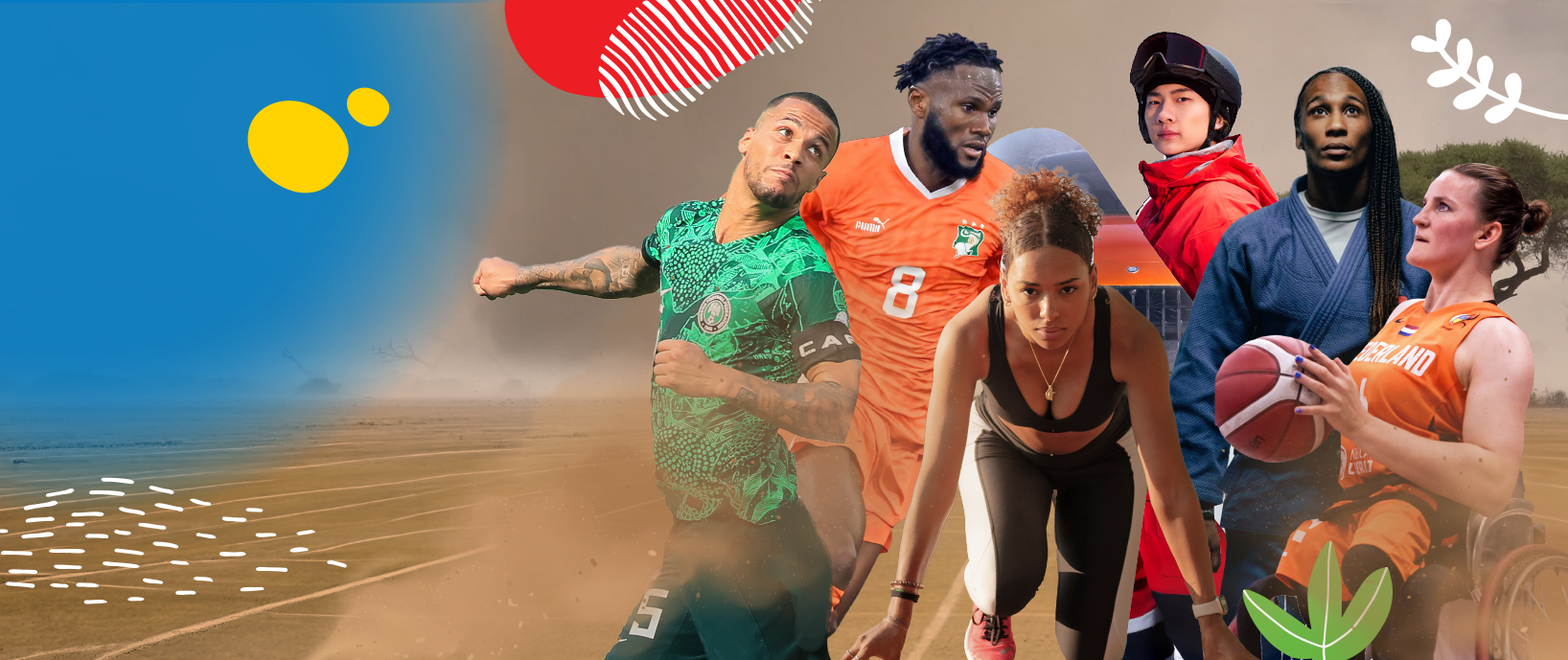
With nearly 80 events in over 50 countries, this year’s living map of restoration and resilience stretched across five continents—through seedling-lined schoolyards, packed football pitches and sunset-lit coastlines—bringing land back to life. In Parakou, Benin, pupils became “Forest Guards,” lining their schoolyard with rows of acacia and cheering for every watered sapling. In Garoua, Cameroon, high-schoolers pieced together a hidden-word “Sustainability Fresco,” pledging to swap single-use plastics for reusable bowls and bottles. In Lome, Togo, passion for sport sprouted hope when UNCCD Sport4Land Champion Naomi Akakpo led 200 teens on a “Race to Plant 2 028 Trees,” pausing just long enough to tuck each seedling into the soil—one tree for every Olympic year up to Los Angeles 2028. In Lagos, Nigeria fellow Champion William Troost-Ekong turned every goal of his charity match into funding for drought-resilient nurseries, greening both the pitch and the planet. India brought a household twist: Land for Life laureate Shyam Sunder Jyani led a “Plastic-Free Kitchen” drive, replacing plastic tea strainers with metal or natural-fiber ones to keep microplastics out of the soil. From island coasts to arid heartlands, communities rallied to mark the day. Volunteers planted mangroves beside flamingo-filled lagoons in Mumbai while pop-up bands kept up the “fly-sustainable” rhythm. Across the equator, Namibia’s students at the NamTip Winter School measured encroaching thornbush and brainstormed ways to bring grasslands back. In Mandalgovi, Mongolia’s Youth4Land Forum combined herding games with virtual-reality dunes, proving that traditional husbandry and tech savvy can share a learning space under the same felt roof. Europe and Asia stirred the senses. Praia, Cape Verde blended morna folk music with mangrove talks, while in France visitors to Paris’s Jardin des Serres d’Auteuil sipped fonio mocktails and sampled millet sauces, discovering how Sahelian drylands nourish both soil and palate. In Spain, Madrid’s Casa Árabe pulsed with poems celebrating the rebirth of the soil once lost to land degradation, and in Yinchuan, China’s national observance filled museums with hands-on displays of the Three-North Shelterbelt and desert-art workshops, inviting children to recite plant names in Mandarin, Arabic and English. Near Los Angeles, USA volunteers at Arcadia Eco-home harvested compost by lamplight, following this year’s rallying call: “Restore the land. Unlock the opportunities.” The theme echoed across cultures and continents—braiding science, tradition, and community into a single green thread of drought-resilient hope.
