Agrivoltaics (Rangevoltaics)
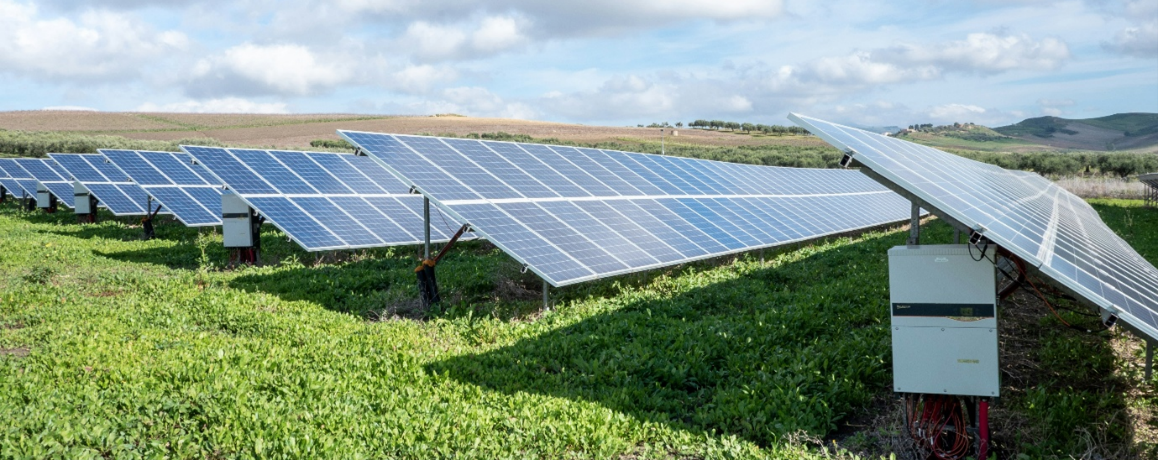
In agrivoltaics, agricultural production such as crops, livestock or pollinator habitats are located underneath or between rows of solar panels. In croplands, for example, solar panels can be installed vertically and at varying heights to promote plant growth and reduce wind speeds by up to 40% (up to 88% for perpendicular winds). A specialised form of agrivoltaics is rangevoltaics (solar grazing), where livestock (e.g. sheep, cattle and goats) are permitted to graze on vegetation within a solar farm. These practices form part of a dual-use strategy that combines renewable energy production with agricultural production and sustainable land management.
Although agrivoltaic systems require significant initial investment in installation and infrastructure, they often provide substantial farm-scale returns within a few years. This depends on the location's suitability, the energy dependence of operations, and access to the grid. Other configurations, such as elevated sun-tracking panel systems, solar installations with integrated sand barriers, and agroforestry (silvopasture) with conventional photovoltaic systems can act as artificial windbreaks to reduce wind erosion when suitably designed.
Agrivoltaics Farm at the University of Colorado
References and Good Practice Guidance
- Wind sheltering in vertical agrivoltaics can increase crop yields: a modelling study for Northern Europe
- Vertical agrivoltaics in a temperate climate: Exploring technical, agricultural, meteorological, and social dimensions
- Fraunhofer Institute Agrivoltaics: Opportunities for Agriculture and the Energy Transition
- Solarpower Europe Agrisolar Handbook
- US Department of Energy Agrivoltaics: Solar and Agriculture Co-Location
Biome/Climatic Zone
Anthropogenic/Land Use