Biocrust Inoculation/Restoration
Biocrust inoculation/restoration involves applying cyanobacteria, algae, mosses and/or lichens to create or re-establish biological soil crusts, which stabilise and cover bare ground. Biocrusts cover approximately 12% of the global land surface, primarily in drylands, and can play a crucial role in mitigating SDS emissions. While protecting existing biocrusts from threats, such as grazing, vehicles and foot traffic (see limiting vehicle access/speed), is the most cost-effective strategy, biocrusts can also be deliberately established through transplantation. Inoculated biocrusts require time to mature and reach full functional effectiveness, but once established they are relatively efficient and low-cost with minimal maintenance requirements, primarily protection from disturbance.
Biocrust organisms are among the first colonisers of terrestrial ecosystems and support the regrowth of native vegetation from bare soils with a depleted microbiome. Protecting biocrust can be combined with organic soil amendments or erosion control blankets to prevent the loss of biocrust components before they can establish. When absent, cyanobacteria can be cultivated in a laboratory and applied to the soil, creating the conditions for more complex biocrusts to eventually emerge. These organisms can be mixed into a slurry with water and other useful components before being sprayed or spread over the restoration area to rapidly establish a more diverse biocrust.
Greenhouse‐grown Biocrust Inoculum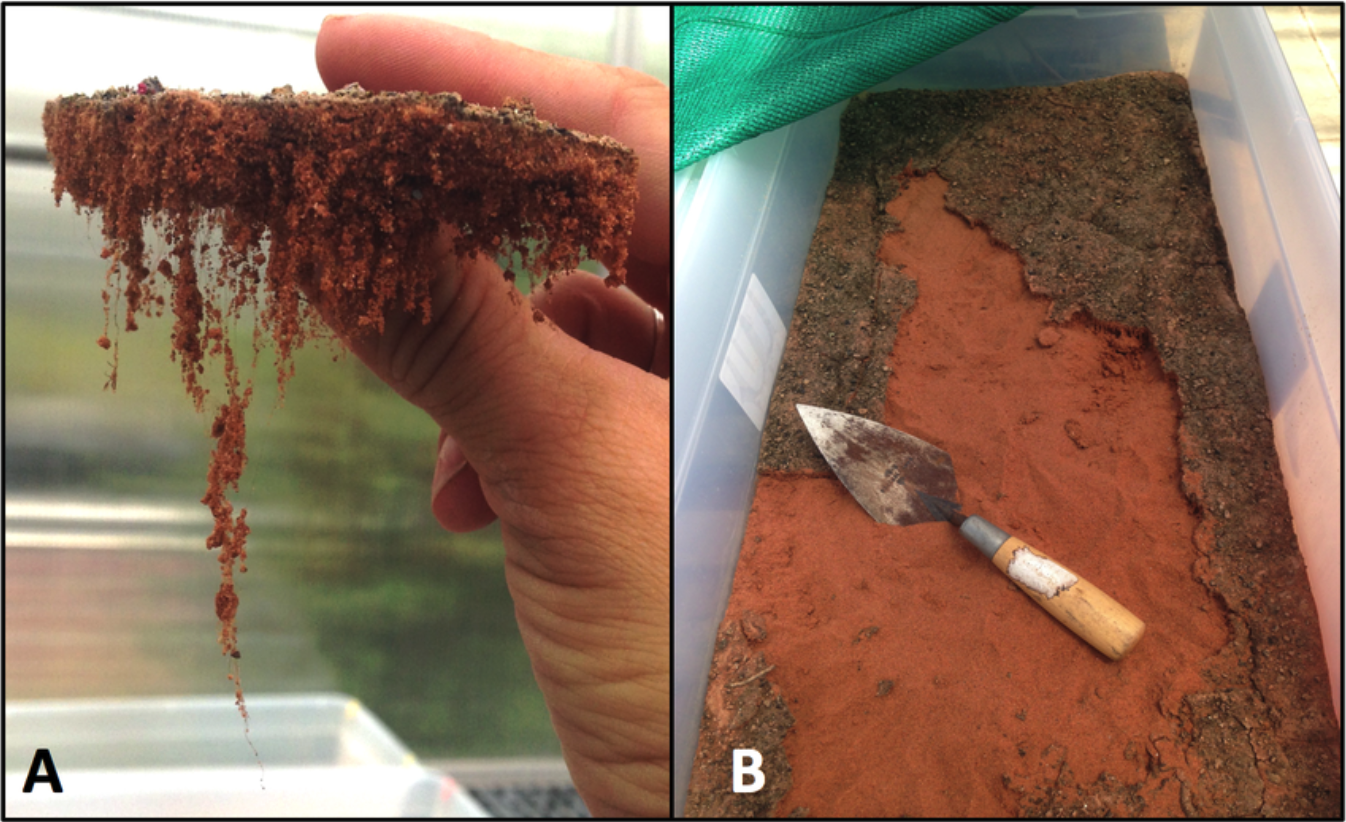
References and Good Practice Guidance
- Global cycling and climate effects of aeolian dust controlled by biological soil crusts
- Temporal and abiotic fluctuations may be preventing successful rehabilitation of soil‐stabilizing biocrust communities
- Induced biological soil crust controls on wind erodibility and dust (PM10) emissions
- Biocrust amendments to topsoils facilitate biocrust restoration in a post-mining arid environment
- Optimizing survival and growth of inoculated biocrust-forming cyanobacteria through native plant-based habitat amelioration
- USGS Biological Soil Crust (Biocrust) Science
Biome/Climatic Zone
Anthropogenic/Land Use