Organic Soil Amendments
Organic soil amendments are plant or animal materials added to soil to improve its physical, chemical, and biological properties, such as compost, manure, biochar, and soil bacteria (see organic mulching and biocrust inoculation/restoration). These amendments enhance soil structure and health, reduce the need for chemical inputs, increasing soil aggregation and moisture retention needed for long-term vegetation growth, especially in areas with low levels of organic matter and nutrients. Organic residues, such as animal and green manure, can be incorporated into circular farming systems to reduce costs (see agroforestry (silvopasture)).
Compost is decomposed organic matter produced through the controlled microbial breakdown of plant residues, animal waste, and other biodegradable materials. Animal and green manure applications can supply high levels of nutrients and stimulate biological activity, contributing directly to increased soil organic matter, improved soil structure, and enhanced nutrient availability. While the benefits of compost and manure can persist for several years after application, maintaining maximum effectiveness typically requires regular reapplication.
Biochar is organic material that has been converted into a stable, carbon-rich substance through a process called pyrolysis, which involves heating the material in the absence of oxygen. Unlike compost or manure, it persists in the soil for decades, thereby contributing to its long-term structural stability. Rather than contributing nutrients or bacteria directly, it enhances the soil habitat for microbes by increasing its nutrient and water retention capacity.
Rhizobium inoculation is a low-cost bacterial treatment that fixes nitrogen and improves the nutrient uptake of plant roots, thereby enhancing crop growth and resilience to erosion. This practice has been widely used since the early 20th century, particularly for legume crops in degraded areas. Psyllium husk powder has shown promise as a soil stabiliser that supports the growth of cyanobacteria and increases soil organic carbon.
Case Studies
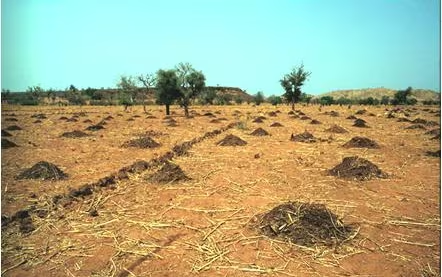
In Burkina Faso, the regular application of compost and animal manure increased soil fertility, improved infiltration and water retention, and reduced susceptibility to water and wind erosion, while supporting more intensive cultivation and higher yields. In Tunisia, rhizobium inoculation of legumes has been used in different agro-climatic zones which are prone to water and wind erosion due to their shallow nature. This practice enhances the nutrient content of legumes, such as beans, chickpeas, and lentils, thereby improving their growth, yield and resistance to disease and the adverse effects of climate change.
Organic Soil Amendments in Burkina Faso
References and Good Practice Guidance
- University of Wisconsin Building Soil Organic Matter with Organic Amendments
- FAO Technical manual of recommended sustainable soil management ‘Recarbonizing global soils’
- Effects of Organic Amendments on Soil Fertility and Environmental Quality: A Review
- Using organic amendments in disturbed soil to enhance soil organic matter, nutrient content and turfgrass establishment
- Compost to improve sustainable soil cultivation and crop productivity
- Eurostat Manure
- Biochar for a sustainable future: Environmentally friendly production and diverse applications
- Rhizobium-inoculant legumes: benefits to producers
Anthropogenic/Land Use