Surface Wetting
Surface wetting involves using irrigation systems or water trucks to dampen the soil in SDS source areas. This increases soil moisture, strengthening the cohesive forces that bind fine particles together and making them less likely to be entrained by the wind, thereby reducing dust emissions. At the same time, localised increases in humidity can suppress dust generation once a critical threshold is reached. Sand and dust particles mobilised from nearby areas tend to adhere to wetted surfaces, which halts them before they can propagate downwind. Surface wetting practices can be applied to croplands (between and after the initial planting of high-value crops), dirt roads, industrial sites, and desiccated wetlands/basins. However, highly permeable soils are not well suited for surface wetting as they require significantly more water to keep the surface adequately moist.
For desiccated wetlands/basins, this option differs slightly from surface flooding, whereby a constant, shallow layer of water is maintained over the soil. Irrigation or distribution systems allow for more accurate and timely applications of water, making them the preferred option when water is limited and/or the intensity of SDS emissions varies greatly over time and space. Water trucks and stationary sprinklers are commonly used at mine and quarry sites to specifically target areas vulnerable to dust emission. For roads and industrial sites, dust palliatives/suppressants may provide more effective and longer-lasting dust control, reduce maintenance requirements, and lower overall costs compared to surface wetting. Organic mulching or wetting of livestock pens and feedlots primarily aims to improve animal welfare, but can also supress dust emissions from hoof action.
In general, surface wetting requires an initial investment in water distribution infrastructure, as well as ongoing costs associated with water trucking and system monitoring. Costs can range from low for gravity-fed systems to high for those requiring pumps and extensive piping or whip lines. Although ground- and vehicle-based sprinklers are less water-efficient than direct piping due to evaporative losses, they can provide more even and precise surface wetting. The installation of irrigation systems and water conveyance can cause surface disturbance, including transport and infrastructure across fragile lakebeds. Once the surface wetting infrastructure is in place, however, the option can be effective for 20 years with proper maintenance.
Case Study
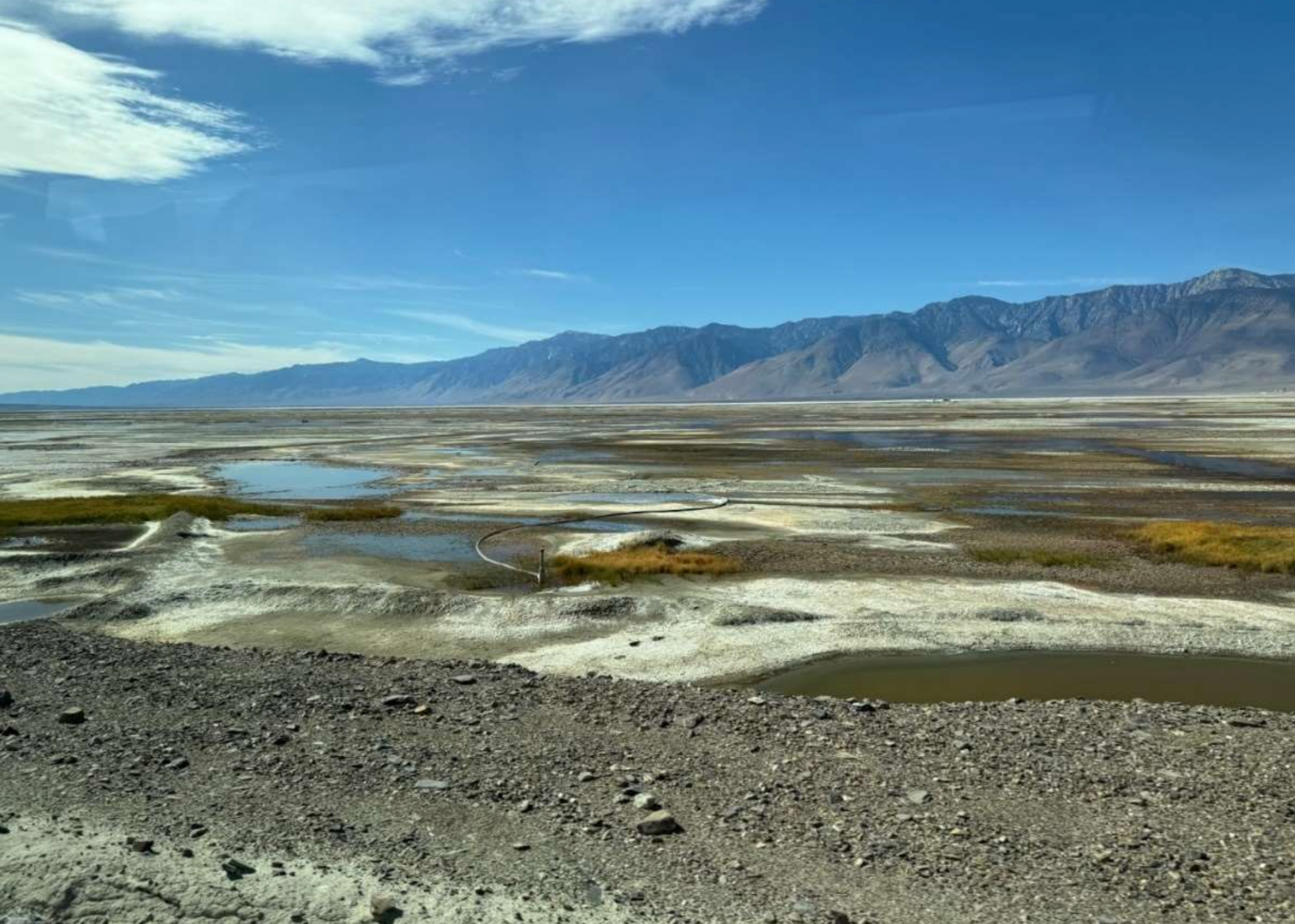
At Owens Lake in Utah, maintaining 99% dust control efficiency required approximately 2.7 acre-feet of water per year using sprinklers and 2.3 acre-feet of water per year using whip lines. However, variations in soil texture, mineralogy, and hydrologic conditions will mean that results at other sites are likely to vary significantly.
Surface Wetting in the Great Salt Lake
References and Good Practice Guidance
- Shrinking water bodies as hotspots of sand and dust storms: The role of land degradation and sustainable soil and water management
- Effectiveness and Impacts of Dust Control Measures for Owens Lake
- Dust Mitigation Options and Costs for Great Salt Lake
- Particulate matter reduction efficiency analysis of sprinkler system as targeted control measures for construction activity
- New South Wales Environmental Protection Agency Dust from small quarries visual guide
- Iowa Beef Center: Beef Cattle Handbook – Feedlot Dust Control
- Meat and Livestock Australia Beef Cattle Feedlots – Waste Management And Utilisation Management of Odour, Dust and Flies
Biome/Climatic Zone
Anthropogenic/Land Use