News & stories


Latest news & stories
الرياض، 14 سبتمبر 2025 -في أول مهمة رسمية لها كأمينة تنفيذية لاتفاقية الأمم المتحدة لمكافحة التصحر (UNCCD)، قامت د.ياسمين فؤاد بزيارة إلى الرياض حيث التقت بمعالي المهندس عبد الرحمن الفضلي، وزير البيئة والمياه والزراعة في المملكة العربية السعودية ورئيس الدورة السادسة عشرة لمؤتمر الأطراف COP16.وقالت الدكتورة فؤاد: ""جاءت زيارتي إلى الرياض لتأكيد التزامنا المشترك ولتسليط الضوء على الدور القيادي البارز لرئاسة مؤتمر الأطراف السادس عشر COP16 في المملكة العربية السعودية، بينما نتجه بخطى ثابتة نحو مؤتمر الأطراف السابع عشر COP17. لنتمكن من مواجهة الآثار العميقة لتدهور الأراضي على الأمن الغذائي والاستقرار الاقتصادي، علينا أن نتحرك بحزم وبروح جماعية. فشراكتنا هي المفتاح لحشد الإرادة السياسية والموارد من أجل استعادة الأراضي وبث الأمل من جديد."ركزت المناقشات على الأولويات المشتركة، بما في ذلك تسريع الجهود لبناء القدرة على الصمود في مواجهة الجفاف، وإصلاح النظم الغذائية، وخلق فرص جديدة لمشاركة القطاع الخاص في استعادة الأراضي.فيما يتعلق بالقدرة على الصمود في مواجهة الجفاف: تناول الاجتماع مبادرة شراكة الرياض العالمية لمواجهة الجفاف والتي تم إطلاقها خلال مؤتمر الأطراف السادس عشر، وأكد الأطراف على الحاجة إلى تبني نهج عالمي استباقي للتأهب للجفاف والاستجابة له، ووضع سياسات قوية تدعم المجتمعات والأنظمة البيئية الأكثر عرضة للخطر.فيما يتعلق بالنظم الغذائية: شدد الجانبان على الصلة الجوهرية بين الأراضي السليمة والإنتاج الغذائي المستدام. وانطلاقاً من القرار التاريخي الذي اعتمده مؤتمر الأطراف السادس عشر COP16 بشأن الأراضي الزراعية المنتجة، أشارا إلى أن الزراعة ما زالت تشكل محركاً رئيسياً لتدهور الأراضي وإزالة الغابات واستنزاف المياه العذبة وفقدان التنوع البيولوجي على مستوى العالم، وأنه لا بد من إصلاحها لتصبح جزءاً من الحل. فيما يتعلق بمشاركة القطاع الخاص: ارتكزت المناقشات إلى مبادرة القطاع الخاص من أجل الأراضي التي أقرها القادة في مؤتمر الأطراف السادس عشر COP16، وركزت على استراتيجيات تهدف إلى فتح آفاق التمويل والابتكار، والحد من المخاطر الاستثمارية، وتطوير مبررات اقتصادية قوية تجعل من القطاع الخاص شريكاً رئيسياً في تحقيق حياد تدهور الأراضي، ودعم الممارسات الزراعية المستدامة، واستعادة الأراضي.وكانت المملكة العربية السعودية قد استضافت مؤتمر الأطراف السادس عشر COP16 في ديسمبر/كانون الأول 2024، وهو المؤتمر الأكبر والأشمل في تاريخ الاتفاقية، حيث تم اعتماد 39 قراراً من قبل 197 مشاركاً من أطراف الاتفاقية.وأضافت الدكتورة فؤاد: " أنا على ثقة بأنه من خلال رئاسة السعودية لمؤتمر الأطراف السادس عشرCOP16 ، والرئاسة المقبلة لمنغوليا لمؤتمر الأطراف السابع عشرCOP17، سنتمكن من أن نبرهن للعالم أننا قادرون على أن نكون متحدين من أجل الأرض، و متحدين من أجل الإنسان، و متحدين بالأمل."للمزيد من المعلومات، يرجى الاتصال:مكتب الإعلام – اتفاقية الأمم المتحدة لمكافحة التصحرpress@unccd.intحول اتفاقية الأمم المتحدة لمكافحة التصحراتفاقية الأمم المتحدة لمكافحة التصحر هي الرؤية والصوت العالمي للأرض وهي تجمع تحت مظلتها الحكومات والعلماء وصنّاع السياسات والقطاع الخاص والمجتمعات المحلية ضمن رؤية موحّدة وجهود مشتركة لإعادة إصلاح الأراضي وإدارتها بشكل مستدام، وذلك من أجل ضمان استمرارية الحياة على سطح الأرض. والاتفاقية ليست فقط معاهدة دولية موقعة من قِبل 197 طرفا؛ فهي تمثل التزاما عالميا متعدد الأطراف لمواجهة آثار تدهور الأراضي اليوم، وتعزيز الإدارة الرشيدة للأراضي في المستقبل. كما أنها تهدف إلى تأمين الغذاء والمياه والمأوى والفرص الاقتصادية لكل الناس، بطريقة عادلة وشاملة.

بقلم: ياسمين فؤاد، الأمينة التنفيذية لاتفاقية الأمم المتحدة لمكافحة التصحرغالبًا ما يُصوَّر الانتقال العالمي في مجال الطاقة على أنه تحدٍ معقد ومكلف وملحّ. لكن هذه النظرة لا تعكس الصورة الكاملة. ماذا لو كانت هذه التحوّلات الكبرى تمثل واحدة من أعظم الفرص في عصرنا لإصلاح كوكبنا؟ إنها فرصة لا لتغيير الطريقة التي نولّد بها الطاقة فحسب، بل أيضًا لإحياء الأرض نفسها، ومعالجة الأزمات المترابطة من منبعها، والمتمثلة في تغيّر المناخ وفقدان التنوع البيولوجي وانعدام الأمن الغذائي.لقد شاهدت ذلك بنفسي هذا الأسبوع في مدينة إيشفايلر بألمانيا. على مدى أجيال، كانت هذه المنطقة معروفة بآلات مناجم "هامباخ" الضخمة، التي تمتد على مساحة 85 كيلومترًا مربعًا (ما يعادل تقريبًا مساحة جزيرة مانهاتن) وتغوص حتى 400 متر (أي ما يعادل نصف ارتفاع برج خليفة، أطول مبنى في العالم). لقدزرت هذا الموقع الذي كان في الماضي منجمًا مفتوحًا برفقة وفد من البرلمانيين من مختلف أنحاء العالم ضمن "أكاديمية صنّاع التغيير العالمية". اليوم، وبفضل جهد دؤوب استمر لعقود، يجري تحويل المشهد إلى ما يمكنني وصفه بـ "الأرض الصديقة": نظام بيئي ينبع بالحياة، وُلد من جرح صناعي. ومن المقرر أن يتحول هذا الحوض الهائل بحلول عام 2029 إلى ثاني أكبر بحيرة في ألمانيا.إنّ ما يحدث في إيشفايلر ليس مجرد "قصة جميلة"، بل تجربة ملموسة وملهمة. إنه نموذج حيّ لما يمكن أن يتحقق حين تلتقي الاستثمارات مع التكنولوجيا، والقانون مع الحوار المجتمعي. كما أن مشروع إيشفايلر هو أيضًا مثال معقد لانتقال عادل، يعترف بسنوات التهجير البيئي والاجتماعي التي سبقت عملية الاستصلاح. وأبرز ما استوقفنا في هذه الزيارة لم يكن في التربة أو الأشجار المزروعة حديثًا، بل وجدناه هو القانون والبشر.فالاستصلاح المذهل الذي شهدناه لم يكن وليد حسن نية الشركات، بل ثمرة إطار تشريعي متين: "قانون الاتحاد الفدرالي لاستخراج المعادن" في ألمانيا. هذا القانون يكرّس مبدأ أساسيًا: "من يستفيد من استخراج الموارد هو المسؤول عن إعادة تأهيل الأرض بعد ذلك." كما يُلزم الشركات بتقديم خطط استصلاح علمية ومفصلة للموافقة عليها قبل البدء بأي عملية حفر. إنه إطار قانوني يضع النهاية في الحسبان منذ البداية. وقد تحقق النجاح لأن القانون فرض ذلك، واضعًا معايير طموحة تضمن إعادة الأرض إلى الناس بحالة صحية ومنتجة وغنية بالتنوع البيولوجي.هذا هو النموذج الذي يجب أن ننقله من إيشفايلر إلى بقية العالم. بالنسبة مع البرلمانيين المرافقين، كان هذا هو الدرس الأبرز. فرغم أن التقنيات أو الموارد المالية لهذا المشروع "الفاخر" قد لا تكون قابلة للتطبيق في كل مكان، إلا أن مبدأ وجود سياسات قوية وقابلة للتنفيذ هو مبدأ عالمي. فالمشرّعون هم المهندسون الحقيقيون لهذا التغيير.على مدى ثلاثة عقود، عالج المجتمع الدولي التحديات الكبرى لكوكبنا من خلال ثلاث اتفاقيات مترابطة، انبثقت من قمة الأرض في ريو. وغالبًا ما جرى التعامل مع هذه الاتفاقيات بشكل منفصل. لكن مشروع إيشفايلر أظهر لنا أن العمل الميداني هو ما يولّد التعاون البنّاء الذي نحتاجه. هنا، يصبح استصلاح الأراضي المسار العملي الموحد الذي يمكّننا به مواجهة تغيّر المناخ وفقدان التنوع البيولوجي والتصحر في آنٍ واحد.فالتربة الصحية والنظم البيئية المزدهرة تشكل أحواضًا كربونية قوية تمتص كميات هائلة من ثاني أكسيد الكربون من الغلاف الجوي. والأراضي المستصلحة تصبح أفضل خط دفاع لنا ضد صدمات المناخ، إذ تعمل كالإسفنج الطبيعي: تمتص مياه الفيضانات وتحتفظ بالرطوبة خلال الجفاف. وفي الوقت ذاته، يعدّ الاستصلاح محرّكًا لعودة التنوع البيولوجي، فمن خلال إعادة بناء التربة السليمة واستعادة الدورات الهيدرولوجية، نضع الأساس للحياة. كما تمهّد زراعة النباتات المحلية الطريق لعودة الملقّحات والحشرات والطيور والثدييات، ليتحول المشهد القاحل إلى نسيج حيّ معقد ومترابط.رحلتي بدأت محليًا في إيشفايلر لكنها ستصل للعالم. كانت هذه أول زيارة ميدانية لي كأمينة تنفيذية، وجاءت كإعلان واضح للنوايا: أنا هنا من أجل الأرض. ومشاهدتي لهذا الاستصلاح على أرض الواقع، برفقة هؤلاء المشرّعين الملتزمين، عززت قناعتي. رسالتي لهم وللقادة في كل مكان هي: "اتفاقية الأمم المتحدة لمكافحة التصحر تقف على أهبة الاستعداد لتكون شريككم على الأرض. سنأتي إلى بلدانكم، ونسير في أراضيكم، ونعمل معكم على صياغة متمحورة حول الإنسان تعيد الحياة إلى أراضيكم

As the planet continues to warm, harsher droughts, extreme heat and erratic rainfall are eroding the food security and livelihoods of millions – especially the smallholder farmers who produce one third of the world’s food. Over the past three decades, disasters have caused US$3.8 trillion in crop and livestock losses globally. But in regions like Africa, only three per cent of family farmers have agricultural insurance, leaving millions exposed to shocks. Meanwhile, land degradation and drought are pushing rural communities deeper into poverty, jeopardizing the ability to feed a growing world population. One way to address the challenge is reducing insurance premiums for farmers who manage the land sustainably, as explained by a new report commissioned by UNCCD and funded by the International Drought Resilience Alliance (IDRA) This innovative model leverages mobile and satellite technologies, behavioral science and systems thinking to provide financial protection while promoting sustainable land use. The report, called ‘Securing Land and Livelihoods: Insurance for Drought Resilience,’ shows the practical and economic benefits of the model through case studies from Ethiopia, Kenya, Malawi and the Horn of Africa. To put it in practice, authors recommend building public-private partnerships, establishing pilot projects and embedding these solutions into national development plans and climate risk strategies. This integrated model reflects UNCCD’s commitment to solutions that align land management, insurance innovation and resilience-building for the communities most affected by land degradation and drought. A pilot project is underway in Namibia, with progress to be shared at UNCCD CRIC23 this December, and the project findings to be presented at a dedicated insurance event during UNCCD COP16 in 2026.

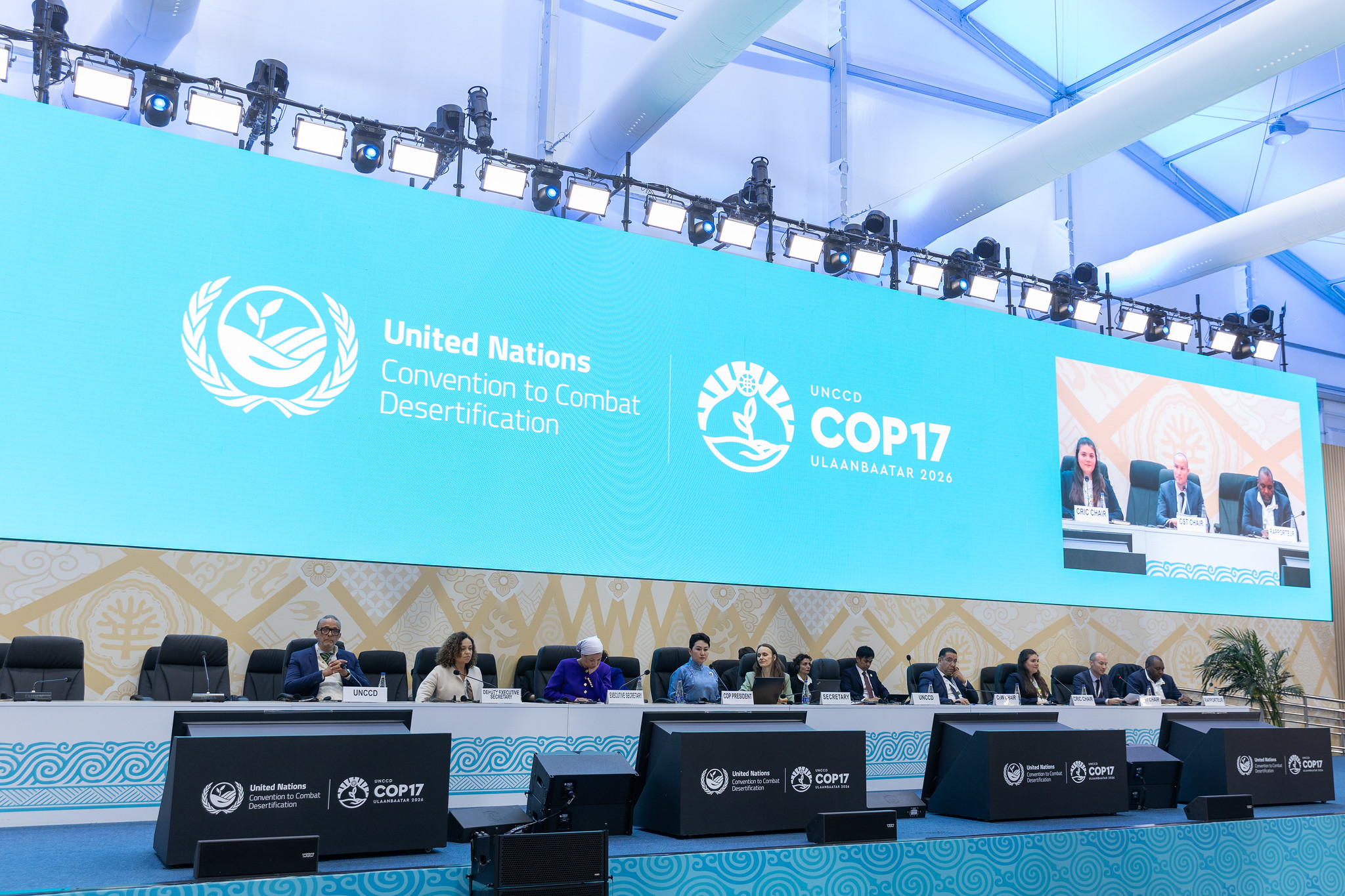
Civil society is on the frontline of the land challenge — and they are essential partners for the UNCCD. From farmers’ associations to women’s cooperatives and youth networks, civil society organizations (CSOs) bring local realities to the global stage. The CSOs amplify the lived reality that land degradation is not only an environmental issue but as a direct challenge to livelihoods, food security and the future of our communities. Today, nearly 1,200 are accredited to the UNCCD and their engagement supported and coordinated through the UNCCD CSO Panel. This structure ensures that voices from local communities are heard in international negotiations, connecting grassroots experience with global policymaking on the future of our land.At the heart of the Convention’s work is Land Degradation Neutrality (LDN) — the global commitment to balance the amount of healthy and productive land with the land being degraded. The goal is simple but urgent: by 2030, reduce degradation, restore what has been lost and make sure there is no net loss of healthy, productive land. To turn this ambition into action, the Global Environment Facility (GEF) launched the Medium Size Project “Strengthening Civil Society Role in Achieving Land Degradation Neutrality (CS4LDN).” Backed by two million USD in funding, this three-year initiative is implemented by the International Union for Conservation of Nature (IUCN) and executed by Both ENDS on behalf of the Drynet network, with IUCN also serving as co-executor. The project is carried out in close partnership with the UNCCD CSO Panel, the UNCCD Secretariat and other global stakeholders. Through CS4LDN, civil society organizations are better positioned to influence LDN policy and practice — linking community-driven initiatives with international decision-making. The project focuses on two main areas: Influencing LDN – raising the visibility and policy impact of CSOs in LDN efforts. This includes building skills in advocacy and communication, promoting local initiatives and supporting CSO participation in global forums such as UNCCD COP and CRIC events.Leveraging LDN – Improving CSO access to funding by strengthening fundraising skills and building connections with donors. Activities range from training and donor roundtables to a study on funding barriers, with special focus on challenges faced by CSOs in the Global South. CS4LDN follows a collaborative, cross-learning approach. Webinars, mentorships and workshops strengthen CSO capacity, while knowledge is shared through an online platform, newsletters and storytelling. A strong focus is placed on amplifying voices from youth- and women-led initiatives. The project is guided by a Project Management Unit (Both ENDS and IUCN) and a Steering Committee that includes the Drynet Board, IUCN, the UNCCD CSO Panel and the UNCCD Secretariat. It will also support CSO consultations and participation in major gatherings, including UNCCD CRIC23 in Panama this December as well as Désertif’actions and UNCCD COP17 in 2026. Photo: © IISD/ENB Anastasia Rodopoulou

Mongolia has unveiled the official logo for the 17th session of the Conference of the Parties (COP17) to the United Nations Convention to Combat Desertification (UNCCD), taking place in Ulaanbaatar from 17 to 28 August 2026. The emblem blends deep cultural symbolism with a call to global action, reflecting UNCCD’s mission to unite nations in finding solutions to desertification, land degradation and drought. The unveiling of the logo marks the beginning of one-year countdown to UNCCD COP17. More than a visual identity, it is an invitation to join hands in planting seeds of unity, resilience and shared trust — so that lands once degraded may flourish again. At the top of the logo, radiating sunrays recall the eternal expanse of the sky — a life-giving force in Mongolian cosmology — which echoes the Sustainable Development Goals and represents the solutions to environmental challenges faced by humanity. The rays flow into the silhouette of a traditional Mongolian ger (yurt), crowned with a toono — the circular opening through which the sky enters the home. This symbol of harmony between people and nature echoes the timeless wisdom of nomadic life and the belief that the earth is both homeland and heritage. Beneath, an open hand cradles the Earth with gentle strength, a gesture of stewardship and protection, while from the palm a green sprout emerges — a sign of resilience, renewal and the promise of a restored world. Together, these elements express COP17’s central message: that our collective efforts, diverse knowledge and shared responsibility can transform the challenges of land degradation into opportunities. With over 75 per cent of its land affected by degradation, Mongolia has made land restoration a national priority through initiatives such as the “Billions of Trees” movement, the “White Gold” rural development programme and the “Food Revolution” agri-soil campaign. Hosting UNCCD COP17 will provide a platform to share these experiences while catalyzing global cooperation to address the interlinked crises of land degradation, climate change and biodiversity loss. UNCCD COP17 will bring together delegates from 197 Parties, academia, civil society and private sector to advance drought resilience and land restoration goals. The conference aligns with the UN International Year of Rangelands and Pastoralists (IYRP 2026), an initiative championed by Mongolia to highlight sustainable rangeland management and the needs of over one billion people who depend directly on these ecosystems.

The secretariat of the United Nations Convention to Combat Desertification (UNCCD) presents its compliments to the Parties and Observer States to the Convention and has the honour to inform that the twenty-third session of the Committee for the Review of the Implementation of the Convention (CRIC 23) to the UNCCD will take place at the Panama Convention Center, in Panama City, Panama from 1 to 5 December 2025. Consultations of affected country Parties of the Convention’s regional implementation annexes for Africa, Asia, Latin America and the Caribbean, Northern Mediterranean and Central and Eastern Europe in preparation for CRIC 23 will be convened on 30 November 2025, at the Panama Convention Center. Further information on the regional consultations will be shared in a separate communication. In due consideration of the above, the secretariat of UNCCD has the honour to invite your Government to participate in CRIC 23. The provisional agenda (ICCD/CRIC(23)/1) and the pre-session documentation will be made available on the UNCCD website in due time. In line with decision 13/COP16, at CRIC 23, Parties will review the effective implementation of the Convention at national, subregional and regional levels. To this end, updates on the implementation of voluntary land degradation neutrality targets and related implementation efforts and the ensured follow-up on policy frameworks identified by the Conference of the Parties at its sixteenth session will be presented at CRIC23. The status of development and promotion of activities for targeted capacity-building to further the implementation of the Convention will be also considered by the session. A report on the status of improving the procedures for communication of information as well as the quality and formats of reports to be submitted to the Conference of the Parties as mandated by decision 4/COP16, will be also presented at CRIC23. The Intergovernmental Working Group on Future Strategic Framework of the Convention will present its interim report for consultation to Parties, intergovernmental organizations and regional groups at CRIC23. Also, in line with decision 20/COP.16 OP8, the CRIC23 will consider priorities for science–policy guidance with the aim of enabling Parties to provide initiative to and feedback on the work of the Science-Policy Interface, with particular attention to contributing to the content of each flagship report. Distribution: To Parties and Observer States through their Diplomatic Missions accredited to the Federal Republic of Germany, National Focal Points and Permanent Missions accredited to UNOG.Through its decision 25/COP.16 the Parties requested that Gender Caucus be convened as part of the official programme of work of the CRIC23 as a vehicle for identifying bottlenecks in the implementation of the Gender Action Plan and for sharing best practices in advancing gender equality and women’s and girls’ empowerment, and encouraging the participation and engagement of women and girls from Indigenous Peoples, local communities, youth and civil society organizations. In accordance with requests made by Parties, the session will facilitate interactive exchanges among Parties and their development partners on topics selected by the Bureau of the CRIC. In order to assist delegations in preparing for the conference, a document entitled “Information for participants” (ICCD/CRIC(23)/INF.1) is made available on the UNCCD website. As per past practice, CRIC 23 will be a paperless session. Accordingly, official documents of the session and its daily journal will not be printed and distributed. All such documents will be made available on the UNCCD website and app. The secretariat would be grateful if your Government would kindly nominate the representative(s) who will attend CRIC 23. Online registration will be available from 15 September 2025 at the following link. For more information on the online registration, please refer to the document “Information for participants” (ICCD/CRIC(21)/INF.1). The secretariat would like to kindly recall that participants are responsible for getting their own visas, hotel reservations and any type of health or other insurance they may need. Participants requiring visas must apply online by filling-up the visa application form at https://lara.migracion.gob.pa and uploading a scanned copy of a facial photo and their passport bio-data page. A quick guide with step-by-step instructions on how to apply will be published on the UNCCD CRIC 23 webpage as soon as possible.The secretariat of the United Nations Convention to Combat Desertification avails itself of the opportunity to renew to the Parties and Observer States to the Convention the assurances of its highest consideration.
