Women’s Land Rights
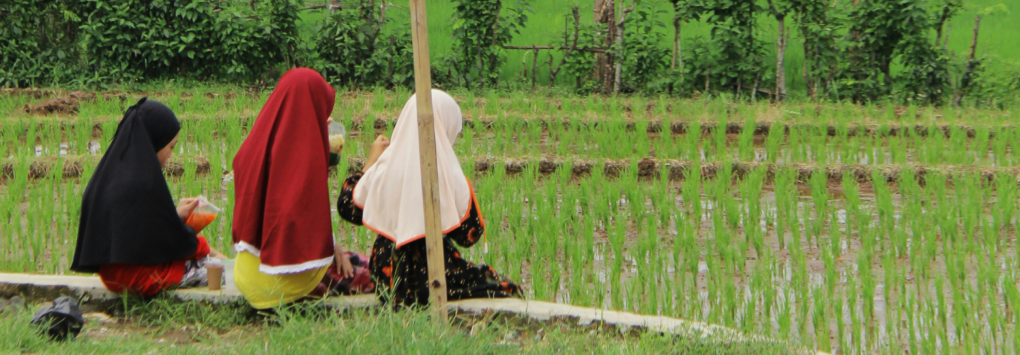
When land is degraded or productive land becomes scarce, women are uniquely and differentially impacted due to their substantial role in land-based activities, greater vulnerability to poverty, and typically weaker legal protections and social status. In areas affected by desertification, land degradation and drought (DLDD), increased competition for scarce natural resources makes women and girls extremely vulnerable to these hazards. Tenure security is essential for the empowerment of women in their households and communities, increasing their access and contribution to the social, economic and environmental benefits that result from sustainable land management and restoration.
Her Land. Her Rights: Advancing gender equality to restore land and build resilience was launched at a high-level event organised by the President of the UN General Assembly in June 2023. This policy brief highlights the critical role of gender-responsive approaches to land tenure that empower women and accelerate the implementation of land restoration commitments and build community resilience. It examines how greater tenure security for women and girls can lead to a more equitable land management outcomes and enhance the implementation of the Convention and its Gender Action Plan adopted in 2017. At COP15 in 2022, the Parties adopted a Gender Road Map to further guide and accelerate implementation of the Gender Action Plan through gender-responsive and transformative approaches.
#HerLand campaign, launched on International Women’s Day in March 2023, is spearheaded by the UNCCD secretariat, in collaboration with partners, activists and influencers. The campaign promotes inspiring examples of women and girls’ leadership in sustainable land management to mobilise support for more secure land rights for women and girls across the world through awareness raising, the dissemination of good practices, and a call to action for stronger female leadership and decision-making power on issues that affect them in the context of DLDD. As part of the #HerLand campaign, a collection of inspiring articles was published in a book titled Her Land to highlight women and girls’ vital role in environmental stewardship and nature-based solutions.
Stand for Her Land Campaign is guided by a steering committee of international organisations led by Landesa. The campaign aims to close the gap between global commitments to gender equality and their implementation on the ground. Through a coalition model involving local grassroots organisations, NGOs/CSOs and other non-state actors, the campaign connects global, national and local actors to empower grassroots leaders and champions in advocating for gender justice and stronger women’s land rights.
Women’s Land Rights Initiative is a network of over 60 partners working to enhance the consideration of women’s land rights across the three Rio conventions. Launched in 2023, the Robert Bosch Stiftung and TMG Research have taken the lead in organising annual workshops on Women’s Land Rights and the Rio conventions:
2023: This first workshop focused on leveraging synergies to advance women’s land rights across the Rio conventions and identify pathways to empower women and ensure more equal land rights. The discussions were facilitated by the Participant Handbook.
2024: The second workshop focused on identifying entry points to leverage synergies for women’s land rights and strengthen the agency of grassroots organisations. Once again a Participant Handbook guided discussions, with conclusions and recommendations published in the Outcome Document.
2025: The third workshop focused on two main themes: (i) shaping our shared vision and building stronger collaboration; and (ii) designing action for advancing key action areas, such as financing, indicators, national plans, and gender caucuses.
In May 2025, TMG Research published a policy brief titled “Unlocking Land Tenure: Pathways for policy action after the triple COPs of 2024”. This brief provides the first ever cross-Convention synthesis of land tenure-related outcomes, with a focus on the rights of Indigenous Peoples and Local Communities, women’s land rights and the potential for inter-Convention cooperation.


