Afforestation/Reforestation
Afforestation is the practice of establishing a tree plantation or a new forest on land that has never been forested before, or that has been without trees for a long time. Reforestation, on the other hand, is the practice of regenerating forests and woodlands that have been destroyed or degraded. On land prone to wind erosion, establishing or re-establishing tree cover reduces surface wind speeds and helps retain moisture and stabilise soils through the trees' root systems.
Afforestation and reforestation initiatives can be undertaken on a large scale. When designing and implementing these initiatives for SDS source mitigation, it is important to consider various factors, such as socioeconomic aspects (e.g. community participation), site characteristics (e.g. soil and water conditions), climatic conditions (e.g. weather and aridity), and species selection (e.g. economic maturity), as well as the initial and ongoing maintenance costs. Similar practices, such as agroforestry (silvopasture) and farmer-managed natural regeneration, involve the strategic planting and maintenance of trees primarily to increase agricultural productivity, but they can also act as natural windbreaks to prevent wind erosion.
Case Studies
In Tunisia, a long-term reforestation project involving the planting of drought-tolerant Acacia tortilis trees on degraded grazing land has reduced wind and water erosion, improved infiltration and enhanced soil organic matter and biodiversity. However, the project required fencing, planting seedlings and early-year irrigation to ensure the trees survived. The results of the Great Green Wall Initiative, one of the largest ongoing reforestation initiatives, have been mixed. While there is evidence of reduced wind erosion, large-scale afforestation has also been associated with reduced soil moisture and lowered water tables, particularly in areas where the selected tree species are not suited to local biophysical and climatic conditions.
Reforestation Plot in Afghanistan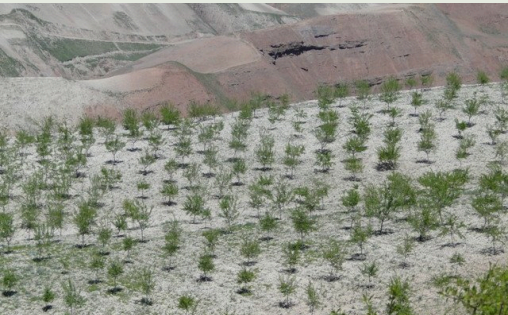
Woodlots can mitigate soil erosion while generating socio-economic benefits. For example, they can be used to produce firewood in Afghanistan, both fodder and firewood in Morrocco, and to maintain seed stocks in Iceland. In these cases, woodlots have diversified livelihoods and improved resilience, increasing farmer profitability while reducing erosion. Strategies such as rotating woodlots with crop or grazing lands, and diversifying stand structure and wind orientation, can strike a balance between tree productivity and environmental outcomes.
References and Guidance
- Ten golden rules for reforestation to optimize carbon sequestration, biodiversity recovery and livelihood benefits
- Woodlots in rotation with agriculture
- European Commission Guidelines on Biodiversity-Friendly Afforestation, Reforestation and Tree Planting
- USAID Guide to Reforestation Best Practices
- FAO Forest Restoration Module
- FAO Combating sand and dust storms in MENA: the role of tree plantation
- Community Forestry Centre Reforestation as a solution to land erosion and soil restoration
Biome/Climatic Zone
Anthropogenic/Land Use