Cocoon Planting
Cocoon planting is a dryland restoration technique in which individual seeds or seedlings are planted in small, doughnut-shaped boxes. Also known as water box planting, this practice is designed to improve tree survival in arid and semi-arid environments by slowly releasing moisture to the roots and reducing wind and thermal stress. It reduces the need for irrigation of seedlings, limits grazing during critical growth stages, and significantly increases survival rates. The cost-effectiveness of cocoon planting can be enhanced further by adding organic soil amendments to provide the trees with essential nutrients during the early stages of growth. This technique can also be incorporated into large-scale reforestation/afforestation projects, agroforestry systems or natural windbreaks to provide additional protection against wind erosion.
Case Study
In areas of the Mediterranean basin and the Canary Islands with less than 200 mm of rainfall per year and steep, rocky terrain, previous reforestation efforts required complex and costly irrigation systems to prevent the loss of seedlings. In these areas, cocoon planting reduced competition for scarce water resources and increased tree survival rates by between 20% and 80%, depending on the species involved.
Examples of Cocoon Plantings
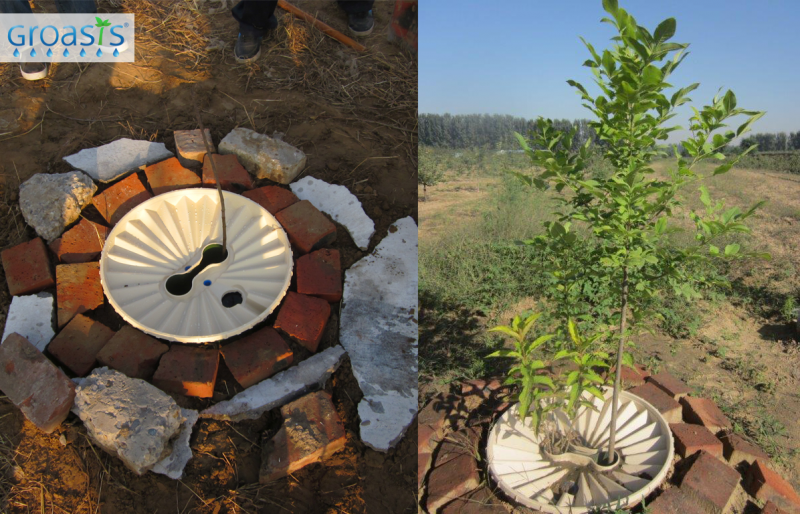
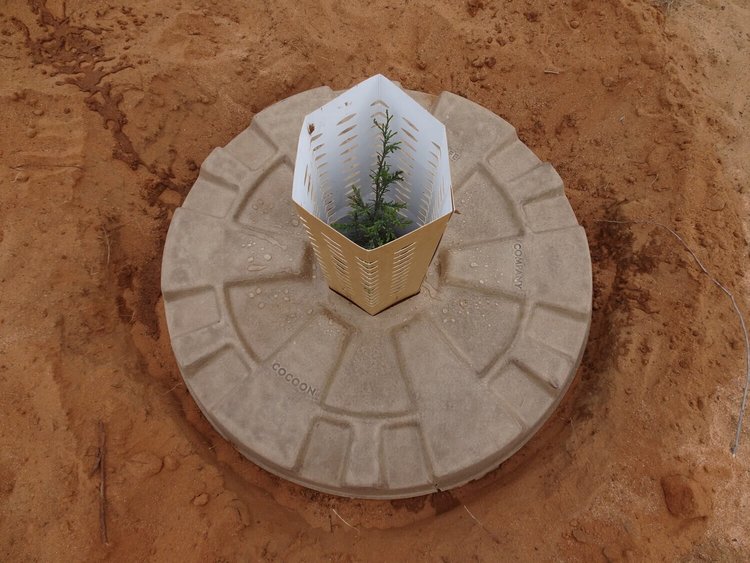
References and Good Practice Guidance
- Pilot cocoon planting technology as a model to enable the growing of olive and almond trees in arid conditions in West Bank and Gaza Strip
- CREAF The Cocoon system improves success rates when reforesting degraded land
- Groasis Water Box Planting Instructions
- Growise Cocoon Planting Guide
- Malle Conservation Revegetation in dry times - Cocoon planters
Biome/Climatic Zone
Anthropogenic/Land Use