Perennial Crops
Perennial crops are characterised by their ability to regrow after harvest. There are many varieties of perennial vegetables, grains, and forage crops. These crops typically do not require tillage (see conservation tillage) and have a longer growing season than their annual counterparts, providing more consistent ground coverage. They also possess an extensive root system that improves soil structure and health and enhances drought resilience. However, perennial plants may face physiological trade-offs between productivity and longevity, as resources that would otherwise contribute to the production of harvestable parts are instead channelled into maintaining the plant's survival. Nevertheless, perennials offer benefits which can make them more attractive to farmers, including long-term cost-effectiveness as they reduce the amount of planting, weed control, and chemicals required. This practice can be combined with intercropping to increase biodiversity and control wind erosion, while generating economic returns. On grazing lands, combining perennial crops with forage conservation techniques (see sustainable grazing) is often useful.
Case Study
As with many regions that produce large quantities of grain, wind erosion due to exposed soils is a significant problem in the United States. Kernza, an intermediate wheatgrass developed by the Land Institute in Kansas and the University of Minnesota, is now being produced commercially on a large scale. Unlike annual grains such as wheat, Kernza develops an exceptionally deep and dense root system that can reach up to 2.5 metres or more. This anchors the soil throughout the year and significantly improves its structure and organic matter content over time. Although yields are currently lower than those of annual wheat, breeding programmes are continuing to improve productivity, and Kernza offers higher water use efficiency than annual wheat. Its perennial nature eliminates the need for annual establishment and tillage, reduces wind and water erosion, improves soil quality, and requires less chemical fertiliser due to increased nutrient uptake and reduced leaching.
Root Systems of Kernza (left) and Wheat (right) in USA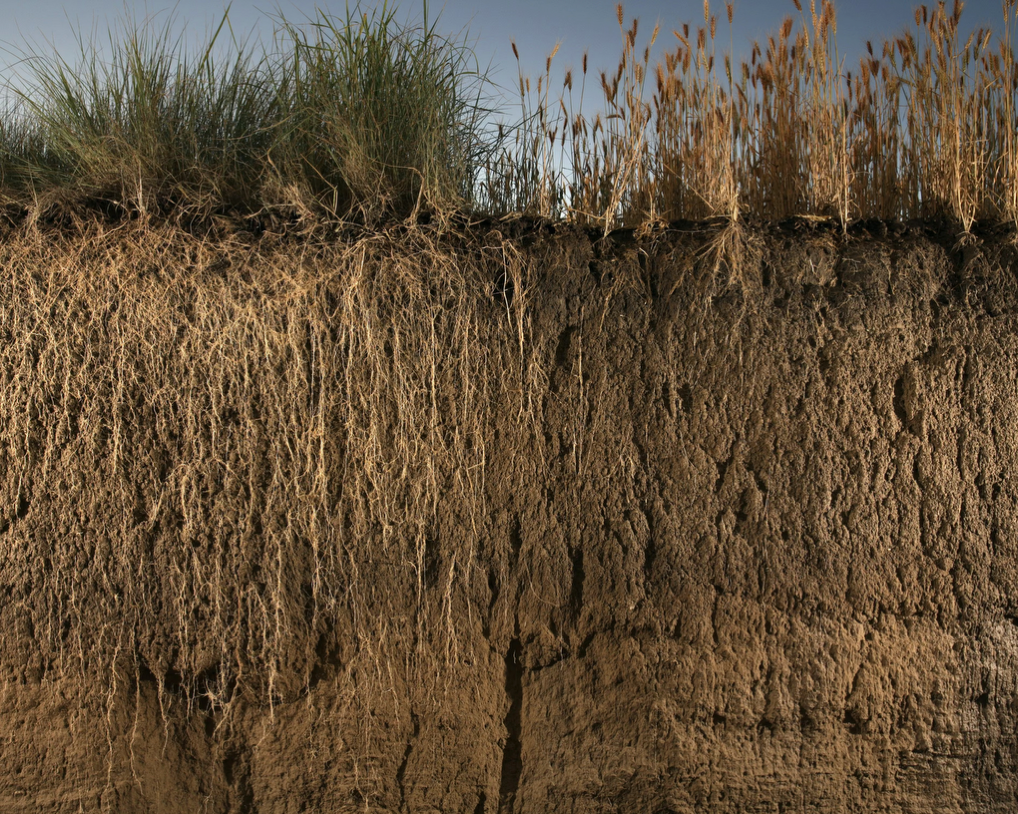
References and Good Practice Guidance
- FAO Perennial crops for food security
- Land Institute Perennial Agriculture and Landscapes of the Future
- World Bank Environmental, Health, and Safety Guidelines for Perennial Crop Production
- Development of perennial wheat through hybridization between wheat and wheatgrasses: a review
- Perennials as future grain crops: opportunities and challenges
- Soil erosion mitigation by perennial species under Mediterranean environment
- A Perennial Green Revolution to address 21st‐century food insecurity and malnutrition
Biome/Climatic Zone
Anthropogenic/Land Use