Polylactic Acid Sand Barrier
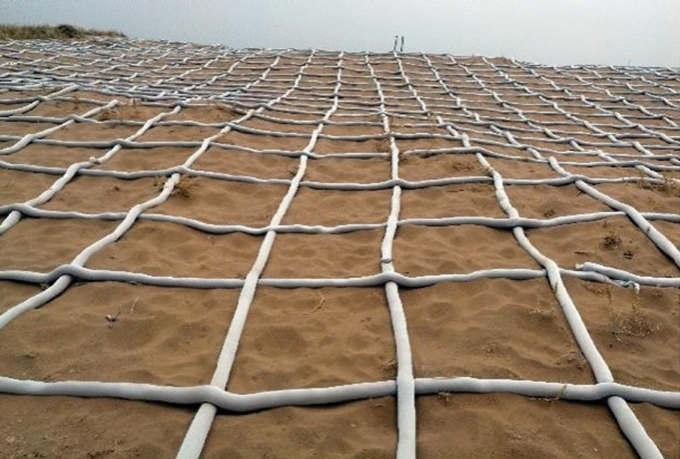
Polylactic acid (PLA) sand barriers are cylindrical textile tubes made of biodegradable fabric. They are filled with sand to form checkerboard barriers. These low barriers are used to create checkerboard patterns that reduce ground wind speeds, trap saltating sands and airborne seeds, and stabilise sand dunes, providing more favourable conditions for vegetation regrowth. Over several years, the PLA sandbags degrade into water and carbon dioxide without leaving harmful residues in the soil. This practice can be combined with large-scale solar installations (see artificial surface roughness) to provide energy generation and related economic benefits alongside sand dune stabilisation.
Compared to straw checkerboards, PLA sand barriers have a lifespan of 2–5 times longer and the materials can be transported more easily to remote sites, even if there are no roads or transport available. However, as these barriers are non-permeable, they can be more easily shifted by strong winds, resulting in ongoing maintenance to ensure they remain effective. Compared to other artificial windbreaks, PLA sand barriers are better suited to uneven terrain as their weight ensures complete ground contact. Innovative design that combines PLA barriers at the base with a sand fence above can increase structural stability and emission reduction potential.
PLA Sand Barriers Before and After Installation in China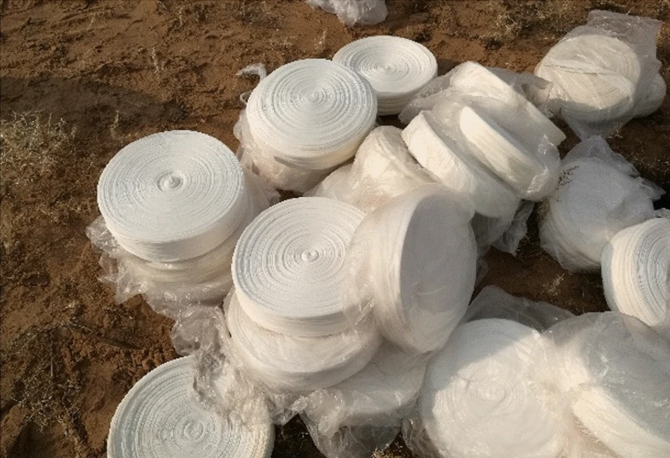
References and Good Practice Guidance
- Using sediment grain size characteristics to assess effectiveness of mechanical sand barriers in reducing erosion
- Innovative Design of PLA Sandbag–Fiber Mesh Composite Wind Fences and Synergistic Windbreak Performance
- Developing natural based biodegradable sand barriers for mitigation of aeolian sands
- Optimized Combined Layout of Sand Barriers for Photovoltaic Power Stations Based on Wind and Sand Control Performance
- Google Patents Sand barrier made of biodegradable material
Biome/Climatic Zone