Artificial Surface Roughness
Artificial surface roughness refers to structures designed to increase aerodynamic resistance and reduce near-surface wind speeds below the friction velocity threshold required for dust emissions to occur. These structures can be natural or man-made and provide an immediate physical barrier while supporting revegetation practices. Their effectiveness in increasing surface roughness depends on factors such as their size, density and porosity, while the cost, durability and maintenance requirements depend on the materials used.
The use of straw bales (hay bales) is considered a flexible, cost-effective and environmentally benign practice. For instance, setting an array of hay bales perpendicular to the prevailing wind can create enough roughness to slow surface wind speeds and trap airborne sediments over large areas. Other design patterns can be created to account for shifts in wind direction, prevent channelling, and support vegetation growth and biodiversity habitat, while taking care to avoid introducing invasive species. The number and cost of bales varies according to the design density, typically 300–600 bales per acre, which equates to around USD 9 million per square mile, excluding the cost of re-establishing vegetation.
Straw Bale Grid Formations in the USA
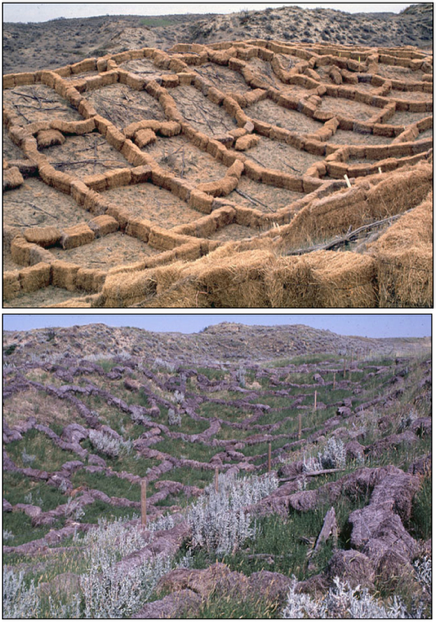
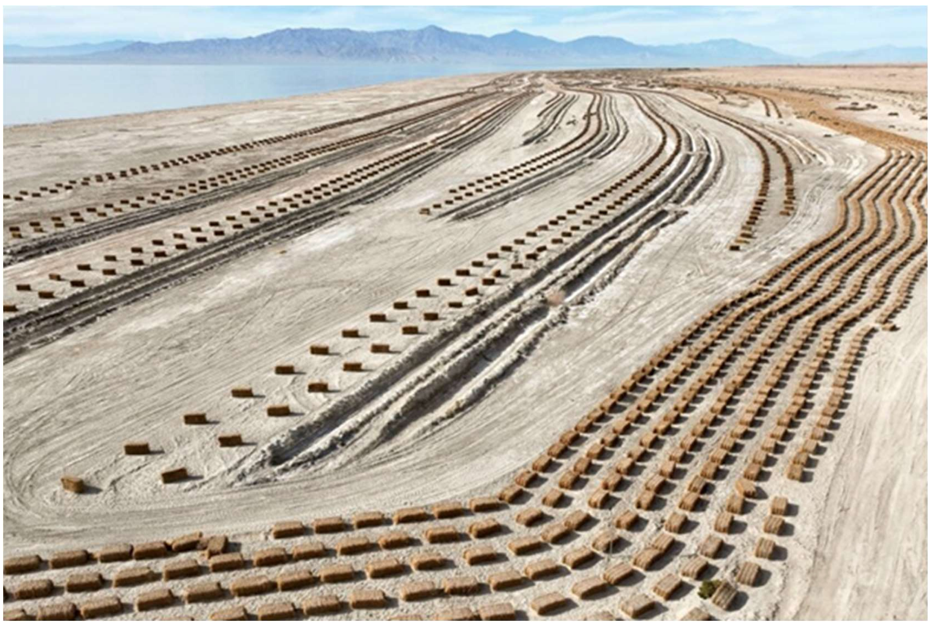
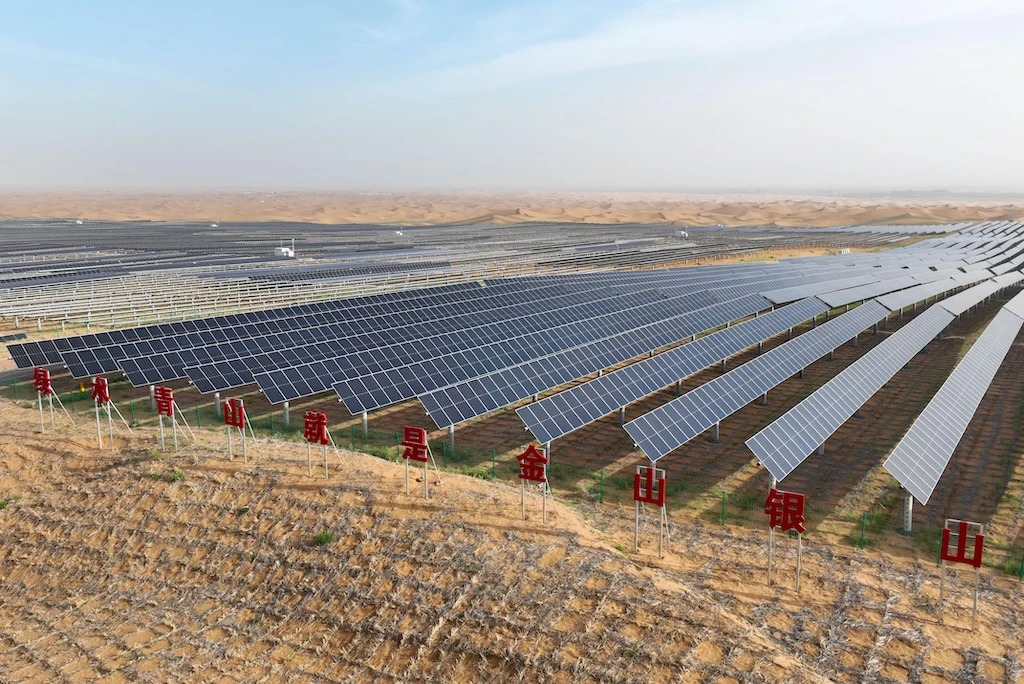
Other artificial surface roughness practices, such as controlled environment agriculture and agrivoltaics, can be integrated with existing methods designed to increase surface roughness, reduce wind speed, stabilise dunes, and prevent sand encroachment. In arid areas, surface-level barriers such as polylactic acid sand barriers, artificial windbreaks or straw checkerboards can mitigate the impact of windblown sand on solar installations. Although they are far more capital-intensive than other surface roughness structures, the integration of renewable energy into SDS source management interventions have the potential to generate significant returns over time.
Solar Farm in the Tengger Desert, China
References and Good Practice Guidance
- Effectiveness and Impacts of Dust Control Measures for Owens Lake
- Description and Costs of Potential Dust Control Options for Great Salt Lake
- Solar Panel Wind-Sand Hazards and Sand Control Modes in Desert Photovoltaic Fields
- An observational study on the microclimate and soil thermal regimes under solar photovoltaic arrays
- Evaluation of wind erosion control practices at a photovoltaic power station within a sandy area of northwest, China
- Vertical agrivoltaics in a temperate climate: Exploring technical, agricultural, meteorological, and social dimensions
- Optimized Combined Layout of Sand Barriers for Photovoltaic Power Stations Based on Wind and Sand Control Performance
- The role of typical low vertical lattice sand barriers in regulating the airflow field on wind-eroded surfaces of photovoltaic power plants
Biome/Climatic Zone
Anthropogenic/Land Use