News & stories

Latest
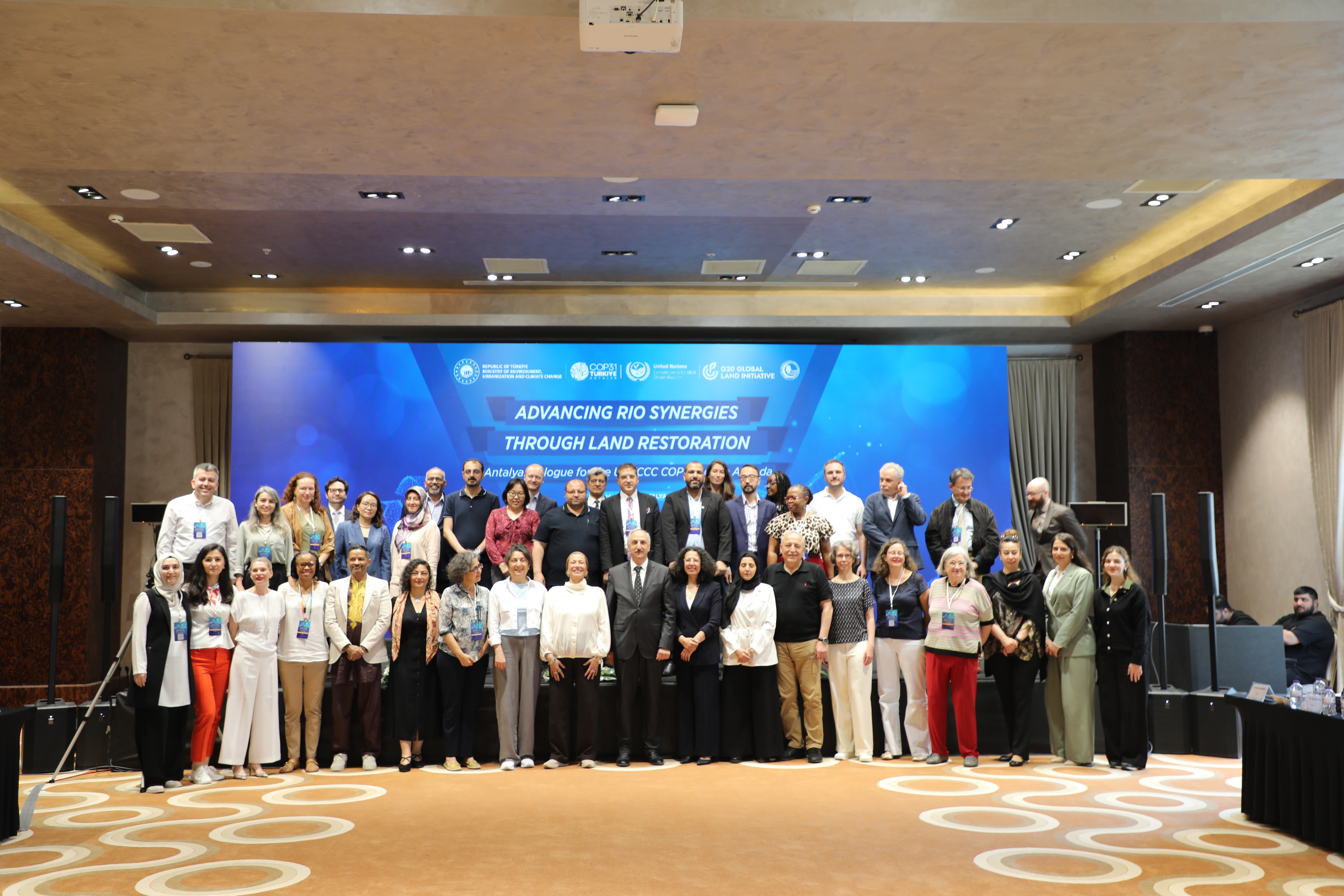
Drought does not arrive with sirens. It builds quietly—through drying soils, shrinking water supplies and wilting crops—until its impacts ripple across farms, cities and entire economies. By the time it is fully visible, the damage is often already widespread and costly, affecting everything from food and energy production to transportation and health.With droughts projected to affect three in four people worldwide by 2050, and three quarters of the world’s land already permanently drier due to unsustainable land management and climate change, how should countries act to prevent drought from escalating into crisis?Much like the Human Development Index reshaped how countries understand progress, the new Drought Resilience Index aims to provide a clear, shared benchmark to help governments manage drought risk and prevent irreversible impacts—including lost lives and shattered livelihoods.Now under development through the United Nations Convention to Combat Desertification (UNCCD), the International Drought Resilience Alliance (IDRA) and partners, the index is designed to give decision-makers a clearer picture of where vulnerabilities lie —helping them assess preparedness, create policies and act before drought turns into disaster.A three-day workshop recently hosted by the European Commission Joint Research Centre in Italy brought together a wide range of international partners—spanning multilateral, scientific, academic, technical, and government institutions—to fine-tune the tool, which is expected to launch as part of a broader AI-powered data visualization platform.We spoke with Edgar Gutiérrez-Espeleta, senior policy consultant at UNCCD advising on the development of the tool, to understand how the Drought Resilience Index works—and why it could reshape how countries prepare for a new drought era. From data overload to clarityThe Drought Resilience Index, part of the broader International Drought Resilience Observatory (IDRO), is designed to turn complex and fragmented data into simple scores that policymakers can use to make decisions. “Drought is one thing. Resilience to drought is another,” says Gutiérrez-Espeleta. “The aim is to help countries assess their capacity to anticipate, prepare for and adapt to drought, and to highlight where action is most needed so they can use limited resources effectively.”To capture this, the Drought Resilience Index is built around three dimensions: anticipation, preparation and adaptation. These reflect the full lifecycle of drought risk. Each dimension is assessed across four areas that shape resilience: the built environment; the natural environment, including soils, forests and wetlands; communities; and the economy —together offering a multidimensional picture of how well countries manage drought risk.Across each of these areas, experts identify one or two indicators to capture the most critical aspects of resilience, drawing on available, UN-vetted global datasets. These indicators are then standardised and combined into a composite score, enabling countries to assess their capacity to manage drought risk.For example, in anticipation, the health of ecosystems—such as forest cover or watershed integrity—can indicate how well the natural environment buffers drought impacts. In preparation, the efficiency and reach of water supply systems reflect the capacity of the built environment to conserve and distribute scarce resources. In adaptation, the share of livelihoods diversified beyond water-intensive activities shows how well the economy can withstand recurring drought conditions.“Low scores act as warning signals, pointing decision-makers to areas that require urgent attention,” explains Gutiérrez-Espeleta.Built through collaborationThe index is not being developed in isolation. It builds on years of work within the UNCCD’s Science-Policy Interface and has been shaped through consultations with top drought resilience experts from different regions, including the European Union’s Joint Research Centre, the US National Drought Monitor, the World Meteorological Organization and Yale Center for Ecosystems and Architecture.In the lead up to the 17th session of the Conference of the Parties to the UNCCD (UNCCD COP17), specialists are refining the selection of indicators, assessing available datasets and ensuring that the index is both scientifically robust and practical for policymakers.One of the key challenges is data availability. Not all countries have the same level of information, and some indicators may only exist for some parts of the world.“We are starting with the best data currently available and building from there,” Gutiérrez-Espeleta says. “As the index evolves, it will also help drive stronger and more comprehensive data collection, as has been the case with the Human Development Index.”A tool shaped by experienceThe idea for the Drought Resilience Index is rooted in experience. In 2015, as Costa Rica’s Minister of Environment, Gutiérrez-Espeleta faced a severe drought that demanded urgent, cross-sector decisions—but without a clear overview, it was difficult to prioritize action. That gap is what the Index is designed to fill. By bringing diverse data into a single framework that everybody can understand, it helps policymakers identify where systems are weakest and where action is most needed—offering, in his words, “a way to quickly see the big picture.”Rather than prescribing solutions, the Index works as a signal, highlighting where problems are most acute and pointing decision-makers towards the areas that require attention.The ambition is simple. When ministers see it at COP17, Gutiérrez-Espeleta hopes their reaction will be immediate: “This is what we needed.” From there, governments can mobilize resources and act—because while drought cannot be prevented, the vulnerability of people, economies and ecosystems can be greatly reduced.Photo : Participants at the IDRO Drought Resilience Index workshop hosted in Italy by the European Commission Joint Research Centre, including representatives of: Yale Center for Ecosystems and Architecture, National Center for Meteorology of the Kingdom of Saudi Arabia, World Meteorological Organization, United Nations Environment Programme, United Nations University Institute for Water, Environment and Health, Global Water Partnership, US National Drought Mitigation Center, NASA Goddard Space Flight Center, CIMA Research Foundation, Sahara and Sahel Observatory, CSIC-CEBAS, Ministry of Ecological Transition and Demographic Challenge of Spain, Ministry of Environment and Sustainable Development of Senegal, Center for Hydrometeorology and Remote Sensing, UK Centre for Ecology & Hydrology, Deltares, International Rice Research Institute, IGAD Climate Prediction and Applications Centre, University of Southern Queensland, UNEP-DHI Partnership, Tree Aid.

UNCCD's 197 Parties convene to assess progress on the road from Riyadh to UlaanbaatarPanama will restore 100,000 hectares by 2035 as part of a pioneering strategy to advance land, climate and biodiversity goalsPanama City, 1 December 2025 – Addressing global loss of fertile lands and escalating droughts will be the focus of the 23rd session of the Committee for the Review of the Implementation of the Convention (CRIC23), as 197 Parties to the United Nations Convention to Combat Desertification (UNCCD) convene in Panama this week.The meeting comes at a crucial moment. If current trends continue, land almost the size of South America (16 million square kilometres) will show continued degradation by 2050, just as the global demand for food, water and energy continues to soar. Meanwhile, two-thirds of the planet have become permanently drier in the last three decades, and the past two years have seen the most widespread and damaging droughts in recorded history. In Panama, drought disrupted traffic through the Canal, significantly impacting global trade.UNCCD Executive Secretary Yasmine Fouad said: “The resilience of our communities, economies and ecosystems depends on healthy land. Yet, we continue to degrade an area the size of Egypt every year, eroding the land’s ability to produce food, store water, support biodiversity and shield people from droughts, floods and sand and dust storms. Investing in sustainable land management, land restoration and nature-based solutions is not only an environmental necessity; it is a development imperative and a strategic investment in stability, prosperity and peace.”“CRIC23 is a key moment to assess our collective progress, strengthen the bridge between Riyadh and Ulaanbaatar, and recognize land and drought resilience as the red thread connecting the Rio Conventions. Together, we can accelerate the shift toward a more resilient, food-secure and nature-positive future.”From Riyadh to UlaanbaatarCRIC23 will review progress in implementing decisions taken at the 16th meeting of the Conference of the Parties (COP16) to UNCCD in Riyadh, Saudi Arabia in December 2024 and discuss the Convention’s post-2030 roadmap. H.E. Osama Faqeeha Deputy Minister of Environment, Water and Agriculture of the Kingdom of Saudi Arabia, UNCCD COP16 Presidency, said: “In Riyadh, world leaders established new priorities for land and drought action. One year on, this meeting is a crucial opportunity to accelerate the translation of COP16 decisions into concrete policies and practices and to advance the Convention's agenda. Sustainable land management and drought resilience cannot wait: we depend on them to ensure food, water and energy security, as the world will need to produce 50 per cent more food by 2050.”The meeting will hold thematic sessions on land tenure as the basis for investments in healthy land; discuss the growing threat of sand and dust storms; and host the second Gender Caucus to give a voice to women, who are disproportionately affected by land degradation and drought, while supporting the livelihoods of entire communities around the world.Parties will also engage with other key stakeholders including youth, Indigenous Peoples and local communities, and see the launch of new reports on Small Island Developing States and rangelands.In addition, the first of three informal and voluntary dialogues on drought resilience will be convened alongside CRIC23, building on the outcomes of COP16 and preparing for the resumption of negotiations at COP17. Led by the COP16 Presidency, the Tafa’ul Process is inspired by the Arabic word تَفَاؤُل (Tafa’ul), meaning constructive optimism and hopeful determination. CRIC23 recommendations will inform decision-making by the Convention’s 196 country Parties and the European Union ahead of the next UNCCD COP17, which will take place in Ulaanbaatar, Mongolia, in August 2026.Mr. Batmunkh Dondovdorj, Special Advisor to the Minister and Chairman of upcoming COP17 Presidency National Office,stressed that the road from Riyadh to Ulaanbaatar must be a road of hope for communities and ecosystems that have long been undervalued. COP17 will coincide with the International Year of Rangelands and Pastoralists, offering a unique political moment to highlight rangelands, which are disappearing faster than rainforests.“The meeting in Panama is crucial to set the basis for a successful COP17, which will bring to the fore the links between human wellbeing and healthy, productive and resilient landscapes,” said Dondovdorj. “That is particularly true for rangelands, which cover around half of the planet’s land area and are home to two billion people, but are often treated as empty, expendable spaces. For Mongolia—a country whose history, culture and economy are deeply rooted in pastoralism—this is not an abstract issue. It is about dignity, identity and opportunity for people who have been overlooked for far too long.”Panama's Nature PledgeToday, Panama highlighted the centrality of land in its Nature Pledge, a roadmap that unifies national efforts to tackle land degradation, biodiversity loss and climate change to leverage the synergies between the three Rio Conventions and advance all of their interconnected goals, faster.As part of its Nature Pledge, Panama plans to restore 100,000 hectares of degraded land by 2035. H.E. Juan Carlos Navarro, Minister of Environment of Panama, declared: “Nature is the backbone of the global economy. The Panama Nature Pledge shows our commitment to restoring critical watersheds, protecting forests, andincentivizing sustainable agricultural practices as a means to build the resilience of our economy and our communities. The Panama Natural Fund, in turn, guarantees long-term conservation actions across the territory. There is no time to lose: We must urgently take care of nature, so nature can continue taking care of us.” A signatory to UNCCD since 1996, Panama has committed to achieve Land Degradation Neutrality by 2030, identified 31 critical hotspots, and is advancing reforestation and Dry Corridor adaptation programmes — underlining its role as CRIC23 host. This year, Panama became the first country to host meetings of all three Rio Conventions in the same year. Notes to editorsFor inquiries and interview requests, please contact: press@unccd.intVisual assets about CRIC23 and the UNCCD Data Dashboard are available here: https://trello.com/b/zq0kxtkK/unccd-cric23-panama-2025Opportunities for mediaPress Briefings: 12:00–13:00 (local time)1 December: Opening press conferenceThe press conference will present the key expectations for CRIC23, highlight Panama’s leadership — including a reference to its Nature Pledge — and provide reflections from the UNCCD COP16 and COP17 Presidencies.Speakers:Juan Carlos Navarro, Minister of Environment of PanamaYasmine Fouad, UNCCD Executive SecretaryOsama Ibrahim Faqeeha, Deputy Minister of Environment, Water, and Agriculture for Environmental Affairs. KSABatbayar Shurenchuluun, State Secretary of the Ministry of Environment and Climate Change of Mongolia2 December: Launch of Brief on Small Island Developing States (SIDS)A new brief highlighting land and drought impacts and action in SIDS around the world.Speakers: Andrea Meza, UNCCD Deputy Executive Secretary Calvin James, UNCCD SIDS Forum Coordinator Fred Nicholas, Project Officer for the National Environment Service in the Cook Islands 4 December: Launch of report on the Economics of Rangelands Presentation of a new report on rangelands — vital for food security and climate stability but rapidly disappearing.Speakers: Mark Schauer, Project Lead (Co-Lead), German Agency for International Cooperation (GIZ) Dr. Barron Orr, Chief Scientist, UNCCDEnrique Michaud, Co-Chair of the IYRP Global Alliance.Ariuntuya Dorjsuren, Director General, International Cooperation Division, Ministry of Environment and Climate Change, and National Focal Point (NFP) of Mongolia December will also see the launch of the International Year of Rangelands and Pastoralists (IYRP), a milestone in the lead up to COP17 in Mongolia in August 2026.5 December – Closing Press Release (World Soil Day)Issued following the CRIC23 closing plenary and coinciding with World Soil Day. It will provide an overview of CRIC23 outcomes and their significance in the lead-up to UNCCD COP17.3 December – Press Trip: Journalists are invited to a field visit organized by the Panama Canal Authority (ACP) at the Miraflores Visitors Center. The visit will offer insights into how the ACP integrates sustainability and watershed protection into its long-term strategy to safeguard the Canal’s water resources.Additional information and media updates on the Convention and CRIC 23 are available on the UNCCD website: https://www.unccd.int/cric23About UNCCDThe United Nations Convention to Combat Desertification (UNCCD) is the global vision and voice for land. We unite governments, scientists, policymakers, private sector and communities around a shared vision and global action to restore and manage the world’s land for the sustainability of humanity and the planet. Much more than an international treaty signed by 197 Parties, UNCCD is a multilateral commitment to mitigating today’s impacts of land degradation and advancing tomorrow’s land stewardship in order to provide food, water, shelter and economic opportunity to all people in an equitable and inclusive manner.About CRIC23Representatives of 196 countries and the European Union are meeting in Panama from 1-5 December 2025 to review their efforts against desertification, land degradation and drought under the United Nations Convention to Combat Desertification (UNCCD) — one of the three Rio Conventions, alongside biodiversity and climate. The 23rd session of the Committee for the Review of the Implementation of the Convention (CRIC 23) to the UNCCD is convening some 500 participants from governments, civil society, and academia to assess progress in advancing the Convention’s objectives.

How Communities of Learning and Practice are speeding action in the face of a new drought era

Information on the COP 16 President’s Initiative on Drought Resilience

When Southern Africa experienced its third consecutive year of severe drought between 2015 and 2017, Bongani Simon Masuku — now Principal Secretary in Eswatini’s Ministry of Agriculture — saw firsthand how fragmented responses could deepen a crisis. As a longtime advocate for science-based policy and former Chair of the United Nations Convention to Combat Desertification (UNCCD) Committee on Science and Technology, Masuku recalls how the lack of coordination and shared learning left many countries struggling to respond effectively.Those hard lessons, nearly a decade old, laid the groundwork for more coordinated and inclusive approaches to drought management — culminating in a significant breakthrough at UNCCD COP16 in 2024.A turning point at COP16Officially launched at UNCCD COP16 in December 2024, the Communities of Learning and Practice on Drought Management (CLP) marked a step change in how countries approach drought.Supported under the Changwon Initiative, the CLP has grown into five regional and one global community: multilingual, interactive spaces for peer learning, co-creation and practical capacity-building.The CLP directly supports Land Degradation Neutrality (LDN) goals and offers a space where policymakers, scientists, youth leaders and local actors share strategies, challenges and successes.Why it mattersOnce seen as sporadic disasters, droughts are becoming a chronic threat. Since 2000, their frequency and intensity have risen by 29 per cent — and by 2050, three out of four people could face their impacts.Yet solutions often remain locked in silos, out of reach for those on the front lines. The CLP breaks those silos by enabling real-time collaboration and cross-regional exchange.Masuku emphasized the importance of reaching all decision-makers:“Knowledge is power. A platform for sharing information is a powerful tool — especially when it reaches those who might otherwise be left out. With the right knowledge, you can make the right decisions.”A living knowledge networkBuilding on earlier regional knowledge-sharing efforts, the CLP has grown rapidly since its launch in late 2024, bringing together over 300 members from across sectors and regions.It has held regional workshops and case clinics tackling both technical and policy challenges. Five global online exchanges have drawn 687 participants worldwide.The platform has published more than 300 multilingual resources — ranging from technical guides to policy briefs — and sparked new partnerships, helping countries co-create tools and strategies.The network is also turning the UNCCD Drought Toolbox into a dynamic, user-driven resource, shaped by field realities and continuous feedback.Voices of changeThe platform isn’t just for governments and experts. It’s opening doors for the next generation of land and climate leaders. Juliet Grace Luwedde, Global Coordinator of the UNCCD Youth Caucus, sees the CLP as an inclusive gateway:“It’s a great place for young people to start learning and connecting — people who can answer their questions and help them grow. No question is too small. It’s also a fantastic resource for young negotiators to build confidence and find their voice.”Tools that drive actionOne of the CLP’s most powerful features is its close link to the Drought Toolbox — a suite of tools for assessing risk, monitoring drought and designing early warning systems.Through the platform, these tools are made more user-friendly and widely accessible. Interactive offerings — from expert clinics and regional competitions to self-paced learning — ensure these tools lead to action, not just information.Looking aheadAs climate stress intensifies, the need for coordinated drought management is growing rapidly. The CLP is expanding to include more countries — particularly in drought-prone regions like the Sahel and the Horn of Africa — while adapting its tools to fit national priorities.Rooted in the spirit of the Changwon Initiative, the CLP fosters innovation, strengthens partnerships andscales solutions that bridge local realities with global goals. Continued collaboration is helping position it as a vital global hub — connecting knowledge, building capacity anddriving action where it’s needed most. A movement rooted in practiceThis is more than a platform. It’s a movement — one that turns collective knowledge into shared resilience. At its core is a simple but powerful idea: investing in people, not just policies, is what ensures no voice is left behind.Sustained support through the Changwon Initiative has helped make that idea real — enabling communities once excluded from critical discussions to take the lead. Today, they are not just included — they are equipped, connected and shaping global solutions from the center.Photo: © ILRI/Stevie Mann

How the Changwon Initiative helped build the UNCCD Drought ToolboxDrought is no longer a rare or distant event. It is becoming one of the most serious and far-reaching challenges of our time. Since 2000, droughts have become 29 percent more frequent and intense. By 2050, as much as three-quarters of the world’s population could be affected.For millions of people, this means more than just dry weather — it means failed harvests, shrinking water supplies, rising food prices and displacement from their homes and livelihoods.But drought, unlike sudden disasters, offers a unique opportunity: it gives us time. And when time is used wisely, it can turn risk into readiness.From crisis to preparedness: The birth of the Drought ToolboxFaced with the growing impact of drought, the United Nations Convention to Combat Desertification (UNCCD) recognized the need for a shift — from reacting to crises after they hit, to preparing before they begin. This led to the creation of the Drought Toolbox: a science-based, globally accessible platform that helps countries and communities assess, monitor and reduce drought risk.Designed as a practical support tool, the Toolbox brings together resources for developing national drought plans, identifying vulnerable areas, setting up early warning systems and learning from real-world examples of drought resilience. Behind this comprehensive platform lies a key driver: the Changwon Initiative.The Changwon Initiative: Turning vision into actionLaunched by the Korea Forest Service in partnership with the UNCCD, the Changwon Initiative was instrumental in transforming the Drought Toolbox from concept to reality. Through targeted funding and technical support, the Initiative helped bring together global experts, institutions and local stakeholders to co-create the platform.Workshops convened with its support became spaces for cross-sector collaboration. Government agencies, scientists and land managers worked side by side to align methodologies, share regional knowledge and design an interface that could speak to both policymakers and practitioners. The result was not just a digital tool, but a living, evolving resource for drought resilience.When Tools Reach People: Global Examples of ImpactAcross the world, the Drought Toolbox is helping countries move from crisis response to long-term resilience — with real results on the ground. In Costa Rica, it became the foundation for a national workshop that brought together ministries, improved coordination and led to drought strategies based on shared data and clear priorities. In Andhra Pradesh, India, local leaders used the Toolbox to identify the most drought-prone areas, translating data into practical action — from installing rainwater harvesting systems to planting drought-resistant crops and training farmers to monitor conditions themselves.In South Africa, the Toolbox supported the integration of early warning systems into land-use and agricultural planning, enabling farmers to adopt more sustainable practices and authorities to act on forecasts before droughts took their toll. Meanwhile, in Central Asia, countries facing similar climate pressures used the platform to harmonize monitoring efforts and coordinate their responses — showing how regional cooperation can strengthen resilience across borders.Collaboration is keyOne of the most important lessons from the Toolbox’s creation is that preparedness is not just technical — it’s collaborative. The platform draws from the expertise of partners such as the Food and Agriculture Organization of the United Nations (FAO), the World Meteorological Organization (WMO), the United Nations Environment Programme (UNEP) and the International Center for Agricultural Research in the Dry Areas (ICARDA), and grounds that knowledge in the real-life experiences of those facing drought on a daily basis.This spirit of collaboration also sparked the development of complementary tools like the Sand and Dust Storms (SDS) Toolbox, recognizing the interconnectedness of climate risks, land degradation and human health.A lasting legacyThe Changwon Initiative did more than fund a product. It helped shape a process that placed accessibility, usability and inclusivity at the heart of drought preparedness. Thanks to this investment, the Drought Toolbox has become a vital global asset — used by countries, institutions and communities to plan ahead and protect what matters most.As droughts grow more frequent and complex, the need for practical, integrated solutions becomes more urgent. The Drought Toolbox — born of international collaboration and local insight — shows us what’s possible when we choose to act before crisis hits.It is a reminder that while we cannot stop the rain from disappearing, we can prepare wisely for its absence — and that preparation begins not with fear, but with the right tools in the right hands.
