News & stories

Latest
Madrid (Spain), 30 June 2023 --- The Spanish Government will make globally available a pioneering system to monitor meteorological droughts in real-time, helping other countries build up their early warning systems and adopt a proactive, rather than reactive, approach to drought management. The announcement is part of Spain’s contribution to the International Drought Resilience Alliance (IDRA), a coalition of more than 30 countries and 20 international entities driving drought resilience in the face of climate change. Teresa Ribera Rodriguez, Vice-President of the Government of Spain and Minister for Ecological Transition and Demographic Challenge, made the announcement in Madrid during the third meeting of the Intergovernmental Working Group (IWG) on Drought of the United Nations Convention to Combat Desertification (UNCCD). “I applaud Spain's leadership and its drive to share technological innovations and valuable expertise with other regions that, like the Mediterranean, are particularly vulnerable to drought,” said UNCCD Deputy Executive Secretary Andrea Meza Murillo. “IDRA recognizes that countries and communities need to tap into their collective experience and knowledge to move towards a more resilient future. Spain’s move is a step in that direction.” Real-time drought visualizations The system developed by Spanish scientists monitors real-time rainfall and evapotranspiration —the combined loss of water from the soil surface and plants— through satellite data and a series of automated weather stations. The resulting visualizations are freely available online and inform the management of water resources, especially, in key industries such as agriculture. Users can also visualize meteorological drought indexes in Spain since 1961 and download datasets for specific places and times. The tool was launched in 2021 as part of Spain’s National Adaptation Plan to Climate Change, and has since been incorporated into Google Earth Engine, a public platform for the analysis and visualization of geospatial datasets. The contribution of Spain is in line with IDRA’s commitment to the ‘Early Warning for All’ initiative against extreme weather and climate change, launched by the United Nations Secretary-General and overseen by the World Meteorological Organization (WMO). The WMO is one of the founding members of IDRA, which was launched in 2022 at the initiative of Senegal and Spain. As part of a drive to promote knowledge-sharing, IDRA members are working to facilitate partnerships between technology providers and vulnerable regions to make drought-management innovations available to all. Members have also agreed on establishing communities of practice to foster knowledge exchange and collaboration. Policy options for drought resilience From 21 to 23 June 2023, Madrid hosted the third meeting of the Intergovernmental Working Group on Drought (IWG), which previously convened in Yerevan, Armenia and Bonn, Germany. The Group is working to identify policy instruments that help countries prepare themselves for, and manage, worsening droughts. In 2024, it will present its findings and recommendations to the 16th UNCCD Conference of Parties. No country is immune to drought and its impacts. In Europe alone, economic losses related to drought reach around 6,200 million euros annually, and the global impacts of this phenomenon are projected to become longer and more severe due to climate change and unsustainable land management. Drought affects agriculture, but also energy, transportation, and tourism, and it directly affects the health of an estimated 55 million people around the world each year.

Bonn/New York, 16 June 2023 – Women facing worsening droughts, raging wildfires and other climate change impacts will deliver an urgent message to the international community at the United Nations in New York, calling for better land rights for women and girls everywhere. Drought, land degradation and desertification – all of which are becoming more frequent – are impacting women and girls first and worst, world leaders will hear at an event in the United Nations General Assembly on 16th June to mark Desertification and Drought Day. The theme of this year’s global observance, led by the UN Convention to Combat Desertification (UNCCD), is ‘Her Land. Her Rights.’ Women make up around half of agricultural workers in developing countries and produce 60-80 per cent of food grown in these regions yet own less than one-fifth of all land worldwide. When land degrades and water and other resources become scarce, women and girls are exposed to poverty, hunger, displacement and violence. Among the leaders and gender equality champions advocating for women’s full land rights will be the Prime Ministers of Iceland Katrín Jakobsdóttir and of Namibia Saara Kuugongelwa-Amadhila, and the Vice-President of the Government of Spain Teresa Ribero Rodríguez. They will be joined by Finland’s first female President Tarja Halonen, UNCCD Goodwill Ambassadors and musicians Baaba Maal, Inna Modja and Ricky Kej, as well as indigenous and youth activists from countries as diverse as Canada and Chad. In a shared call to action, they will show there is a solution: women. They will say that when legal barriers to women owning and inheriting land are removed, women are able to make decisions on how to manage land, and both soil health and agricultural yields improve. Women are also more likely to invest in their family’s nutrition, health and education which benefits the whole of society. UNCCD Executive Secretary Ibrahim Thiaw said: “Investing in women's equal access to land is not just an act of justice. It is an investment in our future, a commitment to the prosperity of our planet. It is an affirmation that we value not only the land beneath our feet, but the hands that work it.” To coincide with the event, UNCCD is launching a new analysis, which shows: Despite comprising nearly half the world's agricultural workforce and producing up to 80 per cent of food in developing countries, women’s rights to inherit their husband’s property continue to be denied in over 100 countries. Discriminatory practices related to land tenure, credit access, equal pay and decision-making often impede their active participation in sustaining land health. Today, less than one-in-five landholders worldwide are women. If women had equal rights to land, agricultural production in the poorest regions would increase by up to 4 per cent and malnourishment would decline by 12–17 per cent, resulting in 150m fewer hungry people globally. Countries with more women parliamentarians prioritize women and girls’ role in land protection and are more likely to ratify relevant treaties and set aside land for conservation. Meanwhile, only 12 per cent of the 881 national environment-related ministries run by elected officials are led by women. The event will continue to build on UNCCD’s ‘Her Land. Her Rights.’ campaign, which was launched on International Women’s Day in March 2023. Organized jointly by the UNCCD with UN Women, the Food and Agriculture Organization of the United Nations (FAO), the UN Human Rights Office, and the UN Development Programme (UNDP), the high-level event “Her Land. Her Rights: Advancing Gender Equality and Land Restoration Goals” will include debates and discussions on a woman’s role in sustainable land management. A digital photo exhibition entitled ‘Her Land’ created and curated by Inna Modja will offer an immersive experience of the daily realities facing women and girls living on the frontlines of desertification, land degradation and drought. She will also be joined by fellow Goodwill Ambassadors Baaba Maal and Ricky Kej in a live musical performance. In addition to New York, other events to mark Desertification and Drought Day – which officially falls every year on June 17th – will take place in all parts of the world, including China, Fiji, Hungary, Italy, Kenya, Mexico, Morocco, Serbia, Türkiye, and Vietnam. ENDS Notes to editors For interviews and enquires please contact: unccd@portland-communications.com or press@unccd.int About UNCCD The United Nations Convention to Combat Desertification (UNCCD) is the global vision and voice for land. We unite governments, scientists, policymakers, private sector and communities around a shared vision and global action to restore and manage the world’s land for the sustainability of humanity and the planet. Much more than an international treaty signed by 197 parties, UNCCD is a multilateral commitment to mitigating today’s impacts of land degradation and advancing tomorrow’s land stewardship in order to provide food, water, shelter and economic opportunity to all people in an equitable and inclusive manner.

As one of the pilot countries to set up the land restoration targets under the UNCCD Land Degradation Neutrality target-setting programme, Armenia has been strategically placed to welcome the members of the UNCCD International Working Group on Drought (IWG) to share national successes in harnessing the adaptation potential of restored natural landscapes. In the words of the UNCCD COP15 President Alain Richard Donwahi, in the challenging times of uncertainty, geopolitical tensions and conflict, the meeting of IWG on Drought demonstrates that the coming-together of countries to protect the environment has the power to eclipse national interests and conflicting agendas to improve lives. One of the least forested countries in the Caucasus Region, with just over ten per cent of forest cover still intact, Armenia is stongly motivated to invest major efforts in projects such as the restoration on natural and agricultural landscapes around the closed stone mines in Artik. The IWG members who gathered in Yerevan earlier this month had an opportunity to meet the activists from the local youth eco-club who presented the positive impact of the project for local communities. Restoring land cover, reinforcing river slopes and planting pioneer tree species on the site of the abandoned stone quarry created a natural barrier against weather extremes, providing residents with a park and a recreation area, and introducing new habitats for a more diverse flora and fauna. Over the course of the project, water pipelines have also been restored and an automated early warning system installed at a local weather station to improve protection against environmental hazards. The total number of beneficiaries of the project is estimated at over 15 000 people, 60 per cent of whom are women. While thanking the government Armenia for hosting the IWG meeting, UNCCD Executive Secretary Ibrahim Thiaw called the attention of participants to the importance of united efforts and a strong political commitment to increase the resilience of nations and communities to extreme weather events, reduce human suffering and promote sustainable development. The IWG on Drought was established by the UNCCD COP 15 to identify and evaluate the full spectrum of options, including global policy instruments, regional policy frameworks and national plans to effectively manage drought under the Convention and support a shift from reactive to proactive drought management. In his remarks the Minister of Environment of the Republic of Armenia Hakob Simidyan stressed that the problem of combating land degradation has become of strategic importance to the country. With about 70 per cent of the territory affected by desertification, and 30 per cent severely degraded, mitigating and preventing the effects of drought becomes all-important for the stable and sustainable national development. The attendees also received a training in skill development for multilateral negotiations, delivered in English and Russian, since many participants came from the Central and Eastern Europe, Central Asia and the Caucasus region. The acquired skill set will serve as an important asset for national delegates at the upcoming UNCCD CRIC21 in October 2023 and the COP16 in 2024.

Mobilizing political will, resources and tools to help countries, cities and communities better prepare and respond to the growing impacts of droughts is critical as global freshwater demand is projected to outstrip available supply by 40% by 2030, leaders urged at the UN 2023 Water Conference in New York.

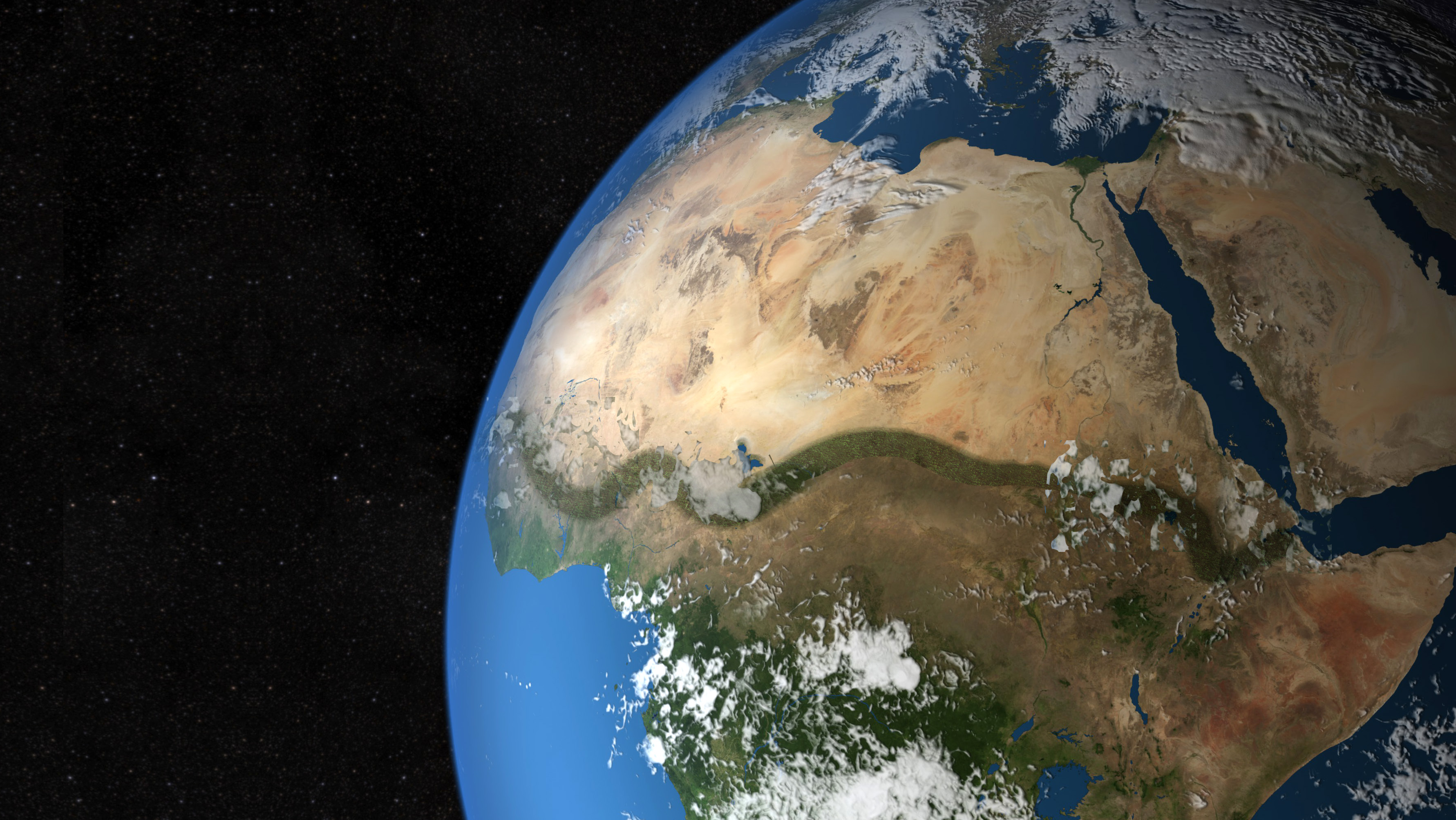
The sun beats down on the dusty streets of Bol, a small town on the shores of Lake Chad. As the locals go about their daily lives, the sounds of laughter and chatter fill the air. For many, living here is a constant struggle, threatened by drought, insecurity, and poverty. But against all odds, the people of Bol have shown remarkable resilience. It all begins with the land. The Lake Chad region, home to approximately 30 million people, has been grappling with the impacts of drought and desertification for decades. Since the 1960s, the lake has shrunk by 90% due to climate change and overuse of resources. The arid land requires significant effort to cultivate and sustain livelihoods, yet the people of Bol have never lost hope. By finding new ways to farm and care for their land, they have learned to adapt to the changing climate and boost drought resilience. One such solution is land restoration. Bol is one of the many communities along the Great Green Wall and has been actively involved in this Africa-led initiative spanning 11 countries across the continent, from Senegal to Djibouti. With the help of local communities, the Great Green Wall Initiative is restoring degraded land, creating a vital source of income for families and empowering women and youth. “We have community farms that are supported by the Agency of the Great Green Wall by providing water and solar panels for the people to work the land,” says Abakar Thiéré, Head of the Lake Chad branch of the Great Green Wall Initiative. Head of the Lake Chad branch of the Great Green Wall Abakar Thiéré The Sahel region has long faced severe, complex security and humanitarian crises. The Boko Haram insurgency is one of the many threats facing the Sahel region. The story of Hassan Amad Muhamad, a resident of Bol, is a powerful example of the town’s resilience. Hassan escaped a life of violence and found hope and a new livelihood as a tractor driver in Bol after completing a three-year training programme. His story is emblematic of the town’s ability to overcome adversity and build a better future. Hassan Amad Muhamad Similarly, the people of Bol have displayed their adaptability and determination in the face of environmental challenges. In response to the extreme drought affecting Lake Chad, they have collaborated with local authorities to develop innovative water management solutions. They have constructed underground cisterns and implemented drip irrigation systems, enabling them to grow crops even in the driest seasons. These techniques have provided essential food and income for families in the community. Central to Bol’s resilience is its strong sense of community. Women, in particular, have formed support groups, pooling resources and knowledge to help one another thrive. These groups have been critical in fostering economic empowerment and resilience in the face of adversity. “When we talk about Lake Chad, women matter. They are the first to get affected by all the crises surrounding the Lake. Men usually respond to the challenges by leaving. Women stay and take care of everything. Women have development of their knowledge in the face of these adversities, they have been resilience in the face of the challenges,” says Hindou Oumarou Ibrahim , President of the Association for Indigenous Women and Peoples of Chad (AFPAT). Bol’s story is a remarkable testament to the power of resilience in the face of adversity. Through collaboration and innovation, the people of Bol have shown that it is possible to find hope and build a better future, even in the most difficult of circumstances. This story is part of a series that seeks to shed light on community drought resilience strategies from various regions around the world. By showcasing these often-untold stories, we hope to inspire and share best practices with others facing similar challenges. Recognizing the urgent need to shift from reactive to proactive approaches in tackling drought and its impacts, the International Drought Resilience Alliance (IDRA) was launched by the leaders of Spain and Senegal at the UN Climate Summit in November 2022, with 30 countries and 20 entities as founding members.

It is easy for some to think that water simply comes from the tap, but this limited perspective fails to acknowledge the vital ecosystems from which our water comes. When rivers run dry or become polluted, when groundwater is over-exploited, and when ecosystems are degraded, it is only then that we begin to understand the true value of water. As we mark World Water Day 2023, we are reminded of the indispensable role water plays in the lives of all living things on our planet. The urgent need for collective action to address the global water and sanitation crisis is reflected in this year's theme, Accelerating Change. Despite an ambitious commitment to achieve Sustainable Development Goals by 2030, billions of people still lack access to safe water and sanitation. This situation is only going to get worse as we are looking to a hotter, drier future. A future where global demand for freshwater will outstrip supply by 40% by the end of this decade. A future where droughts—driven by climate change but also land degradation—will strike more often and hit even harder. These problems do not discriminate. They affect countries and regions across all continents, from China to Chad, from Spain to Chile, from Australia to California here in the United States. Healthy land is critical as we face a future of increasing weather extremes and human pressure. Through sustainable land management we can restore ecosystems, boost drought resilience and safeguard water resources for future generations. The UN Water Conference that starts today is a once-in-a-generation opportunity to set an ambitious Water Action Agenda. One that can foster a more resilient, equitable, and prosperous future by recognizing the interconnectedness of water, land, climate and nature. On World Water Day 2023, we reaffirm our steadfast commitment to accelerate change and address the water and sanitation crisis that impacts every aspect of our lives. We call on governments, organizations, businesses, and individuals around the world to join forces, share knowledge, and accelerate change to ensure safe water and sanitation for all.
