News & stories

Latest
Dear UNCCD Focal Points and Stakeholders, Women hold a vital stake in the health of the land, yet often don't have control over it. Across the world, women face significant barriers in securing land rights, limiting their ability to thrive and prosper. And when land becomes degraded and water is scarce, women are often the worst affected. The global focus of the 2023 Desertification and Drought Day is on women’s land rights— essential for achieving the interconnected global goals on gender equality and land degradation neutrality by 2030 as well as advancing other Sustainable Development Goals. Under the slogan “Her Land, Her Rights”, this year’s Desertification and Drought Day will send a strong message that investing in women’s equal access to land and related assets is a direct investment in their own future and the future of humanity. This year’s global observance of Desertification and Drought Day will be held at the United Nations Headquarters in New York, with events taking place in all parts of the world. I count on your strong support to reach out to people and communities about the key role of gender equality in the sustainable future of land. You will find the announcement and background note in all UN languages on the 2023 Desertification and Drought Day webpage. I also invite you to support the campaign “Women, Girls and Land” that seeks to promote successful examples of women’s contributions to sustainable land management and mobilize action for stronger female leadership in combatting desertification, land degradation and drought. Visit https://www.unccd.int/land-and-life/gender/herland to learn more. Please send your plans for the observance event to communication@unccd.int, so that we can feature your activities on the UNCCD website. Further information will be shared in due course. Should you have any questions, please contact Ms. Xenya Scanlon, Chief of Communications, External Relations and Partnerships. On this year’s Desertification and Drought Day, let us unite our efforts to recognize and empower women and girls to be at the forefront of global land restoration and drought resilience efforts.

Abidjan, Côte d'Ivoire - On the invitation of UNCCD COP15 President Alain Richard Donwahi, the members of the COP15 Bureau held their second meeting on 1 March 2023 in Abidjan. This meeting was an opportunity to take stock of what has been achieved since the first COP15 Bureau meeting in Bonn in October 2022 and identify the next steps in the lead up to UNCCD COP16 in 2024. In his opening remarks, COP15 President Donwahi congratulated stakeholders who are working to realize the commitments made at COP15 and pledged his support. “My focus this year will be on supporting the UNCCD Executive Secretary in the implementation of many regional initiatives that aim at fighting drought and land degradation such as the Great Green Wall Initiative, the Middle East Green Initiative and the International Drought Resilience Alliance, but also major projects within the five regional annexes, he said. UNCCD Executive Secretary Ibrahim Thiaw stressed that much progress has been made since the COP: “Our beating of the 'drought and land restoration' drums seem to be bearing fruit. Let's continue to work towards a sustainable future for all,” he said. Executive Secretary Thiaw also gave an update on the activities of the Secretariat and of the intersessional working groups, which are working to respond to the mandate given by UNCCD Parties at COP15. Already, 115 Parties have submitted their national reports, which will be considered at CRIC21 session, scheduled to take place in Samarkand (Uzbekistan) in October 2023. COP15 Bureau members expressed their satisfaction with the progress made and readiness to continue the fight to mitigate the effects of land degradation and drought together.

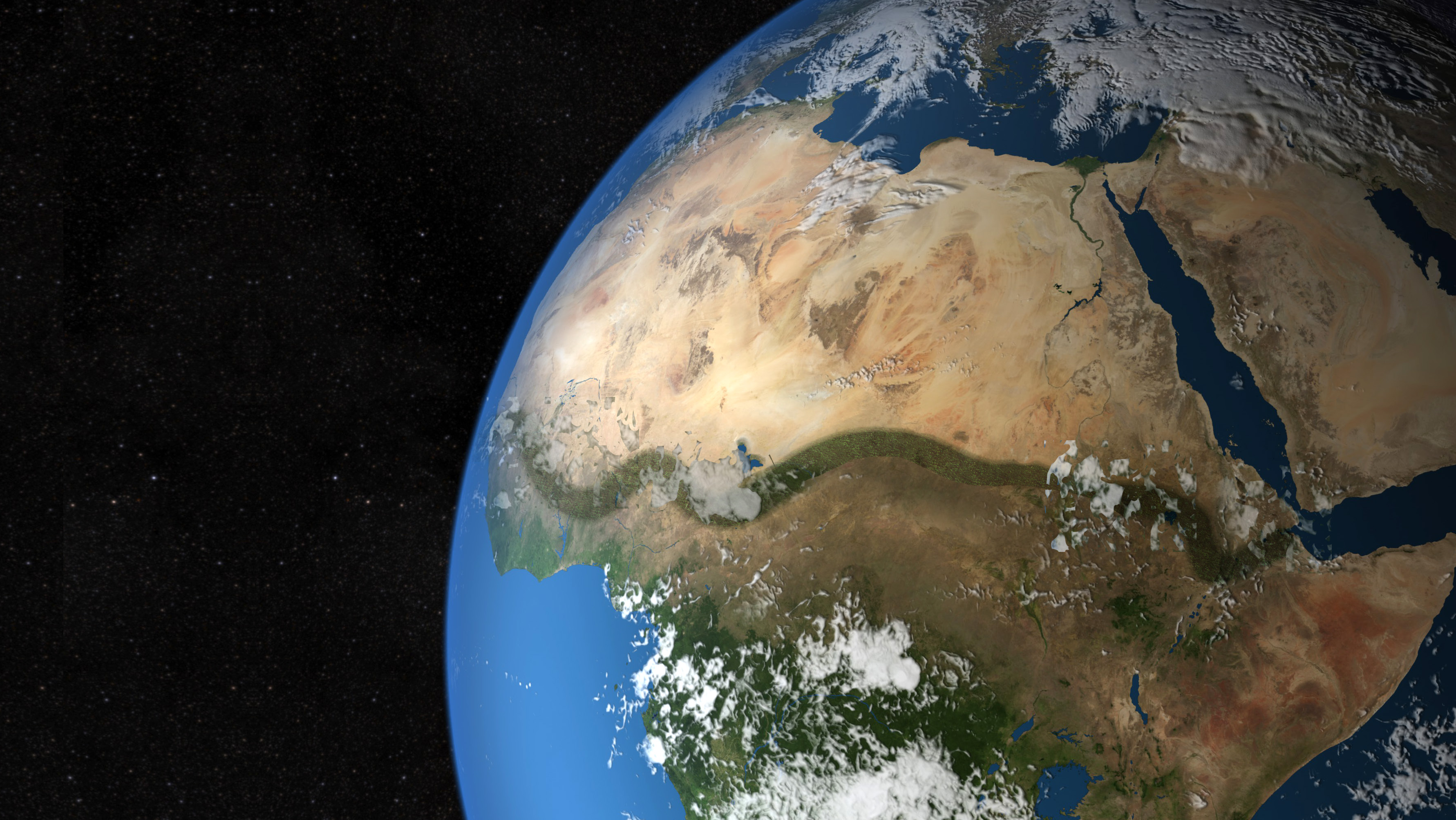
1 March 2023, Abidjan, Côte d'Ivoire It is a pleasure to be back in the wonderful city of Abidjan, at the kind invitation of our President. I have always enjoyed visiting Abidjan, but this visit has a special significance, as it is the first since our memorable COP15. So there is now in my calendar a pre-CoP15 and a post-CoP15. Much progress has been made since we last met in Bonn (in October). I would say that our beating of the “drought and land restoration” drums seem to be bearing fruit. This is good news as we certainly need to do much more, at scale. Indeed, despite our past efforts, more land is being degraded, more rivers drying up, more wetlands and more forests destroyed. Simply put, the additional demand on natural resources imposed by our lifestyle is not commensurate with the capacity of our planet to regenerate itself. Our relative prosperity (if ever the extraordinary inequality in the world allows us to use the word prosperity) our prosperity, I said, is nothing but an ecological illusion. Land, water, ecosystems and natural environments are all showing signs of weakness, if not collapse. Never - since the industrial revolution - has the world been hit by such strong and violent gusts of drought (often followed by floods). Never have we destroyed as many forests, degraded as much fertile land or extracted as much water for our agricultural, industrial or basic human needs. On the positive side, we have never had access to so much science and knowledge about how to reduce the pressure on resources; how to live better in harmony with nature; how to ration water use for irrigation; how to regenerate soils and promote more respectful practices. It is in this way that the decisions adopted by our COPs serve as political reference; as a gauge of the willingness of the Parties to contribute to solutions; of the political will of the Parties to collaborate to mitigate the effects of land degradation and drought. It is also in this regard that we appreciate the decisions of the Group of 20 richest countries in the world to engage in land restoration, in collaboration with other interested Nations. We see this as an expression of political will. The first meeting of the Steering Committee of the G20 Land Restoration Initiative held in Saudi Arabia, is a clear signal of proactive cooperation in this area. At the recent COP of the Climate Change Convention in Egypt, the International Drought Resilience Alliance (IDRA) was created! Spurred on by the President of the Republic of Senegal and The Prime Minister of Spain, IDRA is a high-level global alliance, to promote international cooperation and collaboration to mitigate the effects of drought. The first meeting of the Alliance's Steering Committee is scheduled to take place in a few days in New York. The International Drought resilience Alliance, which brings together more than 30 countries, Development Banks and financial mechanisms, UN entities, inter-governmental and non-governmental organizations. IDRA signals world leaders’ commitment to making drought resilience a priority in national development and cooperation policy. It is a partnership to address the increased centrality of the land and drought agendas in the global multilateral agenda. It responds to your calls at COP15 that we need to shift from reactive to preventive – so it will help transition quickly from the current emergency response to build drought resilience. Very much in line with this, and as decided by our COP15, the Inter-Governmental Working Group on Drought had its first meeting also in November of last year; a second meeting is scheduled for 13 and 14 March in Yerevan – with many thanks to Armenia for hosting this important meeting. But several other important UNCCD processes have kick started since we last met. The Science Policy Interface held its first meeting this past December. The Midterm evaluation of the UNCCD Strategic Framework is underway. Its own Intergovernmental working group met from 13-15 February to agree on the set-up for this comprehensive review of the progress made since 2018. Another positive development to note is the National Reporting. A total of 115 UNCCD Parties (the vast majority) have already submitted their national reports. The team is busy compiling the data in time for the next session of the Committee of Review of Implementation. The next CRIC session, scheduled to take place in Samarkand (Uzbekistan) in October, will consider the results of these reports. Now turning to the Global Mechanism, COP 15 requested that the Global Mechanism develop a methodology and conduct a needs assessment to determine the financial requirements for the implementation of the Convention and develop a time-bound strategy to increase fund mobilization based on this needs assessment. We are pleased to report that the methodology will be tested and show-cased at CRIC with results made available at COP 16. Progress was also made on the LDN TSP 2.0 – your plan to improve LDN targets (to ensure they are more quantitative, specific, policy-coherent, linked to the integrated land use planning and gender responsiveness). Now let me turn to external developments which are helping boost our agenda. As you know, COP15 the Convention on Biological Diversity took place in December in Montreal, where Parties adopted the Kunming-Montreal Global Biodiversity Framework to galvanize halting and reversing biodiversity loss. Of particular relevance to UNCCD is the Goal which makes explicit reference to land restoration. Notably the ambition to achieve at least 30% of restoration of degraded areas by 2030. This is a good complement to the various land restoration projects across the world, including the Great Green Wall of the Sahel, the Middle East Green Initiative, the Dry Corridor of Latin America, the AFR100 in Africa to name just a few. Which brings me to The G20 Global Land Restoration Initiative. The Coordination office is now fully staffed. The Steering Committee (made up of G20 representatives, UNEP and FAO) held its first meeting in November in the Kingdom of Saudi Arabia and discussed the Initiative Strategy as well as the terms of Reference for the Committee. Now allow me to be a bit more forward looking. I recently returned from a trip to the Kingdom of Saudi Arabia who will graciously host UNCD COP 16. You will have received a more detailed briefing in writing on the status of the organization of COP16, so I just wanted to stress how engaged our future host country is in receiving us in 2024. I am sure our Bureau member from Saudi Arabia will elaborate more on this. On my part, I came back from Riyadh convinced that we will have a great COP 16. I look forward to your deliberations and guidance on the different items of the draft agenda in front of you. Thank you.

Drought is one of nature's costliest disasters – across the globe, more frequent and prolonged droughts are up nearly by a third since 2000. No country or region is immune to their impacts, which cost the global economy billions of dollars each year and range from the loss of life, livelihoods and biodiversity to water and food insecurity, disruption in the energy, transportation and tourism sectors, as well as forced migration, displacement and conflicts over scarce resources. As the drought resilience and preparedness are taking the center stage in the global efforts to bolster the economies and communities against natural disasters, the new collaboration launched today between the United Nations Convention to Combat Desertification (UNCCD) and the National Drought Mitigation Center (NDMC) at the University of Nebraska-Lincoln is particularly timely. According to the cooperation agreement signed by the UNCCD Executive Secretary Ibrahim Thiaw, the Vice Chancellor of the University of Nebraska-Lincoln Michael Boehm and NDMC Director and Associate Professor Mark Svoboda, the NDMC will be tasked with recommending approaches to integrated drought risk management focused on drought-smart land-based solutions. The Center will also serve as a think tank on emerging drought policy issues, convening independent scientific debate on drought resilience and providing methodological guidance on knowledge management related to SDG targets of building disaster resilience, mitigating water scarcity and achieving land degradation neutrality. The UNCCD Executive Secretary Ibrahim Thiaw welcomed the new agreement by saying that it “will help to foster better collaboration between UNCCD, and local and national institutions, and to develop and share best practices on drought resilience and adaptation. Through this partnership, we will increase access to information and knowledge and will be able to provide technical guidance and support to countries and communities to build their capacity to manage drought risk and vulnerability.” “This is the next step in formalizing the collaboration on drought risk management between the UNCCD and the NDMC," said Mark Svoboda, Director of the National Drought Mitigation Center. “We look forward to this next stage, building on the NDMC’s long track record with international drought planning.” Today’s signing builds on the successful cooperation between NDMC and UNCCD over the past decade. The Center, whose mission is to reduce the effects of drought on people, the environment and the economy by researching the science of drought monitoring and the practice of drought planning, is an active participant in several drought-related initiatives spearheaded by the Convention, including the Intergovernmental Working Group on Drought, the UNCCD Science-Policy Interface and the UNCCD-led Drought Toolbox. These platforms are focused on supporting decision-makers and practitioners in adopting timely, proactive and coordinated approach to drought risk management. “For more than 25 years, the National Drought Mitigation Center at the University of Nebraska-Lincoln has provided invaluable guidance to communities and other entities across the United States and around the world seeking to understand drought, plan for drought events and ultimately reduce the negative effects of such events,” said Mike Boehm, NU Vice President and Harlan Vice Chancellor for the Institute of Agriculture and Natural Resources at UNL. “It is an honor to work with the United Nations Convention to Combat Desertification to offer these essential tools more broadly to combat drought and improve lives worldwide.” The future collaboration between UNCCD and NDMC is envisioned as a working partnership that will utilize the latest science to help reduce the high human, social and economic costs of drought and water scarcity. The partnership will focus on recommending methods for integrated drought risk management that prioritize a strategic shift from emergency response to building long-term resilience through early warning, vulnerability assessment and risk mitigation. Catalyzing political will and accelerating action to enable such a shift is the ambition of the International Drought Resilience Alliance (IDRA) launched last November at the UN Climate Summit that brings together 30 countries and over 20 entities. At the forefront of these efforts is the drought-smart sustainable land management: adapted to the national and regional contexts, it has the potential to buffer ecosystems and communities against drought so that periods of water scarcity do not escalate to humanitarian or ecological disasters. For more information, contact: UNCCD: Ms. Xenya Scanlon Chief, Communications, External Relations and Partnerships T: +49 152 5454 0492 E: xscanlon@unccd.int NDMC: Ms. Leah Campbell Communications Specialist National Drought Mitigation Center University of Nebraska-Lincoln T: +1 402 472 8121 E: lcampbell21@unl.edu About The United Nations Convention to Combat Desertification (UNCCD) is the global vision and voice for land. We unite governments, scientists, policymakers, private sector and communities around a shared vision and global action to restore and manage the world’s land for the sustainability of humanity and the planet. Much more than an international treaty signed by 197 parties, UNCCD is a multilateral commitment to mitigating today’s impacts of land degradation and advancing tomorrow’s land stewardship in order to provide food, water, shelter and economic opportunity to all people in an equitable and inclusive manner. https://www.unccd.int/ The National Drought Mitigation Center at the University of Nebraska-Lincoln helps people, organizations and institutions build resilience to drought. Our mission is to reduce the effects of drought on people, the environment and the economy by researching the science of drought monitoring and the practice of drought planning. We collaborate with and learn from decision-makers at all levels across the U.S. and around the world. https://drought.unl.edu/

nnovators from the Great Green Wall countries are invited to apply for the DeserTech Innovation Leaders for the Great Green Wall, a new training scheme to find innovative solutions to tackle desert-related challenges.

UNCCD, the global vision and voice for land, welcomes the announcement made Monday, 7 November 2022, at the Sharm el-Sheikh Climate Change Conference that Saudi Arabia will contribute USD 2.5 billion over the course of 10 years to support the Middle East Green Initiative projects.
